
Trapped by the "Virtual Booking" Task Scam: My Story and Warning to Others
Task scam, virtual booking job scam, crypto task scam review, online job scam warning, travel booking scam.

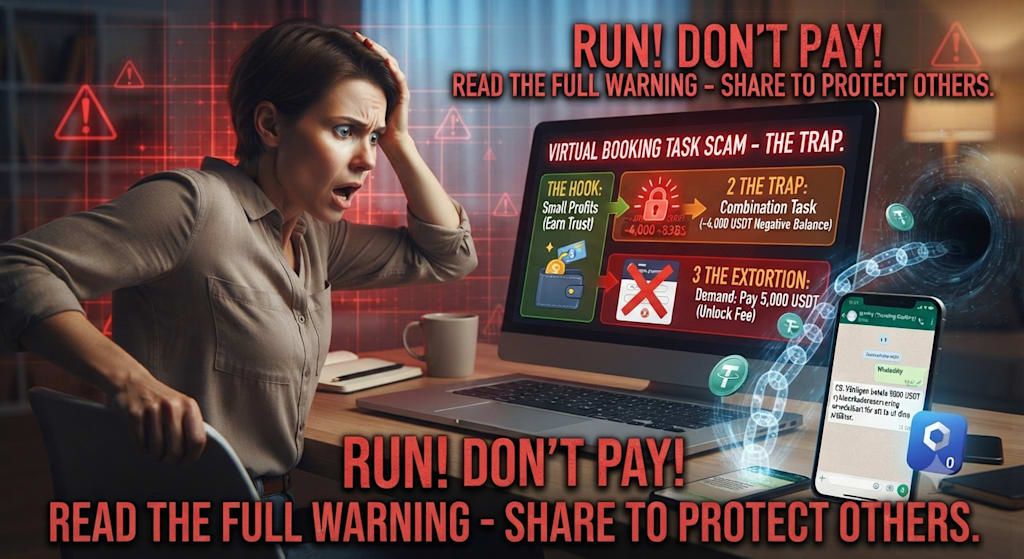
They say that smart people don’t fall for scams—until it happens to them. I always considered myself a skeptic, someone who could spot an online trap a mile away. And yet, here I am, sharing my story because I fell right into one of the most sophisticated online employment traps out there: the virtual booking task scam.
If you have ever been approached on WhatsApp or Telegram with an offer to earn easy money by clicking buttons to "help hotels increase their market value," read this before you deposit a single cent.
How It Starts: The Illusion of a Legitimate Job
It started two weeks before Christmas. I was contacted by someone representing a platform cleverly disguised as a travel-booking company. At first glance, the concept almost sounds logical—or at least structured enough to trick your brain into believing it:
You are given "tasks" (usually 40 a day) where you click to simulate hotel bookings.
These virtual bookings help hotels boost their market visibility and ranking.
You make a small crypto deposit (like USDT) to fund the bookings, and in return, you earn a commission on your own deposits.
Once you finish your daily tasks, your initial deposit plus your commission flows straight back into your wallet.
For the first few days, it actually worked. I saw my balance grow. I got my money back. It felt safe, professional, and entirely real. I even started planning out a strategy: I'll just work two days in a row, cash out my 100 USDT profit, and avoid hitting the higher multi-task tiers.
I thought I was outsmarting the system. Little did I know, the system was designed to trap me.
The Trap: "Combination" Tasks and Negative Balances
The real danger of this task scam lies in what they call "combination packages"—double or triple bookings that are supposedly triggered randomly as you work through your 40 daily tasks.
Because these combo packages require a higher financial volume, the price of the booking exceeds your current account balance. Suddenly, your dashboard shows a negative balance (for instance, -400 USDT or -800 USDT).
To finish your 40 tasks for the day and unlock your funds, you are told you must deposit more money to cover the negative balance. If you don't do it within a strict timeframe, or if you fail to request an extension from customer service, your account gets frozen.
I hit this wall on my fifth day. I was handed a triple combination package, my account went deeply negative, and because I panicked and didn't handle the extension properly, my account was locked with nearly $4,000 of my money trapped inside.
The Psychological Illusion: Why We Keep Believing
What makes these scams so brutally effective is the psychological environment they build around you:
The Professional Website: The dashboard looks sleek, complete with complex rules, terms of service, and strict penalties for missing deadlines. It mimics a legitimate corporate platform.
The Polite Customer Service: Support agents are unnervingly polite, responsive, and ready to guide you step-by-step through wallet addresses and deposit instructions.
The WhatsApp Group Chat: You are placed in a group chat with dozens of other "workers." When you panic about a negative balance, others chime in to say: "Don't worry, this happened to me too! It's just normal planning error, not a scam. Just deposit and cover it, you'll get it all back!" (Looking back, these were almost certainly bots or accomplices).
The Final Extortion: The "Reputation Damage" Fee
When I finally contacted customer service to get my account unfrozen and withdraw my funds, I was hit with the final, absurd demand.
They told me I needed to deposit an additional 5,000 USDT as a "reputation damage repair" fee because my account was frozen due to my own failure to complete the tasks on time. When I asked the obvious question—“What is the point of paying 5,000 if I get it back immediately?”—they calmly replied that "it’s just how the system works."
That was the moment the illusion shattered, even though a dangerous part of my brain still whispered: “What if? What if I just pay the 5,000 and walk away with my nearly 9,000 USDT total balance?”
I didn't pay. And I am writing this so that you don't either.
Lessons Learned: How to Spot a Task Scam
If you are currently looking at a dashboard with frozen funds, or if someone has just messaged you out of the blue with a "remote clicker" or "hotel optimization" job, look out for these red flags:
You have to pay to work: No legitimate job requires you to deposit your own cryptocurrency or cash to complete daily tasks and receive your salary.
Aggressive escalation: The tasks suddenly become more expensive the longer you stay, trapping more and more of your money behind "negative balances" and "combos."
Pressure to act fast: Customer service and group chats push you to make quick financial decisions out of fear of losing your progress.
I lost money, but I gained a hard lesson. If it sounds too good to be true, it definitely is. Share this story to protect someone else from falling down the same rabbit hole.
About the Creator
zenGaze
A person with a new idea is a crank until the idea succe!eds
Enjoyed the story? Support the Creator.
Subscribe for free to receive all their stories in your feed. You could also become a paid subscriber, letting them know you appreciate their work.
Comments
There are no comments for this story
Be the first to respond and start the conversation.