
The Video Game Market Is Leveling Up Faster Than Ever
From mobile play to cloud streaming and esports, the global video game industry is entering a new era of scale, access, and creativity.

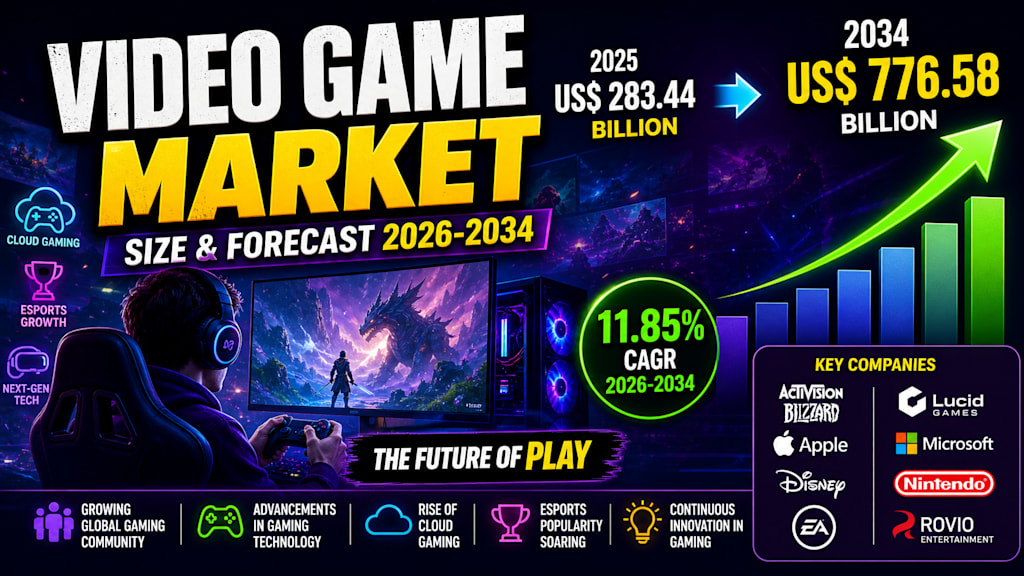
The global video game market is no longer just a segment of the entertainment world. It has become one of the most powerful digital industries on the planet, shaping how people play, connect, compete, and consume content. What began as a niche pastime has evolved into a mainstream cultural force that reaches children, teens, adults, and even older audiences across every major region.
According to Renub Research, the video game market is forecast to rise from US$ 283.44 billion in 2025 to US$ 776.58 billion by 2034, expanding at a CAGR of 11.85% during 2026–2034. That level of growth reflects more than just rising demand. It signals a full-scale transformation in how games are delivered, monetized, and experienced across the world.
At the heart of this expansion is a simple reality: gaming is now for everyone. Mobile devices have lowered the barrier to entry, cloud platforms are removing the need for expensive hardware, esports has turned gaming into a spectator sport, and subscription services are making access easier than ever. Together, these forces are pushing the market into a long and dynamic growth cycle.
Gaming Has Moved Beyond the Console
For years, gaming was associated mainly with consoles and PCs. That picture has changed dramatically. Today, the biggest audience is often found on smartphones, where casual and serious players alike can jump into a game anytime, anywhere. The rise of mobile gaming has been one of the strongest growth engines in the entire industry.
Smartphones have made video games more accessible to people who may never have considered themselves “gamers.” A user no longer needs a dedicated device, a large budget, or technical knowledge to get started. A phone is enough. That shift has opened the door to a massive new audience, especially in emerging markets where mobile-first digital behavior is stronger than console-first habits.
This broad accessibility is helping gaming become part of everyday life. People play during commutes, lunch breaks, evenings at home, and even while socializing online. The result is a market that is not only larger, but also more deeply woven into modern habits than ever before.
Why the Market Is Growing So Fast
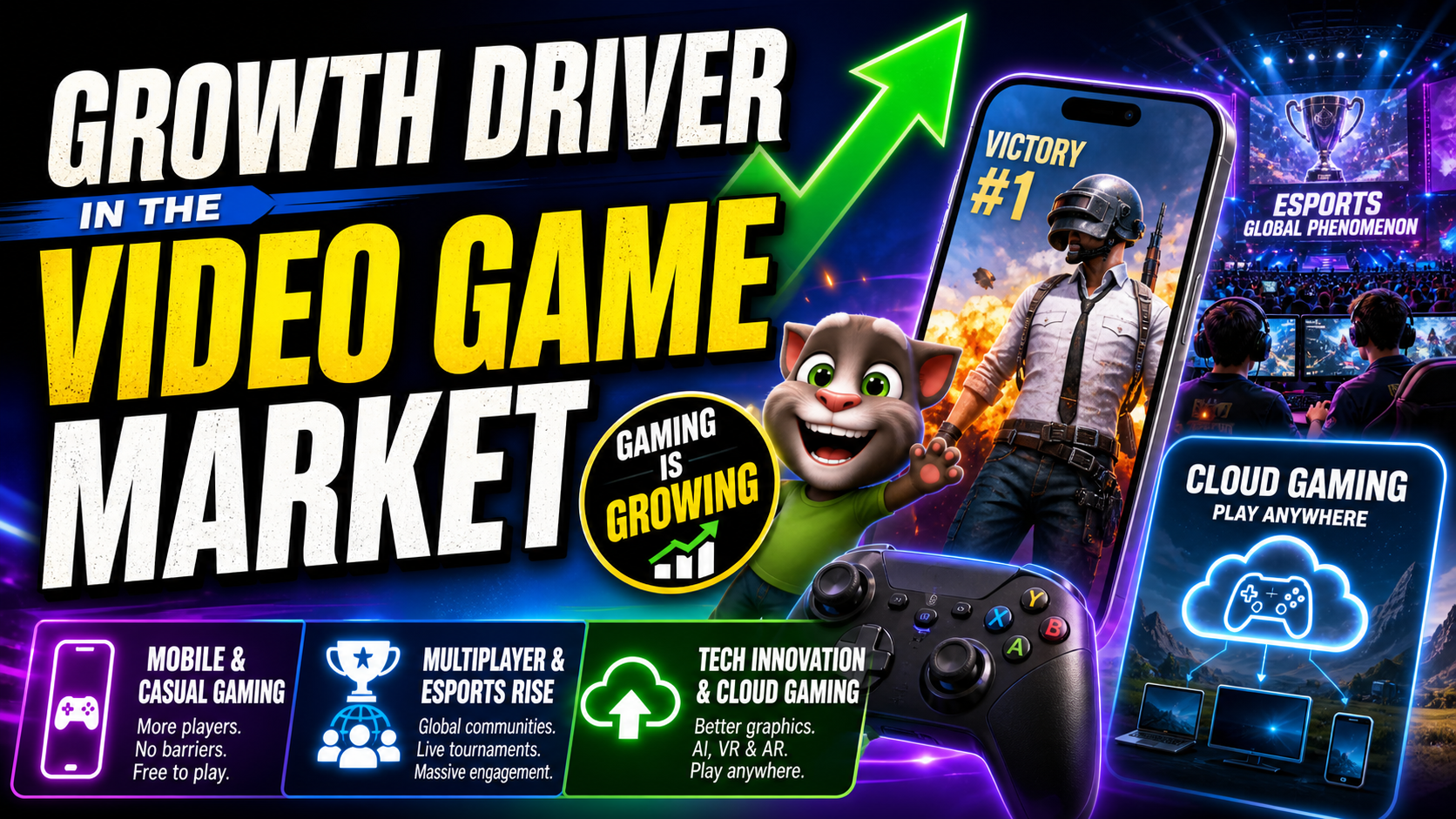
One of the biggest reasons the video game industry is accelerating is the rapid expansion of mobile and casual gaming. Games now reach users across age groups and geographies, and the free-to-play model has made participation easy. Users can download and begin playing without upfront investment, which removes a major barrier to entry.
The second powerful growth driver is the rise of online multiplayer gaming and esports. Gaming is no longer an isolated activity. It is social, competitive, and highly interactive. Players can connect with friends or strangers in real time, join global communities, and take part in tournaments that attract millions of viewers. Live streaming has also amplified visibility, allowing games to grow through content creators, tournaments, and fan communities.
A third catalyst is technology. Better graphics engines, faster processors, improved connectivity, and immersive tools such as virtual reality and augmented reality continue to enrich gameplay. Cloud gaming has become especially important because it allows users to stream games without owning expensive consoles or high-end PCs. This makes advanced gaming more inclusive and more scalable.
Subscription services are also reshaping the business model. Instead of buying a single game, players can subscribe to broad libraries, increasing convenience and helping companies build recurring revenue streams. The combination of accessibility, technology, and flexible pricing is one reason the market continues to expand at such a strong pace.
Cloud Gaming Is Changing the Rules
Cloud gaming may be one of the most important long-term shifts in the industry. In the past, gamers needed powerful hardware to enjoy high-quality titles. That model created a clear divide between casual users and dedicated players. Cloud platforms are narrowing that gap.
With cloud delivery, games can run on remote servers and stream directly to devices such as phones, tablets, laptops, smart TVs, and other connected screens. This makes the experience more flexible and less tied to physical equipment. It also helps developers reach a wider audience while reducing distribution friction.
This trend is especially significant in regions where device costs are a barrier. Instead of waiting for consumers to upgrade hardware, publishers can reach them through devices they already own. As broadband infrastructure improves and 5G adoption grows, cloud gaming will likely become an even more influential part of the gaming ecosystem.
Esports Has Turned Gaming Into a Global Spectacle
Esports has done something few people would have predicted a decade ago: it has transformed video games into major live entertainment. Professional tournaments now fill arenas, stream to millions of viewers, and attract sponsorships, advertising, merchandise sales, and media partnerships.
What makes esports so powerful is not just the competition itself, but the community built around it. Fans follow teams, individual players, and tournament seasons with the same intensity that traditional sports audiences bring to football, cricket, or basketball. This creates a strong engagement loop that extends far beyond a single game release.
Developers have also learned how to design for longevity. Rank systems, seasonal events, ongoing updates, and downloadable content keep players invested long after launch. Instead of treating a game as a one-time purchase, companies now manage it as a living platform. That approach increases retention and strengthens revenue over time.
The Business Model Is Evolving
The modern video game market is not only growing in size. It is also changing in structure. In the past, game sales were largely built around boxed products or one-time digital purchases. Now, the industry relies on multiple revenue streams.
Free-to-play titles generate income through advertising, in-app purchases, and premium upgrades. Subscription services offer libraries of games for recurring monthly fees. Some publishers monetize through battle passes, cosmetics, downloadable expansions, and live-service content. Others focus on premium launches supported by long-tail digital sales.
This flexibility gives the industry remarkable resilience. A game can earn revenue not just at launch, but over months or even years. Strong communities, frequent updates, and cross-platform availability can extend a title’s commercial life far beyond what was once typical.
At the same time, this shift has raised the stakes. Players expect more content, better quality, and constant updates. The market rewards innovation, but it also punishes weak launches quickly. That is why the industry is both more profitable and more demanding than ever.
Challenges Still Stand in the Way
Despite the excitement, the video game market is not without problems. One major challenge is the rising cost of development. Modern games require larger teams, longer production cycles, advanced tools, and more polished visuals. That raises risk, especially for independent studios and mid-sized developers.
Market saturation is another issue. There are now more games than ever competing for player attention. In mobile gaming, especially, hundreds of similar titles can flood app stores. Standing out requires not only quality, but also strong marketing, community support, and regular updates.
User acquisition costs are also rising. It is becoming more expensive to attract players and keep them engaged. A weak launch can lead to major losses, while a crowded marketplace can make it difficult for even good games to break through.
Regulatory and player wellbeing concerns are also increasing. Governments are paying closer attention to gaming addiction, screen time, loot boxes, children’s spending, privacy, and content suitability. As the industry expands globally, publishers must navigate different rules in different markets. That adds another layer of complexity to already challenging business operations.
Regional Growth Is Happening Everywhere
One reason the market is so dynamic is that gaming growth is not limited to one geography. It is unfolding across North America, Europe, Asia Pacific, Latin America, and the Middle East & Africa.
The United States remains one of the most influential gaming markets, supported by high spending, strong technology infrastructure, major publishers, and a thriving esports and streaming culture. Console, PC, and mobile gaming all play important roles in the country’s ecosystem.
The United Kingdom also stands out as a highly developed market with strong digital adoption, active game development, and wide participation in console, PC, and mobile play. It continues to be an important European hub for design, publishing, and testing.
China leads in active user scale and remains a giant in mobile gaming, online multiplayer, and esports. Despite regulatory oversight, the market remains highly significant because of its population size and the strength of its digital entertainment ecosystem.
Brazil is emerging as a fast-growing gaming market, driven by younger demographics, increasing internet usage, smartphone penetration, and the popularity of mobile gaming. Saudi Arabia is also expanding quickly, supported by a young population, digital investment, and growing interest in esports and online entertainment.
These regional markets matter because they show that gaming growth is not a one-market story. It is a global phenomenon with local shapes, preferences, and opportunities.
Different Platforms, Different Strengths
The market is often discussed as one industry, but it really operates across several major platforms.
Mobile gaming is the widest by reach. It attracts casual players and increasingly serious users, offering accessibility, quick sessions, and broad adoption.
PC gaming remains strong among enthusiasts, esports players, content creators, and those who value customization and performance. PCs are still the preferred platform for many strategy, simulation, and shooter titles.
Console gaming continues to deliver premium entertainment experiences and remains important for exclusive titles, family play, and high-quality living room gaming.
Online and next-generation gaming are changing how these platforms interact. Cross-platform ecosystems, cloud access, backward compatibility, and digital distribution are reducing the old boundaries between device categories. Players now expect to move more easily between screens, accounts, and game libraries.
The Competitive Landscape Is Getting Sharper
Large companies dominate much of the conversation around gaming, but competition comes from many directions. Publishers, platform holders, developers, cloud providers, and media companies all play a role in shaping the market.
Major players such as Microsoft, Nintendo, Sony-related ecosystems, Electronic Arts, Apple, Disney, and Activision Blizzard reflect how broad the industry has become. The lines between gaming, entertainment, technology, and social media are increasingly blurred. That is why gaming is no longer just a product category. It is a platform economy.
For companies, success depends on more than one blockbuster release. It now requires ecosystem thinking: subscriptions, live services, hardware, cross-media engagement, and long-term player retention. Those that can combine content and technology effectively are likely to benefit most from the next stage of growth.
Final Thoughts
The global video game market is entering one of the most important growth phases in its history. Strong demand, mobile expansion, esports momentum, cloud access, and digital distribution are pushing the industry into new territory. Renub Research’s projection of growth from US$ 283.44 billion in 2025 to US$ 776.58 billion by 2034 shows just how powerful this shift could become.
What makes this market especially interesting is that its growth is not driven by one trend alone. It is the result of several forces moving together: technology, accessibility, social connection, and creative innovation. That combination makes gaming one of the most resilient and future-ready segments in global entertainment.
At the same time, the industry must continue solving real challenges. Development costs are rising, competition is intense, and regulators are paying close attention. The companies that succeed will be the ones that balance innovation with responsibility, scale with quality, and monetization with player trust.
The message is clear: gaming is no longer just part of pop culture. It is part of the digital economy itself. And as the next decade unfolds, the video game industry may prove that it is still only at the beginning of its biggest level yet.
About the Creator
Enjoyed the story? Support the Creator.
Subscribe for free to receive all their stories in your feed.
Comments
There are no comments for this story
Be the first to respond and start the conversation.