
The Backup That Never Took Over
Yu Chengdong said Huawei's wide-screen phone would dethrone an iPhone in days. One woman bought a $300 Android instead — and kept both in separate pockets.
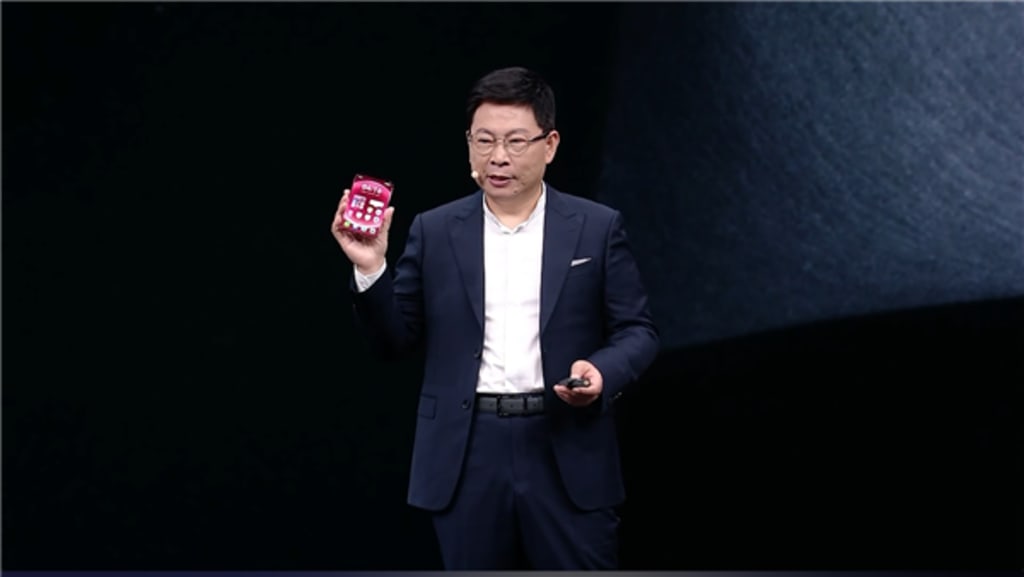
Yu Chengdong said those words from the stage to a room full of journalists. The red lights on their recorders glowed steadily; their phone screens refreshed with the specs of the Huawei Pura X View: 96.1 percent screen-to-body ratio, 6.68 millimeters thick, 7000 milliamp-hours, Kirin 9030S. Those numbers would go into press releases, paired with a photo of Yu holding the device up.
But what people would remember was the line that didn't sound like launch copy: Apple users could buy this wide flat-screen model as a backup. Use it for a few days, and it might just take over as the main phone.
The remark felt light—casual, almost throwaway. But it carried weight. A company that had spent six years fighting its way back to a global stage was now using the words "backup phone" to pry open the most loyal user base on earth.
I.
That night, Lin Zhao came across the news while charging her iPhone. The cable curled from the nightstand, hugging the white wall paint, its tip plugged into the phone's bottom port. She had used this device for three years. Battery health: 86 percent. A faint scratch ran across the upper-right corner of the screen—not deep, but visible when the light caught it.
She swiped the story away. Then she swiped back.
A backup phone. She had never considered owning one. One phone was enough—why would she need two? But the phrase "use it for a few days and it might become your main" stuck somewhere she couldn't name. She wasn't unhappy with her iPhone. It was just that after three years, every unlock showed the same wallpaper, every album opened in the same order, and every time a charging cable died, she bought a new one and carried on.
She had no reason to switch. But she also had no reason not to.
II.
Lin Zhao walked into the Huawei store on a Saturday. The place wasn't crowded. A child was playing with the hinge of a foldable display unit, opening and closing it with a rhythmic squeak. The Pura X View sat on the central stand—matte black backplate, a thin metallic edge along the sides. She picked it up. Her first thought: light. Much lighter than her iPhone.
When the screen lit up, she paused.
Not the colors. Not the resolution. She had already looked up those numbers online. What made her stop was this: when she opened a long-form article on WeChat, the text was larger than on her iPhone, yet the number of lines on the screen hadn't dropped. Then she opened a photo—a sunset she had taken the previous year at Erhai Lake—and the image stretched sideways. The sky spread from the left edge all the way to the right, as if someone had trimmed both ends of the original and spliced them back together.
"Wide flat-screen." She remembered Yu's term. It really was wide.
A salesperson came over and suggested she try the camera. Lin Zhao took a shot of the plane tree outside the window, then took the same view with her iPhone. Zooming in on both, the Pura X View showed sharper leaf edges and clearer bark texture in the shadows. She glanced at the price tag: 5,999 yuan—more than two thousand less than what she had paid for her iPhone years ago.
She set the phone back on the stand. The salesperson said she could take it home for a seven-day trial. She said she would think about it.
III.
What Lin Zhao hesitated over wasn't the money.
That evening at home, she lay in bed, her iPhone on the left and a borrowed Android phone on the right—a friend had said, "Try it for a few days. You don't have to buy Huawei."
She opened WeChat on both devices. Her primary account was on the iPhone; her work account was on the Android. The two ran independently, no overlap. She also tried Google Photos—the Android backed up its pictures automatically, and when she opened the app on her iPhone, she could see them too, though with a two-second delay.
She realized that if she switched to HarmonyOS, that workflow might stall. She had read somewhere that Google Photos inside the Zhuo Yi Tong compatibility layer often failed to read photos properly, stopping mid-backup. She wasn't sure if that was true, but the uncertainty alone was enough to keep the Android phone on the right side of her pillow and leave HarmonyOS in the realm of imagination.
At that moment, she understood clearly that she wasn't choosing a phone. She had a simple rule for the "other" device: it had to be different from her iPhone. Not just in looks—in how it worked. If the iPhone was closed, the other should be open. If the iPhone wouldn't let her tinker, the other should. Not because it was better, but because they would each do their own thing without stepping on each other's feet.
HarmonyOS and iOS felt too similar. So similar that she saw no reason to carry both.
IV.
A week later, Lin Zhao ran into her colleague Zhou Yuan in the break room. Zhou was holding a Pura X View—black, with a matte screen protector.
"How is it?" she asked.
"The screen is really good," Zhou said, handing it over. "When I watch dramas, the black bars at the top and bottom are much smaller than on my iPhone. The battery lasts forever—I charge it every two days."
"And your iPhone?"
"In my bag." Zhou pulled it out. "Mainly for work messages. This one is for gaming, videos, and the occasional meeting note."
"You carry both?"
"Both. One for work, one for play. Works fine."
Lin Zhao scrolled through Zhou's Pura X View. His photo gallery held over three hundred screenshots—all dialogue captions from shows or game victory screens. No folders, no categories. His contact list contained only six numbers: family and food delivery. The WeChat account was a secondary one, with just three people in his group chats.
The phone was busy. It averaged six hours of screen-on time a day—videos, novels, games, sticky notes. But it was also empty. It had never stored a truly important photo, never synced a conversation that needed remembering, never connected to anything beyond a computer, a watch, and a pair of earbuds.
It was a diligently faithful backup device. After two weeks of use, Zhou Yuan had not once thought about turning it into his main phone.
V.
In the end, Lin Zhao didn't buy it.
She bought her friend's Android instead—not because it outperformed the Pura X View, but because it was cheap: 2,300 yuan, 16+512, unsealed but unused. After a week, she installed a module that let her log into the same WeChat account simultaneously on the iPhone and the Android. She also set up a file-sharing app that synced photos automatically between the two—no AirDrop needed.
She carried both when she went out. iPhone in her coat's left pocket, Android in the right. The left pocket handled everything that needed to be "remembered": banking, health, calendar, important chats. The right pocket handled everything "spontaneous": short videos, forums, screenshots, the occasional photo of a street cat that she could post without editing.
She didn't think of either as the "primary." And she didn't think of either as the "backup." They simply divided the work, like two chairs at home—one at the desk, one on the balcony. Which one you sat in depended on what you wanted to do, not on which one mattered more.
VI.
Online discussions about Yu Chengdong's remark lasted three days. Some said Huawei had real confidence; others said the price was too high; still others posted screenshots of their own two-iPhone setups, claiming the best backup was another iPhone.
Lin Zhao never clicked back into those threads. She sat on the balcony, soaking up the sun, streaming an old drama on the Android while her iPhone charged indoors. The picture stretched across the wide screen, the sky spilling from left to right, like a photograph that had been cut and rejoined. She remembered the Erhai sunset in the store—it really had looked beautiful.
But she didn't regret her choice. A backup phone, she had come to realize, had less to do with the phone itself and more to do with which hand you used to grab your keys, and which hand you used to open the door.
Later, the Pura X View dropped in price—a five-hundred-yuan cut. Zhou Yuan said he should have waited another month. Lin Zhao said if he had, his backup would have become an old model. Zhou said, well, it's just a drama-watching device anyway—what difference does new or old make?
He added, it's all about screen size and battery. Lin Zhao didn't respond. She felt like saying something, but the sun was too warm. She closed her eyes, and the phone slid onto her knees, its screen still on. The old drama was running its end credits—the frame narrowed to black text on a white background, rolling upward, line by line.
About the Creator
Jin
Writer of reamstories
https://reamstories.com/jin
Enjoyed the story? Support the Creator.
Subscribe for free to receive all their stories in your feed. You could also become a paid subscriber, letting them know you appreciate their work.
Comments
There are no comments for this story
Be the first to respond and start the conversation.