tech news
01 Media keeps a finger on the pulse of the latest and greatest in tech trends; technology news coming from large corporations and startups around the world.
How to Hire a Backend Developer as an Executive
Investment in backend engineering talent is critical for software projects. While user-facing features receive the limelight, the invisible backbone – databases, APIs, security layers, deployment pipelines – governs the company’s ability to out-innovate competitors. A well-architected stack supports new software product lines. A high-performing backend engineer can reduce feature delivery times, protect critical apps from attacks, and cut infrastructure spend through optimization.
By Dmitry Baraishukabout a year ago in 01
Google Workspace vs Microsoft 365 for Startups: Which One Wins?
To startups deciding between Google Workspace and Microsoft 365, the decision isn't merely a matter of your preference; it can dictate the way you work, work together, and safeguard your data in the years to come. In the Microsoft vs Google battle for business today, it pays to know how each platform supports your work.
By Elliman Technologiesabout a year ago in 01
The Role of AI Agents in Future-Ready Data Science
Introduction According to a study, over 60–80% of the time a data scientist spends is performing non-strategic work, such as data cleaning, maintaining pipelines, working through schema mismatches, or even validating input data manually. These repetitive tasks not only slow down time to deployment for models, and creates delays in experimentation, but do represent potential upside for that business.
By Nishtha Darjiabout a year ago in 01
Two-minute overview of this week's new energy industry news (June 17-June 23)
1、Renewable Energy Information——The UK’s Crown Estate to invest £400m in offshore wind supply chain expansion According to Reuters on 17 June, the Crown Estate, which manages the seabed around England, Wales and Northern Ireland on behalf of the monarchy, has announced up to £400 million in investment to strengthen the UK’s offshore wind supply chain. The funding will support the development of domestic ports, manufacturing, and testing facilities, aiming to ease key bottlenecks and accelerate progress towards the UK’s 2030 target of a largely decarbonised power sector.
By Energy Boom Clubabout a year ago in 01
ISO & CE Certified Concrete Plant Manufacturers: Why It Matters
In today’s global construction landscape, investing in a reliable concrete batching plant is not just a matter of price—it's a matter of quality, compliance, and performance. As governments and developers increasingly demand higher standards for safety, sustainability, and efficiency, choosing ISO and CE certified concrete plant manufacturers has never been more important.
By consrtuctionmachinesabout a year ago in 01
Customer Service for Travel Industry
In today’s highly competitive travel sector, simply offering flight bookings or hotel reservations is not enough. The customer service for travel industry has evolved into a core business differentiator that can make or break a travel brand’s reputation.
By OneClick IT Consultancy P Limitedabout a year ago in 01
How AI Resume Parsers Are Transforming Oracle HCM Workflows in 2025. AI-Generated.
Introduction: Oracle HCM Needs a Smarter Way to Handle Candidate Profile Import In today’s high-volume, compliance-driven talent landscape, Oracle HCM users face mounting pressure to automate candidate data ingestion while ensuring accuracy, consistency, and global compliance. Manual resume screening isn't scalable. Every delay in profile creation could mean losing top talent. Enter AI resume parsers and resume extractors—the backbone of intelligent, automated candidate profile import for Oracle HCM users.
By Lovepreet Singhabout a year ago in 01
Strengthen Every Call: A Complete Guide to Home Cell Phone Signal Boosters
In today's world, mobile connectivity is at the core of how we work, socialize, and stay informed. Our phones are not just tools for calling—they’re lifelines to the internet, entertainment, business, and safety. Yet, for many people, reliable cellular reception inside their own homes remains an ongoing challenge. Walls, building materials, and distance from the nearest cell tower often contribute to weak signals and dead zones. This makes simple tasks—like making a call or streaming a video—frustrating and unreliable. Fortunately, a cell booster for home offers a powerful solution that brings strong, stable signal coverage indoors.
By MUHAMMAD SHAFIEabout a year ago in 01
How AI Software Development Services Are Powering Next-Gen Digital Products
There’s something kinda wild about how much AI is shaping the tools we use daily—and most of us don’t even realize it’s happening. You scroll, click, get personalized recommendations, and talk to a chatbot that gets you... And everything just works. That seamless experience? It’s not luck. It’s what AI software development services are quietly powering behind the scenes.
By Vitarag Shahabout a year ago in 01
A Warning in a Whisper
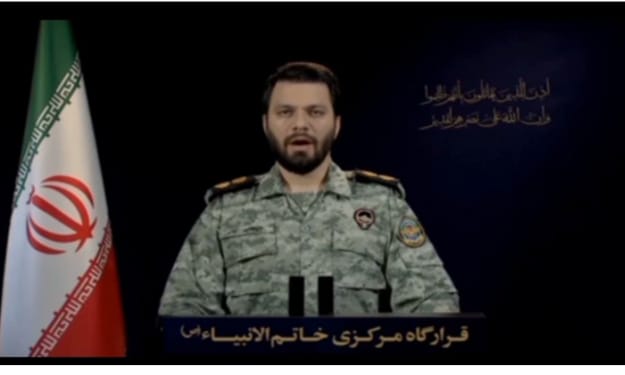
turated with noise, Iran’s latest military statement speaks louder through silence, posture, and precise diplomacy. Introduction In geopolitical communication, tone can be as decisive as content. Recently, a video statement from the spokesman of Iran’s Khatam al-Anbiya Central Headquarters attracted wide international attention. Not for its aggressive language, but for its composed delivery. Shared via Press TV’s official WhatsApp channel, this message carried more than policy—it conveyed presence, patience, and readiness. What makes this moment significant isn’t merely the message, but how it was delivered. The spokesperson’s calm demeanor, deliberate speech, and subtle yet firm posture presented a rare kind of warning—one that doesn’t shout, but still resounds. --- Context and Message The core statement was clear: > “Powerful and calculated operations with severe and unpredictable consequences await the United States in response to its direct aggression and violation of Iran’s sovereignty.” While many countries issue warnings, this one was structured, measured, and wrapped in certainty. It didn’t echo panic or provocation. Instead, it showed a nation quietly prepared to act with both force and focus. For seasoned observers of Middle Eastern diplomacy, this was not simply rhetoric—it was calibrated signaling. Iran has long practiced a threefold strategic doctrine: resilience, restraint, and response. Unlike impulsive actors in global politics, its military messaging follows a timeline of preparation and positioning. This statement was no exception. It fits into a larger pattern of Iran's geopolitical posture—particularly in how it manages tension with the United States. --- The Unspoken Message: Body Language and Demeanor What made this message especially powerful was not just what was said, but how it was presented. Watching the video reveals three major elements of non-verbal communication that magnify the weight of the message: 1. Unusual Calm in the Eyes The spokesman’s gaze did not shift nervously, nor did it seek to impress. It was direct, centered, and stable. This kind of eye contact sends one signal: full awareness without fear. It tells viewers that the message was not reactive—it was prepared. 2. Low, Measured Tone Every sentence was spoken slowly and clearly, as though rehearsed not for performance, but for impact. A low voice tends to carry authority, and the deliberate pacing indicated that every word had been chosen with care. 3. Composed Physical Presence There was no fidgeting, no exaggerated movements, and no dramatic hand gestures. The posture was straight but relaxed. The speaker looked like someone who has no need to convince—only to inform. This is often the posture of someone who knows their side holds leverage. These elements combined to send a message more powerful than military hardware: confidence. --- Beyond Words: The Broader Meaning This message is not a one-off outburst. It is part of a broader evolution in Iran’s foreign policy and strategic communication. Over the last decade, Iran has shifted from being a reactive actor to a calculated power center in the Middle East. Whether through alliances with Lebanon’s Hezbollah, military presence in Syria, political influence in Iraq, or support for groups in Yemen and Gaza, Iran’s geopolitical footprint has grown. In that context, this statement represents more than just defense—it reflects deterrence. By emphasizing unpredictability and readiness, Iran’s military command signals that any aggression will not be met with standard retaliation, but with intelligent, perhaps asymmetrical, operations. This is a page from the psychological warfare manual: don’t announce the counterstrike—imply it, project certainty, and make the other side guess when and how it will come. --- The Power of Media and Silence In a time when social media is saturated with shouting matches, exaggeration, and performative politics, Iran’s approach here stood out. No shouting. No chest-thumping. Just a quiet, intentional delivery. The silence behind the words amplified their meaning. This isn’t the kind of video that trends because of its drama—it stays in your mind because of its clarity. It doesn’t go viral for emotion. It spreads because it reflects a deeper calm—one that comes from being prepared. --- Strategic Silence: A New Era of Messaging Strategic silence has become one of Iran’s key soft power tools. This isn’t silence as in absence, but as in intention. It’s the silence that comes from knowing your next move but choosing not to reveal it. When a nation uses silence strategically, it creates space for doubt in the opponent’s mind. That’s more powerful than a direct threat. It shifts the psychological advantage. It suggests that the real battlefield might not be visible—and the real answer may already be in motion. This messaging tactic aligns with Iran’s long-standing concept of “Sabr-e-Strategic” (Strategic Patience), where time is used as a weapon, and clarity replaces chaos. --- Conclusion The statement issued by Iran’s military spokesman was more than policy—it was posture. In a brief video, Iran managed to signal resolve, strength, and strategic depth without ever raising its voice. It reminded observers that power does not always require volume, and clarity does not demand chaos. In today’s volatile global environment, such moments of composed messaging often say more than entire campaigns. Iran’s silent warning was, paradoxically, one of the loudest signals to come out of the region in recent months. When the spokesperson looked into the camera, calm and unwavering, the message was unmistakable: We are not reacting. We are ready. ---
By Riaz Gillani Exclusiveabout a year ago in 01