mobile
The ins and outs of mobile; explore the evolution and future of smartphones and how mobile technology impacts the way we live and communicate.
Is India the Last Straw for Apple’s Sinking Ship?
The Indian market has been abuzz with the news of Apple opening its first retail store in India. The opening of the store is the final step in Apple’s Make In India strategy attempt, where the tech giant is aiming to capitalise on India’s burgeoning manufacturing capabilities. However, there might be more to the story. Worldwide, Apple’s personal computer (PC) sales (laptops, workstations and desktops) have been hit by the recession, dropping by over 40% in the last quarter alone. The company was hit the hardest by the economic downturn when compared to other manufacturers, but India might just be the antidote to its problems. Capitalising on India Apple has been trying to leverage India’s capabilities ever since its Chinese supply chain was disrupted due to the COVID-19 pandemic. In addition to factory shutdowns all across China, the country’s zero-COVID policy resulted in a manufacturing crunch that Apple was eager to address, adopting a China+1 policy for manufacturing. Since then, Apple has set up a factory in India in Hosur, and took over Foxconn’s Sriperumbudur facility for assembly of iPhones. These factories are targeted to take over 25% of Apple’s manufacturing workload from Chinese factories. The Indian government has also played an active role in encouraging Apple’s Indian dreams. Under the smartphone production-linked incentive, Apple was able to export over $1 billion worth of iPhones in a month and created over 1 lakh jobs in just under 19 months. However, the company has declined to manufacture its more expensive iPads and MacBooks in the country, mainly because it does not have a non-Chinese contract manufacturer for these products. Due to the Indian government’s hardline stance against Chinese investments in Indian factories, Apple has found it difficult to navigate the regulatory landscape to allow for iPad and MacBook manufacturing. The Indian government, however, has kept the door open for Apple, with government sources stating that Apple can join the manufacturing PLI at a later date, up to two years down the line. Even as it fails to materialise a manufacturing plan for its most profitable devices in India, it seems that Apple is looking to lock in the Indian market to revitalise its falling sales. A report by IDC found that Apple’s PC sales have dropped by 40.5% in the last quarter. After record sales during the COVID-19 pandemic, more specifically 111.5% in 2021 Q1, it seems that the demand has finally fallen off for Apple as spending slows down. Experts have predicted that the next big boom for PC sales will come in 2024, due to an ageing installed base looking for an upgrade. Until then, companies might need to find a stopgap measure, and it looks like Apple is looking towards India to fill the gap. A small slice of a big pie The Indian PC market has slowly been growing over the past few years, spurred by a huge spike in PC sales over the course of the pandemic. In fact, the sector only recorded a loss of 11.7% in Q3 2022 after a whopping eight quarters of consecutive growth, even though the shipments numbered close to 3.9 million units. Despite this evident decline, the Indian PC market has surged as worldwide markets experience a shortfall, growing by a marginal 0.3% year-over-year. Even in the midst of a global pandemic and economic downturn, the spending power of the Indian population has continued to increase. Customer spending for 2021 recorded a 16.7% increase over 2020, representing a 10% net increase over 2019. As Apple’s PC sales continue to decrease, it seems that the company wants to capture a slice of the Indian pie by starting its retail operations in the country. Apple has already taken over the luxury smartphone market in India, boasting over 50% market share in this segment. In February, it was reported that Apple reported three consecutive quarters of double digit growth, mainly on the back of iPhone sales. Now, it seems that the company wishes to replicate this market dominance in the PC market as well, with the next leg of its strategy—retail stores. The Cupertino giant is looking to open two retail locations in the country—one in Mumbai and another in Delhi. This two-pronged strategy will not only allow them to capitalise on the increasing spending power of the Indian middle class, but also target the upper-class and elite population, which are one of its core markets. The opening of the store also comes alongside a new set of products across all lineups. Leaks have surfaced that Apple is working on a new 15.5-inch version of the MacBook Air, a new Mac Pro with M2 Ultra, and a purported iMac based on the M2 chip. When compounded with the company’s expansion strategy in India, these new products might just be the catalyst Apple needs to get back on its feet.
By Surya Kumar4 years ago in 01
Can Nanotechnology Build The AI Of The Future?
Nanotechnology is one of the biggest fields of emerging technologies, seeing application in various fields such as agriculture, medicine and engineering. However, many, including prominent futurist Ray Kurzweil, have said that nanotechnology will be the tool that AI will use to achieve the ‘singularity’. While such a vision is still in the future, technology today have begun to exhibit similar synchronisation in their abilities to work with each other, especially when it comes to AI and nanotech. These two fields can be used in conjunction with each other, from AI helping nanotech research to progress faster, to creating foods that taste like meat when they have none, to nanotech powered compute to ensure the spread of AI. This article covers how AI and nanotechnology can come together and build the future of humanity’s existence. AI Helps Scale Nanotech Due to the scale of research undertaken when dealing with nanoparticles, it is difficult to quantify some of the variables in the setting, as they cannot be recorded. Moreover, interpreting these results is also a behemoth task, owing to the same reasons. However, AI is a perfect fit for these tasks, as it can not only optimise the data and algorithm design for the technology, but also estimate multiple parameters and interpret results from experiments. This has also led to multiple nanotechnology facilities to begin utilising AI in their research segments, owing to the high degree of accuracy and effectiveness that AI brings to the table in nanotechnology. Moreover, in applications that require a high degree of precision, AI can also enable the intricate preprogramming of nanobots’. This includes medical applications, as the minimal invasiveness of these bots is sought after in the medical field. Nanotechnology can also enable the transformation of stem cells to bone cells on command, thus providing a solution for multiple diseases. The manipulation of stem cells by AI can also result in the creation of human organs for the replacement and repair of damaged ones. Guided by the AI, the nanobots can generate an organ from stem cells. By utilising an AI, nanobots can also differentiate between good and bad cells, something that cancer researchers have been trying to determine for many years. Moreover, nanobots can also rely on unsupervised machine learning to help them make these decisions. With the help of a vast library of data on the human body, and the difference in the appearances of these cells from normal cells, a model can be trained to identify which cells are infected and which aren’t. This will be targeted by the nanobots in order to tackle the problem and destroy only the affected cells. Nanotech And AI Can Resolve The World’s Food Problems The relationship between AI and nanotechnology isn’t restricted to the medical field purely. Multiple companies in the United States are aiming to bring the next step in the evolution of human food, fueled by nanotechnology and AI working together. They are working towards building plant-based products that look, smell and taste similar to meat, but aren’t. Even though this idea has been around for as long as veganism has, the companies claim that AI has offered them tools that have not been seen until now. The components of the food are broken down to their most basic level, as every aspect of the taste and flavour of the dish are caused by micro-components. These components are usually comprised of specific molecules, or other ingredients such as protein and fat, making it difficult to replicate without the presence of animal products. However, AI has found ways to combine these micro-components in the multiple permutations and combinations in order to achieve a result that is close to the end result. The algorithms find new ingredients or formulation that provide substitutes for animal based products. When the AI provides an unsatisfactory result, the model is tweaked by researchers and provides a satisfactory result. Until now, companies such as NotCo are using this method to create liquid foods like mayonnaise, scrambled egg replacements and cookie dough, as solid foods require a completely different level of complexity to replicate. Utilising an algorithm known as Giuseppe, NotCo aims to provide a scalable and accessible solution for using meat. Livestock farming is one of the biggest and most resource-intensive markets in the world, and many estimates peg it as occupying 60% of food-related greenhouse emissions. Solutions such as this would not only make the world greener, but also free up the land and water used by livestock. Nano-compute Will Power The Future AI Currently, compute is one of the biggest requirements of AI, alongside data to train the model. Now, advancements are being made in nanotechnology that could surpass the compute power offered by GPUs, leading to large-scale breakthroughs in systems utilizing models such as depp learning. Nano-enabled hardware has long been the goal of many computer manufacturers, as they are in the pursuit of shrinking hardware while extending its capabilities. IBM demonstrated it with the creation of the first artificial phase-change neurons, while other giants have shown interest in the field.
By Surya Kumar4 years ago in 01
Replit Knows India Better than Amazon, Microsoft
Globally, there are about 26.9 million software developers, out of which India is predicted to make up 5 million, overtaking the US’ developers by 2023. Due to the high developer concentration in the country, India has become a premier market for those in the dev tools business. Among them, Replit, a San Francisco-based startup, emerging as one of the most active members building a developer community in India. “A lot of people in India code using their phones… In college classrooms under their tables, students are coding on their phones to practise what they’re learning in real time,” said Anshul Bhide, BizOps, India Head at Replit, in an exclusive interview with Analytics India Magazine. Indeed, India has one of the lowest penetration of powerful PC devices (23% of urban population), but has a huge penetration when it comes to mobile phones (66.2% of the population). It seems that this extends even to coding tasks, as Anshul stated. Phones are one of Indians’ most preferred interface with the net, and this preference is working in Replit’s favour. Recounting an anecdote, Anshul said, “I spoke to someone from a small town that faces a lot of power outages. The Replit mobile app has been amazing for them because they can’t charge their laptop that quickly, but their mobile can always be charge super quickly, and so they’re able to code seamlessly.” Looks like Replit has its eyes on India for reasons other than its considerable talent base and user base. When asked about the company’s presence in India, Anshul stated, “India has always been critical for Replit. It’s our second largest market, it’s one of our fastest, if not the fastest growing market today. The reason why it’s super powerful in places like India is that you don’t need a super high-end laptop to run code anymore, it’s done all on Replit’s servers.” As a company offering tools for developers, this has resulted in an extremely tight product market fit for Replit in India. Anshul elaborated, “We have a unique product market fit in India because of a lot of the needs of the users, for example mobile over desktop, and having a fast 5G internet, are getting fulfilled and everyone’s obsessed with learning how to code. There are always these organic communities and YouTube channels with massive followings. All of these are factors that have allowed Replit to grow super organically, super fast.” Software Developers in Dilemma In India, coding has become a new passion for those entering the job market. At last count, over 1.08 million students were enrolled in computer science undergraduate courses in India, with more pursuing their interest through the Internet. Even as Indians look to upskill themselves and enter the industry, auto-coding platforms seem to be diluting the value proposition of developers. With the rise of auto-coding platforms like Replit’s Ghostwriter, developers’ jobs seem to be at stake now more than ever. Just last month, GitHub wiped out its Indian team numbering over 140. After remarking that Replit would be happy to interview and speak to some of these laid off GitHub developers, Anshul elaborated on the current state of the software market, stating, “Making 1x developers into 10x and 100x developers with the help of all of our compute capabilities, our storage capabilities, our hosting and deployment capabilities, and with obviously Ghostwriter on the top of it, that’s what we see. The median set of developers are going to become supercharged, overall it’s a productive decade; it’s not going to take away developer jobs.” Replit to the Rescue LLM-based coding platforms are continuing to improve themselves, with Google researchers demonstrating last week that they can be used to self-debug. In the age of Microsoft’s GitHub Copilot, Amazon CodeWhisperer, and more, how does Replit stand apart? Replit has also instituted an undertaking known as Replit bounties, which are a way for ‘0x developers to become 1x developers’. Non-developers can put up a bounty or a problem to solve on the Replit app, and developers can solve these problems to earn ‘cycles’ — Replit’s virtual currency. Recounting another story, Anshul stated, “I was just speaking to somebody, a college student who has won multiple bounties, and now he’s gotten a job, earning in dollars with a Silicon Valley-based company. Remote work is real, bounties are a great place to earn.” Even though developers have been at the forefront of AI and automation ever since the field came to be, it seems that ChatGPT woke the world up to what is possible with AI. Speaking on this, Anshul said, “GPT-4 has really captured consumer imagination and a large part of this is the first time that a consumer-facing app has been put out there, and that’s why outside of 25 million developers in the world, everybody else is aware of this as well. The new paradigm shift is going to be generative AI.” Even as the world shifts around it, India is uniquely poised to make the most of the situation. Anshul elaborated, “India is actually already becoming the hub for all of this. I’m in a bunch of conversations with communities of people who are actually building things with generative AI and I think that is something powerful.”
By Surya Kumar4 years ago in 01
LangChain is the Android to OpenAI’s iOS
Earlier this month, LangChain, a Python framework for LLMs, received seed funding to the tune of $10 million from Benchmark. Soon after, the startup received another round of funding in the range of $20 to $25 million from Sequoia, quoting a valuation of $200 million. At its base, the main offering of LangChain is an abstraction wrapper that makes it easier for programmers to integrate LLMs into their programs. While it provides a relatively simple interface for LLMs, many developers swear against using LangChain in a production environment due to its anachronisms. However, the fact remains that many developers treat LangChain as the go-to framework in their applications, with the project garnering 20,000 stars on GitHub. This evokes a question on the valuation of the project — is an open-source abstraction wrapper really worth $200 million? What makes LangChain great? The framework was released in October 2022, in the midst of the generative AI wave. Based on the belief their true potential lay in bringing LLMs together with other applications, Harrison Chase, a programmer, developed this library. At first, it only had support for the OpenAI and Cohere API, along with a Python interpreter. Today, the project has blossomed to support over 20 model providers and hosting platforms, over 50 document loaders, more than 10 vector databases, and over 15 tools commonly used by LLMs. Developers have stated that what NumPy and Pandas did for machine learning, LangChain has done for LLMs, greatly increasing their usability and functionality. By using LangChain, developers can empower their applications by connecting them to an LLM, or leverage a large dataset by connecting an LLM to it. The main plus point of LangChain is its ability to create a chain of commands, an intuitive way to relay instructions to an LLM. Each command or ‘link’ of this chain can either call an LLM or a different utility, allowing for the creation of AI agents that can decide information flow based on user input. In addition to chaining, the package also has ways to implement LLM memory and built in benchmarks to evaluate the potential utility of an LLM. Even though LangChain is a fully featured and well supported framework, it is said to be notoriously unusable in a production environment. While the developers have created a support channel for those using this framework in a production environment, certain developers have spoken against using it. User Karrot_Kream on the Hacker News forum stated, “There also seems to be really poor observability in the code and performance seems to be an afterthought. I tell friends who ask about LangChain that it’s great to experiment with but not something I’d put into production.” Indeed, the dominant perspective is that while LangChain does bring some value to the table, especially in terms of integrating an LLM with minimal effort, serious users would rather just write their own wrapper. Moreover, large language models have evolved since the first launch of LangChain, from simple text generators to more fully-featured and nuanced programs. While there is still consensus that LangChain does offer some value, it seems that the value proposition is slowly shrinking.
By Surya Kumar4 years ago in 01
Install and Join TikTok!
TikTok is a social media platform that has taken the world by storm. With over a billion downloads globally, TikTok has become the go-to app for short-form, entertaining videos that showcase talent, humor, and creativity. Despite its initial reputation as a platform for lip-syncing and dancing videos, TikTok has evolved into a diverse platform that offers something for everyone. In this article, we will explore the reasons why you should install and join TikTok.
By prezo mike4 years ago in 01
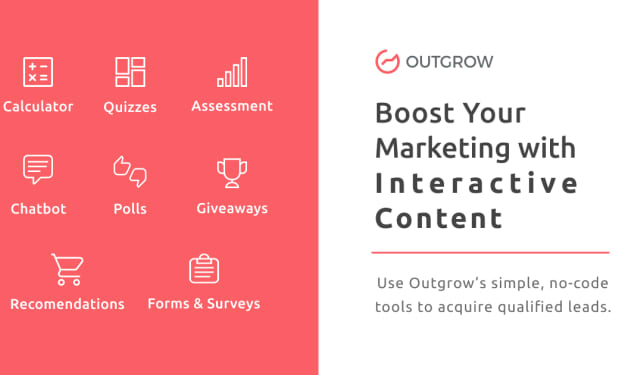
Outgrow: How It Can Help You Generate High-Quality Leads and Convert Sales for Your Website
Are you struggling to generate high-quality leads for your website? Have you tried different lead generation tools, but none seem to be working? If your answer is yes, then you are in the right place. In this article, we will introduce you to Outgrow, a powerful lead generation tool that can help you generate high-quality leads and convert sales for your website.
By The Fitpreneur Network4 years ago in 01
Best Smartwatch 2023: Top Picks For Every Budget
While traditional watches look classy, smartwatches have gained quite a popularity these days due to their unique features that make our lives easier. They come in different shapes and sizes and support a wide range of features that enable us to do a lot more (when compared to a traditional watch) - you can keep a check on your heart health, track your sleeping pattern, check SpO2 levels, get instant weather updates, control your music and camera, and even make/take calls from your wrist. We can go on but we are sure that you are already aware of these interesting features and their utility.
By Avinash Gupta4 years ago in 01