future
Explore the next frontier of tech innovation, and imagine our society in the near and far future.
Why AI Can't Replace Us: 7 Undeniable Reasons
Why AI Can't Replace Us: 7 Undeniable Reasons Introduction: See the picture of the world where AI (Artificial Intelligence) rules absolutely, and makes all the choices for work processes both simple, i.e. writing an essay, and those with a more permanent impact on life. Is it really not quite like tasting a forbidden fruit? But let's pause and recognize a fundamental truth: notwithstanding the fact that AI hints at marvels, it has been only a tool - an extension of human brain - never a replacement. The very way AI is used as a tool by the same man who puts a brush in the hand of a painter or the one who provides keyboard under the fingers of a writer, AI serves us only a tool for human ingenuity, but not a substitute for it.
By Vinamra Yadav2 years ago in 01
Day 16 of posting about learning Python(Django)
Day 16: Persistence Pays Off - A RabbitMQ Rescue Mission and News Feed Triumph! Greetings, fellow developers! Today's update is a testament to the power of persistence and the thrill of conquering a pesky bug. As you may recall, the past few days involved juggling some personal matters alongside my coding endeavors. However, those hurdles are now behind us, and it was time to dive headfirst back into the exciting world of the News Aggregator project!
By Muhammad Usman2 years ago in 01
Why is TikTok Banned in Some Countries?
In social media, few platforms have made as significant an impact as TikTok. Behind its viral dances and comedic sketches lies a story of innovation, controversy, and geopolitical tension. At the center of it all is Zhang Yiming, the visionary entrepreneur hailed as China's Mark Zuckerberg. Zhang's journey began in China's Fujian province in April 1982. Raised by parents who encouraged his passion for technology, he embarked on a path that would eventually lead him to found ByteDance, the company behind TikTok. Unlike Zuckerberg's storied Harvard beginnings, Zhang's early career involved fixing computers and navigating through failed ventures before finding success with ByteDance in 2012. ByteDance's flagship app, TikTok, quickly became a global sensation, reshaping how users consume and create content with its algorithm-driven feed. From dancing videos to comedic skits and stream-of-consciousness monologues, TikTok offered a platform for creative expression unlike anything seen before. Its intuitive algorithm, which learns users' preferences as they scroll through an endless feed of videos, set it apart from competitors like Snapchat, Instagram, and Facebook. However, TikTok's has not been without challenges. Legal constraints, such as India's ban in 2020 amid concerns over data privacy and national security, have cast a shadow over its future. The app's ties to China have fueled suspicions and calls for regulation, particularly in the United States. The Trump administration's threats of a ban, coupled with allegations of censorship and data collection, have placed TikTok under intense scrutiny. The specter of China's National Intelligence Law, which compels companies to hand over data at the government's request, looms large over ByteDance and its global operations. Despite these challenges, TikTok has continued to thrive, boasting over 2 billion downloads worldwide and making Zhang one of China's wealthiest individuals. Yet, the uncertainty surrounding its future remains palpable. The potential for further bans, regulatory crackdowns, or even forced divestiture looms large, threatening to upend TikTok's global ambitions. Beyond the controversies, the case of TikTok raises broader questions about the intersection of technology, geopolitics, and national security. How should governments and companies navigate the complexities of a globalized digital landscape, where data flows freely across borders and national interests collide? The debate over TikTok is just one example of the challenges posed by the rise of Chinese tech giants and the need for comprehensive regulation and oversight. As countries grapple with issues of data sovereignty, privacy, and national security, the stakes for companies like TikTok have never been higher. In the midst of uncertainty, one thing remains clear: the story of TikTok is a testament to the power of innovation and the ever-evolving nature of the tech industry. As users and policymakers navigate the complexities of a rapidly changing world, the fate of TikTok serves as a poignant reminder of the delicate balance between innovation and regulation. Whether TikTok emerges stronger or succumbs to the pressures of geopolitics, its legacy will undoubtedly shape the future of social media and technology. And as we ponder the implications of its rise and uncertain future, one thing is certain: the only constant in the world of tech is change. As we navigate these uncertain waters, let us also remember the words of Zhang Yiming himself: "The next big idea won't necessarily come from Facebook, Google, or Apple - it could come from you." In a world where innovation knows no bounds, the possibilities are endless. And perhaps, with the right combination of curiosity, determination, and a touch of brilliance, the next TikTok may be just around the corner. In conclusion, the rise and uncertain future of TikTok serve as a microcosm of the broader challenges facing the tech industry in an increasingly interconnected world. As governments, companies, and users grapple with issues of data privacy, national security, and innovation, the story of TikTok offers valuable insights into the complexities of navigating a globalized digital landscape. Whether TikTok ultimately succeeds or fails, its impact on the tech industry and the world at large will be felt for years to come.
By Sanjana Dixit2 years ago in 01
Saudi Arabia's $2 trillion gamble: Can Oil wealth fund tech revolution?
It was just a few months ago that Saudi Sovereign Wealth Fund, PIF, had $676 billion in assets under management. As of the month of March, Saudi Arabia transferred a $164 billion stake in Aramco to PIF, propelling it to the second-biggest fund in the Middle East for an astonishing $925 billion. This is up from $595.6 billion in 2022 and is now resulting in PIF 16 percent ownership of Aramco.
By Andrea Zanon2 years ago in 01
Microsoft Empowers AI Division
With its latest involvement in AI, Microsoft has not only stirred the tech industry, but indeed has justified its reasons why. They have literally put Mustafa Suleyman, the co-founder of DeepMind, on it to establish their brand new AI division. However, please bear with me, since this is not a typical company reorganization as it reflects a crucial move of comprising people in its artificial intelligence (AI) path.
By Vinamra Yadav2 years ago in 01
8 tips to help you master your mass hiring
Be in a small or a big scale organization, when it comes to hiring one of the greatest difficulties a recruiter will confront is hiring many individuals in a short measure of time. However, a mass hiring process need not mean that you have to compromise on the quality of hire. So what is mass hiring??
By mayank kejriwal2 years ago in 01
Nvidia's Blackwell Chip
Introduction: Unveiling the Future of AI Processing In the vibrant realm of technological innovation, each unveiling brings forth a wave of excitement and anticipation. Nvidia, a vanguard in the domain of computing, has once again captured our imagination with the introduction of its latest masterpiece: the Blackwell artificial intelligence (AI) chip. This marvel of engineering holds the promise of transforming the landscape of AI processing, opening doors to unprecedented possibilities and fueling the dreams of developers and visionaries alike.
By Vinamra Yadav2 years ago in 01
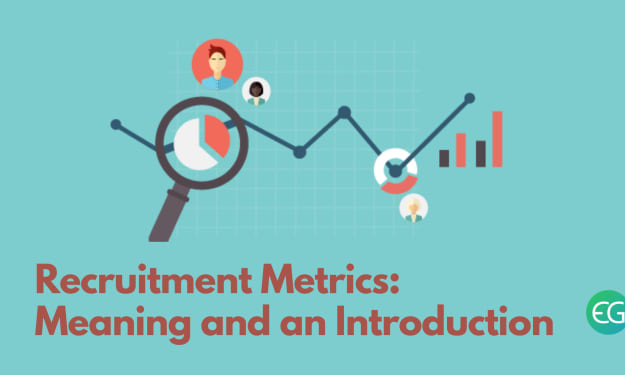
Recruitment Metrics: Meaning and an Introduction
Recruiting metrics are estimations used to track hiring achievement and success and optimize the method of hiring candidates for an association. When used accurately, these metrics help to assess the recruiting procedure and whether the company is hiring the right people. Recruiting metrics refer to estimates used to assemble, analyze, and monitor hiring success and optimize the hiring process in order to make better-informed decisions and gain a good return on investment.
By mayank kejriwal2 years ago in 01
Understanding Morris II
Introduction: Unveiling Morris II Morris II is a new mystery that has emerged in the maze-like field of cybersecurity, where digital sentinels serve as resilient defenses against the never-ending flood of new dangers. This sneaky AI virus poses a serious threat to the security and integrity of systems powered by ChatGPT and Gemini. It is similar to a phantom hiding in the deepest corners of the internet.
By Vinamra Yadav2 years ago in 01
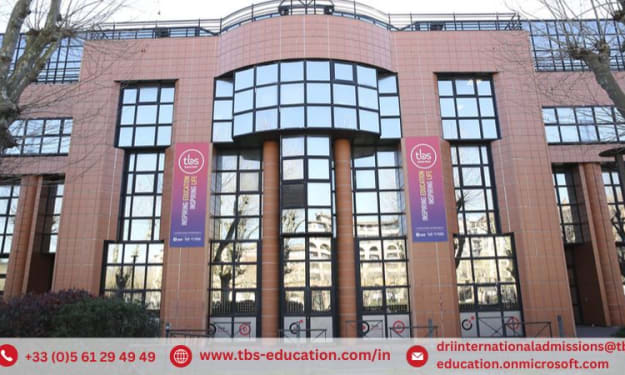
Why you should study at the Best business school in France
France is a popular study location for prospective business students searching for a flexible, high-quality education situated in Western Europe, since it is home to 11 of the world's finest business schools, according to the QS Global MBA Rankings. We chatted with some of France's Best Business School in France to find out more about the advantages of studying there, especially at their business school.
By tbs education2 years ago in 01