future
Explore the next frontier of tech innovation, and imagine our society in the near and far future.
The Barcode Breakthrough: The History of a Game-Changing Invention
On June 26, 1974, a checkout worker at a Bog general store in Troy, Ohio got to be the to begin with individual to check a basic supply item—a pack of Wrigley’s Delicious Natural product chewing gum—using a Widespread Item Code (UPC). Superior known as a standardized tag, UPCs before long got to be omnipresent, utilized all over from basic need and retail stores to healing centers and Damages wanderers.
By Shams Says2 years ago in 01
Talent Analytics: Attrition Rate, Meaning and Tips to Improve It - Recruiter's blog
Employee attrition is the decrease of staff when employees leave the association and their replacement is not found yet. So would you be able to see the similarity between the meaning of the word attrition and employee attrition per se?
By mayank kejriwal2 years ago in 01
Encrypted digital currencies
Increased Adoption and Mainstream Usage Digital currencies have transitioned from niche technological novelties to a burgeoning mainstream financial instrument. Bitcoin, Ethereum, and other cryptocurrencies are increasingly utilized for everyday transactions, investments, and even cross-border payments. Astute market leaders, including Tesla and Paypal, have exposed cryptocurrency to a broader audience by accepting digital currencies as legitimate forms of payment. As more consumers and businesses adopt these digital currencies, the traditional financial landscape continues to evolve, paving the way for a decentralized monetary system. Advancements in Encryption Technology Encryption technology plays a pivotal role in ensuring the security and integrity of digital currencies. Innovations in cryptographic techniques, particularly those associated with public and private key pairs, have significantly bolstered the robustness of digital transactions against fraud and hacking. Furthermore, advancements such as zk-SNARKs (zero-knowledge succinct non-interactive arguments of knowledge) and homomorphic encryption offer enhanced privacy features, giving users greater confidence in the confidentiality of their transactions. Rise of Decentralized Finance (DeFi) Decentralized finance, or DeFi, has revolutionized the financial sector by providing decentralized alternatives to conventional banking services. Through blockchain technology and smart contracts, DeFi eliminates intermediaries, offering users direct access to financial services like lending, borrowing, and trading. This rise of DeFi platforms not only democratizes access to financial tools but also reduces costs and improves efficiency, driving further interest and participation in the digital currency ecosystem. Benefits of Encrypted Digital Currencies Enhanced Security and Privacy The inherent design of digital currencies provides enhanced security and privacy that traditional financial systems often lack. Cryptographic methods ensure that transactions are immutable and securely recorded on the blockchain, effectively preventing unauthorized access and fraudulent activities. Additionally, privacy-focused cryptocurrencies like Monero and ZCash employ advanced cryptographic techniques to protect user identities, making it challenging to trace transactions. Reduced Transaction Costs and Time Traditional financial transactions, particularly international ones, can involve significant fees and delays. Digital currencies streamline this process by facilitating peer-to-peer transactions without the need for intermediaries. Consequently, transaction costs are considerably reduced, and payments are executed almost instantaneously. This efficiency opens up new possibilities for global commerce, particularly for small businesses and individuals who can now access cost-effective and expedited financial services. Financial Inclusion for the Unbanked A significant portion of the global population remains unbanked, primarily due to the lack of access to traditional banking services. Digital currencies offer a viable solution by providing a decentralized platform that requires only internet access. This financial inclusivity allows individuals in underserved regions to engage in economic activities, save, and invest their earnings securely. Moreover, the flexibility and accessibility offered by digital currencies can empower these individuals, driving economic growth and reducing poverty. Challenges and Risks in the Digital Currency Landscape Regulatory and Legal Hurdles The rapid proliferation of digital currencies has outpaced regulatory frameworks, leading to uncertainties and legal challenges. Governments around the world are grappling with how to classify and regulate these assets, ranging from outright bans to supportive legislative measures. The lack of a unified regulatory approach creates confusion and limits the potential for cross-border digital currency integration. Establishing clear, consistent regulations is essential for fostering innovation while protecting consumers and financial stability. Vulnerabilities to Cyber Attacks Despite their robust encryption, digital currencies remain vulnerable to cyber-attacks. High-profile cases of exchange hacks and ransomware attacks have raised legitimate concerns about the security of these digital assets. As cyber threats continue to evolve, the digital currency ecosystem must continuously innovate and enhance its security measures to safeguard against sophisticated cyber-attacks. Users and platforms alike must adopt comprehensive security practices to mitigate risks. Market Volatility and Economic Implications The volatile nature of digital currencies poses significant challenges for their adoption as stable financial instruments. Price fluctuations can be drastic, driven by market speculation, regulatory news, and macroeconomic factors. This volatility complicates their use as a reliable medium of exchange or store of value. Furthermore, the integration of digital currencies into the global economy remains uncertain, potentially disrupting traditional financial markets and economic stability. The Role of Governments and Regulations Approach to Digital Currency Regulations Governments worldwide are adopting varying approaches to regulate digital currencies. Some countries embrace the technology, crafting supportive regulations to foster innovation and economic growth. Others adopt more conservative stances, imposing stricter regulations to prevent illicit activities and financial instability. A balanced regulatory approach is crucial, one that encourages technological advancement while addressing concerns about security, fraud, and market manipulation. Central Bank Digital Currencies (CBDCs) Central banks are exploring the development of their own digital currencies, known as Central Bank Digital Currencies (CBDCs). These state-backed digital currencies aim to combine the benefits of digital currency technology with the stability of traditional fiat currency. By issuing CBDCs, central banks can offer a secure and efficient payment system, enhance monetary policy implementation, and provide an alternative to decentralized digital currencies. The successful implementation of CBDCs holds the potential to reshape the global financial landscape. Balancing Innovation with Regulation Striking a balance between fostering innovation and implementing effective regulation is essential for the sustainable growth of digital currencies. Over-regulation could stifle technological progress and hinder economic opportunities, while insufficient regulation might lead to financial instability and security risks. Policymakers must collaborate with industry stakeholders to develop frameworks that encourage innovation while safeguarding users and maintaining market integrity. Future Innovations in Digital Currency Technology Development of Quantum-Resistant Encryption As quantum computing technology advances, it poses a potential threat to current encryption methods used in digital currencies. Developing quantum-resistant encryption algorithms is critical to ensuring the long-term security of digital assets. Researchers are actively exploring cryptographic techniques that can withstand the computational power of quantum computers, ensuring that digital currencies remain secure and viable in the future. Integration with Internet of Things (IoT) The integration of digital currencies with the Internet of Things (IoT) holds promising potential. IoT devices can autonomously execute and verify financial transactions using digital currencies, enabling a seamless and automated economy. For instance, smart appliances could automatically pay for services, and supply chain processes could be streamlined with real-time payments and tracking. This convergence of technologies could revolutionize various industries by enhancing efficiency and reducing transaction friction. Smart Contracts and Programmable Money Smart contracts, self-executing contracts with the terms directly written into code, are a hallmark of blockchain technology. These programmable contracts enable automated, trustless transactions, reducing the need for intermediaries and minimizing the risk of human error. The ability to program money opens up new possibilities for decentralized applications, from automated payment systems to complex financial derivatives, further expanding the utility and appeal of digital currencies. Social and Economic Impacts of Digital Currencies Redistribution of Economic Power Digital currencies have the potential to redistribute economic power by reducing reliance on centralized financial institutions. Individuals gain greater control over their finances, bypassing traditional intermediaries and potentially reducing income inequality. The decentralized nature of digital currencies empowers users, particularly those in underserved regions, to participate more actively in the global economy. Changes in Global Financial Systems The widespread adoption of digital currencies could lead to significant changes in global financial systems. Traditional banking and financial institutions may need to adapt their services and infrastructure to accommodate the growing demand for digital currency transactions. Additionally, cross-border payment systems and international trade could become more efficient and less dependent on conventional currencies, altering the dynamics of global economic interactions. Impact on Traditional Banking Institutions The rise of digital currencies presents both challenges and opportunities for traditional banking institutions. Banks may need to innovate and integrate digital currency services to remain competitive, while also addressing the regulatory and security concerns associated with these assets. The financial industry may see a shift towards more decentralized and automated systems, prompting banks to evolve their business models and explore new revenue streams. In conclusion, the future of encrypted digital currencies holds immense promise, marked by rapid advancements, regulatory considerations, and transformative social and economic impacts. By navigating the complexities and embracing the opportunities presented by digital currencies, society can unlock a new era of financial innovation and inclusivity.
By Wajd Mohamed2 years ago in 01
Electronic chip technology: The amazing future
Invention of the Transistor The journey of electronic chip technology began with the invention of the transistor in 1947 by John Bardeen, Walter Brattain, and William Shockley at Bell Labs. This breakthrough replaced vacuum tubes, offering a smaller, more energy-efficient, and reliable component essential for amplifiers and switches. The transistor set the stage for subsequent advancements in electronic circuitry. Introduction of Integrated Circuits Integrated circuits (ICs), conceived by Jack Kilby at Texas Instruments and Robert Noyce at Fairchild Semiconductor around 1958-1959, revolutionized electronic design by combining multiple transistors onto a single chip. This miniaturization enabled more complex functionalities in a compact form, drastically reducing size and cost while improving performance and reliability. Advancements in Semiconductor Materials Early semiconductor materials, primarily germanium, were soon supplemented and then largely replaced by silicon. Silicon's superior electronic properties, such as its ability to maintain semiconductor behavior over a wide range of temperatures, and the development of silicon dioxide (SiO2) as an effective insulator, made it the material of choice. This shift was crucial in the mass production of reliable and efficient chips. The Impact of Moore's Law Predicting the Number of Transistors Gordon Moore, co-founder of Intel, in his 1965 paper, observed that the number of transistors on a chip doubled approximately every two years, leading to what is now known as Moore's Law. This empirical prediction highlighted the exponential growth in computing power, guiding the semiconductor industry's expectations and roadmaps for future advancements. Influence on Design and Manufacturing Moore's Law significantly influenced how electronic chips were designed and manufactured. As transistor counts soared, design optimization and manufacturing precision became critical. This led to innovations in computer-aided design (CAD) tools, semiconductor fabrication techniques, and error detection methods to maintain quality. Challenges in Upholding Moore's Law Despite its historical accuracy, Moore's Law faces significant challenges as transistors near atomic scales, causing issues such as quantum tunneling and heat dissipation. The physical limitations of miniaturization push the industry to explore alternative materials, new transistor architectures, and unconventional computing paradigms to sustain growth. Key Innovations in Chip Architecture Development of Microprocessors The microprocessor, introduced in the early 1970s, was a pivotal innovation. The Intel 4004, for instance, integrated the functions of a CPU onto a single chip, enabling computers to become more compact and affordable. It spearheaded the development of personal computing by drastically improving processing capabilities within a smaller footprint. Evolution to Multi-Core Processors As single-core processors reached their performance limits due to heat and power constraints, the industry transitioned to multi-core processors. By placing multiple cores on a single chip, computational tasks could be parallelized, enhancing performance and efficiency in handling complex workloads and multitasking. Emergence of System-on-Chip (SoC) The System-on-Chip (SoC) represents another leap in chip architecture, integrating all necessary components—CPU, GPU, memory, and more—onto a single chip. SoCs power a wide range of devices, from smartphones to embedded systems, by providing comprehensive, energy-efficient solutions that optimize performance and functionality. Advances in Fabrication and Miniaturization Photolithography Techniques Photolithography, the process of using light to pattern semiconductor materials, has been the cornerstone of chip fabrication. Innovations in this technique, such as deep ultraviolet (DUV) and extreme ultraviolet (EUV) lithography, have enabled the creation of finer patterns, allowing for more transistors in a given area and thus increased chip performance. Progress in Nanotechnology Nanotechnology has opened new frontiers in chip fabrication. Techniques like atomic layer deposition (ALD) and nanoprinting have allowed for unprecedented precision in material placement at the nanoscale, resulting in more efficient transistors and circuits. This advancement supports the continued miniaturization of electronic components. 3D Chip Stacking and Packaging 3D chip stacking and advanced packaging technologies have emerged as solutions to overcome the limitations of traditional planar designs. By vertically integrating multiple layers of chips, these techniques improve data transfer speeds and reduce latencies while conserving space and enhancing overall performance. Applications and Global Impact Usage in Consumer Electronics Electronic chip technology is ubiquitous in consumer electronics, driving the functionality of smartphones, tablets, and wearable devices. These chips enable powerful computing capabilities, multimedia processing, and connectivity, significantly shaping modern lifestyles and consumer behaviors. Contribution to Telecommunications In telecommunications, chips facilitate everything from base stations to user devices. The rapid advancements in wireless technology, including 5G networks, are heavily reliant on sophisticated chips that handle complex signal processing, data transmission, and reception, thus revolutionizing global communication infrastructures. Role in Computing and Data Centers Chips are the backbone of computing and data center operations, powering servers, storage solutions, and networking equipment. They support vast computational tasks, enable efficient data processing and management, and are critical for the functioning of the internet, cloud services, and big data analytics. Future Trends in Electronic Chip Technology Potential of Quantum Computing Quantum computing represents a paradigm shift with the potential to surpass classical computing's limitations. By leveraging quantum bits (qubits) and principles of quantum mechanics, quantum chips could perform complex calculations at unprecedented speeds, solving problems currently beyond the reach of conventional computers. Rise of Artificial Intelligence Chips The emergence of artificial intelligence (AI) and machine learning has driven the development of specialized AI chips. These chips, optimized for parallel processing and executing neural network computations, are crucial for advancing AI applications, from autonomous vehicles to sophisticated data analytics and decision-making systems. Environmental and Economic Considerations As chip technology advances, environmental and economic considerations become increasingly important. Sustainable manufacturing practices, efficient energy usage, and recycling programs for electronic waste are essential to mitigate the environmental impact. Economically, the industry faces challenges in balancing innovation with cost, accessibility, and ethical practices. Through continual innovation, electronic chip technology fundamentally transforms various domains, driving progress and connectivity in the modern world.
By Wajd Mohamed2 years ago in 01
South Korea Faces a Democratic Reckoning Amid Martial Law Chaos
South Korea Faces a Democratic Reckoning Amid Martial Law Chaos South Korea, a nation known for its vibrant democracy and rapid economic growth, is grappling with a political crisis that has left citizens shocked and angered. Recent attempts to impose martial law by President Yoon Suk-yeol have sparked public outcry, bringing the resilience of South Korea's democratic fabric into question. This article examines the unfolding situation, its impact on citizens, and the broader implications for South Korea's global standing.
By Mahamad Samiullah Kha2 years ago in 01
Beyond the Hype: Is South Korea Ready for an Innovation Revival?
South Korea’s notoriety as a driving trend-setter is beneath danger. In a benchmarking report discharged by the country’s Service of Science and ICT in February, South Korea had slipped behind China in science and innovation improvement for the to begin with time. The report dissected investigate papers, licenses and master studies in 11 innovation regions, counting data and communications innovation, protection and nanoscience.
By Shams Says2 years ago in 01
Inspiration Without Action: How Women in Tech Need More Than Words
Bunches supporting ladies in science, innovation, building and maths (Stem) areas are battling to survive as corporations’ contracting budgets, and social changes, see differences techniques take a back seat.
By Shams Says2 years ago in 01
Gas Heater vs. Electric Heater: Which Option is Better for Your Home?
When the cold begins to set in and your home feels like an icebox, finding the right heating solution is more than just a decision—it's a necessity. The classic showdown between a Gas Heater and an electric heater has puzzled many homeowners. Let's explore their strengths and differences to help you find what works best for your needs, comfort, and budget.
By The Appliance Guys2 years ago in 01
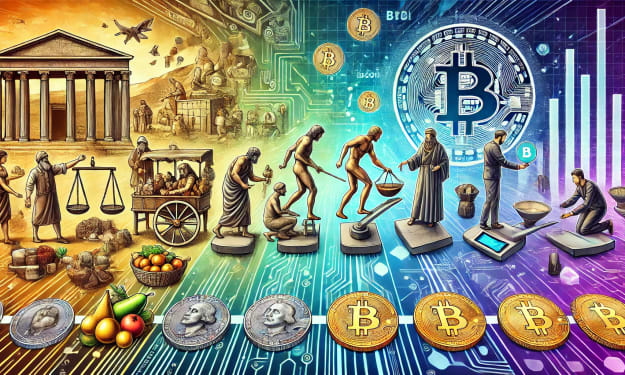
The Evolution of Currency: From Barter to Bitcoin
Paper Money: Revolutionising Trade and Commerce Money has always been a pivotal part of human civilization, from bartering to complex financial systems. Understanding this evolution helps us better appreciate the current monetary landscape and predict the future of currency. This blog follows the interesting journey of currency and its origins, key transformations, and emerging digital currencies that shape our economy today. How to Make Money with Redotpay Referral Bonus: A Step-by-Step Guide
By denizan Lawyer2 years ago in 01