future
Explore the next frontier of tech innovation, and imagine our society in the near and far future.
A Guide on Top Features to Look for When Investing in a Disc Golf Backpack!
Well, that's the common question that many people. Being a beginner stepping up to the first round, you may have shown up equipped with just a starter set of discs, a good pair of shoes, and a water bottle. But as the rounds, the courses, and the gear start accumulating, having a high-quality disc golf bag becomes really important.
By Disc Store2 years ago in 01
Why Hiring Managers Should Use Psychometric Test Online?
The word psychometric basically refers to the measurement of the mind. Unlike facets such as education, skills, experience, appearance and punctuality, the behavioral traits and personality of a candidate can be much more difficult to assess during an interview.
By mayank kejriwal2 years ago in 01
"Engineering Innovation: Turning Ideas into Reality"
Introduction In the world of product development, turning an idea into a fully-functional, market-ready product requires more than just creativity—it requires precision, technical expertise, and careful execution. This is where product engineering services come in. These services cover everything from conceptualizing and designing the product to ensuring its integration, performance, and scalability.
By andrew smith2 years ago in 01
Budget 2025: Key Terms You Must Know
The annual budget is one of the most anticipated financial events, shaping a country’s economic policies, taxation, and overall financial landscape. The Budget 2025 introduces new policies, tax reforms, and fiscal strategies that influence businesses, individuals, and investors alike. To better understand its implications, it's crucial to familiarize yourself with key budgetary terms. In this blog, we’ll break down the most important financial terms you need to know to make sense of Budget 2025. 1. Fiscal Deficit The fiscal deficit is the difference between the government's total expenditure and its total revenue (excluding borrowings). A high fiscal deficit indicates that the government is spending more than it earns, which may lead to borrowing or increased taxation to balance the budget. Why it matters? A rising fiscal deficit can affect inflation, interest rates, and overall economic growth. 2. Revenue Deficit The revenue deficit occurs when the government’s total revenue receipts are lower than its total revenue expenditure. This means the government is spending more on operational expenses than it earns through taxes and other sources. Why it matters? A high revenue deficit signals inefficient public finances and can lead to higher borrowings. 3. Capital Expenditure Capital expenditure (CapEx) refers to government spending on infrastructure, development projects, and long-term investments such as roads, bridges, railways, and digital infrastructure. Why it matters? Increased capital expenditure boosts economic growth by creating jobs and improving public services. 4. Direct and Indirect Taxes Direct Taxes: These are taxes imposed directly on individuals and businesses, such as income tax and corporate tax. Indirect Taxes: These are levied on goods and services, such as GST (Goods and Services Tax) and excise duty. Why it matters? Changes in direct and indirect taxes can impact personal savings, corporate profits, and consumer spending. 5. Inflation and Consumer Price Index (CPI) Inflation refers to the rate at which the general level of prices for goods and services rises, reducing purchasing power. The Consumer Price Index (CPI) is used to measure inflation by tracking the price changes of essential goods and services. Why it matters? High inflation reduces the value of money and affects the cost of living. Budget policies aim to control inflation through fiscal measures. 6. Subsidies Subsidies are financial support provided by the government to sectors like agriculture, energy, and education to make essential goods and services more affordable. Common subsidies include fuel subsidies, food subsidies, and fertilizer subsidies. Why it matters? While subsidies help lower costs for consumers, excessive subsidies can strain government finances. 7. Disinvestment Disinvestment refers to the government's strategy of selling its stake in public sector enterprises (PSUs) to raise funds. It is a tool used to reduce fiscal deficits and encourage private sector participation. Why it matters? Disinvestment can improve efficiency in public sector enterprises and reduce the financial burden on the government. 8. Public Debt and Borrowings Public debt consists of money borrowed by the government to finance expenditures when revenues are insufficient. Borrowings can be domestic (from banks and the public) or international (from foreign institutions). Why it matters? Excessive public debt can lead to higher interest payments and economic instability. 9. GST Reforms Goods and Services Tax (GST) reforms aim to simplify tax structures, reduce tax evasion, and enhance tax compliance. Budget 2025 may introduce new GST rates, exemptions, or procedural changes. Why it matters? Any change in GST rates affects business costs, product pricing, and overall market dynamics. 10. Income Tax Slabs and Deductions Income tax slabs define the tax rates applicable to different income groups. The budget may introduce changes in tax slabs, standard deductions, exemptions, or rebates. Why it matters? Changes in tax slabs can impact disposable income, savings, and overall consumer spending. 11. Digital Economy and Fintech Initiatives With the rise of digital transactions, governments are focusing on fintech innovations, digital payments, and cryptocurrency regulations. The budget may allocate funds to cybersecurity, financial inclusion, and digital banking initiatives. Why it matters? A strong digital economy promotes transparency, efficiency, and financial accessibility. 12. Green Economy and Climate Finance Governments worldwide are increasing their focus on sustainability. Budget 2025 may introduce policies supporting renewable energy, carbon credits, electric vehicles (EVs), and climate adaptation funds. Why it matters? Investments in a green economy drive sustainable development and reduce environmental damage. Conclusion Understanding these key budgetary terms will help you navigate the financial landscape of Budget 2025 with confidence. Whether you're an individual taxpayer, a business owner, or an investor, keeping track of budget changes can help you make informed financial decisions. Stay tuned for in-depth analysis and updates on how Budget 2025 will shape the economy and affect your financial future!
By INFO INSIDER 2 years ago in 01
Revolutionizing Healthcare with Remote Patient Monitoring Software
In the ever-evolving landscape of healthcare, patient engagement and relationship management have become pivotal for delivering high-quality care and ensuring patient satisfaction. Healthcare CRM Software development stands at the forefront of this transformation, providing healthcare organizations with the tools they need to manage patient interactions, streamline operations, and enhance overall service delivery. This article delves into the significance of Healthcare CRM software, its key features, benefits, challenges, best practices, and future trends shaping the industry.
By Stephan Hawke2 years ago in 01
Elliot Sohayegh: Innovating Multifamily Investments with Focus on Apartments and Multi-Unit Properties
As the multifamily investment landscape continues to evolve, few individuals have made as significant an impact as Elliot Sohayegh. Known for his strategic approach to real estate, Sohayegh has become a leader in the multifamily sector, focusing primarily on apartment buildings and multi-unit properties. With a keen understanding of market dynamics, he has successfully built a strong portfolio that showcases his commitment to long-term growth, value creation, and sustainable investments.
By Elliot Sohayegh2 years ago in 01
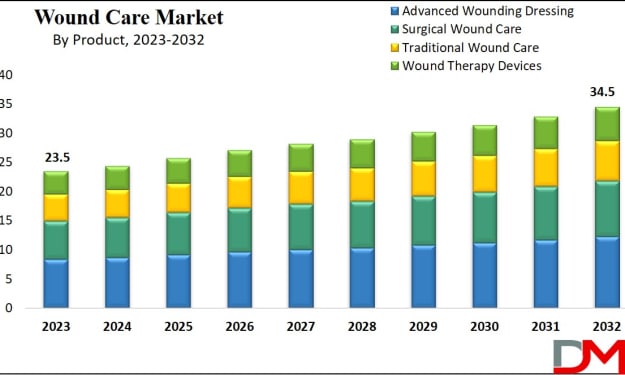
Global Wound Care Market Analysis: Trends, Innovations, and 2024 Forecast Study
Global Wound Care Market: An In-Depth Analysis and Future Outlook The global healthcare industry continues to evolve with advancements in medical technologies, leading to improved outcomes in various sectors. One of the most vital segments of this industry is wound care, which is experiencing significant growth due to factors such as an aging population, rising incidences of chronic diseases, and innovations in wound healing products. The global wound care market has seen substantial growth and is poised for further expansion, driven by these dynamics.
By Ajay kumar2 years ago in 01
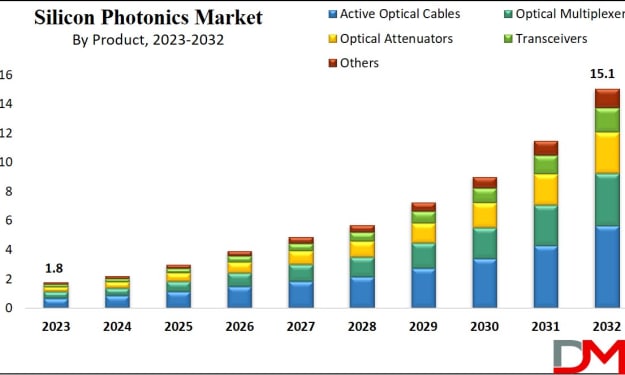
Global Silicon Photonics Market | Insights: Trends, Innovation Future Projections Rising Growth Business Analysis And 2024 Forecast
The Global Silicon Photonics Market: Current Trends and Future Growth The Global Silicon Photonics Market is on an impressive growth trajectory. Expected to be valued at USD 1.8 billion in 2023, the market is forecasted to soar to USD 15.1 billion by 2032, marking a compound annual growth rate (CAGR) of 26.7%. This meteoric rise can be attributed to the increasing demand for high-speed data transmission and the ongoing advancements in technologies like 5G, quantum computing, and artificial intelligence (AI).
By Ajay kumar2 years ago in 01
How Do Concierge Doctors Handle Food Poisoning Cases?
Concierge doctors in San Francisco specialise in delivering personalised and immediate medical care, particularly for ailments like food poisoning. Unlike traditional healthcare models, these internal medicine doctors emphasise convenience and patient-centred solutions by offering house calls and telemedicine options. With their expertise, they can address food poisoning cases efficiently, ensuring swift recovery and preventing complications.
By jilli Smith2 years ago in 01