
Sheathed Wings
Six years after going dark on the global stage, Huawei returns with an inward‑folding tri‑fold, an Agent‑driven OS, and a record‑breaking R&D war chest—proving that the toughest constraints breed the most radical engineering.
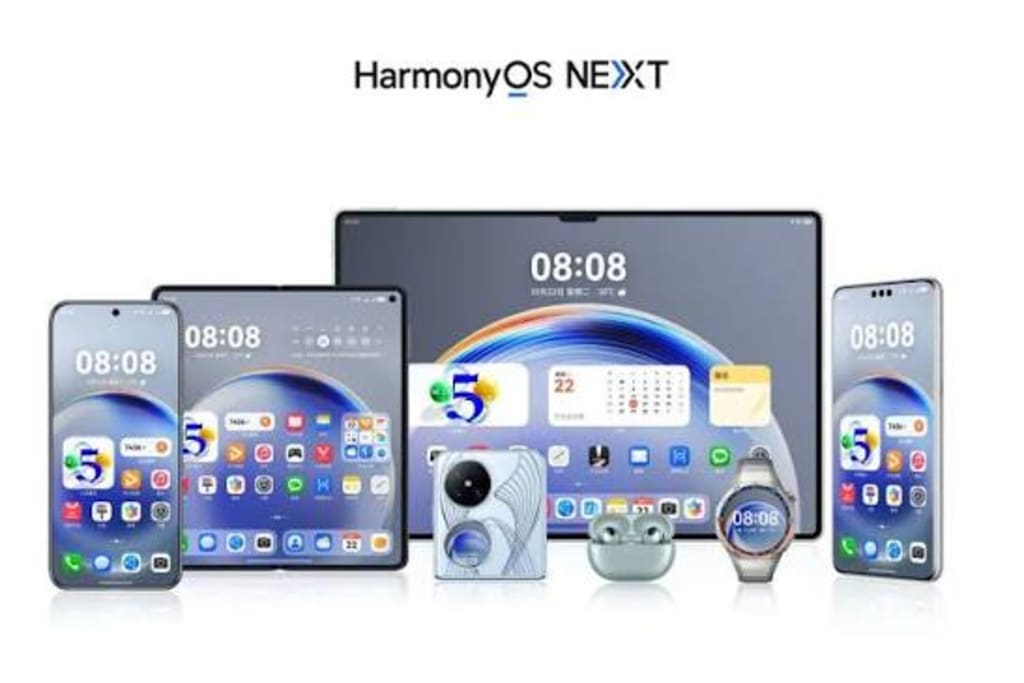
Six years is an eternity in consumer technology. In 2020, Huawei took the global stage for the Mate 40 series. Then, the world shifted. Sanctions hit, overseas markets slipped away, and the company went quiet on the international front—retreating to its home turf, licking its wounds, and recalibrating.
On September 7, 2026, at exactly 14:30 Beijing time, the silence broke. Huawei beamed its autumn product launch across five major overseas platforms—X, Facebook, LinkedIn, TikTok, and YouTube. The chatrooms flooded with surprised emoticons. Western tech pundits scrambled to cover it.
But if you were watching closely, the hype wasn't the real story. The real story was the order in which Huawei played its cards—and the quiet, magnetic click of the hinge they unveiled at the very end.
The Awakening of the Digital Butler
HarmonyOS 7 had technically been announced back in June at Huawei’s developer conference. But a developer announcement is for coders; a consumer launch is for the rest of us.
The previous versions of HarmonyOS (4 through 6) were obsessed with connectivity—getting your watch to talk to your car, or your phone to cast to your TV. HarmonyOS 7 changes the game entirely. It abandons the "container of apps" model and pivots to an "intent-first" system.
Here’s what that actually means: Your phone stops being a toolbox and starts being a butler.
During the keynote, He Gang gave two quietly revolutionary demonstrations. In the first, he told his phone he was training for a marathon. Xiao Yi (Huawei’s voice assistant) didn't just pull up a running app. It scavenged his health data, scanned his calendar for free time, analyzed his past training logs, and generated a bespoke workout plan—automatically slotting it into his schedule.
In the second, he stepped outside his office and asked his phone to retrieve a document from his home PC, which was sitting closed and asleep on his desk. Xiao Yi reached across the internet, woke the machine up, located the file, and fired it over.
These aren't flashy parlor tricks. They are the culmination of the HarmonyOS Agent Framework 2.0, which now boasts a complex-task success rate above 90%. For the first time, Huawei is opening system-level AI manipulation to third-party developers. This means an app can actually operate the phone on your behalf, rather than just pushing notifications.
Most other operating systems treat AI as a cool add-on. Huawei has embedded it into the very fabric of the device. When AI becomes a system property, the entire ecosystem changes—and that change was palpable on stage.
The Fold That Flips the Formula
The Mate XT 2 was the main event. But to understand its brilliance, you have to understand its flaw. The first-generation Mate XT used an S-fold design—essentially, the screen wrapped around the outside. It looked futuristic, but it was fragile. An exposed screen on a $2,000 device is a heart attack waiting to happen.
Huawei took a scalpel to its own creation. The Mate XT 2 adopts a radical U-shaped dual inward fold. Both sides fold inward, tucking the delicate main screen safely inside the chassis. To address the obvious issue of not being able to see anything when it's shut, they added a separate external OLED display.
The Chinese tagline translates loosely to: "Folded, it sheathes its wings; unfolded, it soars." It’s poetic, but it’s also a brutally practical distinction between the device’s two states.
Let’s get the horsepower out of the way, because the specs are staggering: a 3nm-class Kirin 9050 Pro chip utilizing "logic folding" technology for a 53.5% higher transistor density; a 6,500 mAh battery (up from 5,600); a 200-megapixel main sensor; and a starting storage of 16GB + 512GB (the 256GB entry-level is dead). Colors include Obsidian Black, Pure White, and a stunning Brocade Purple.
But the feature that stopped me cold wasn't the camera or the battery. It was the Lingdun Privacy Screen.
On the premium configurations (16GB + 1TB / 2TB), Huawei has embedded a hardware-level filter that controls the direction of light from individual RGB sub-pixels. Head-on, the screen is vibrant and full-color. Look at it from a 45-degree angle? It's pure black.
This isn't a gimmick. It’s a targeted bullet for a specific user. Huawei knows exactly who is buying a three-fold device: high-net-worth professionals shuttling through airports, train stations, and high-rise conference rooms. They aren't scrolling TikTok; they are reviewing contracts, reading sensitive emails, or parsing financial data. For them, privacy isn't a preference—it's a non-negotiable demand. At a rumored price tag exceeding $3,000 for the top trim, Huawei isn't selling a phone. They are selling a fortress.
The Ecosystem: Not Just a Login, but a Brain
Alongside the marquee phone, Huawei rolled out the Pura X Max (a clamshell fold with a new Bordeaux Red), the fully ceramic WATCH 6 Pro (which completes 14 health metrics in 60 seconds), the impossibly light FreeBuds 7 Yuezhang (4.3 grams, with 48kHz Hi-Fi lossless audio), and the MatePad Air.
On paper, it looks like any other ecosystem. But the difference is glue. In most ecosystems, devices are connected via a login. In Huawei’s world, they are connected via a single agent. Xiao Yi doesn't care if you are talking to the watch, the tablet, or the phone. The agent follows you, remembers your context, and acts across the boundaries of hardware. This isn't just synergy; it's a single organism.
The Mathematics of Survival: 467.8 Billion and 121.3 Billion
A week before the launch, Huawei dropped its first-half financials. The top line was stellar: Revenue hit RMB 467.8 billion—an all-time high, marking a full recovery to pre-sanction 2020 levels. In China, they hold a 20.6% smartphone market share, shipping 27.6 million units.
But the number that deserves a second look is the R&D spend: RMB 121.3 billion.
That is a 25.2% increase year-on-year, accounting for nearly 26% of total revenue. For every 100 RMB Huawei earns, they put 26 RMB right back into the furnace—chips, Ascend AI, operating systems, and autonomous driving. The trade-off is brutal: net profit tanked 36% to RMB 23.8 billion.
You don't spend $121 billion on R&D if you want a good quarterly earnings call. You spend that much because you are fighting for survival on a geological timescale. Every single product showcased on September 7—the U-fold, the Kirin 9050, the privacy matrix, the Agent Framework—is a physical manifestation of that 121.3 billion RMB. Without that investment, the livestream would have been a rerun.
The Chessboard: Three Kingdoms, Three Paths
Between September 7 and 10, 2026, the foldable market saw its most congested launch window in history:
Sept 7, 14:30 – Huawei Mate XT 2 (Extreme three-fold).
Sept 7, 19:00 – Xiaomi 18 Fold (A "mid-fold" productivity device).
Sept 10, 01:00 – Apple's first-ever foldable iPhone.
It’s a study in strategy. Huawei is pushing the boundaries of luxury and form-factor extremity; Xiaomi is aiming for the pragmatic sweet spot; Apple is entering to legitimize the category. Counterpoint projects Samsung's share will drop from 40% to 32%, while Apple captures 25% in its first year, and Huawei holds steady at 24% globally (and a commanding 60% in China).
The industry pie is actually shrinking—Omdia reported a 21.6% drop in global foldable shipments in H1 2026. But the premium slice of that pie is growing. Huawei and Xiaomi betting their most expensive phones on the same day is a calculated response to market contraction: premiumization as a defense mechanism.
The Sound of Resilience
Four things linger with me after writing this piece.
First, the time. Six years of 5G absence in overseas markets. Six years is long enough to forget a brand. Yet they returned, not with a land-grab, but with a patient build in Southern Europe, the Middle East, and Southeast Asia.
Second, the hinge. Huawei invented the S-fold, owned it for two generations, and then willingly killed it. In the tech world, cannibalizing your own golden standard speaks more to a company's engine than simply setting the standard in the first place.
Third, the targeting. The privacy screen. The 3,500-nit ceramic watch. These aren't mass-market features. They show that Huawei knows exactly where its three-fold users are, what they fear, and what they value. At that level, you aren't competing; you are serving a specific social class.
Fourth, the sacrifice. RMB 121.3 billion in R&D while net profit dives. That is the behavior of a company that doesn't care about looking pretty at a launch event.
The keynote ended with the presenter folding the Mate XT 2 shut. There was a soft, magnetic snap—a sound of finality. For a company that spent half a decade on the ropes, that snap wasn't an ending. It was a rebirth.
Six years of sanctions, billions in research, and a completely redesigned hinge. When the outside world pushes hardest, the question is always: What do you have left to put on the table?
For Huawei, the answer was clear: Everything.
About the Creator
Jin
Writer of reamstories
https://reamstories.com/jin
Enjoyed the story? Support the Creator.
Subscribe for free to receive all their stories in your feed. You could also become a paid subscriber, letting them know you appreciate their work.
Comments
There are no comments for this story
Be the first to respond and start the conversation.