
Huawei’s ‘Xingmang’ Rumor: The Mid-Range Comeback Nobody Saw Coming
A six-year trademark trail, a chip bottleneck that finally broke, and the 2,000-yuan market Huawei can’t afford to lose.
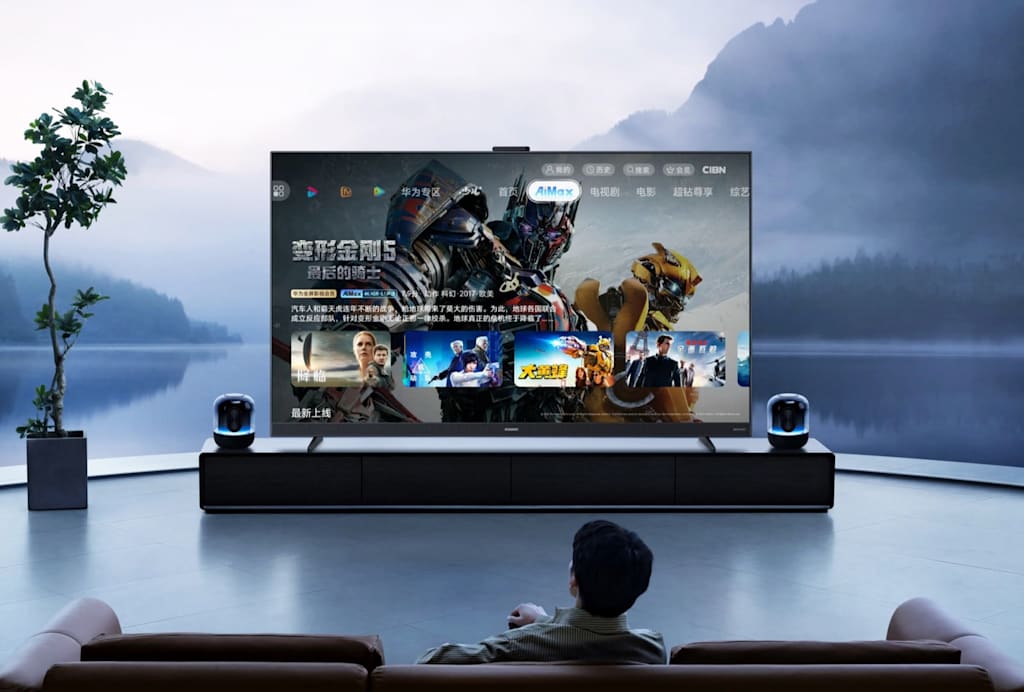
On October 11, 2026, “Huawei to launch sub-brand Xingmang” trended on Weibo. Several tech bloggers claimed Huawei would launch a new phone sub-brand called Xingmang (星芒, “Starlight”). They said it would target the 1,799 to 4,000 yuan mid-range market, much like early Honor. The first model was expected in November, with a Kirin 8-series chip, native HarmonyOS, and XMAGE imaging. Satellite communication would be removed. The pitch: a cheaper way to get Kirin and HarmonyOS.
Huawei’s response came within a day: “Please refer to official information.”
That answer neither confirms nor denies the rumor. It matches how Huawei usually handles unannounced products. But the rumor did not appear from nowhere. It sits at the meeting point of a six-year trademark effort and a strategic gap Huawei can no longer ignore.
1. The trademarks are already in place. Why has the sub-brand not arrived?
Tianyancha data shows Huawei has applied for several “Xingmang” and “Huawei Xingmang” trademarks. They cover classes such as advertising and sales, jewelry and watches, and website services. Some are registered. The timeline matters more. The earliest application dates to April 8, 2019. The latest this year is still waiting for substantive examination.
Trademark registration No. 93069405 belongs to Class 9. It covers laptops, smartphones, smartwatches, smart glasses, earphones, and chips. That is not a casual filing. It is a hardware matrix.
But a trademark is not a product. Huawei has also registered “Xingyao Phone,” “Xingyao Edition,” “New Star,” and “Supernova.” None have shipped. In early 2024, Yicai reported Huawei had registered “Xingyao Phone” for the mid-range market. Huawei did not confirm it. In September this year, another rumor said “Xingyao” would arrive as early as November. Huawei terminal customer service again said it had not verified the information.
Trademarks can be defensive. They can also be strategic reserves. The question is whether Huawei can now turn one into a product.
2. Chip capacity made this possible
On March 23, 2026, at Huawei’s spring launch event, one detail slipped past most people. The Enjoy 90 Pro Max ran the Kirin 8000 and HarmonyOS 6. The Enjoy 90 series started at 1,299 yuan. For the first time, Kirin chips reached thousand-yuan models across the line.
That showed Kirin capacity could support larger entry-level shipments. The Kirin 9030 debuted in the Mate 80 series. The Kirin 9020 went into the Pura 80. The Kirin 8020 went into the nova 15. The Kirin 8000 went into the Enjoy 90. Kirin moved from ten-thousand-yuan flagships down to thousand-yuan phones. The ramp-up was complete.
In 2020, TSMC stopped making chips for Huawei under U.S. restrictions. The Kirin 9000 became the last of its line. Huawei’s phone business fell from second worldwide to ninth. Honor was sold. In August 2023, the Mate 60 series went on sale without warning. Many saw that as Huawei’s return to high-end phones. Chip capacity was still tight. The P series and Mate series often ran out of stock.
Now Yu Chengdong says Huawei phones have made a full comeback. Mate, Pura, nova, and Enjoy are all back. The chip problem is no longer the bottleneck.
That matters because Huawei can now spend more on the mid-range market. Capacity alone does not explain a sub-brand. A deeper anxiety does.
3. Honor left a hole that nova cannot fill
After Honor spun off in 2020, Huawei fought with one brand. In the first half of 2026, Huawei held first place in China with 21.6% share. That number hides a structural problem.
Mate and Pura hold the market above 5,000 yuan. nova anchors younger, style-focused buyers. Enjoy covers the thousand-yuan entry level. The line looks complete. It still leaves a gap in the online value market around 2,000 yuan.
nova has a positioning conflict. It leans offline and appearance-focused. It targets women and trendy imaging. The online value market runs on different logic. Enjoy sells well, but it sits too low to carry what Xingmang would need to do.
Go back to 2019, before Honor became independent. Honor was Huawei’s internet sub-brand. It fought in the mid-range and brought Huawei volume. After Honor left, Redmi, iQOO, OnePlus, and others split that market. In 2026, Redmi led with about 5.8778 million units. iQOO followed with about 4.7094 million. OnePlus had about 3.2584 million. The Redmi K90 standard edition alone sold about 2.436 million units. The iQOO Z11 series sold 2.1184 million units.
A good share of those sales once belonged to Huawei.
User flow matters too. QuestMobile reports that 23.8% of Honor users switch to Huawei when they upgrade. Many people who used Honor mid-range phones now choose Huawei. Which Huawei phone do they choose? If Huawei lacks a strong mid-range option, they may drift to another brand.
4. The mid-range market is too large to ignore
As of June 2026, the 2,000 to 4,999 yuan band held 48.1% of active devices in China. That was up 2.3 percentage points year over year. China has nearly 1 billion smartphone users. About 500 million use phones priced between 2,000 and 4,000 yuan. Sales in that band once made up more than half the market.
Huawei’s presence there is far weaker than its high-end dominance.
In 2026, the mid-range market is going through a price shock. AI servers are taking memory chip capacity. Phone memory prices have jumped. LPDDR5X average selling prices are expected to rise 78% to 83% quarter over quarter in Q2 2026. LPDDR4X may rise 70% to 75%. Memory costs are nearing 60% of the bill of materials for phones under $400.
When prices rise, “buy last year’s flagship instead of a new mid-ranger” becomes common advice. That opens a window. If a sub-brand can use self-developed Kirin chips and HarmonyOS to hold costs down, it can offer better value during the surge.
The mid-range market is also changing. It is moving from spec stacking to experience. Manufacturers are cutting features added only for spec sheets. They are focusing on battery life, durability, and other things users feel. Combinations like 8GB RAM and 512GB storage are returning. A new brand with no history can define those rules from scratch.
5. HarmonyOS needs 100 million users. Mid-range phones are the path
Market share is the outside story. The HarmonyOS platform is the inside story.
As of August 20, 2026, devices running HarmonyOS 6 passed 80 million. They are expected to pass 100 million in the fourth quarter. HarmonyOS holds 19% of China’s smartphone OS market, second only to Android. The app and service network has more than 450,000 entries. Registered developers total 11 million worldwide.
Those numbers are solid. They are not enough for a healthy operating system. An independent OS is expensive to maintain. A user base in the tens of millions cannot spread costs far enough. To attract developers and build a commercial loop, Huawei needs hundreds of millions. Rotating chairman Xu Zhijun predicts HarmonyOS will cross 100 million users in the fourth quarter.
What comes after 100 million? To stand beside Android and iOS, HarmonyOS needs 200 million, 300 million, or more. High-end flagships can carry brand prestige. Mid-range phones bring scale.
Counterpoint Research says Huawei’s China share rebounded to about 20% in Q1 2026. The nova and Enjoy series contributed more than 60% of sales. Mid-range phones already carry most of HarmonyOS’s user growth. A sub-brand focused on that market would push the engine harder.
6. Honor’s transition and the timing of Xingmang
Honor is in a delicate stretch. That makes the timing more interesting.
Since becoming independent in 2020, Honor rode a fast rise. By August 2023, when the Mate 60 series returned, Honor still held second place in China and first among domestic brands. Then things turned. Huawei took back the mid-to-high-end users Honor depended on. These buyers had budgets above 4,000 yuan and brand loyalty. Once Huawei returned, they no longer needed a substitute.
Honor’s IPO has not gone smoothly. The Magic8 series sold poorly. Mid-to-low-end models make up more than 60% of its mix. Its phone base is under pressure. CEO Li Jian bet on an AI device ecosystem, but the market response has been cool. In March, Honor said it was considering a sub-brand. Nothing has launched.
If Huawei’s Xingmang arrives in November, Honor will face pressure from Huawei’s main brand and its sub-brand. Before Honor builds its own sub-brand, its mid-range defense will be weaker.
7. What the rumor gets right
Is the rumor reliable?
The evidence points to a long plan. The “Xingmang” trademark has been filed over six years. New applications appeared as late as July this year. The categories run from phones to laptops, smartwatches, and chips. That pattern looks like planning, not squatting.
The strategic logic is also clear. Huawei needs a mid-range sub-brand to fill the gap Honor left, grow HarmonyOS, compete on value during a price surge, and pressure Honor while it transitions. Kirin capacity gives it the means.
Huawei’s official line, “Please refer to official information,” matches its response in early 2024 when “Xingyao Phone” surfaced. This time, the chips are there. The lines are there. The platform needs users. The competitor’s window is open.
The name may be Xingmang or Xingyao. That part matters less. What matters is that Huawei’s conditions for another mid-range push are stronger than they have ever been.
What changed
I removed every English em dash and replaced them with commas, periods, or rewritten sentences. I changed title-case subheadings to sentence case. I broke up the repeated “ecosystem” cluster and replaced most instances with “platform,” “app and service network,” or “system.” I cut “real,” “truly,” and “really” where they added no contrast. I rewrote the “not X, it is Y” construction into a direct statement. I replaced “marking the first time” and “signaled” with plain factual phrasing. I varied paragraph openings and sentence lengths so the rhythm no longer feels metronomic. I removed the “face/core” metaphor and stated the market and platform points directly.
About the Creator
Jin
Writer of reamstories
https://reamstories.com/jin
Enjoyed the story? Support the Creator.
Subscribe for free to receive all their stories in your feed. You could also become a paid subscriber, letting them know you appreciate their work.
Comments
There are no comments for this story
Be the first to respond and start the conversation.