
How Artificial Intelligence App Development Is Replacing Entire Customer Service Departments in 2026
How Artificial Intelligence App Development

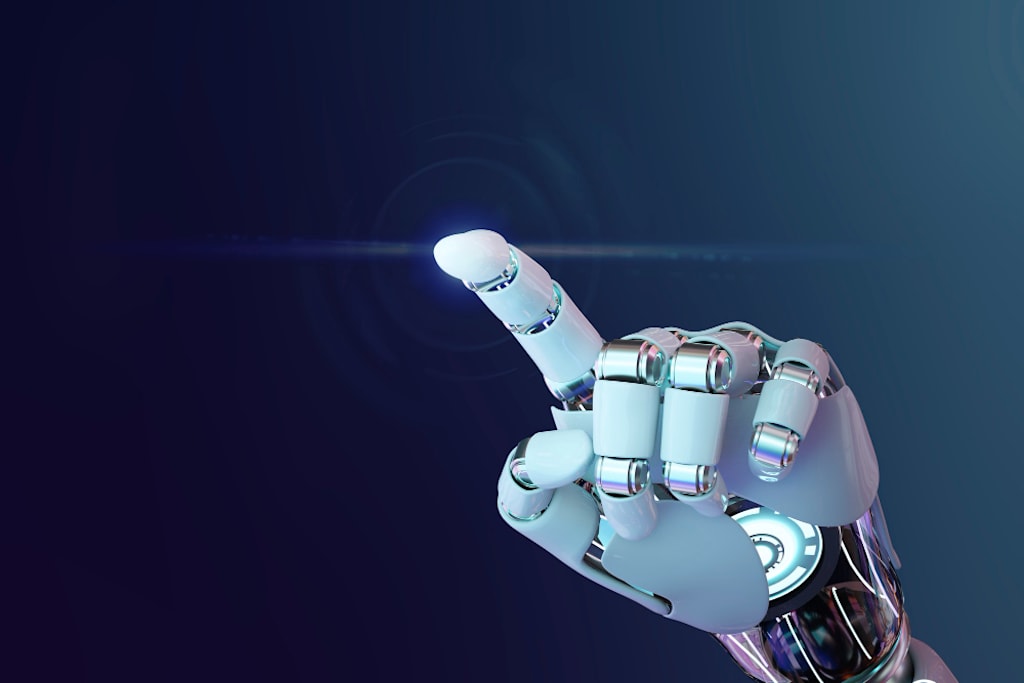
The landscape of corporate operations has undergone a seismic shift. If 2023 was the year of AI experimentation and 2024 was the year of integration, 2026 is officially the year of displacement. Across the globe, the traditional "call center" or "customer support wing" is being dismantled, not by a lack of need for service, but by the sheer efficiency of custom AI solutions.
What was once a room filled with hundreds of representatives handling phones and tickets has been compressed into a localized server or a cloud-based neural network. For creators and entrepreneurs on platforms like Vocal.Media, understanding this transition is vital—whether you are looking to optimize your own business or reporting on the future of work.
The Evolution: What is an AI App in 2026?
To understand the replacement of human departments, we must first answer: What is an AI App in today’s context? In 2026, an AI application is no longer just a wrapper for a chatbot. It is a sophisticated ecosystem capable of multimodal reasoning—processing voice, text, and even visual data (like a customer holding a broken product to their camera) in real-time.
These apps act as "Digital Employees." They don't just search a database; they understand intent, sentiment, and historical context. When a user asks a question, the app doesn't just provide an answer; it performs an action. This shift from "information retrieval" to "autonomous execution" is why entire departments are being phased out.
The Shift to Autonomy: Core Features of an AI Agent
The reason human departments are being replaced lies within the Core Features of an AI Agent. Unlike the "dumb" chatbots of the past, 2026-era agents possess several critical capabilities:
Autonomous Decision Making: They can process refunds, re-route shipments, and verify identities without human oversight.
Memory Persistence: They remember a customer’s frustration from a call six months ago and adjust their tone accordingly.
Cross-Platform Synchronization: The agent follows the user from the mobile app to the desktop site and even to smart-home devices seamlessly.
Proactive Problem Solving: Using predictive analytics, these agents often contact the customer to resolve a technical glitch before the customer even notices it.
By automating these complex tasks, the "tier one" and "tier two" support roles that previously employed thousands are now handled by a single, well-architected software instance.
The Business Logic: Benefits of AI Automation
The primary driver behind this mass replacement is the undeniable Benefits of AI Automation. For a mid-to-large-sized enterprise, the advantages go far beyond simple cost-cutting.
Scalability: An AI agent can handle 10,000 inquiries simultaneously. A human department would require massive infrastructure and hiring sprees to handle a sudden surge in traffic.
Consistency: Humans have bad days; AI does not. Every customer receives the same high level of politeness, accuracy, and brand-aligned messaging.
24/7/365 Availability: Global businesses no longer need to manage complex "follow-the-sun" shifts across different time zones. The AI is always awake, always updated, and never gets tired.
Data Synthesis: While a human helps one person, the AI is analyzing 1,000 conversations to identify a recurring product bug, reporting it to the engineering team in seconds.
Navigating the Transition: AI Development Services
Building a system capable of replacing a department isn't an "off-the-shelf" endeavor. Companies are increasingly turning to specialized AI Development Services to build proprietary models. These services ensure that the AI is trained on the company’s specific data, culture, and legal requirements.
In 2026, the demand for these services has skyrocketed. Businesses are looking for "End-to-End" solutions that include data cleaning, model training, and API integration. The goal is a "frictionless" handoff where the AI feels like a natural extension of the brand.
The Financial Reality: AI Development Cost
A common question for stakeholders is the AI Development Cost. While it may seem expensive to build a custom solution, the ROI (Return on Investment) is reached faster than ever. In 2026, the cost of developing a custom agent might range from $50,000 for a specialized bot to over $500,000 for an enterprise-wide system.
However, when compared to the overhead of a 50-person customer service team—including salaries, benefits, office space, and training—the AI pays for itself within the first six to nine months. Furthermore, as "Low-Code" AI platforms mature, the entry price for smaller businesses is steadily dropping.
Building the Future: Cost to Hire AI Developers
Because these systems are so critical, the Cost to Hire AI Developers has become a significant line item in corporate budgets. We are no longer just looking for general software engineers; the market demands Machine Learning (ML) specialists, Prompt Engineers, and AI Ethicists.
In the current market, a senior AI developer can command a salary significantly higher than a standard full-stack developer. For businesses that cannot afford an in-house team, outsourcing to specialized firms remains the most viable path to replacing legacy human-operated systems with automated ones.
The Tech Stack: AI Tools To Use
For those looking to implement these changes, the list of AI Tools To Use has expanded. In 2026, the stack usually involves:
LLM Orchestrators: Tools that manage which "brain" (model) to use for which task.
Vector Databases: Essential for giving AI a long-term memory of company documents and customer histories.
Synthesized Voice APIs: For replacing phone-based support with human-like, empathetic vocal interactions.
Sentiment Analysis Engines: To detect when a customer is genuinely distressed and requires an "escalation" (which, in 2026, usually means a more senior AI or a rare human specialist).
The Human Element: What Happens to the Staff?
As we discuss Artificial Intelligence App Development replacing departments, we must address the human cost. The roles aren't just disappearing; they are evolving. The people who used to answer phones are being retrained as "AI Tutors" or "Conversation Designers." Their job is to monitor the AI, correct its mistakes, and ensure it maintains a "human" touch.
However, the sheer volume of employment in this sector has undeniably shrunk. The customer service industry is moving from a "labor-intensive" model to a "capital-intensive" and "tech-intensive" model.
Conclusion
By 2026, the debate over whether AI can replace customer service is over—it already has. Through the strategic use of AI Development Services and the integration of autonomous agents, businesses have achieved a level of efficiency that was previously unthinkable.
While the AI Development Cost and the Cost to Hire AI Developers represent significant upfront investments, the long-term Benefits of AI Automation make it a mandatory move for any company wishing to remain competitive. As we look toward the 2030s, the "Customer Service Department" will likely be remembered as a 20th-century relic, replaced by the invisible, instant, and infinite capacity of Artificial Intelligence.
About the Creator
Aarti Jangid
Hi, I’m Aarti Jangid. I write blogs about AI development, real estate app development, and eCommerce app development. Through my articles on Vocal Media, I share insights about modern technologies and digital solutions.
Enjoyed the story? Support the Creator.
Subscribe for free to receive all their stories in your feed.
Comments
There are no comments for this story
Be the first to respond and start the conversation.