
How AI Is Changing the Way We Experiment With Beauty and Style
The “try before you commit” approach enables more considered and confident appearance-related decisions.

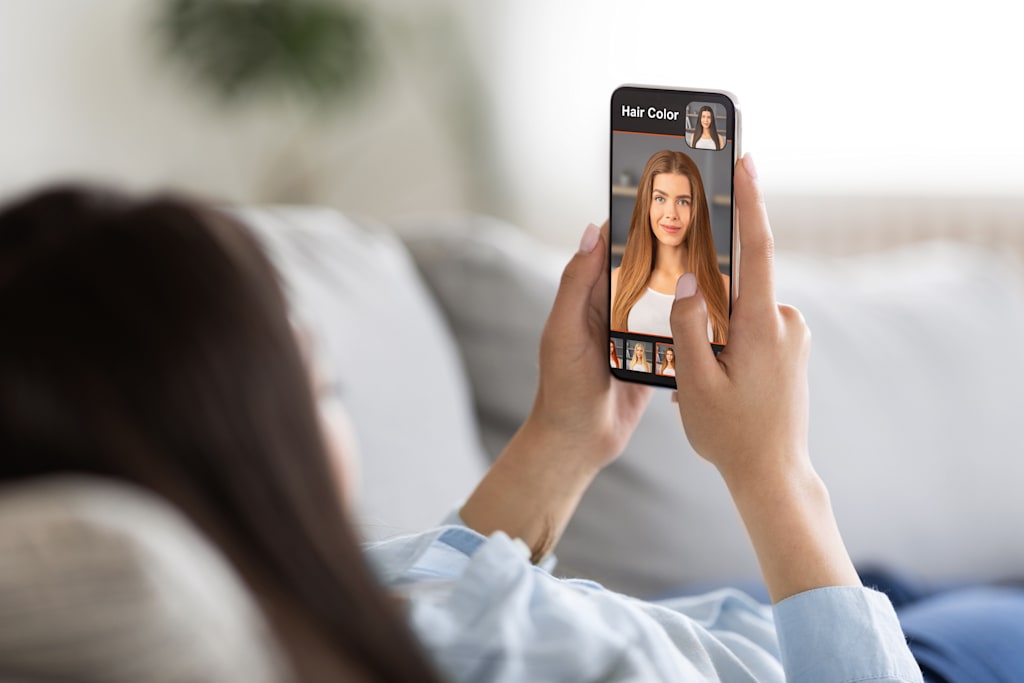
Fashion and beauty have always been about experimentation: trying a bold lipstick, switching up a hair color, or buying a dress in a shade you never thought you could pull off. But traditionally, experiments with appearance have come with a certain amount of risk, cost, and commitment. Recent advancements in AI image, beauty, and styling tools have changed that.
What once required a salon appointment, a makeup counter or stylist consultation, or a leap of faith can now happen in seconds using your photo—with surprisingly realistic results and a decent level of personalization. You can test makeup looks, hair colors and styles, or clothing ensembles and palettes before making permanent changes or real-life purchases.
By eliminating physical constraints, digital try-ons have not only made experimentation more accessible but also more extensive, enabling more tailored results. Virtually, you can explore a greater variety of options, which means a higher chance of discovering beauty and style solutions that genuinely work for you—those that enhance your features, complement your skin tone, and align with your personal preferences.

Style: AI Promotes More Confident Experimentation
For many people, the hardest part isn’t choosing what they like but knowing where to start. Rather than chasing short-lived or highly specific microtrends, timeless, classic garments and universally flattering colors are the most reliable entry point.
Summer style is leaning toward effortless, wearable pieces that balance comfort with polish. Relaxed tailoring, soft-draped dresses, sheer layering, linen sets, elevated basics, and fluid silhouettes make for great street-style looks. In turn, colors such as emerald, teal, fuchsia, and eggplant work well across different skin tones because of the way their undertones interact with natural complexion, contrast, and warmth.
AI tools make experimentation easier and more confident by enabling quick, private previews. Styling apps like OnStyle can help you rediscover or refresh your style by suggesting new custom outfit ideas or advising on how to style or accessorize the garments you already have in your wardrobe for a more refined visual appeal. They can also help define your authentic palette of base and accent colors.
AI image generator tools like ARTA offer photo-editing features that can help you explore new colors and shades by adjusting your photos. You simply upload an image and prompt AI to change a garment’s color to the one you want to test. It’s especially useful for reimagining how a certain color or shade would interact with your complexion not in a vacuum, but within a real-life setting or environment, so you can better understand when and where it feels most appropriate and flattering.

Makeup: AI Enables More Accurate Beauty Choices
Blurred berry lips, watercolor makeup, soft-focus skin, and warm, sun-flushed complexions are expected to dominate this summer, but the challenge for most consumers is figuring out which variations truly suit their own features.
AI beauty try-on tools help ensure that personalized self-expression comes first and assist you with refining the looks that feel most natural to you. They enable you to experiment with seasonal makeup inspiration in a low-commitment way, reducing the trial-and-error cycle that often leads to wasted purchases or trend fatigue.
With apps like YouCam, you can test different lip product tints and textures, eye makeup styles, blush shades, highlighter placement, contour intensity, complexion finishes, brow shapes, and much more based on your selfie.

Hair: AI Makes Major Changes Less Intimidating
Layered cuts, soft volume, long curtain bangs, warm brunette tones, and dimensional blondes are expected to remain highly popular this season. But not every trend suits every face shape, bone structure, or personal style equally.
Hair transformations commonly carry the highest risk in beauty experiments, since a dramatic haircut or color change can take months to reverse, which is why many people stay within the same comfort zone for years.
With AI hair-simulation apps, you can better understand visual balance before committing. For example, you can preview whether softer layers complement your angular features or whether darker shades create too much contrast against your skin tone.
Tools like FaceApp let users instantly see how different cuts, lengths, colors, and textures interact with their own features. Not only does it eliminate the risk of unpleasant surprises at a salon, but it also promotes bolder experimentation and enables greater freedom of self-expression.
About the Creator
Ana Chur
Holistic health advocate and wellness writer
Enjoyed the story? Support the Creator.
Subscribe for free to receive all their stories in your feed.
Comments
There are no comments for this story
Be the first to respond and start the conversation.