
Blockchain DApp Development in 2026: Emerging Trends and solutions
DApp Development trends

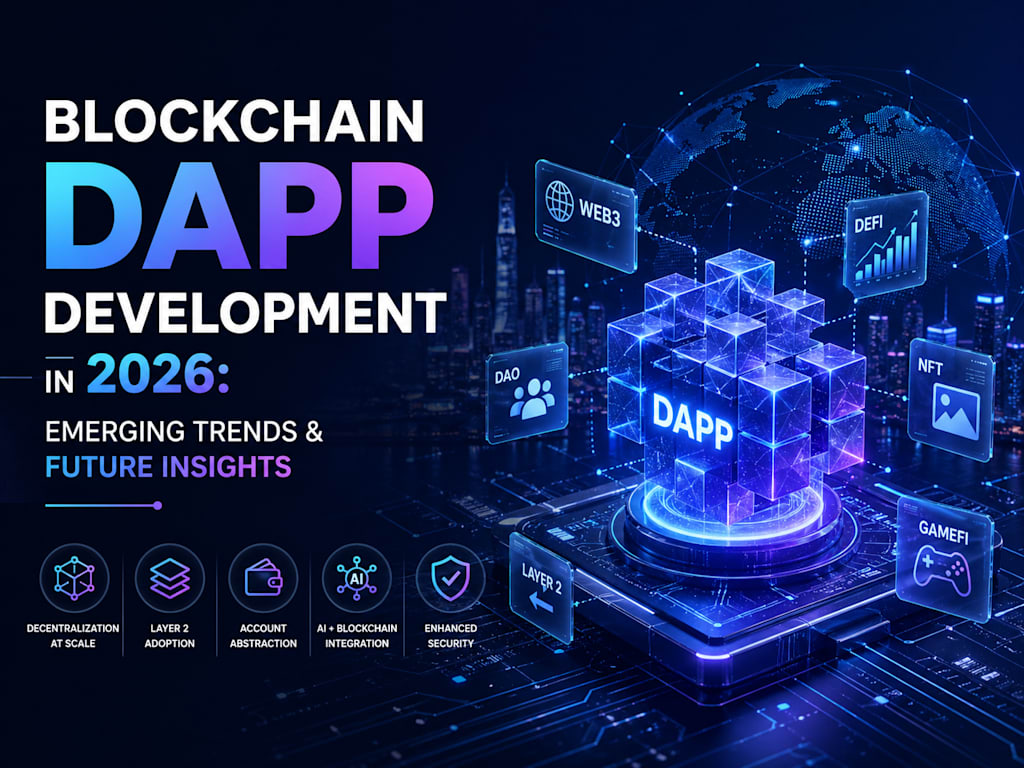
Blockchain technology continues to reshape the digital economy, and in 2026, decentralized applications (DApps) are no longer experimental innovations—they are becoming mainstream enterprise solutions. From finance and healthcare to supply chain and gaming, businesses are actively investing in DApp ecosystems to enhance transparency, security, and user control over data.
This blog explores emerging technologies, development trends, cost factors, and modernization strategies shaping the future of DApp development in 2026.
Emerging Technologies Driving DApp Development in 2026
The blockchain ecosystem is rapidly evolving, and several emerging technologies are redefining how decentralized applications are built and deployed.
1. Layer-2 Scaling Solutions
Ethereum and other major blockchains face scalability challenges. Layer-2 solutions like rollups and sidechains significantly reduce transaction costs and increase throughput.
This directly impacts dapp development cost, making large-scale DApp deployment more affordable for startups and enterprises.
2. Zero-Knowledge Proofs (ZKPs)
Zero-knowledge technology enhances privacy by allowing data verification without revealing the data itself. In 2026, ZK-based DApps are widely used in:
- Identity verification systems
- Financial transactions
- Healthcare record management
This ensures regulatory compliance while preserving user privacy.
3. AI-Powered Smart Contracts
Artificial Intelligence is now being integrated into blockchain systems to automate decision-making within smart contracts. AI helps:
- Detect fraudulent transactions
- Optimize gas usage
- Predict network congestion
This combination of AI and blockchain is transforming DApp efficiency and intelligence.
4. Interoperability Protocols
Cross-chain communication is one of the biggest breakthroughs in 2026. Protocols like Polkadot and Cosmos enable seamless asset and data transfer between blockchains.
This eliminates silos and enhances DApp scalability across ecosystems.
5. Decentralized Identity (DID)
User identity management is shifting from centralized databases to blockchain-based identity systems. DID allows users to control their digital identity securely without relying on third parties.
Key Trends in Blockchain DApp Development (2026)
1. Enterprise Adoption of DApps
Enterprises are no longer hesitant about blockchain. Industries like banking, logistics, and insurance are actively deploying decentralized solutions for transparency and efficiency.
2. No-Code & Low-Code Blockchain Platforms
To reduce dependency on highly technical developers, no-code blockchain platforms are emerging. These tools allow businesses to build DApps with minimal coding expertise.
3. Tokenized Business Models
Tokenization is becoming a core part of digital transformation strategies. Businesses are creating token-based ecosystems for:
- Loyalty programs
- Asset ownership
- Governance systems
4. Sustainability-Focused Blockchains
Eco-friendly blockchain networks are gaining traction due to concerns about energy consumption. Proof-of-Stake (PoS) systems dominate new DApp development projects.
5. Integration with Web3 Ecosystems
DApps are now a core component of Web3 infrastructure, integrating seamlessly with decentralized storage, wallets, and NFT marketplaces.
DApp Development Cost in 2026: What to Expect?
One of the most frequently asked questions by businesses is about dapp development cost. The cost varies depending on complexity, blockchain platform, features, and security requirements.
Key Cost Factors:
1. Application Complexity
Simple DApps (basic smart contracts) cost significantly less than enterprise-grade multi-chain platforms.
2. Blockchain Network
Ethereum, Solana, Binance Smart Chain, and Polygon all have different gas fees and infrastructure costs.
3. Feature Integration
Advanced features such as:
- AI integration
- Cross-chain functionality
- Real-time analytics
increase overall development cost.
4. Security Requirements
Auditing smart contracts and implementing advanced encryption adds to development expenses but is essential for safety.
5. Development Team Expertise
Hiring an experienced dapp development company ensures better architecture design and reduces long-term maintenance costs.
Estimated Range (2026):
Basic DApp: $20,000 – $50,000
Mid-level DApp: $50,000 – $150,000
Enterprise DApp: $150,000 – $500,000+
Legacy Application Modernization Strategies for Blockchain Integration
Many enterprises already have legacy systems that are not blockchain-ready. To adopt DApp ecosystems, organizations need effective Legacy application modernization strategies.
Here’s how businesses are transitioning:
1. API Layer Integration
Instead of rebuilding systems from scratch, APIs are used to connect legacy applications with blockchain networks. This enables gradual migration.
2. Microservices Architecture
Monolithic legacy systems are being broken into microservices, allowing easier integration with decentralized components.
3. Hybrid Blockchain Models
Companies are adopting hybrid systems where traditional databases coexist with blockchain networks for better performance and compliance.
4. Data Tokenization
Legacy data is being tokenized and stored on blockchain networks to enhance security and traceability.
5. Cloud + Blockchain Convergence
Modernization strategies increasingly combine cloud computing with blockchain infrastructure for scalability and flexibility.
These Legacy application modernization strategies ensure that businesses can adopt decentralized systems without disrupting existing operations.
Role of a DApp Development Company in 2026
Partnering with a skilled dapp development company is crucial for building scalable and secure blockchain applications.
A professional development company provides:
- Blockchain architecture design
- Smart contract development
- Security auditing
- UI/UX development for Web3 applications
- Post-deployment support and scaling
Expert developers ensure that businesses avoid costly mistakes and comply with evolving blockchain standards.
Future Insights: Where DApp Development is Heading
The future of DApp development is driven by convergence; where blockchain, AI, IoT, and cloud computing work together seamlessly.
Key Predictions for 2026 and Beyond:
- DApps will become default infrastructure for financial systems
- AI-driven decentralized governance will increase
- Cross-chain ecosystems will eliminate blockchain fragmentation
- Enterprise adoption will surpass early-stage startups
- Regulatory frameworks will stabilize global blockchain adoption
The evolution of decentralized systems suggests a future where users have complete control over their digital assets and identity.
Conclusion
Blockchain DApp development in 2026 is entering a transformative phase powered by scalability solutions, AI integration, and cross-chain interoperability. Businesses are rapidly shifting toward decentralized ecosystems to improve transparency, efficiency, and trust.
Choosing the right dapp development companies are critical steps for organizations aiming to stay competitive in the Web3 era.
As innovation accelerates, DApps are set to become the backbone of next-generation digital infrastructure—reshaping how industries operate, interact, and evolve.
About the Creator
keith laurance
Keith Laurance, a Tech Blogger and Entrepreneur working with Octal IT Solution. I'm passionate about my work and want to spread knowledge everywhere, so everyone can take advantage of the latest technologies and trends.
Enjoyed the story? Support the Creator.
Subscribe for free to receive all their stories in your feed.
Comments
There are no comments for this story
Be the first to respond and start the conversation.