
Apple’s Vision Pro Is on Life Support. The Redesign That Could Save It Is the One Apple Refuses to Build.
Four designs are on the table. The one that works is the one Apple’s leaders keep rejecting.
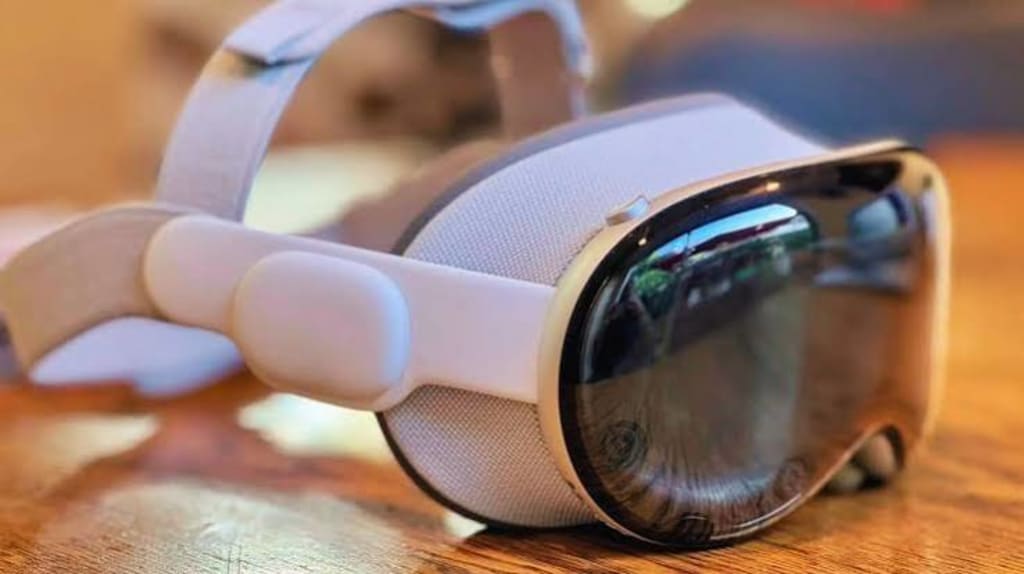
In 2024, Apple released the Vision Pro at $3,499 and called it the start of spatial computing. Two years later, that start looks more like a footnote. Bloomberg’s Mark Gurman reports that Apple is working on a “radically redesigned” Vision Pro, codenamed N224. The company is exploring four design directions. The product probably won’t arrive until late 2028 or early 2029. Gurman describes the project as being on “life support.”
Apple has tried this before. N107 tried to move computing to a Mac or another device. N100, the “Vision Air,” and N109, a lighter cheap version, were shelved. N224 is the fourth attempt. It may be the last.
Four directions, one problem
Gurman says the Vision team is evaluating four concepts. All four aim to cut weight.
The first keeps the current egg-shaped design but uses plastic, titanium, and other light metals. The second and third test different material mixes. Those three are engineering optimizations, not reinventions. They aim to let someone wear the headset for more than twenty minutes without neck pain.
The fourth has caused the most internal argument. It would move the processor and battery out of the headset and into a separate computing puck. The puck would connect by wire or wirelessly. Meta used this architecture for its VR Glasses at Connect 2026.
The four concepts expose Apple’s real problem: the company still has not decided what the Vision Pro is for.
The puck fight
The external puck has clear data behind it. The current Vision Pro weighs between 750 and 800 grams, depending on the headband. Its external battery adds another 353 grams. Meta’s VR Glasses put the headset at about 100 grams and the external module at about 300 grams. That is roughly one-sixth the weight of the Vision Pro. It also costs about one-third as much. After trying Meta’s device, Gurman said, “Meta’s VR Glasses are exactly what the Apple Vision Pro should have been.”
Senior Apple leaders disagree. Gurman reports that they think an external module creates a “poor user experience.” They want a design closer to an all-in-one device. Their concern is not imaginary. A separate puck means another object to carry. Apple has built its brand on simple, integrated products. Some executives see the puck as breaking that promise. The current Vision Pro already uses an external battery, and some users dislike it. Moving the processor out too could make the experience feel more fragmented.
The fight is not really about a puck. It is about product identity. Is the Vision Pro a Mac you wear on your head? Or is it a pair of immersive glasses? Those two answers lead to different engineering choices. The four N224 concepts sit between them.
The project is on “life support”
The larger problem is where Apple is putting its money. Gurman says N224 is on “life support” because resources are moving to smart glasses. Apple plans to launch display-free AI glasses in late 2027, codenamed N50. They will focus on audio, camera, and Siri. They will compete with Meta’s Ray-Ban line.
The shift is already visible in staffing. In August 2026, Apple laid off at least 60 people from the Vision group who worked on VR. Earlier, the Vision Product Group was split. Mike Rockwell, its former head, moved to Siri. The team that once handled Vision software and hardware was broken up and folded into larger engineering groups. Fletcher Rothkopf, who ran Vision hardware, no longer reports directly to senior leadership.
Incoming CEO John Ternus has changed his tone. He was long seen as a Vision Pro skeptic. In a recent interview, he called it an “extraordinary product” and said he sees promise in enterprise and medical uses. That does not match Gurman’s report that senior decision-makers oppose the external module.
Apple has not given up on the current product. The M5 Vision Pro added a 10% pixel increase and refresh rates up to 120Hz. It also raised the price from $3,499 to $3,699. The update did not fix the main complaints.
The market has already voted
The Vision Pro’s sales explain the hesitation. Retail employees told Gurman that some Apple Stores sell only one Vision Pro per month. “Hitting even that number counts as lucky.” Two years after launch, cumulative sales are estimated between 350,000 and 400,000 units. Return rates are unusually high for Apple.
Buyers return it for two reasons: weight and price. They report headaches, motion sickness, and eye fatigue. At $3,499, the device sits outside the mainstream market. Omdia says global XR headset shipments fell 12% in 2026. Tethered headsets fell 34%. Standalone devices are taking their place. Omdia notes that one key to recovery is whether Apple can launch a more affordable Vision Pro around 2028, which would push Samsung, vivo, and others to compete harder.
The whole XR headset category is waiting for Apple. Apple has not answered.
Meta shows another way
Meta’s VR Glasses give Apple a concrete comparison. They cost $1,299 and launch in spring 2027. They compress VR into glasses that weigh about 100 grams. The external puck carries a Qualcomm processor and battery. It can hang on a belt or fit in a pocket. Mark Zuckerberg called it “the first time VR appears in the form of a pair of glasses.”
Gurman tried the device. He said the puck’s size and weight are close to the current Vision Pro’s battery pack, but the casing has a non-slip design. Meta solved an engineering problem. Apple’s leaders are making a product-definition choice. Meta chose a split design. Apple’s leadership calls that undignified.
The market may not care about dignity. Meta’s glasses cost one-third as much and weigh one-sixth as much. For most buyers, that comparison matters more than the philosophy of an all-in-one device.
What happens next
N224 depends on three unresolved questions.
First, which design wins? The external module best solves weight, but it faces the strongest internal opposition. If Apple chooses material tweaks inside an all-in-one frame, N224 may still feel heavy.
Second, where does the money go? Apple’s focus is now on AI glasses in late 2027. N224 is on “life support.” If smart glasses sell well, Apple could cut headset investment further.
Third, what does Ternus want? He becomes CEO soon. If he sees the Vision Pro as a long-term platform, N224 has a path. If he sees it as a stepping stone, the path narrows. Gurman writes that senior Vision managers have pushed Apple’s leaders to keep the category alive, secure funding, and grow it. They still cannot guarantee the new headset will ship.
Apple has spent billions on Vision Pro research and supply chain. It has sold about 600,000 units and still has not settled what the product is. N224 is the fourth attempt to keep it alive. If it fails, Apple’s position in headsets may shift from waiting for a better version to waiting for a different product.
That different product, a pair of AI glasses without a screen, will not arrive until at least late 2027.
About the Creator
Jin
Writer of reamstories
https://reamstories.com/jin
Enjoyed the story? Support the Creator.
Subscribe for free to receive all their stories in your feed. You could also become a paid subscriber, letting them know you appreciate their work.
Comments
There are no comments for this story
Be the first to respond and start the conversation.