
Apple Just Killed Ownership — And You’re Paying for the Funeral
I ran the numbers on Apple’s new leasing plan. What I found is a subscription trap wrapped in a shiny titanium box.
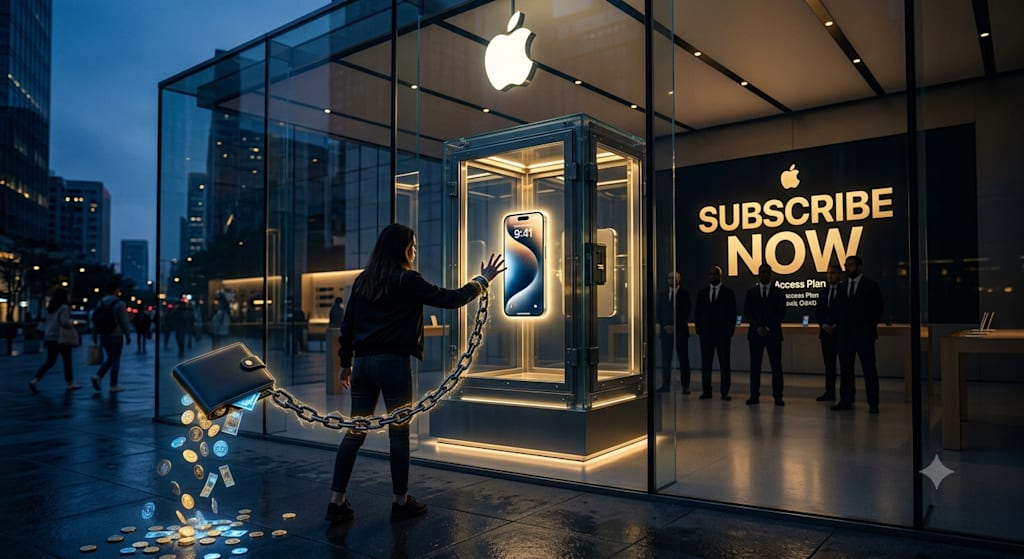
When “owning” becomes “subscribing”, and “upgrade every year” becomes “return anytime”, Apple is playing a high‑stakes game around the concept of ownership. This is far more than a tweak to its business model. It is a surgical strike on consumer psychology and financial structures. In this operation, are we the beneficiaries, or the carefully calculated “patients”?
Mark Gurman of Bloomberg dropped a bombshell: Apple is expected to launch a brand‑new hardware leasing plan called “Apple Upgrade” in the United States on July 28, 2026. The news sent shares of its partner Klarna surging 11% on the day.
On the surface, this looks like Apple’s “good‑will move” to absorb price hikes and lower the entry barrier. But peel back the financial layers, and you will find this might be Tim Cook’s most aggressive bet on the “hardware‑as‑a‑service” vision yet.
1. What is “Apple Upgrade”? A quick guide to the new leasing rules
This is not a simple instalment plan. It is a usage‑rights subscription service built on financial leverage.
The lease covers iPhone and Apple Watch for 24 months, and Mac and iPad for 36 months. Users can pay off the device early, upgrade to a newer model early, or return or buy the device at term end. The user takes a loan from Klarna to pay the instalments; Klarna earns interest, and Apple covers its costs and generates profit through the rental income. To promote the new plan, Apple will discontinue new enrollments in its existing iPhone Upgrade Program and standard instalment plans.
Unlike the iPhone Upgrade Program, which mandates AppleCare+, Apple Upgrade does not include AppleCare+. That means if you crack the screen, you will face a hefty repair bill upon return.
2. No free lunch for bargain hunters
Many folks see “leasing” and immediately think: “Can I game the system?” Rent a maxed‑out Mac, edit a project, and return it; or strip parts and send back a shell. Apple and Klarna have built a solid firewall.
Soft credit check. This is not the “open a credit line with a tap” you see in some markets. It is a deep‑profile assessment similar to a comprehensive credit bureau check. While it does not affect your credit inquiry count, it accurately evaluates your total debt burden and default risk.
Ownership and insurance hedging. The device title always remains with Apple. Since Apple owns the assets, it can purchase property insurance on the leased devices as the insured party. In cases of malicious damage, loss, or non‑return, the insurer compensates Apple. That premium is baked into your monthly payment — you cannot see it, but you are paying for it.
Bottom line: if you think you can pull a “zero‑cost heist” or swap parts, the tight credit screening and insurance loop have already sealed that door.
3. Why is Apple pushing this shift? The numbers behind the move
This is not a whim. It is driven by two pressures: supply‑chain costs and financial risk management.
Price pressure under the “memory apocalypse.” Thanks to the explosive expansion of AI infrastructure, global storage chips are in an epic shortage. Apple has already been forced to raise prices on Macs and iPads multiple times. Market forecasts predict the iPhone 18 series, due in September, will set new price records. If a base iPhone climbs to, say, $1,199 or more, many marginal buyers will be priced out. Leasing is the most respectable fig leaf to preserve the user base.
Offloading bad‑debt risk. Remember that Apple tried to build its own hardware subscription service in 2022, only to shelve it by late 2024 over regulatory concerns and software issues. By bringing in Klarna this time, Apple has successfully shifted credit risk, capital tie‑up, and loan servicing to a fintech partner. Apple simply collects equipment rents and sells new units — a near‑risk‑free profit engine.
4. The numbers: rent vs. buy — a personal dilemma
Let’s run a rough cost calculation (based on U.S. market estimates).
Option A: Buy outright.
Cost: $1,199 (assuming iPhone 18 Pro Max 256GB). You own the device; after three years, resale recovers ~$400. Net cost: ~$800.
Option B: Apple Upgrade — 24‑month lease, return at end.
Cost: ~$50/month × 24 = $1,200. After two years, you have spent $1,200 and own nothing — effectively a $600/year rental fee.
Option C: 24‑month lease, then buy out.
Cost: $1,200 (rent) + residual value (estimated $400+) = $1,600+. You pay at least $400 more than buying outright — that extra is the interest and handling fee for “flexibility.”
The stark conclusion: Leasing is about trading money for cash‑flow flexibility, not saving money. If you are a frugal pragmatist, buying outright is always cheaper. If you are a gadget enthusiast who must have the latest model every year and does not care about ownership, leasing offers an escape hatch (early return).
5. Who should — and shouldn’t — rent an Apple device?
Three types who might benefit
Gadget obsessives: They want the newest model annually and want to avoid the hassle and depreciation of second‑hand sales.
Short‑term project workers: For example, a video editor who rents a fully‑loaded Mac Studio for a project and returns it when done, charging the cost to the project budget.
Cash‑strapped but essential users: They truly need the Apple ecosystem but cannot afford the full upfront payment, and they can handle a long‑term monthly commitment.
Three types who should absolutely avoid it
“Long‑haulers”: If you keep an iPhone for five years, buying outright is your best bet.
Clumsy or naked‑device users: Without AppleCare+, a single screen repair could cost half a year’s rent.
Privacy‑sensitive souls: Returned devices are officially refurbished; data is wiped, but the psychological hurdle — “my device was used by someone else” or “my device once belonged to someone else” — can be hard to overcome.
6. The ultimate takeaway: Cook’s “open conspiracy” and the industry’s future
This move is a gentle way to phase out the “24‑month interest‑free” perk in the U.S. market. By introducing leasing, Apple removes “liabilities” from its balance sheet while locking in users’ continued spending over the next 2–3 years.
The grander ambition: when leasing becomes the norm, “annual churn” becomes a habit. Apple will no longer need massive annual innovations to push upgrades; it just needs to keep you hooked with a “pay XX per month” price tag. If this model succeeds, it could upend the entire consumer electronics industry — shifting from selling hardware to collecting rent.
To close with an old saying, repurposed:
“You think you are renting the device, but in fact the device is renting your future cash flow. In this actuarial game, Apple never loses, Klarna pockets the spread, and consumers are left with nothing but a bill to be paid on time — apart from the fleeting thrill of a new gadget.”
Final thought: Apple Upgrade is a mirror reflecting the new face of consumerism — ownership is no longer the point; experience is king. But remember, behind every “pay‑monthly” offer stands an actuary earning seven figures, watching your wallet.
About the Creator
Jin
Writer of reamstories
https://reamstories.com/jin
Enjoyed the story? Support the Creator.
Subscribe for free to receive all their stories in your feed. You could also become a paid subscriber, letting them know you appreciate their work.
Comments
There are no comments for this story
Be the first to respond and start the conversation.