
40 Million iPhone 17s Sold in China – Why Apple Still Wins Without Trying
Android flagships got expensive, Apple stood still – and won anyway.
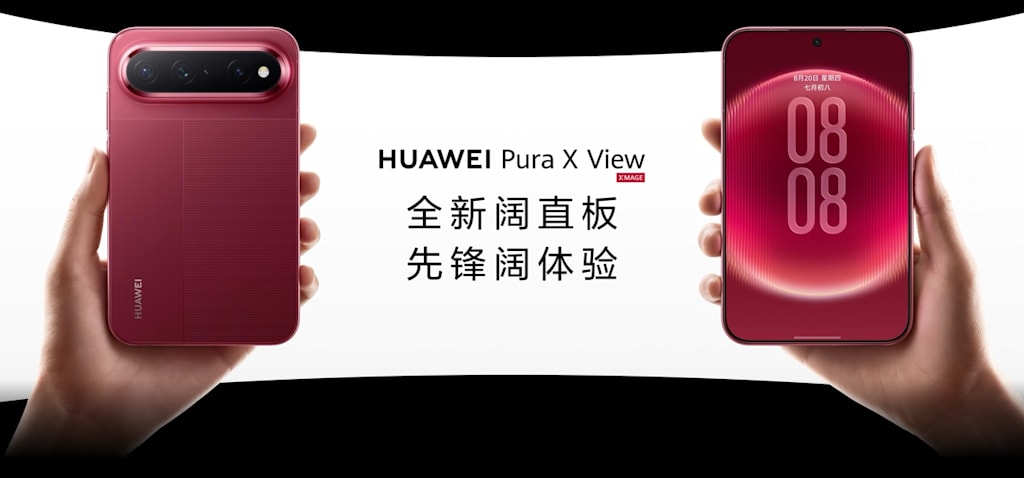
By early August 2026, cumulative domestic shipments of the iPhone 17 series had reached 40,045,800 units.
That number landed in the same year Android flagships across the board raised their prices. Apple didn't suddenly get stronger. The market dynamics changed.
I. The standard model at 5,999 yuan—right on the line
The iPhone 17 standard model: 256GB base storage, 120Hz ProMotion display, priced at 5,999 yuan.
In 2026, China's smartphone subsidy policy drew a clear line: devices priced below 6,000 yuan qualified for government subsidies. Apple set the standard model at 5,999 yuan, brushing right up against that threshold.
That same year, Huawei's Mate series, Xiaomi Ultra, OPPO Find X, and other Android flagships largely crossed the 6,000-yuan mark, with some models approaching 7,000 yuan.
After e-commerce platforms rolled out their own top-up subsidies, the effective street price of the iPhone 17 standard model at one point dropped to 4,499 yuan.
A phone distributor in eastern China said over the phone: "Android flagships hiked prices so aggressively in the first half of the year that foot traffic asking for quotes dropped by half in our store. By the second half, Apple had barely moved its prices, and customers just came back on their own."
Apple didn't start a price war. It stood still and waited for everyone else to raise their prices first.
II. What's stored in iCloud is not photos. It is switching costs.
A 2026 college graduate posted this on a social platform: "I've used my iPhone for four years. I have 20,000 photos in iCloud, 120 notes, all my course materials and internship documents. Switching to Android? I would have to take a week off just to sort out my data."
Under that post, the comment section gathered over 4,000 replies. One highly upvoted comment read: "It's not that I don't want to switch. It's that I can't afford to switch."
Apple's platform stickiness has never been sustained by "technological superiority." AirDrop for file transfers, smooth handoff with AirPods, unlocking a Mac with an Apple Watch—these are not tech moats. They are behavioral moats.
Once behavior is wired in, switching is no longer a matter of choice. It is a matter of cost.
Third-party survey data supports this observation: Apple's user retention rate has held above 90 percent for five consecutive years. Not every generation of iPhone is worth upgrading to. But when users do upgrade, they do not seriously consider another brand.
On university campuses, in vocational training labs, and at the desks of employees three years into their tenure at internet companies, the iPhone visibly outnumbers any other brand. A common scene: after a group discussion ends, seven or eight people raise their phones simultaneously, and the AirDrop contact list pops up with a uniform row of circular Apple avatars.
This is not aesthetic conformity. It is infrastructure in the social network.
III. The second-hand market fights an invisible war for Apple
The iPhone 17 Pro launched at 7,999 yuan.
A comparable Android flagship was priced at 6,999 yuan at the same time.
Three years later, that iPhone trades on the second-hand market for roughly 2,800 to 3,200 yuan. The Android flagship from the same period sells for between 1,200 and 1,500 yuan.
Here is a short calculation. The iPhone's average annual cost of ownership comes to roughly 1,666 yuan—(7,999 minus 3,000) divided by three. The Android's comes to about 1,883 yuan—(6,999 minus 1,350) divided by three. You pay 1,000 yuan more upfront, but save about 200 yuan per year while using it.
On the ground floor of Zhongguancun's Technology Trade Center in Beijing, a second-hand phone shop displays two devices side by side on the counter: an iPhone 17 Pro on the left, and an unnamed Android flagship on the right. Both were activated in September 2026, with similar cosmetic condition.
The shop owner, surnamed Chen, has run this stall for eleven years. Pointing to the left, he says: "Put this one out, and someone will ask about it within three days." Then pointing to the right: "Put this one out—people haggle down to half first, then complain it is still too expensive, and eventually go buy the Apple."
Chen flips both phones face down. "It's not that Android is bad," he says. "It's that it's too fast. Three generations in one year—who can keep up? By the time I take a trade-in and haven't even sold it, the new generation drops, and the old model's price gets cut in half right then and there."
He twists the lid back onto his thermos and adds one last line: "Apple is slow. But slow has its advantages. Three years from now, it is still an Apple. Three years from now, that Android is already two generations behind."
About the Creator
Jin
Writer of reamstories
https://reamstories.com/jin
Enjoyed the story? Support the Creator.
Subscribe for free to receive all their stories in your feed. You could also become a paid subscriber, letting them know you appreciate their work.
Comments
There are no comments for this story
Be the first to respond and start the conversation.