
11 Innovation Leaders Designing Next-Gen Augmented Reality Shopping Apps
From Virtual Try-Ons to AI-Powered Recommendations: The Next Evolution of Online Shopping

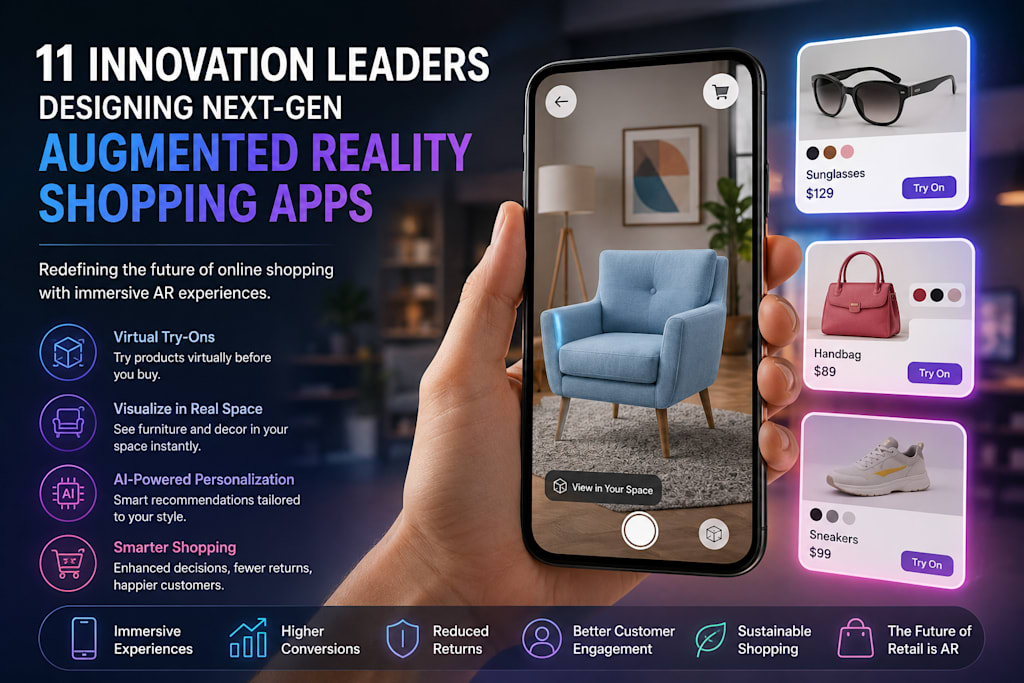
Online shopping has come a long way from static product images and lengthy descriptions. Today's consumers want interactive experiences that help them visualize products before making a purchase. This growing demand has fueled the rise of augmented reality (AR) shopping applications, which are transforming how people discover, evaluate, and buy products online.
Augmented reality bridges the gap between physical and digital commerce by allowing customers to virtually place products in their environment, try on items, and make more informed purchasing decisions. As technology advances, a new generation of innovators is leading the way in creating immersive shopping experiences that are redefining the future of retail.
Here are eleven innovation leaders and trends shaping the next generation of augmented reality shopping apps.
1. Companies Building Virtual Try-On Experiences
One of the most popular uses of AR in retail is virtual try-on technology. Whether customers are shopping for glasses, makeup, jewelry, or clothing, AR allows them to see how products look before purchasing.
This technology significantly reduces uncertainty and helps shoppers feel more confident about their choices. As a result, retailers often experience higher conversion rates and lower product return rates.
2. Furniture and Home Decor Innovators
Buying furniture online can be challenging because customers struggle to determine whether products will fit their space or match existing decor.
AR-powered applications solve this problem by allowing users to place virtual furniture inside their homes using their smartphones. Customers can view products from different angles, test various sizes, and compare designs in real-world settings before making a purchase.
3. Beauty Technology Pioneers
The beauty industry has embraced augmented reality to create highly personalized customer experiences.
Consumers can now test lipstick shades, eyeshadow palettes, hair colors, and skincare products without physically applying them. These virtual experiences not only improve convenience but also encourage experimentation and product discovery.
4. Fashion Brands Embracing Digital Fitting Rooms
Traditional online clothing purchases often lead to sizing concerns and return requests. AR-powered fitting rooms help address these challenges by allowing users to virtually wear clothing and accessories.
As body-scanning technologies become more advanced, digital fitting rooms are becoming increasingly accurate, helping shoppers make better purchasing decisions while reducing waste caused by unnecessary returns.
5. Artificial Intelligence and AR Integration Leaders
The most advanced shopping platforms are now combining AI with augmented reality to create smarter experiences.
Artificial intelligence analyzes customer preferences, purchase history, and browsing behavior, while AR provides immersive product visualization. Together, these technologies deliver highly personalized shopping journeys that feel intuitive and engaging.
This trend is also driving demand for Gen AI Shopping Assistant Development, enabling businesses to offer intelligent recommendations and conversational shopping support within AR environments.
6. Retailers Investing in Interactive Product Demonstrations
Modern consumers want more than product descriptions—they want experiences.
AR enables retailers to create interactive product demonstrations that showcase features, functionality, and usage scenarios in real time. Whether it's exploring electronic devices, fitness equipment, or household appliances, shoppers gain a deeper understanding of products before buying.
This enhanced transparency builds trust and increases customer satisfaction.
7. Automotive AR Shopping Innovators
The automotive industry is increasingly using AR technology to improve digital vehicle purchasing experiences.
Potential buyers can explore vehicle interiors, customize colors, compare configurations, and view detailed specifications from their smartphones. These immersive experiences help customers narrow down options before visiting a dealership.
As AR capabilities continue to evolve, digital vehicle shopping is expected to become even more interactive and convenient.
8. Luxury Retail Experience Designers
Luxury brands are leveraging AR to deliver premium digital experiences that reflect the exclusivity of their products.
Customers can virtually preview watches, handbags, jewelry, and high-end fashion items with remarkable detail. These immersive experiences help brands maintain a sense of prestige while expanding their online presence.
The combination of luxury and technology creates unique customer journeys that strengthen brand engagement.
9. Social Commerce and AR Innovators
Social media platforms have become powerful shopping channels, and AR is playing an important role in their evolution.
Interactive filters, virtual product trials, and immersive shopping experiences allow users to discover products directly through social content. This seamless integration between entertainment and commerce is reshaping how consumers interact with brands online.
Social commerce powered by AR is particularly appealing to younger audiences who value engaging and interactive digital experiences.
10. Cross-Platform Commerce Leaders
Today's consumers switch between smartphones, tablets, laptops, and physical stores throughout their buying journey.
Innovation leaders are developing AR shopping experiences that work consistently across multiple devices and channels. This ensures a seamless experience regardless of how customers choose to engage with a brand.
Cross-platform functionality also enables businesses to create unified customer journeys that support both online and offline interactions.
11. Sustainability-Focused AR Developers
Sustainability is becoming a major priority for both consumers and businesses. AR technology contributes to sustainability efforts by helping customers make more informed purchases.
Virtual product visualization reduces uncertainty, which can lower return rates and minimize shipping-related emissions. It also decreases the need for physical product samples and promotional materials.
As environmental concerns continue to influence purchasing decisions, AR shopping solutions are becoming valuable tools for sustainable retail practices.
Why Augmented Reality Is Becoming Essential for Ecommerce
Consumer expectations continue to evolve rapidly. Shoppers increasingly demand experiences that are convenient, personalized, and interactive. Augmented reality addresses these expectations by making online shopping more engaging and informative.
Businesses that embrace AR technology can gain several advantages, including:
- Improved customer engagement
- Higher conversion rates
- Reduced return rates
- Enhanced product visualization
- Stronger brand differentiation
- Better customer satisfaction
These benefits make AR a strategic investment for retailers looking to remain competitive in the digital marketplace.
For companies considering a Shopping App For Your Ecommerce Business, integrating augmented reality capabilities can provide a significant competitive advantage and help create memorable customer experiences.
The Future of AR Shopping Applications
The future of augmented reality shopping is incredibly promising. Advances in artificial intelligence, computer vision, wearable devices, and spatial computing will continue to enhance AR capabilities.
Consumers may soon shop through smart glasses, interact with fully immersive digital storefronts, and receive real-time personalized recommendations within virtual environments. These innovations will blur the line between physical and digital commerce even further.
As technology becomes more accessible and affordable, AR shopping experiences are likely to become a standard feature rather than a premium offering. Businesses that invest in these technologies today will be better positioned to meet the expectations of tomorrow's consumers.
Conclusion
Augmented reality is transforming online shopping from a transactional process into an immersive experience. From virtual try-ons and digital fitting rooms to AI-powered personalization and interactive product demonstrations, innovation leaders are redefining what modern commerce looks like.
As retailers continue to explore new ways to engage customers, AR shopping applications will play an increasingly important role in shaping the future of e-commerce. The companies leading this transformation are not simply adopting technology—they are creating entirely new ways for consumers to discover, evaluate, and purchase products in the digital age.
About the Creator
Aarti Jangid
Hi, I’m Aarti Jangid. I write blogs about AI development, real estate app development, and eCommerce app development. Through my articles on Vocal Media, I share insights about modern technologies and digital solutions.
Enjoyed the story? Support the Creator.
Subscribe for free to receive all their stories in your feed.
Comments
There are no comments for this story
Be the first to respond and start the conversation.