
Why We Still Need Poets
A Life in Poems

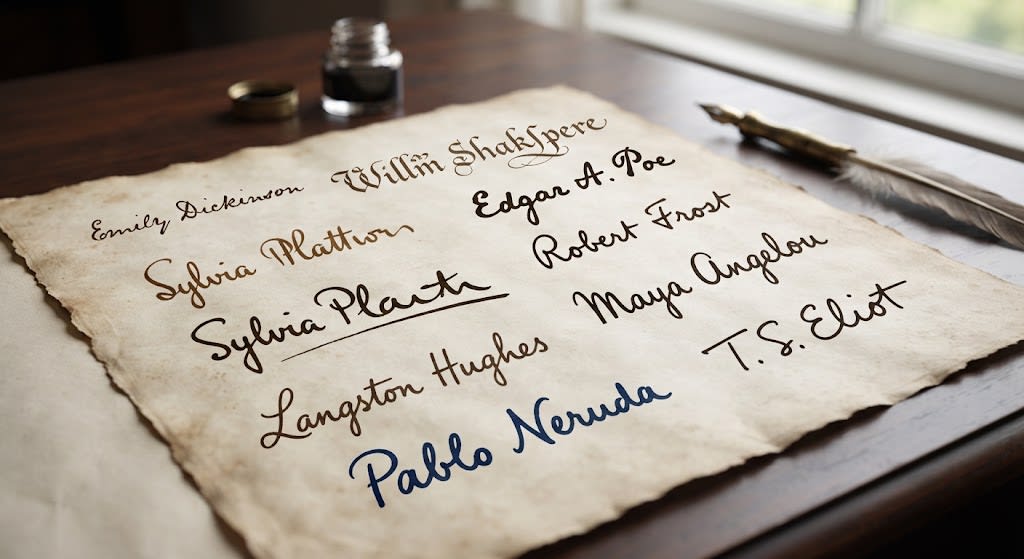
We have grown embarrassed by poets. The embarrassment rarely takes the form of hostility. It appears as courtesy. We praise the great poets, speak reverently of their place in literature, then return to the language of business, politics, technology, and entertainment as though poetry belonged to another part of human life.
The poet has acquired the reputation of an unnecessary person. That reputation makes sense in a culture where nearly everything must prove its usefulness. A poem repairs nothing. It produces nothing. It settles no dispute and supplies no answer on demand. It occupies very little physical space while asking an extraordinary amount from the mind. Three minutes with a poem can remain lodged in a person’s thinking for fifty years. Such a disproportion seems almost absurd in a society accustomed to judging value by immediate results.
Modern life has placed an enormous burden upon language. Words sell products, move money, issue instructions, protect reputations, win elections, maintain relationships, and operate machines. Much of that language has a brief existence. Once the transaction ends, the words have served their purpose and disappear beneath the next demand. Poetry asks something different of language. It asks us to remain with a word long enough to discover what we have overlooked.
That demand helps explain why poets have always been difficult to classify. They work with experiences that resist practical description. Grief can begin before a person understands what has happened. Desire may exist before its object becomes clear. Fear can enter a life before reason has found its cause. Memory can change the meaning of an event long after the event has ended. Prose can tell us what happened. Poetry moves toward the experience itself, toward the part that remains after the facts have been gathered and arranged.
Edgar Allan Poe understood that territory with extraordinary precision. The popular Poe has become almost a caricature of himself, surrounded by ravens, premature graves, doomed women, and Gothic rooms, a figure conveniently brought out each October. That version of Poe remains entertaining because it keeps him at a comfortable distance. The real Poe was a remarkably exacting craftsman who understood the mechanics of emotional effect. He understood sound and rhythm. He understood recurrence. Above all, he understood what a single word could do when placed in exactly the right position.
“The Raven” is remembered for its refrain, although the refrain itself tells only part of the story. What matters is the change repetition produces in the mind of the speaker. At first, the word sounds like an answer. As the poem proceeds, it becomes something imposed upon him. His grief begins to acquire a voice of its own, and each return of the word carries the weight of everything that came before. Poe understood that language could become obsessive. He understood something more disturbing as well. The reader could be drawn into that obsession. The poem gives grief a structure in which the wound keeps reopening.
Emily Dickinson possessed a similar command of language through an entirely different method. Her poems often appear to enter a thought after it has already begun. Explanation falls away, leaving the reader with a sentence whose force exceeds its size. Her famous dashes deserve more attention than the mythology surrounding them usually allows. They interrupt the expected movement of thought and make the reader hesitate. Meaning arrives through participation. Dickinson rarely removes uncertainty before presenting an experience. She preserves the uncertainty, allowing the mind to work inside it, which may explain why her poems continue to resist exhaustion after generations of reading.
Percy Bysshe Shelley gave poetry a different responsibility. He believed imagination could possess moral and political power. For Shelley, poetry could alter the terms through which people understood freedom, justice, desire, and human possibility. Such faith can appear extravagantly romantic to modern readers. It can also seem naive until history reminds us how many political changes began as ideas that looked impractical, dangerous, or impossible. Shelley understood that a person must first be able to imagine another kind of world before demanding one. His poetry carries hope alongside disappointment because history rarely rewards human beings according to the size of their hopes.
Keats approached the problem through beauty and mortality. He is often reduced to the poet of beauty, a description that makes his work sound gentler than it really is. Keats knew that beauty acquires much of its force from its vulnerability to time. What we love becomes precious partly because we understand that we cannot keep it. His idea of negative capability offers an especially sharp challenge to modern impatience. He believed the mind could remain within uncertainty without rushing toward a conclusion. Doubt, in such a view, could be evidence of intellectual strength. The unanswered question could have greater value than the hurried answer.
Modern life has become remarkably uncomfortable with that kind of uncertainty. A question appears and an answer follows almost immediately. An opinion is expected before thought has had time to develop. Every subject seems to produce an expert ready to explain it before we have decided whether we understand the question itself. Keats offers another possibility. A mind can remain unsettled while it works. Sometimes the unsettled state is where the deepest understanding begins.
Wordsworth changed poetry by arguing that serious verse could grow from experiences carrying little public importance. Childhood memories, solitary moments, encounters with other people, and private recognition could become subjects worthy of sustained attention. The idea seems harmless now because poetry has absorbed it so thoroughly. In Wordsworth’s time, the claim carried greater force. English poetry had long devoted itself to kings, battles, heroic deeds, mythology, religion, and public events. Wordsworth turned toward the individual and argued that a childhood memory could possess the gravity of history.
That idea deserves defending because most human lives leave few official records. People remember their parents, their first homes, the people they loved, the people they lost, the mistakes they made, the places they left, and the moments whose meaning arrived years afterward. History has little room for most of those memories. Poetry can give them room. A poem can preserve a private experience long after the person who lived it has vanished from the record. A life that left no monument can still leave language behind.
Robert Frost carried some of Wordsworth’s interest in common experience into an American setting while giving his poems the sound of ordinary conversation. His apparent simplicity can be deceptive. “Mending Wall” begins with a wall and gradually opens into questions about property, custom, separation, and inherited belief. Frost trusts the reader enough to leave those questions inside the poem rather than explaining them afterward. “Stopping by Woods on a Snowy Evening” works through the same kind of restraint. The language seems accessible and the music remains memorable, yet beneath it lies a struggle involving desire, responsibility, mortality, and the obligation to continue living. Frost knew that plain speech could carry complicated thought without announcing its importance.
Walt Whitman had little interest in keeping poetry within respectable boundaries. He wanted an American poetry large enough to contain labor, sexuality, democracy, death, war, desire, loneliness, the body, and the individual self. His long lines are sometimes mistaken for freedom from form. They have their own discipline. Repetition gives them structure, while the catalogs create a widening sense of human presence. Whitman’s speaker gathers people into the poem until the individual voice begins to resemble the voice of a country. He understood a persistent American tension. A person can belong to a multitude while retaining a distinct self.
These poets offer no single theory of poetry. They scarcely offer a single theory of anything. Poe examines obsession through sound. Dickinson makes uncertainty part of the method. Shelley gives imagination a political purpose. Keats places beauty beside mortality. Wordsworth finds significance in memory. Frost conceals philosophical difficulty inside ordinary speech. Whitman expands the individual until the private voice becomes communal. Their differences matter because each discovered another way to prove that language can do far more than transfer information.
What unites them is a refusal to treat language as transparent. A word carries sound, history, association, rhythm, and emotional weight. Its position can change its meaning. Repetition can change its force. A single substitution can alter an entire poem. Poets understand this because their work depends upon distinctions that ordinary communication tends to overlook.
Most of us use language because we want something accomplished. We want a message delivered, an instruction understood, a transaction completed, or an argument settled. Poetry slows that process. The language itself becomes part of the subject. This can make poetry feel strangely out of place in modern life, where language is frequently designed to produce an immediate response. A poem often works against that expectation. Its meaning may emerge only after the reader has spent time inside it.
A poem can make a word troublesome again. Language wears down through constant use. Words that once carried precision become slogans. Phrases repeated often enough begin to sound meaningful even after their original meaning has faded. Poets resist that decay by returning to the words themselves. They test them, rearrange them, listen to them, and place them in circumstances where an old word can recover its force.
The result can be uncomfortable. A strong poem may bring an emotion to the surface that a reader has spent years avoiding. It may give a name to something the reader preferred to leave unnamed. It may take an assumption that seemed harmless and reveal what lies underneath it. Poetry offers consolation at times, yet consolation is hardly its highest purpose. Grief deserves more than a pleasant sentence. Mortality deserves more than an inspirational quotation. Love deserves more than a greeting-card sentiment. A poet may have to make an experience more difficult before the reader can understand it, and that difficulty can become part of the gift.
A poem encountered at twenty can return at sixty as though someone had altered the words. The poem itself has remained available while the reader has accumulated years the younger person could never possess. A line that once seemed decorative can become severe. A passage that once seemed obscure can become painfully clear after death, divorce, departure, disappointment, or the ordinary accumulation of years. The poem has acquired a different meaning because the reader has acquired a different life. Few experiences in literature are stranger than recognizing yourself inside words you once thought you understood.
This helps explain the peculiar attachment people form to poets. Poe becomes associated with dread. Dickinson becomes associated with inward thought. Shelley carries hope and revolt. Keats brings youth into the presence of mortality. Wordsworth turns toward memory. Frost questions inherited assumptions. Whitman gives the individual a public voice. Such associations can harden into literary clichés, and the poets themselves are always more complicated than the portraits handed down to us. Still, something important survives beneath those portraits. We carry poets into our own lives.
An essay may change an opinion. A novel may give us another world for several hundred pages. A poem can become part of the language through which we understand ourselves. That kind of survival has little to do with fame. It is closer to companionship. The poem remains available when the circumstances of its first reading have disappeared, waiting for another version of the reader to encounter it.
The argument for poetry, then, has little to do with beauty alone. Beauty gives pleasure, and pleasure has its place. Poetry has a harder responsibility. It gives language to experiences that facts cannot preserve. A record can establish that someone died. A poem can attempt to approach what death did to the person who remained. A biography can tell us where someone lived. A poem can suggest what leaving that place meant. A history can establish that a war occurred. A poem can enter the consciousness of someone who carried the war home. Facts preserve events. Poetry reaches toward the human meaning attached to them.
A culture can function with very little poetry. It can conduct business, maintain institutions, develop technology, gather information, and communicate at extraordinary speed. None of those achievements guarantees that the people living within such a culture possess the language required to understand their own experience. A civilization can become remarkably efficient at communication while losing some of its ability to say what its experiences mean. The danger has little to do with the number of poems people read. The greater danger lies in forgetting that language has purposes beyond efficiency.
The poet resists that impoverishment by giving attention to the word before it passes into the next sentence. The poet reminds us that memory can contain knowledge and that uncertainty can remain unresolved while thought grows deeper. Private experience can acquire a public language. An emotion can survive the person who first felt it. A moment that would otherwise disappear into the private history of one life can remain available to someone living centuries later.
That is why we still need poets. Their work has never been to make life prettier. Their work is to make experience harder to evade, language harder to misuse, and memory harder to lose. They take what a culture may regard as too private, too difficult, too useless, or too strange for practical language and give it a lasting form. For all our machines, our speed, our abundance of information, and our confidence in immediate answers, we remain creatures whose experience regularly exceeds our ability to explain it. Poetry begins in that distance between what we live and what we can say. Its survival suggests that we have yet to become satisfied with a language limited to whatever can be explained quickly.
About the Creator
Tim Carmichael
Let your becoming be louder than your fear, and your smallest steps become the road you once thought impossible to walk. An Appalachian poet and cookbook author my book Beautiful and Brutal Things is on Amazon, Link 👇
Enjoyed the story? Support the Creator.
Subscribe for free to receive all their stories in your feed. You could also become a paid subscriber, letting them know you appreciate their work.
Comments
There are no comments for this story
Be the first to respond and start the conversation.