
Why Is Global Book Distribution Important for Modern Authors?
Make Your Book Accessible Across the Globe
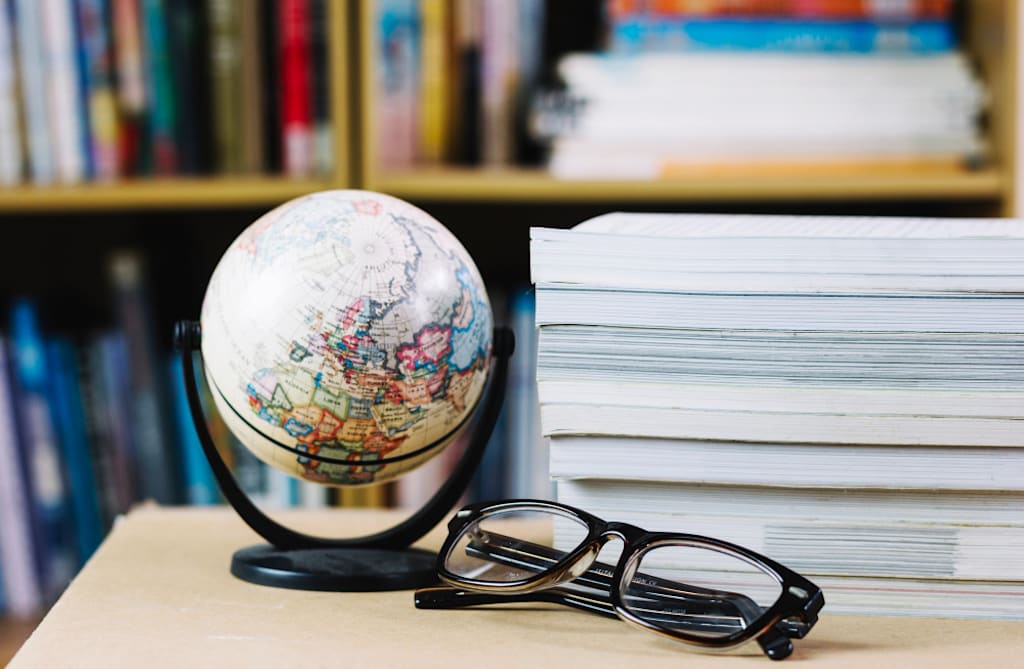
There used to be a time when, if you wanted your book in the hands of a reader, you had to either find a publisher or learn the how-to's of business administration and employ-and be employed-and pay for physical copies of your book to the very end of the earth, through a lengthy process called Global Book Distribution. This is no longer the case-though walking or even hopping on a commercial plane in the countries of the world is today more relevant than ever. Understanding global book distribution is the key to a book that finds its audience.
Eventually, you will discover why global distribution matters. And you'll learn where most authors fall heavily on the wrong side of automation. Keep reading to understand those potholes and prevent them from bottoming you out right out of the gates.
What Global Book Distribution Actually Means
Distribution is not just the act of uploading your manuscript somewhere and pressing publish. It's the entire system that gets your book from your hard drive to a reader in Toronto, Tokyo, or Nairobi. And we cannot emphasize this enough: it's never the fault of the reader.
Most independent authors will eventually be published in any number of formats (print, digital and increasingly audio) and in multiple retail stores. If we view the book as a single "entity", (preferably with multiple retail and formats), then we understand that a truly distributed book would also be listed with local pricing, have a global footprint and would be accessible in other languages. Then the tools, they really exist and they really work.
The moment you start thinking about kdp amazon self publishing, you are already thinking about global distribution because Amazon operates in dozens of countries and serves millions of readers worldwide through a single publishing infrastructure. That is powerful. But it is only one piece of the puzzle.
The Problem Most Authors Do Not Realize They Have
Here is something that most self-publishing guides skip over: publishing on a platform is not the same as being distributed by that platform.
Many authors upload their book, assign it a price, and assume that the algorithm will take care of the rest. It will not. Distribution requires deliberate setup selecting the right territories, enabling expanded distribution channels, choosing whether to go exclusive with one platform or wide across many. These are decisions that affect whether your book appears in libraries, independent bookstores, online retailers outside of Amazon, and international markets that are growing faster than the U.S. book market right now.
Authors who skip this setup phase often discover months later that their book is technically "published" but effectively invisible to 90% of the global reading population.
Why International Readers Are Not an Afterthought
The United States accounts for roughly 30% of global book sales. That means nearly 70% of potential readers are outside American borders. Countries like Germany, the United Kingdom, India, Brazil, and South Korea have enormous reading populations with growing appetites for independently published content.
If you're an author who chooses not to take full ownership of the distribution process, you are voluntarily leaving something like 85% of your potential audience and income on the table. Reading a conventional book is extremely hard, and I have every confidence that someday every international consumer who is hungry to buy your book will be able to easily and affordably do so.
Before you nail the publishing strategy as the next step of your publishing journey, this is an example of this distributionist mindset at play. One might have an extremely niche genre indeed following topics that have never been covered for children before. However, the global distribution means that having the content available is documented to allow one parent in every country to find a book based upon an age mapped and relevant search.
Where the Process Breaks Down and How to Fix It
The Exclusivity Trap
One of the biggest decisions authors face with Kindle Direct publishing (KDP) of their e Book is whether to go exclusive to Amazon and join the Select program, or to put your book on Kindle and then wide distribute the book across many bookshelves. It seems like creating a book is the hardest part, but distributing is a big decision that you need to think about.
The answer is easier than you might think. Be sure that you've assessed your target audience, based on the platform they use the most. If your readers gravitate toward genres with a high Kindle Unlimited readership, this may be more beneficial than wide distribution. If they vary across platforms like Kobo or Apple Books, you'd be better served by wide distribution.
Format Gaps That Cost You Readers
Many authors publish only an eBook, ignoring print-on-demand options that make physical books accessible globally without upfront inventory costs. Print matters more than digital-only authors often assume. Libraries overwhelmingly prefer physical books. Many gift buyers prefer them. And readers in certain international markets still strongly favor print over digital.
The kdp amazon self publishing ecosystem includes print-on-demand infrastructure that can put your paperback in front of global buyers without requiring you to ship a single copy yourself. This is one of the most underutilized features available to independent authors and it directly solves the problem of reaching readers who will not buy digitally.
Metadata and Discoverability
Your book's title, subtitle, categories, keywords, and description are not just marketing copy. They are the instructions you give to algorithms and search engines that determine whether readers can find your work. Authors who rush through metadata setup or copy it carelessly from templates are essentially hiding their books in plain sight.
The fix here requires deliberate research. Spend serious time learning how readers actually search for books in your genre. For those publishing a children's book, this means understanding how parents and educators search age ranges, themes, educational value, and reading level all become searchable criteria that your metadata should directly address.
The Practical Steps to Broader Distribution
Getting your distribution right does not require a degree in publishing or a team of professionals. It does require a clear process and a willingness to learn how each platform works.
Start with your core platforms. Amazon is the largest retail market for books in the English-speaking world, and understanding kdp amazon self publishing how the interface works, how royalties are calculated by territory, how expanded distribution options function is foundational knowledge every independent author needs. Do not publish without reading the platform's distribution documentation thoroughly.
Then go wide. Services like IngramSpark and Draft2Digital allow you to distribute to hundreds of retailers and library systems with a single upload. These platforms are not redundant with Amazon they reach entirely different reader populations. A reader who buys exclusively through Apple Books or Barnes and Noble online will never encounter your work if you only publish on one platform.
Consider your pricing by territory as well. A book priced at $12.99 in the United States may be unaffordable to readers in markets with different purchasing power. Most major platforms allow you to set different prices for different territories. Use this feature thoughtfully rather than leaving the default in place.
Do not ignore libraries either. Library distribution through platforms like OverDrive and Bibliotheca can introduce your book to readers who would never have discovered it through retail channels. Libraries are particularly important for children's book authors they are a primary discovery channel for parents seeking new titles for young readers, and a single library system can expose your book to thousands of families.
The Long Game: Why Distribution Compounds Over Time
Here is something worth understanding about global distribution that most authors do not discuss openly: it is not a one-time decision. It is infrastructure you build, and it compounds over time.
An author who publishes widely from the start accumulates reviews, readership, and sales data across multiple markets. That data informs future publishing decisions. It builds visibility in retail algorithms. It creates a network of readers in different countries who recommend your work within their own communities organically, without any advertising spend from you.
An author who publishes narrowly and tries to expand later faces an uphill battle. Older books receive less algorithmic attention, and re-establishing visibility on platforms you ignored during launch is genuinely difficult. The window of opportunity that opens when a book is new does not stay open indefinitely.
The most successful independent authors, the ones who build sustainable careers rather than one-book moments, treat global distribution as a foundational business decision made before the book even launches.
Closing Thought: Your Reader Is Already Out There
Somewhere right now, there's someone looking for something to read: someone who would actually really love your book. Maybe they live on the other side of the world. Maybe they are already looking for your book on a platform you haven't published to yet. Maybe they are looking for the kind of story for their child that only you'll tell.
Whether it's your first or 10th children's book that you're finally publishing, that big question remains: have you built the infrastructure to accommodate that reader who is going to find you? And you are so close to them, you can't see that.
Global book distribution is not a luxury for authors with large budgets or publishing house backing. It is the baseline strategy that every modern author independent or hybrid needs to take seriously from day one. The tools are accessible. The platforms exist. The only thing standing between your book and its global audience is the decision to set things up correctly.
Make that decision early, and make it deliberately. Your future readers are already looking.
About the Creator
Enjoyed the story? Support the Creator.
Subscribe for free to receive all their stories in your feed.
Comments
There are no comments for this story
Be the first to respond and start the conversation.