
Why I Left a $300k Corporate Dream Job to Regain My Freedom
A raw, firsthand account of walking away from executive corporate success to escape the golden handcuffs and reclaim control over life, time, and mental health.

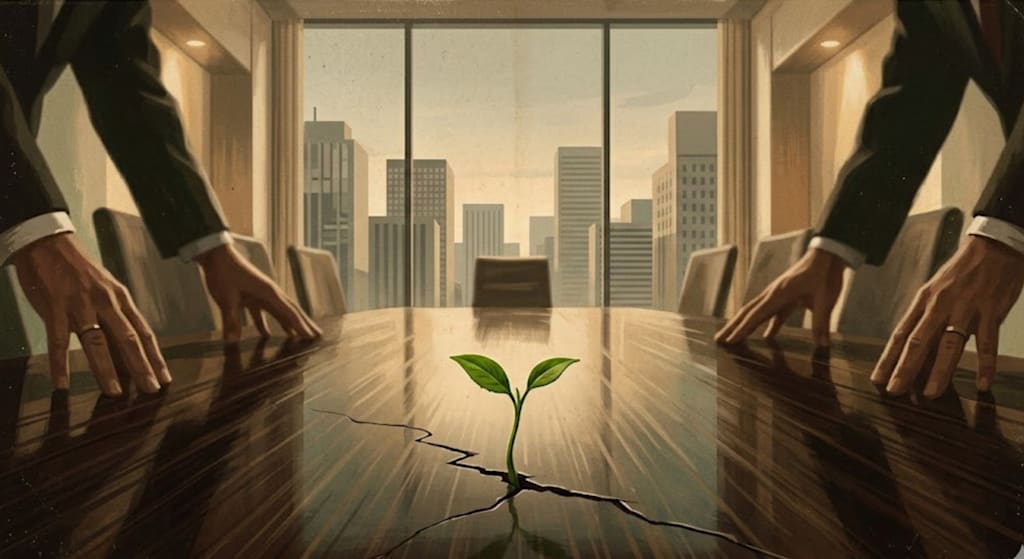
The Day I Realized My Dream Job Was a Well-Paying Cage
"You look miserable," my wife said, not looking up from her laptop.
It was 11:42 PM on a Tuesday. I had just closed a transaction that would net my firm seven figures, and my hands were shaking so badly I couldn’t unbutton my shirt. On paper, I was the definition of winning. I had the VP title, the corporate housing, the flight status, and a compensation package that made my college self look like an amateur.
But as I sat on the edge of the bed, watching the rain hit our high-rise window, a terrifying thought crept into my mind: If this is the top, why does it feel like the bottom?
The Metric That Lied
For seven years, I operated under a simple equation. More output equals more status, which equals more freedom. I was the guy who answered Slacks at 2:00 AM. I took pride in being "indispensable."
Then came the quarter where everything went perfectly. We beat our targets by 140%. I expected a wave of relief, a moment to breathe, maybe a weekend where I didn't check my inbox. Instead, my reward was a shiny new spreadsheet from the board. The new target for next quarter was double what we had just achieved.
That was the moment the illusion broke. I wasn't climbing a ladder. I was running on a treadmill where the speed only increased when I proved I could handle it. The success wasn't buying me freedom; it was just buying more expensive walls for my cage.
The Question I Couldn't Ignore
The next morning, I did something completely out of character. I blocked off my calendar from 9:00 AM to noon. No meetings. No status updates.
I walked down to a coffee shop three blocks from the office—a place I passed every day but had never actually entered. I ordered a black coffee, sat by the window, and watched the city move. For the first hour, my chest felt tight. My pocket vibrated like a phantom limb. I felt an overwhelming sense of guilt, as if I were shoplifting my own time.
By the second hour, the anxiety faded, replaced by an uncomfortable clarity. I looked at the people rushing past the window, ties flying, eyes glued to screens. I realized I hadn't looked at a tree, read a book for pleasure, or had an uninterrupted conversation with an old friend in over three years.
My job paid me for my intellect, but it owned my attention. And attention is the only currency that actually matters.
The Mistake That Changed Everything
I decided to run a quiet experiment. I didn’t quit—not yet. Instead, I stopped volunteering for things. I stopped checking my emails past 6:00 PM. I stopped pretending that every minor corporate fire required my personal gasoline.
The first week, I expected to get fired. I expected a stern talking-to from the managing director.
But something strange happened. Nobody noticed.
In fact, because I was no longer reactively jumping into every tactical mess, my strategic work actually improved. I was making fewer decisions, but they were better ones. I had stumbled into a profound truth: the corporate ecosystem doesn't actually value your constant presence; it just takes whatever you are willing to give until you have nothing left.
What Happened Next Surprised Me
Three months into my experiment, I was offered another promotion. More equity, a bigger team, and a direct line to the C-suite.
A year prior, I would have popped champagne. That day, I felt a profound sense of dread. I looked at the executive offering me the role. He was fifty-two, on his second divorce, and looked like he survived entirely on black coffee and antacids. He was handing me the keys to a bigger cage, expecting me to thank him for the upgrade.
"I can't take it," I said.
The room went dead silent. "What do you mean?" he asked, genuinely confused. "This is what you've been working for."
"I know," I said. "That's why I'm leaving."
The Real Problem Wasn't What I Thought
I used to think the problem was the company, or the boss, or the industry. It wasn't. The problem was my own identity. I had tied my self-worth so tightly to my professional output that without my title, I didn't know who I was. I was terrified of being ordinary.
Leaving that job wasn't a triumphant movie moment. It was messy. It involved awkward exit interviews, a massive lifestyle downgrade, and weeks of waking up at 6:00 AM with panic attacks because my phone wasn't buzzing.
But then, the space started to fill up with things that actually mattered. I started cooking again. I started sleeping six hours a night, then seven, then eight. I built a tiny consulting practice where I control the hours and choose the people I work with. I make less money, but I own my Tuesdays.
We are taught to climb until we can't climb anymore. But we rarely ask what the ladder is leaning against. Sometimes, the most successful thing you can do is step off completely, look up at the cage you built for yourself, and walk out the open door.
About the Creator
abualyaanart
I write thoughtful, experience-driven stories about technology, digital life, and how modern tools quietly shape the way we think, work, and live.
I believe good technology should support life
Abualyaanart
Enjoyed the story? Support the Creator.
Subscribe for free to receive all their stories in your feed.
Comments
There are no comments for this story
Be the first to respond and start the conversation.