
Why Every Writer Secretly Hates Their Best Work
The Strange Relationship Between Writers and Their Greatest Achievements

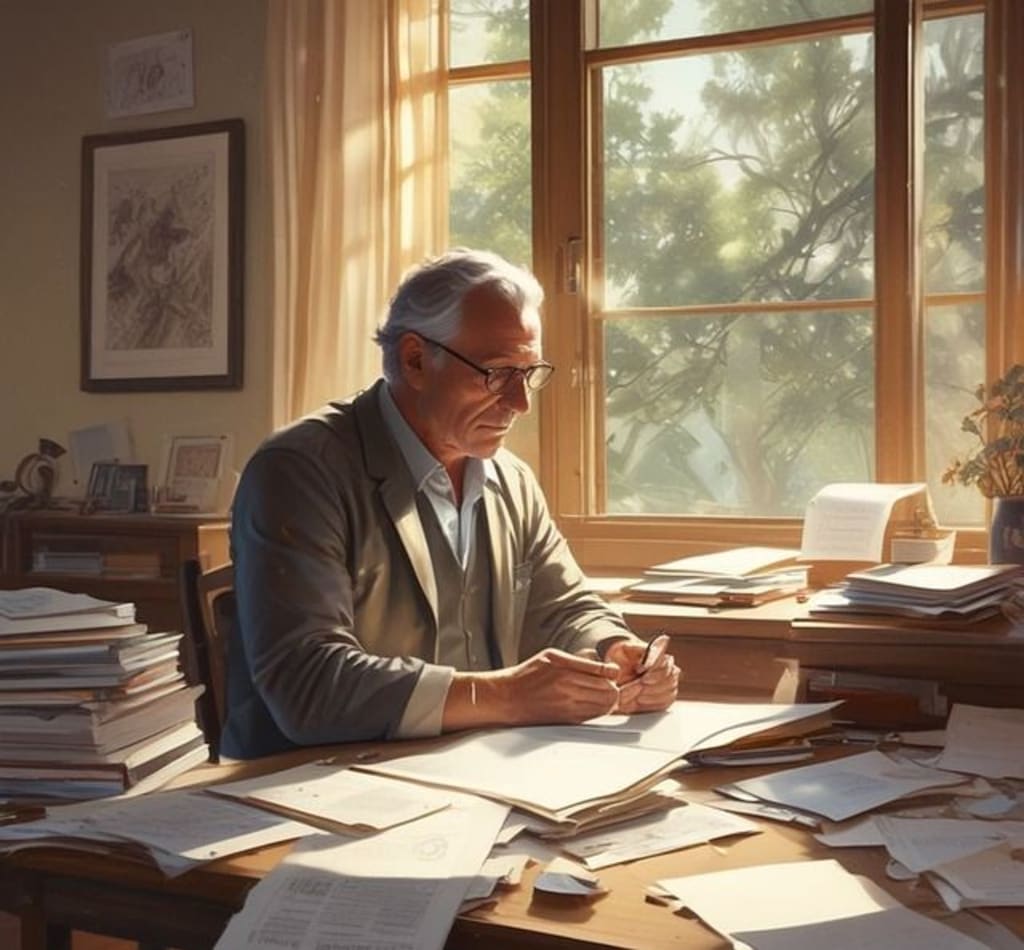
There is a strange confession that many writers rarely admit out loud.
The piece that readers praise the most is often the one the writer struggles to look at again.
It sounds ungrateful, even absurd. After all, if an article earns thousands of views, a poem touches strangers across the world, or a story receives glowing comments, shouldn't the author love it too?
Not always.
Sometimes the work that changes your life is the same work you never want to read again.
I learned this after publishing what became my most successful essay. It wasn't carefully planned. I didn't spend months outlining it or researching every paragraph. Instead, it arrived on one of those quiet evenings when emotions become louder than thoughts.
I sat down with no intention of creating anything remarkable. I simply wanted to empty my mind.
The words poured out faster than I could question them.
When I finally reached the last sentence, I felt exhausted rather than proud. I almost deleted the entire draft. It seemed too personal, too imperfect, too revealing. But after staring at the blinking cursor for several minutes, I clicked "Publish."
Then I closed my laptop and forgot about it.
The next morning, my inbox was overflowing.
Readers thanked me for putting their emotions into words. Some admitted they had cried. Others said they had shared the article with family members who finally understood what they had been trying to explain for years.
It quickly became my most-read piece.
Ironically, it also became the one I avoided reading.
At first, I couldn't understand why.
If everyone else loved it, why did I feel uncomfortable every time someone mentioned it?
The answer took years to uncover.
A writer doesn't experience their work the same way a reader does.
Readers see polished sentences.
Writers remember deleted paragraphs.
Readers admire beautiful metaphors.
Writers remember every sentence that refused to cooperate.
Readers discover finished stories.
Writers remember sleepless nights, second-guessing, and the quiet fear that none of it would make sense.
Every paragraph carries memories invisible to everyone else.
The finished piece becomes a photograph.
The writer remembers the entire journey.
There is another reason many writers secretly dislike their best work.
Success freezes it in time.
Imagine spending months painting one picture.
People love it so much that every conversation afterward becomes about that single painting.
Eventually, it begins to feel less like your greatest achievement and more like a room you can never leave.
Writing works the same way.
Readers naturally compare every new article to the one they loved most.
Publish another story, and someone says they preferred the old one.
Try a different style, and another reader asks why you changed.
Without realizing it, your greatest success quietly becomes your shadow.
Writers crave growth.
Readers often crave familiarity.
Those two desires don't always get along.
Perhaps the hardest truth is this:
Your best work usually belongs more to your readers than to you.
Once words are published, they stop being entirely yours.
A sentence you barely remember might become someone's favorite quote.
A paragraph you almost deleted could help another person through the darkest week of their life.
Meanwhile, you continue remembering every flaw hidden beneath the surface.
That gap between public admiration and private criticism never completely disappears.
Perfectionism also plays its part.
Most writers don't reread their successful pieces thinking, "I did well."
Instead, they whisper things like:
"I should have rewritten that ending."
"That paragraph feels awkward."
"I've become a much better writer since then."
"I can't believe I missed that mistake."
Ironically, improving as a writer often makes your older successes harder to appreciate.
Growth changes your standards.
What once felt extraordinary eventually feels unfinished.
Yet readers aren't comparing your article to the writer you've become today.
They're experiencing it for the very first time.
That difference matters.
I once asked another writer if they had a favorite piece.
They smiled before answering.
"My favorite," they said, "is always the one I'm working on."
At first, I thought they were avoiding the question.
Later, I realized they had described the writer's mindset perfectly.
Writing isn't about protecting yesterday's success.
It's about chasing tomorrow's possibility.
Maybe that's why writers rarely celebrate for very long.
Each finished story simply becomes evidence that another unwritten story is waiting.
The excitement lives in creation, not completion.
Looking back now, I understand why I struggled to revisit my most popular article.
It wasn't because I hated it.
It was because it reminded me of the person who wrote it.
That version of me was uncertain, vulnerable, and desperately hoping someone would understand.
Every sentence preserved emotions I had already outgrown.
Readers saw a masterpiece.
I saw a snapshot of an older self.
Perhaps every writer secretly hates their best work for the same reason people struggle to look at old photographs.
The picture isn't embarrassing because it's bad.
It's uncomfortable because it captures someone you've already left behind.
And maybe that's exactly how it should be.
If your best work still feels perfect years later, perhaps you haven't grown enough since writing it.
The goal isn't to create one unforgettable story and spend the rest of your life admiring it.
The goal is to keep becoming the kind of writer who makes yesterday's masterpiece look like practice.
That quiet dissatisfaction isn't failure.
It's proof that the next story is already asking to be written.
About the Creator
MR HONEST
If you enjoy my writings, subscribe so I can create more and you can access exclusive content. Thanks to all of you for supporting me
Enjoyed the story? Support the Creator.
Subscribe for free to receive all their stories in your feed.
Comments
There are no comments for this story
Be the first to respond and start the conversation.