
Why Content Distribution Matters More Than Ever
Creating strong content is only half the job. The real growth comes from getting that content in front of the right audience.

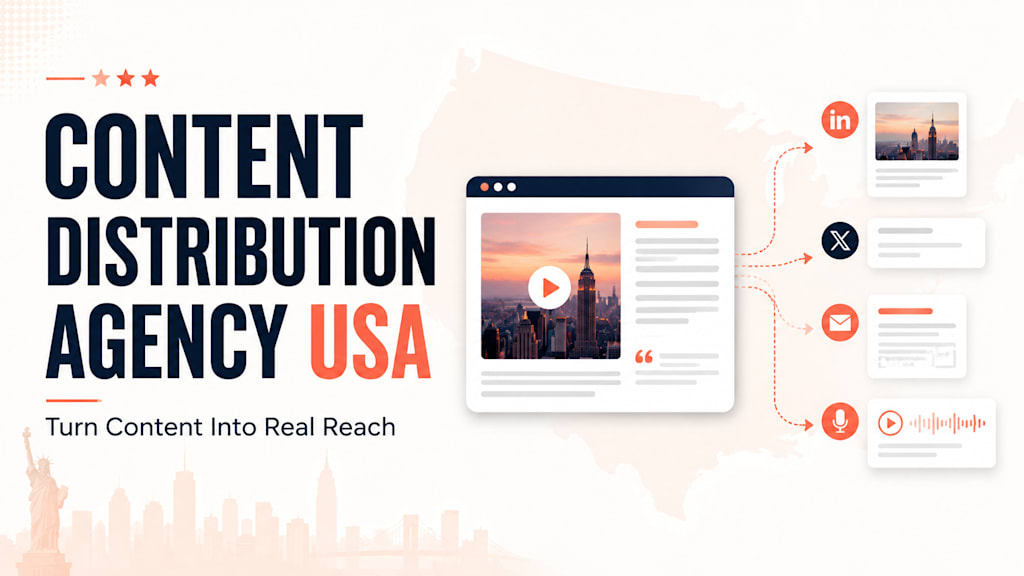
Most brands put serious effort into creating content, but far less effort into making sure that content actually reaches the people it was created for. A team may spend days preparing an article, recording a podcast, filming an interview, running a webinar, or building a customer story. The ideas may be useful, the production may be solid, and the message may be genuinely relevant to the audience. Yet once the content goes live, it often gets one social post, one newsletter mention, and then slowly disappears.
That is where many content strategies break down. The problem is not always the quality of the content. In many cases, the issue is that the content was published, but not properly distributed. A strong article does not automatically rank. A good podcast episode does not automatically grow. A useful video does not build trust if only a small group ever sees it. Content needs a plan after publication, not just before it.
This is why a Content Distribution Agency USA can be valuable for brands that already create content but struggle to get consistent visibility from it. The role of distribution is not to throw links everywhere and hope for traffic. It is to take one strong asset, reshape it for different platforms, and place it in front of the right audience in a way that feels natural, useful, and relevant.
Publishing and distribution are not the same thing
A common mistake brands make is treating publishing as distribution. Publishing simply means the content is live. Distribution means the content is actively being moved through the right channels, in the right formats, with the right message for each audience. That difference sounds small, but it changes the entire outcome of a content campaign.
For example, posting a blog link on LinkedIn is not really a distribution system. It is a single promotional action. A stronger approach would turn that same article into a LinkedIn post built around one idea, a short email section, a few quote graphics, a short video script, a founder-led post, and maybe a supporting guest article or backlink placement. The original message stays connected, but each version has its own purpose and fits the platform where it appears.
This is what good distribution does well. It does not copy and paste the same content everywhere. It adapts the content so it has a better chance of being understood, shared, saved, searched, or acted on.
Why good content often gets wasted
Good content is often wasted because the process ends too early. A brand creates the main asset, publishes it, shares it once or twice, and then moves on to the next topic. That may feel productive internally, but it leaves a lot of value on the table.
A podcast episode may contain five or six strong ideas, but many people will never listen to the full episode. A webinar may include answers to important buyer questions, but only a small percentage of the audience may watch the replay. A customer story may contain proof points that could help the sales team, but those points may stay hidden inside one case study page. A founder interview may explain the brand’s point of view clearly, but if it is not repurposed, only a narrow audience will ever hear it.
Distribution helps unlock that value. It takes the strongest parts of an asset and turns them into smaller, more usable pieces. One article can become a newsletter feature, social posts, a short-form video, a sales follow-up note, and a guest post angle. One webinar can become short clips, a blog section, and email content. One podcast can become a week or even a month of useful visibility when handled properly.
Why the USA market makes distribution even more important
The American market is crowded across nearly every serious category. SaaS brands publish educational guides. Agencies share frameworks. Founders build personal brands on LinkedIn. Consultants write newsletters. Ecommerce brands create videos. Media brands publish clips, podcasts, and explainers. This means even useful content can get buried quickly if there is no plan to keep it moving.
In a market this competitive, brands need more than one touchpoint. A potential customer may ignore the first article, notice the second LinkedIn post, watch a short clip the following week, and finally understand the message after seeing it again in a newsletter. That is how brand recall often works now. People do not remember every post, but they do remember brands that show up consistently with useful ideas.
Distribution gives one idea more chances to land. It helps the same core message appear in different formats, across different channels, without making the content feel repetitive or forced. That repeated visibility is especially useful for brands selling services, expertise, consulting, software, or high-trust offers where buyers need time before they take action.
What a content distribution agency actually does
A content distribution agency helps brands get more mileage from the content they already create. The exact work depends on the campaign, but the goal is usually the same: turn existing content into a wider set of useful assets that can support search, social media, email, video, backlinks, and sales conversations.
A strong distribution partner may help with:
- Reviewing existing content assets and identifying the strongest ideas
- Turning long-form content into shorter platform-ready pieces
- Creating LinkedIn posts, newsletter sections, and community-friendly content
- Repurposing podcasts, webinars, and founder interviews into short-form clips
- Supporting backlink campaigns through article publishing and content placements
- Adapting content for search visibility and social discovery
- Planning distribution before the asset is published
- Tracking which channels, formats, and angles perform best
The most important part is the mindset. A good agency does not treat a podcast, article, webinar, or video as a finished item. It treats it as source material for a broader campaign. When the original asset is strong, it can support far more than one post.
One asset can become a full campaign
One of the most practical ways to understand distribution is to stop thinking of content as a single finished piece. A webinar is not just a webinar. It can become clips, email content, social posts, sales material, FAQs, and supporting articles. A podcast is not just an episode. It can become a set of short clips, key takeaways, quote graphics, newsletter sections, and search-friendly written content.
For example, one useful long-form video could become:
- Three short video clips for social media
- Two LinkedIn posts built around specific ideas
- One newsletter feature with extra context
- A blog section that supports search
- A quote graphic for brand visibility
- A community post that starts a useful discussion
- A sales follow-up note for warm prospects
- A short FAQ answer based on a common objection
This does not mean brands should stretch weak content just to fill a calendar. That usually creates thin, repetitive posts. The better approach is to extract genuinely useful ideas and reshape them with care. If the source material is strong, distribution helps it work harder without making it feel recycled.
Short-form video is now part of content distribution
Short-form video has become one of the strongest distribution tools because it fits the way people consume information today. Most people will not immediately commit to a full podcast, webinar, or long article from a brand they barely know. However, they may watch a 40-second clip if the opening is clear and the topic feels relevant.
A short-form clip can introduce an idea, show a founder’s point of view, answer a common objection, share a customer insight, or turn a complex topic into something easy to understand. It can also lead people back to the full asset when they want more depth. In this way, short-form content works as a doorway into longer, deeper material.
The key is that the clip needs to stand on its own. A random cut from a longer recording is rarely enough. The clip needs context, one clear point, and a reason for the viewer to keep watching. Good distribution is not just about cutting content shorter. It is about making the best part of the content easier to discover.
Distribution should be planned before publishing
Many brands think about distribution after the content is already finished. That is usually too late. A better approach is to plan distribution before the content is created, because that makes the original asset easier to repurpose later.
If a podcast is being recorded, the host can ask questions that produce strong short-form answers. If a webinar is being prepared, each section can be built around clear takeaways. If a case study is being written, the team can capture proof points that work for social posts, email, and sales follow-ups. This does not make the original content less natural. It simply gives it more structure.
Before creating a major asset, brands should ask who needs to see it, which platforms matter most, whether it can become short-form video, whether it can support search, whether it can help the sales team, and what smaller assets can come from it. These questions make content more useful from the start.
Common mistakes brands make with distribution
Many brands are closer to a good distribution system than they realize, but a few common mistakes hold them back. They post once and move on. They share the same caption everywhere. They treat all platforms the same. They create long-form content with no repurposing plan. They ignore short-form video opportunities. They publish without a clear audience in mind. They measure only views instead of looking at meaningful engagement, leads, brand recall, and content-assisted conversations.
The biggest mistake is assuming good content will automatically find the right audience. Sometimes it does, but most of the time it needs help. Distribution is that help. It gives the content a better chance of being seen by the people who are most likely to care.
Final thoughts
Good content should not be posted once and forgotten. A podcast, article, webinar, founder interview, customer story, or long-form video can support far more than one campaign when it is distributed properly. It can help with search, social media, email, short-form video, backlink building, sales conversations, and long-term brand visibility.
That is the real role of content distribution. It helps existing content show up in more places, in better formats, and with a clearer purpose. For brands tired of creating content that disappears too quickly, the answer is not always to create more. Sometimes the smarter move is to distribute what already exists with more intention.
About the Creator
Clipping Agency
Clipping Agency drives creator growth through clipping services, clipping campaigns, and clipping marketing, turning long-form content into short-form momentum at scale.
Enjoyed the story? Support the Creator.
Subscribe for free to receive all their stories in your feed.
Comments
There are no comments for this story
Be the first to respond and start the conversation.