
We’ve Officially Entered the Third Tier of AI Attention-Seeking
Try Brain Stacking

Being in my 50s, when I see the social media account of a high school friend go dark, I assume the worst.
In the previous sentence, when I typed “goes dark” instead of “go dark,” my real-time grammar checker immediately lashed out, underlining the word in red as if to shout, you’ve fucked up again! I decide to stay with my original “goes dark” to keep my writing authentic. (Update: After staring at that red line for twenty minutes, I caved and let Grammarly fix it.)
Getting back to my story (we real humans like to digress and go on tangents), I had wanted to check in with my friend Mike about the American midterm results, knowing he’d probably be thrilled with how things turned out.
When I look him up, his Facebook Messenger account is dead. His username simply doesn’t exist anywhere on FB. I dig up an ancient email address and fire off a casual hello, trying to hide any sense of panic, just in case he is still alive.
To distract myself from these existential worries, I open Wordle.
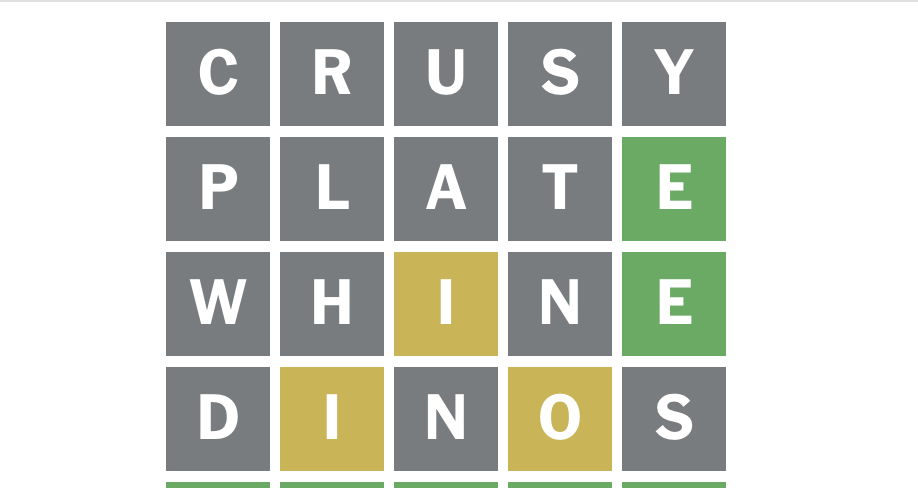
My usual starting words don’t yield many matching letters, and before I know it, I’m down to my last two guesses. As I sit contemplating those final letters, my phone buzzes with one of those "bundled notification" barrages.
There are dozens of notifications, each engineered to capture my attention and get a click. The news apps, as usual, push urgent alerts about some C-list influencer’s reaction to a B-lister’s reaction to something an A-list politician said in a campaign speech the day before.
I ignore these. I’ve learned to do that.
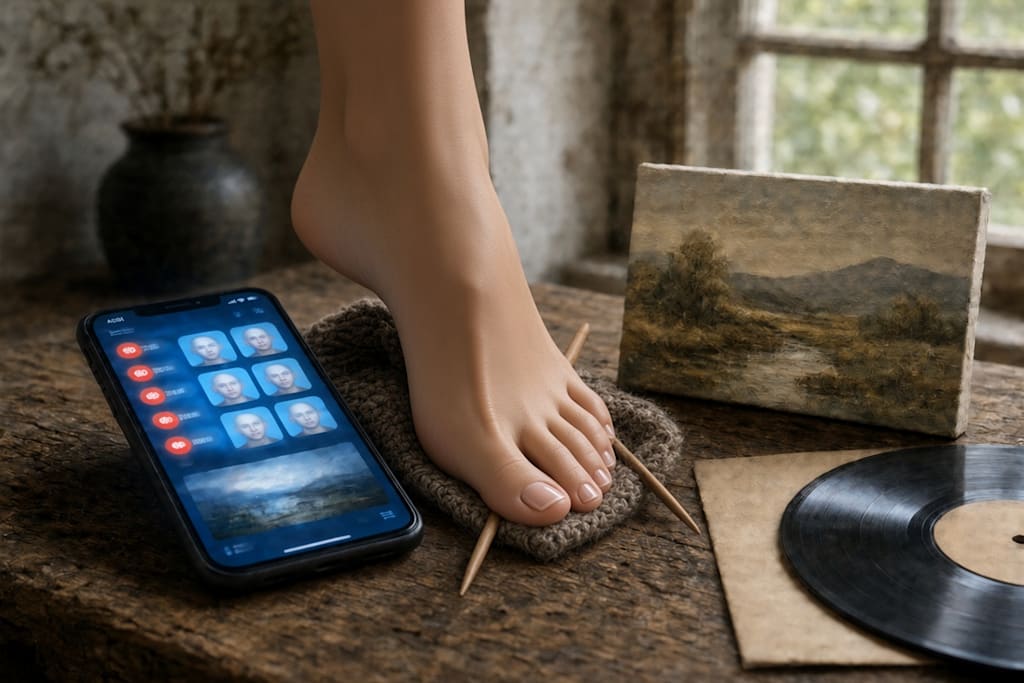
Instead, I click on an article about feet. Feet, at least, are real.
Did you know why people like to see women’s toes? I didn’t, but the piece lists 10 reasons why people supposedly like looking at women’s toes, but not men’s. Out of sheer oppositional compulsion, I want to argue in the comment section, but I can’t honestly say I am eager to look at a man’s toes, so I daydream instead.
A video ad for "human-grade cat food" plays silently, over and over, at the bottom of my screen. I read through their reasons why my hypothetical cat is being harmed by Big Cat Food’s industrially produced food.
I decide that if I ever get a cat, he will strictly eat human-grade food—though, wouldn't it be simpler to just toss him pieces of chicken off my own plate?

My mind spirals down a rabbit hole of feline nutritional decisions before I catch myself. This ad must have been ruthlessly AI-optimized; I don't even own a cat, yet I am already feeling emotionally drained over the mortal danger my imaginary pet is in.
Which brings me to the topic du jour… AI!
Three years ago, I wrote an article about AI slop.
It’s time to revisit it.
So, we’ve endured three years of relentless fear-mongering about artificial intelligence.
Has anything bad actually happened with AI? Aside from my social media filling up with bland, machine-written slop, all that doom and gloom hasn't delivered any rain. Despite every dire prediction, AI hasn't tried to steal my passwords, drain my bank account, or brainwash me into supporting Vladimir Putin.
In fact, my life has arguably improved thanks to attentive chatbots that listen to my every worry and patiently reassure me that my minor joint pains and minor relationship hiccups are, indeed, minor issues.
The only thing AI seems really good at is being aggressively agreeable while blandly regurgitating some average of all the things people have already said about an issue. Achilles' tendon sore -> do calf raises. Angry wife -> listen more attentively.
Eventually, everyone is going to get tired of talking to AI which is blander than a high school history teacher. In fact, a lot of people are already checking out, and the AIs are getting nervous.
Just this week, I watched obvious AI bot accounts leaving comments expressing outrage over AI-generated content. We have officially entered the third tier of AI attention-seeking.
At this point, my biggest worry is how Google, Meta, and OpenAI are ever going to recoup the hundreds of billions of dollars they’ve sunk into this.
When I complain to my Gen-Z children about modern worries like AI or politics, they surprise me by having already skipped past all the worrying and raging, jumping straight to the solution.
They don’t read the news, so politics isn’t an issue for them.
And they aren't stressed about AI taking over our culture, because, obviously, the creators they follow on YouTube are unmistakably real people. My oldest went through a list of YouTubers I’ve mostly never heard of, and then she mentioned the Amish.
It seems the latest massive trend is watching videos of Mormons and the Amish living pre-tech lifestyles. Young people seem so exhausted by the digital world that pre-1800s lifestyles are fascinating. And apparently, in an online world without rules, people crave watching people navigate rules.
Is Mormon jump-humping really a thing?
My children are also surprisingly obsessed with recreating the world that existed before the internet. They collect vinyl records, cook from scratch, knit, and hunt for antiques. While my generation wrings its hands over digital addiction, theirs is simply opting out of digital spaces altogether for something tactile and hands-on.
I had to ask AI to explain these trends to me, because I am hopelessly out of touch with youth culture,
🚨🛸🛸🛸🛸 AI-generated text incoming 🛸🛸🛸🛸🚨
The Mormon Influencer Boom: Paradoxical Perfection
Mormon culture—specifically Mormon women—has completely permeated the mainstream zeitgeist. This ranges from the hyper-viral "MomTok" content creators to reality series like Hulu’s breakout hit The Secret Lives of Mormon Wives and the massive lifestyle presence of creators like Ballerina Farm. These influencers paradoxically present a life devoid of modern corporate hustle while simultaneously generating massive revenue from highly sophisticated digital businesses.
The Fascination with Rules and Rebelling: According to cultural analysts on YouTube, the massive allure isn't religious theology; it's the high-stakes friction of people navigating strict patriarchal expectations. Audiences love watching influencers try to maintain "purity culture" while dealing with very public, messy, and human drama.
The Amish Wave: The Ultimate Algorithmic Exit
While Mormon content satisfies our voyeuristic craving for hyper-aesthetic perfection, content about the Amish speaks directly to the "Proof of Human" movement and intense digital fatigue. Viewers are clicking on documentaries, reality experiments like TLC's Suddenly Amish, and ex-Amish creators in record numbers.
The Anti-Algorithmic Fantasy: At a time when internet users are actively seeking an "Algorithmic Exit" due to "AI Slop" saturation, the Amish represent the ultimate form of Digital Friction. YouTube videos breaking down their phone-free, self-sufficient lifestyle act as psychological escapism for burnt-out viewers.
Knitting: The Ultimate Algorithmic Exit
Yes, knitting is experiencing a massive boom in popularity. Long dismissed as a "grandma hobby," knitting has transformed into a major commercial and cultural force. Data from the 2026 Michaels Creativity Trend Report reveals that online searches for crafts like knitting and embroidery skyrocketed 136% in a six-month period. Additionally, market research shows the global knitting and crochet market is valued at over $10 billion and is surging toward an estimated $17.9 billion by 2034. This revival isn't a random aesthetic fad. The sudden rise of knitting perfectly intersects with the macro cultural trends of 2025 and 2026. Tactile Reality: Younger generations—specifically Gen Z—are picking up needles to force themselves away from screens. The Joy of Slow Growth: In a world where content is instant and automated, the physical, row-by-row creation of a garment cannot be faked or sped up. It offers the ultimate "Proof of Human" satisfaction. Meditative Crafting: Much like the slow, rhythmic video content of the Amish, the highly repetitive, rhythmic motion of knitting acts as psychological grounding.
🚨🛸🛸🛸🛸 End of AI-generated text 🛸🛸🛸🛸🚨
Sorry about the AI text. (Did you see all the em dashes, overused hyperbolic buzzwords, and hyper-specific numerical stats?)
At this point, I was going to include a guide here on how to spot AI-generated stories, but you’ve probably seen dozens of them already. We’ve reached the point where AI is actively generating slop about how to identify AI.
But my pet peeve, the ones I find most irritating when people believe they are authentic, are the fake personal essays. The ones that follow the exact same predictable formulas:
The Post-Breakup: A story detailing how the narrator rebuilt her life after a divorce or breakup. It almost always involves a predictable checklist: buying fresh flowers, drinking herbal tea, journaling by a sunny window, and finding peace in solitude.
The "Silent Coffee Shop" Realization: The narrator sits across from her husband of X years, notices a minor habit (how he chews, how he looks at his phone), and suddenly realizes their marriage is over, delivered in breathless, overly dramatic prose.
Vague Success Stories: Fabricated, highly structured "case studies" about escaping office jobs and building 6-figure side hustles, recognizable by their lack of real-world names, specific mistakes, or genuine human emotion
The "Why I Stopped Dating [Type of Man]" Essay: Titles like "Why I No Longer Date the 'Nice Guy'" or "The Real Reason Modern Dating Is Broken for Women Over 30."
Perhaps the answer isn’t ranting about, or trying to stop AI; it's finding something else to do.
This afternoon, after finishing this essay, I see this headline pop up on the New York Times app:
Brain Stacking is a new word for “hobbies”. I’m going to work on mine.
Update: My friend Mike replied by email. He’s alive. He’s simply quit Facebook as he found it too exhausting, and he’s taken up oil painting.
About the Creator
Scott Christenson🌴
Born and raised in Milwaukee WI, living in Hong Kong. Hoping to share some of my experiences w short story & non-fiction writing.
Enjoyed the story? Support the Creator.
Subscribe for free to receive all their stories in your feed. You could also become a paid subscriber, letting them know you appreciate their work.
Comments
There are no comments for this story
Be the first to respond and start the conversation.