


Getting a straighter, healthier smile is something everyone wants. It doesn't matter if you're a kid, a teen, or an adult. Orthodontic treatment can make your dream smile a reality. This guide will show you the different braces out there. It's here to help you decide on the best path for your smile.
Key Takeaways
- Discover the diverse range of orthodontic solutions suitable for patients of all ages.
- Understand the importance of proper teeth alignment and its long-term benefits.
- Learn about the components, maintenance, and cost considerations for different types of braces.
- Explore modern treatment options like Invisalign and clear aligners.
- Gain insights to help you choose the right orthodontic treatment for your unique needs.
Understanding Orthodontic Treatment and Its Importance
Orthodontic treatment is more than just straightening teeth. It's key for keeping your mouth healthy and boosting your confidence. Knowing when you need braces or other treatments is the first step to better teeth alignment and lasting health benefits.
Common Signs You Need Orthodontic Treatment
- Crowded or overlapping teeth
- Gaps or spaces between teeth
- Overbite, underbite, or crossbite
- Difficulty chewing or biting
- Speech problems or difficulty pronouncing certain sounds
- Jaw misalignment or TMJ (temporomandibular joint) issues
Long-term Benefits of Proper Teeth Alignment
- Fixing these orthodontic issues through treatment offers many long-term benefits, including:
- Improved Oral Health: Aligned teeth are easier to clean, cutting down on tooth decay and gum disease risks.
- Enhanced Functionality: A correct bite and better chewing can improve digestion and prevent jaw pain or TMJ disorders.
- Increased Self-confidence: A straighter smile can make you feel more confident, improving your social and work life.
Impact on Oral Health and Self-confidence
Teeth that don't line up right can cause many oral health problems, like tooth decay and gum disease. They can also hurt your self-confidence and overall life quality. Getting orthodontic treatment can fix these issues, improving your dental health and self-confidence.
Orthodontic treatment benefits
A vibrant, visually appealing illustration showing various types of braces, such as traditional metal braces, clear aligners, and colorful options for kids, arranged in a harmonious and engaging manner. Include smiling faces of people of different ages showcasing their radiant smiles, emphasizing confidence and happiness post-treatment.
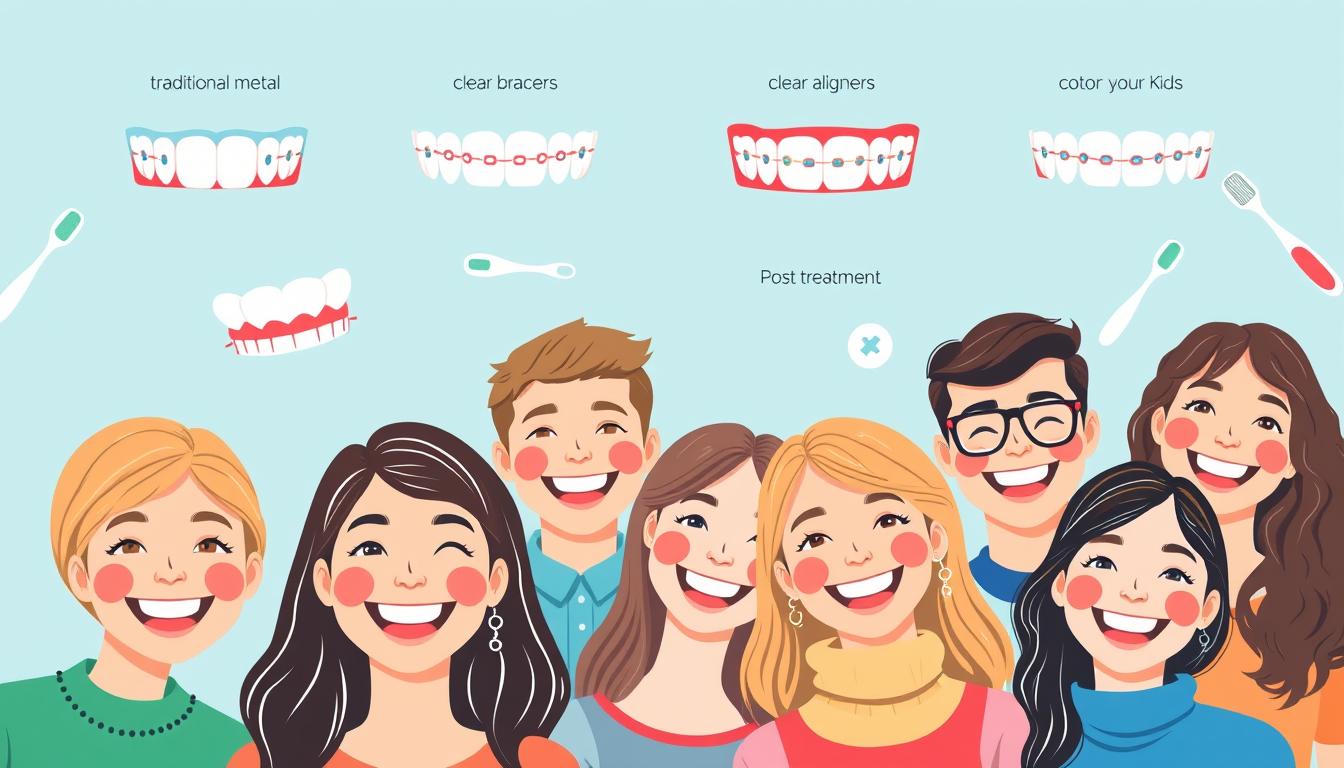
Incorporate elements symbolizing dental health, like toothbrushes and floss, subtly in the background. The overall tone should convey positivity and the transformative benefits of orthodontic treatment. Brand representation: https://bpsmilesny.com/
"A beautiful smile can open doors and create opportunities that might otherwise remain closed."
Traditional Metal Braces: The Time-tested Solution
For many years, metal braces have been the top choice for fixing teeth. They are known for their reliability and effectiveness. Metal braces help people of all ages get a straighter, more beautiful smile.
- Components of Metal Braces
- Metal braces have several parts that work together. The main parts are:
- Metal brackets that are bonded to the front of each tooth
- Archwires that connect the brackets and apply gentle, controlled pressure
- Elastics or ligatures that hold the archwire in place
Maintenance and Care Requirements
Metal braces need extra care to keep them clean. It's important to brush and floss well around the brackets and wires. Regular visits to the orthodontist are also needed to keep the braces working right.
Cost Considerations and Insurance Coverage
The cost of metal braces varies based on the case and location. It usually costs between $3,000 and $7,000. Many insurance plans cover some of the cost, but it's best to check with your provider.
Component Description
Metal Brackets Small, durable metal devices that are bonded to the front of each tooth
Archwires Thin, flexible wires that connect the brackets and apply gentle pressure to move teeth
Elastics/Ligatures Tiny rubber bands or metal ties that hold the archwire in place
"Metal braces are a time-tested and reliable option for improving teeth and bite alignment. They remain a popular choice for patients of all ages due to their effectiveness and relatively low cost."
Ceramic Braces: The Aesthetic Alternative
Ceramic braces are a top pick for those who want a less visible orthodontic option. They are clear or tooth-colored, blending well with your teeth. This makes them a great choice for those who don't want to draw attention to their braces.
These braces have brackets that match the color of your teeth. This design makes them almost invisible. It's perfect for keeping your smile looking natural while you're getting your teeth straightened.
- Ceramic braces are less noticeable than metal braces, allowing for a more discreet orthodontic treatment.
- They are made of high-quality, durable ceramic material that is stain-resistant and can withstand the rigors of daily use.
- Ceramic braces are often seen as a more aesthetic orthodontic option compared to traditional metal braces.
Even though ceramic braces look better, they need a bit more care than metal braces. The ceramic can stain or change color if not cleaned well. So, you'll need to brush and floss regularly and see your orthodontist often.
In the end, ceramic braces are a good mix of looks and function. They're a favorite among people of all ages who want a subtle yet effective way to straighten their teeth. Knowing the good and bad about them helps you choose what's best for you.
Invisalign and Clear Aligners: Modern Solutions
Invisalign and clear aligners are new options for straightening teeth. They are different from metal braces. These options are clear, custom-made, and offer many benefits.
Treatment Process with Clear Aligners
The Invisalign process starts with a visit to an orthodontist. They take impressions, X-rays, and 3D scans of your teeth. This helps create a plan for your treatment.
Then, they make clear aligners that move your teeth slowly. You wear each set for about two weeks. This changes your smile over time. Plus, you can take out the aligners to eat, brush, and floss.
Lifestyle Considerations and Restrictions
Invisalign aligners are almost invisible, so you can straighten your teeth without anyone noticing.
Because you can remove them, you can still enjoy your favorite foods and drinks.
But, you need to wear them for at least 20-22 hours a day for the best results.
Candidacy Requirements
Invisalign and clear aligners work for many people. But, they might not be right for everyone. If you have very crooked teeth or other serious issues, you might need traditional braces.
An orthodontist will check if Invisalign or clear aligners are right for you. With the right care, these options can help you get a straighter, healthier smile.
Lingual Braces: Hidden Treatment Option
Lingual braces are a hidden way to straighten teeth without being seen. They are placed on the inner (lingual) side of the teeth, making them hidden from view. This is different from traditional metal braces that are visible.
These braces offer many benefits for people of all ages. They let you keep a natural smile while you're getting your teeth straightened. This is great for adults and teens who don't want their braces to be noticeable.
Getting lingual braces involves making each bracket fit your teeth perfectly. This ensures they are comfortable and work well to move your teeth into the right place.
Advantages of Lingual Braces Potential Challenges
- Completely hidden from view
- Maintains natural appearance during treatment
- Customized to each patient's unique dental anatomy
- Effective in addressing a wide range of orthodontic issues
- Require a longer adjustment period for patients
- May be more difficult to clean and maintain
- Generally more expensive than traditional braces
- Not suitable for all patients, depending on the complexity of their case
Lingual braces are a discreet choice, but they come with some unique challenges. They might take longer to get used to and need extra care to stay clean. They also cost more than traditional braces.
Choosing between lingual braces and other treatments should be a decision made with an orthodontist. They can help figure out what's best for your smile.
Choosing the Right Orthodontic Treatment
Choosing the right orthodontic treatment is important. You might want traditional metal braces, ceramic braces, Invisalign, or lingual braces. Knowing the benefits and considerations of each can help you decide what's best for you.
Factors to Consider When Selecting Braces
Many factors should guide your choice of orthodontic treatment. These include your aesthetic preferences, lifestyle, and budget. Consider the following:
Aesthetic preferences: Do you prefer a more discreet or visible treatment option?
Oral hygiene: How much time and effort are you willing to dedicate to maintaining your braces?
Comfort: Some treatment options may be more comfortable than others, especially during the adjustment period.
Activity level: If you participate in sports or other physical activities, certain treatment options may be more suitable.
Cost Comparison of Different Options
The cost of orthodontic treatment varies. It depends on the type of braces, the complexity of your case, and where you live. Traditional metal braces are usually the cheapest. Invisalign and lingual braces are pricier. Talk to your orthodontist about costs and see if you can get help with payment.
Treatment Duration Expectations
The length of your treatment is another important factor. Metal braces often take 12 to 24 months. Invisalign and other clear aligners might take 6 to 18 months, depending on your case.
By thinking about these factors and talking to a qualified orthodontist, you can choose the right orthodontic treatment. This treatment should meet your dental needs and fit your lifestyle and preferences.
What to Expect During Treatment
Starting orthodontic treatment can be both thrilling and a bit scary. But knowing what to expect can ease your worries. The orthodontic treatment process includes several steps to improve your smile.
First, you'll meet with your orthodontist for a check-up. They'll look at your teeth, bite, and overall health. This helps them create a treatment plan just for you. Then, they'll put on your braces or aligners.
- Regular Adjustments: You'll need to see your orthodontist often for adjustments. These visits help your orthodontist check your progress and make any needed changes.
- Dental Hygiene: Keeping your teeth and gums clean is very important during treatment. Your orthodontist will teach you how to brush and floss properly.
- Treatment Duration: How long you'll be in treatment depends on your case. But most people are in treatment for 12 to 24 months.
- Post-Treatment Care: After your braces or aligners come off, you'll wear a retainer. Your orthodontist will show you how to take care of it to keep your teeth straight.
Talking openly with your orthodontist is important during treatment. Knowing what to expect can make you feel more confident and excited about your new smile.
About the Creator
DOCTOR RANK
Doctor Rank specializes in digital marketing services for medical professionals, offering solutions such as SEO, Facebook Ads, website design, patient forms, AI live chatbots, , and landing page design to help grow your practice
Enjoyed the story? Support the Creator.
Subscribe for free to receive all their stories in your feed.
Comments
There are no comments for this story
Be the first to respond and start the conversation.