
The Top 10 Reasons Why Kamala Harris Could not Have Won Against Donald Trump in the 2024 Presidential Race
"Analysing a never-ending postmortem on a disastrous presidential campaign built on illusion rather than connection"
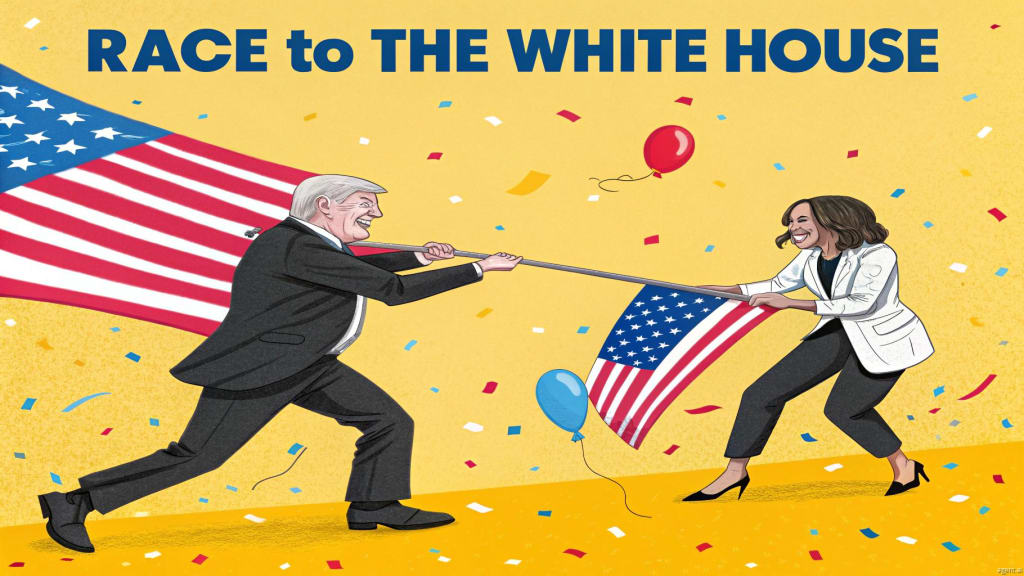
History does has this uncanny and thought provoking way of remembering moments not by the intentions of their architects, but by the echoes they leave behind. And when it comes to Kamala Harris’s ill-fated presidential run, the echoes are not of a powerful orator, a visionary reformer, or even a likeable stateswoman—but of confusion, lying narratives, mistrust, and missed opportunity.
The Harris Waltz 2024 presidential campaign was one of the most over-managed and under-inspired endeavours in modern political memory. Beneath the professional polish and digital fanfare was a hollowness that even the most sympathetic voters couldn't ignore. Despite the best efforts of battle hardened political handlers, big media machines establishing the narrarives, and data suppression tactics to inflate her viability, the American public ultimately saw what they needed to see. And what they saw was not enough to get her around that desk in the oval office.
Here are the top 10 reasons Kamala Harris was deemed unelectable for President of the United States— I will provide a list of lessons to learn by that will likely echo in campaign strategy rooms and political science classrooms for generations to come.
Skimming through the numerous blunders of a pointless 1.5 billion cash burning dumpster fire of an electioneering disaster, here's the final list of the 10 most disenchanting pitfalls a potential presidential candidate will need to avoid:
1. The Charisma Deficit and Blatant Lack of Personal Appeal
Charisma isn’t optional in modern presidential politics—it's currency. Harris consistently lacked the magnetic energy needed to connect with voters on a visceral level. There was no “It Factor,” no flash of fire that made crowds rise to their feet. Instead of drawing people in, she seemed to repel through stiffness, discomfort, and an air of detachment that never quite thawed.
2. Lacking an Articulated and Clear Vision, No Compelling Narrative
One of the great paradoxes of her campaign was that she often seemed unsure of why she was running. Her speeches were peppered with buzzwords but barren of substance. Voters weren't just confused—they were disoriented. She had ample opportunity to articulate a vision that was bold, inclusive, and uniquely hers. But instead, she offered a fog of platitudes and vague promises that failed to distinguish her from the very system she was supposed to reform.
3. Big Money, Bigger Strings Does Not Make a President
From the start, her campaign was drenched in the influence of big donors and D.C. elites. This wasn’t a grassroots uprising—it was an astroturf operation. Americans have become increasingly cynical about corporate influence in politics, and Harris became a walking symbol of that cynicism. The sense that her every move was focus-grouped and her every word was poll-tested led many to believe she wasn’t just backed by puppet masters—she was the puppet.
4. Economic Vagueness Policy Lacking in a Time of Crisis
With inflation on the uptick and economic uncertainty looming, the American people looked to their next leader for a credible, well-outlined economic vision. Harris offered none. Her answers on fiscal policy were either evasive or nonexistent, leaving a vacuum that her opponents filled with brutal efficiency. The economy remains a kitchen-table issue—and Harris never even pulled up a chair.
5. Word Salads and Empty Calories that Lack Nourishment
Let’s address the ever-growing elephant in the room: her speech patterns not only became a national joke but was highlighted and laughed at around the world. “Word salad” montages trended weekly as she delivered mindless speeches filled with verbose redundancies, circular logic, and outright gibberish. It became increasingly clear she wasn’t just struggling with her messaging—she was struggling with coherence exuding the inability to make an ounce of sense to even the most advanced intellect. A presidential candidate can somehow on a normal day, survive bad press, but not to the extent of becoming the punchline.
6. No Escaping from the Ghost of Biden’s Failed Policies
She failed badly at forging an identity that separated her from the Biden administration, and that proved fatal. Her perceived loyalty to a non-performing administration many viewed as faltering made her look like an extension of its incompetence rather than a solution to it. When she did try to define herself, it came off as both performative disingenuous and too little, too late, due to this inherent flaw.
7. Mainstream Media Bias and Propaganda Backfired
The media played a dangerous game—treating Harris not as a candidate to be scrutinized but as a product to be sold. Every fawning interview, every gushing editorial, every carefully cropped image backfired. The public no longer trusts legacy media, and its open adoration of Harris didn’t elevate her; it alienated voters further, who sensed they were being manipulated rather than informed.
8. Radio Silence Immediately Following Her Nomination
For weeks after her nomination, Harris disappeared. No interviews. No town halls. No real engagement. Her absence wasn’t seen as strategic—it was seen as evasive. It gave the impression that her team was scrambling behind the scenes to repackage her for an electorate that already felt sold a lemon. In politics, silence is never golden—it's damning.
9. A Weak Running Mate in Tim Walz aka Tampon Tim
The choice of Tim Walz as her vice-presidential pick was one of the more baffling decisions in recent campaign history. A man with neither national name recognition nor a commanding presence, Walz was perceived as a non-entity. At a time when voters were looking for a dynamic duo to inspire confidence in the nation, they instead got a cardboard cutout ticket.
10. Over-Scripted, Underwhelming Stage and TV Interview Performances
Every time Harris took the stage, she looked more like an amateurish actor struggling through her lines rather than a leader with potential rallying a nation. Her delivery felt hyper-rehearsed and soulless, as though she was mimicking what a “president” should sound like rather than being one. Although we're in a digital age, authenticity matters—perhaps now more than ever—and Harris's campaign was soaked in unappealing artificiality.
And Then There Was the Data or Lack Thereof
Polling data released to the public—when it was released at all—was often misleading, cherry-picked, or outright suppressed. The mainstream narrative that Harris was the “inevitable” nominee collapsed under the weight of ground-level reality. Real voter sentiment, when allowed to surface, told a very different story. But it was ignored until the numbers at the ballot box left no more room for their persistent illusions.
Conclusion: A Cautionary Tale, Not a Legacy of Hope
Kamala Harris’s campaign will be remembered not as a trailblazing moment for women or people of colour, but as a masterclass in how not to run for president. It was a campaign that mistook media adoration for voter support, marketing for messaging, and identity for ideology. In the end, the American people didn’t reject Kamala Harris because of who she is—but because of what she wasn't: authentic, clear, visionary, and capable.
History may forgive many things—but it never forgets a candidacy that tried to manufacture greatness rather than earn it for being real - Donald Trump was real.
About the Creator
Enjoyed the story? Support the Creator.
Subscribe for free to receive all their stories in your feed.
Comments
There are no comments for this story
Be the first to respond and start the conversation.