
The Role of Suffolk County Council in Everyday Life
Understanding Suffolk County Council: A Quiet Force in Daily Life

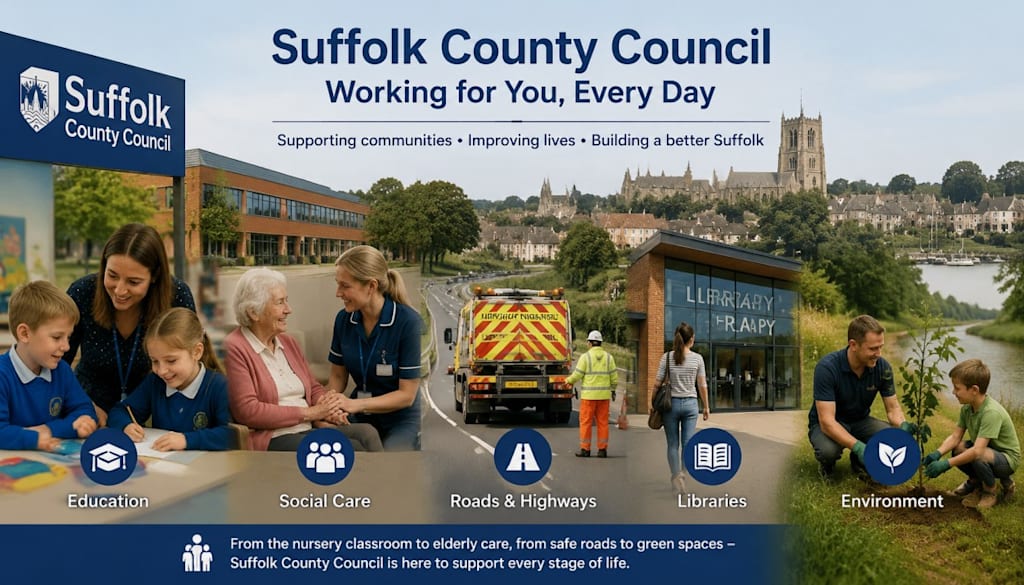
For many people living in Suffolk, the name Suffolk County Council might not be part of everyday conversation — yet its influence is woven into the fabric of community life across the county. This is the public body responsible for services that affect homes, families, schools, roads, care and community wellbeing from the moment people wake up to when they go to sleep. Whether it’s a local road being repaired, a school support plan for a child, or help for an older relative living independently, the council’s decisions and actions ripple through daily life.
At its core, Suffolk County Council is the upper‑tier local authority for Suffolk, England — the strategic body tasked with planning and delivering key public services across the county, including education, social care, transport, safety and more.
How the Council Is Structured and Makes Decisions
Suffolk County Council is a democratically elected organisation made up of 75 councillors chosen by residents every four years. These councillors sit in a democratic chamber where they shape policies, set budgets and determine priorities for the entire county.
The council operates under a Leader and Cabinet model, in which the elected Leader selects a small group of councillors to form the Cabinet. This Cabinet oversees day‑to‑day strategic decisions — from how money is spent to how services are run — and is supported by committees that scrutinise decisions and hold the executive to account.
Behind the scenes, professional staff help deliver these services and give expert advice. Senior roles like the Chief Executive, Chief Finance Officer and Monitoring Officer are legally required to ensure decisions are effective, lawful and transparent.
This mix of elected leadership and professional administration ensures that local priorities are considered alongside legal obligations and expert service delivery.
Everyday Services That Touch People’s Lives
Though the council’s role might seem abstract at first glance, its work materialises in real, tangible ways for residents:
Schools and Support for Children
One of the most visible roles of Suffolk County Council is its responsibility for education and children’s services. Schools in Suffolk, support for children with additional needs, and safeguarding programmes are overseen by the county council. This includes special educational needs and disabilities (SEND) support, school planning and funding, and services that protect vulnerable children.
For families, this means the council is directly involved in ensuring children have safe, supported learning environments and access to the support they need — from early intervention to exam years and beyond.
Care for Adults and Community Wellbeing
When it comes to adult social care, the council’s role becomes intensely personal. Suffolk County Council is responsible for programmes that help adults — particularly older people and those with disabilities — live as independently as possible. Many of these services support people in their own homes, helping with daily living, ensuring safety, and connecting them with health and community networks.
In recent years, the council has had to allocate large portions of its budget to meet rising demand in adult and children’s care — a reflection of an ageing population and increasing complexity of needs. In its 2025/26 budget, for example, 77 pence of every pound was earmarked directly toward essential care, wellbeing and support for vulnerable residents.
These services are more than administrative functions — they represent lifelines for individuals and families navigating health challenges or the complexities of ageing.
Transport, Roads and Infrastructure That Keep Life Moving
From maintaining county roads to coordinating public transport routes, Suffolk County Council plays a central role in keeping the county connected and mobile. Everyday journeys — whether travelling to work, school, shopping or appointments — depend on planning, road maintenance and seasonal services like gritting in winter.
In rural parts of Suffolk, where distances between towns and villages can be significant, these services are especially vital. Footpaths, public rights of way, road safety initiatives and transport strategies all fall under the council’s remit, making sure people can move about safely and efficiently.
Public Safety, Fire Services and Emergency Planning
Suffolk County Council is also responsible for public safety through services such as the Fire and Rescue Service and emergency planning — functions that may only come into stark focus when they are urgently needed, but which operate every day to protect lives and property.
In practical terms, this includes fire station coordination, community safety campaigns, emergency response planning for severe weather or major incidents, and public safety education programmes. These services help keep families and neighbourhoods safe around the clock.
Wider Community Services and Environment
The council’s responsibilities extend into areas of environmental stewardship, waste management, recycling, parks and countryside access. While smaller councils in Suffolk may handle local functions like waste collection or housing, the County Council sets regional strategies and supports services across the entire county, ensuring that environmental and community wellbeing stays high on the agenda.
Through planning, conservation programmes, and public engagement, the council shapes how communities interact with green spaces, historic sites and environmental initiatives — contributing to quality of life beyond essential services.
Money Matters: Budgets and Public Priorities
Governance and service delivery are deeply tied to fiscal decisions. Each year Suffolk County Council sets a budget that allocates public money to its various services. In recent years, the council’s budget has grown to meet rising demand and inflation. For 2026/27, a proposed plan was set at around £850 million, with a focus on protecting frontline services and supporting vulnerable residents.
Despite this substantial figure, choices about spending are challenging. As demands increase — especially in social care and children’s services — the council must make tough decisions about where to prioritise resources and where efficiencies can be made. These financial pressures are not unique to Suffolk but reflect wider challenges faced by local authorities across England.
For residents, council tax contributions are tied directly to these budgeting processes. Part of the council’s income comes from council tax, which helps fund key public services alongside central government grants.
Democracy in Action: How Residents Can Participate
While much of the council’s work happens behind the scenes, opportunities for public engagement are real and ongoing. Residents are represented by elected councillors who speak for their communities in council chambers. Council meetings, including Cabinet decisions and committee hearings, are often open to the public — offering transparency and accountability.
Public consultations, surveys and budget feedback exercises enable people to shape council priorities, voice concerns, and influence how services are delivered. In this way, local governance becomes a shared project between elected officials, professional administrators and the communities they serve.
A Changing Landscape: Local Government Reorganisation
Looking ahead, local governance in Suffolk is set to undergo significant structural change. The traditional two‑tier system — where the county council oversees strategic services and district/borough councils handle local ones — is being reviewed as part of a nationwide effort to simplify public service delivery.
In 2026, plans were announced to replace all six existing councils in Suffolk with three new unitary authorities, aiming to streamline services and reduce complexity for residents.
While this change won’t take effect until later in the decade, it reflects evolving thinking about how best to organise local government so that it remains responsive, efficient and closer to the communities it serves.
Everyday Life and the Council: Why It Matters
When looked at closely, the work of Suffolk County Council is far from abstract. It’s the organisation that determines the quality of local roads, the support available for families and older residents, the safety of communities, and the availability of vital services that people count on every day.
Whether someone realises it or not, each resident’s encounter with local services — from school systems and health support to transport and safety — is shaped by decisions made within this democratic body. It stands as a reminder that local governance isn’t a distant concept, but a living framework affecting life from dawn to dusk in homes, workplaces, schools and public spaces across Suffolk.
Call to Action
Want more stories like this? Subscribe to our newsletter for detailed articles, real-life insights, and untold stories from people who’ve experienced history firsthand. Stay informed, stay inspired!
About the Creator
MUHAMMAD SHAFIE
Muhammad Shafie is a writer and blogger passionate about digital culture, tech, and storytelling. Through insightful articles and reflections, they explore the fusion of innovation and creativity in today’s ever-changing world.
Enjoyed the story? Support the Creator.
Subscribe for free to receive all their stories in your feed.
Comments