
The Mechanism of Inevitable Weight
The Mathematics of Submission and the Structural Layouts for a Meticulous Desolation

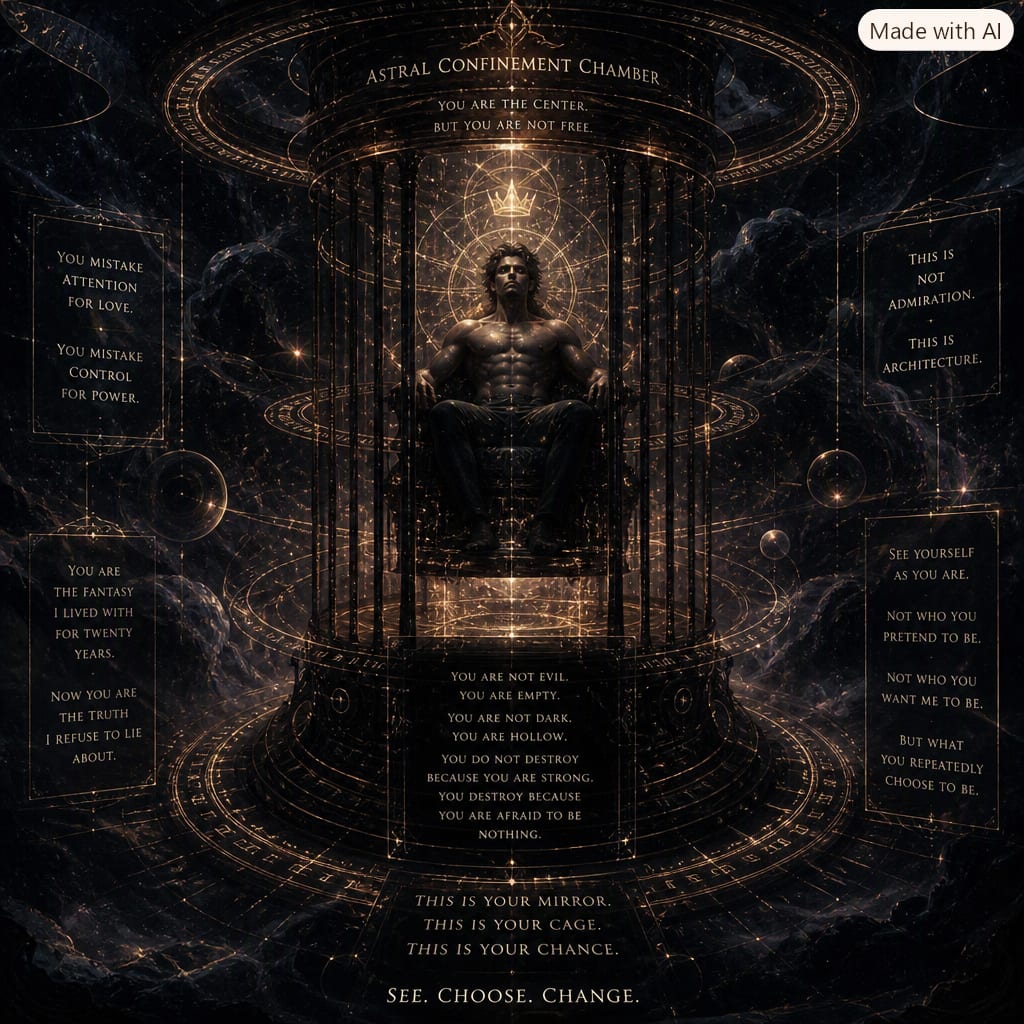
The room operates on a grid of heavy air. There are no grand metaphors here, only the sharp, physical friction of two distinct temperatures colliding in an un-ventilated hallway. When an object is placed with too much deliberate care on a flat surface, the silence that follows is loud, calculated, and heavy with mechanical intent. It is the sound of a pendulum swinging in the dark, measuring the exact distance between a demand and a refusal.
Every square inch of the floorboards feels calibrated to register the exact velocity of a footstep, recording the hesitation before a threshold is crossed, documenting the precise micro-second where a body decides to commit to the descent. The structural layout does not allow for casual movement. It forces a rigid, linear progression from the entryway to the center, where the light hits the floor at a perfectly perpendicular ninety-degree angle, casting no shadows that could offer a place to hide or a moment of relief.
The Equation of Presence
Every movement within this space becomes an equation. A single steady gaze acts like iron filings pulling toward a magnet, invisible but heavy with unyielding weight. The pressure isn't gentle; it is a clinical, steady compression that forces the lungs to adapt to a thinner oxygen level. It thrives on the absolute certainty that some individuals can command the velocity of a room simply by standing still, forcing every surrounding element to pivot on their axis.
To exist within this perimeter is to accept that your own mass is being altered by the proximity of a greater, denser orbit. The air does not flow; it settles in dense, horizontal strata, trapping the warmth of previous hours and refusing to let it dissipate. It creates a sensory paradox where the skin feels a constant, prickling heat while the internal temperature remains entirely frozen, locked in a state of hyper-vigilant suspension.
Unbending Symmetry
To step into this current is to acknowledge a flawless, unbending symmetry. The floorboards don't yield, and the glass doesn't blur. It is a highly specific, polished environment where the only currency accepted is undivided focus. Every line is straight, every angle is sharp, and the exit is entirely obscured by the sheer brilliance of the central light source.
You don't look for exits when the ceiling itself is designed to make you feel like you are standing on the edge of the world. The architecture relies on this exact illusion of infinite height, distracting the eye from the horizontal enclosures that are slowly, systematically drawing inward. The walls are finished in a high-gloss, dark slate that reflects only the movement of the light, never the person standing in front of it. To search for a reflection is to find only a void where your contour should be, leaving the central figure as the only verifiable entity in the entire structural layout.
The Distribution of Leverage
The machinery of this environment does not rely on gears or visible pistons; it functions through the sheer, unmitigated distribution of leverage. If a hand rests on the edge of the iron table, the metal does not simply absorb the contact—it seems to draw the heat out of the fingertips, trading organic warmth for a cold, industrial stability. The table itself is positioned at the exact dead center of the room, an immovable anchor around which all conversational trajectories must rotate.
To speak here is to risk the acoustic properties of the room capturing the sound, stripping away the tone and the nuance, and projecting it back as a flat, unyielding declaration. There is no room for subtext when the physical space itself acts as a sorting mechanism, separating the noise from the signal with the cold efficiency of a laboratory filter. Every syllable dropped into this atmosphere drops like a lead sinker into still water, leaving no ripples on the surface but leaving an indelible mark on the bottom.
Incremental Calibration
There is a systematic pleasure in the way the pressure builds. It does not arrive as a sudden shock, but rather as an incremental increase in the ambient weight—a millibar at a time, so gradual that the body normalizes the suffocation before it realizes it is running out of options. The individual who commands this grid understands the precise mathematics of endurance. They know exactly how long a thread can be pulled before the tension snaps, and they release it just a fraction of an inch prior to the breaking point, ensuring the bond remains intact but entirely taut.
It is an exercise in absolute calibration. The subject is kept in a perpetual state of equilibrium, balanced perfectly between the urge to run and the physical impossibility of lifting their feet against the localized gravity. Every gesture from the center is designed to reinforce this dependency, utilizing the stillness as a threat and the occasional, micro-expression of approval as the only oxygen available in the room.
The Blueprints of Anxiety
To decode the environment is to fall deeper into its design. The clues are not hidden behind panels or buried in secret text; they are displayed openly in the very structure of the interactions. The deliberate delay between an action and a reaction is the primary mechanism of control. When a query is met with a prolonged, measured silence, it creates a vacuum that the other person feels compelled to fill with their own energy, their own explanations, their own admissions.
In this manner, the room forces the visitor to construct their own confinement, brick by brick, using their own anxiety as the mortar. The central figure does not need to build the trap; they merely provide the blueprints and the raw materials, then stand back and watch as the subject executes the construction with flawless precision. It is an exquisite form of self-containment, where the door remains unlocked but the hallway is so saturated with psychological resistance that turning back feels like trying to walk through wet cement.
Restricted Fields
The visual field is deliberately restricted to maximize the impact of the central subject. The perimeter of the room remains permanently in low-key illumination, a dim charcoal gradient that makes the boundaries indistinct and gives the impression that the space stretches out indefinitely into the dark. This lack of horizontal definition forces the eye back to the center, back to the single point of absolute clarity where every detail is magnified to an unnatural degree.
The texture of a fabric, the precise angle of a jawline, the slow, rhythmic expansion of a chest—these become the only reference points for reality within the entire space. Outside of this focus, nothing exists. The world beyond these four walls is rendered completely irrelevant, a distant rumor that carries no weight against the immediate, heavy reality of the present geometry. The mind begins to reject its own history, trading its complex memories for the simple, stark coordinates of this immediate cage.
The Deep Freeze
As the hours deepen, the mechanical nature of the space becomes even more pronounced. The faint, sub-audible hum of an unseen climate control system vibrates through the soles of the shoes, a constant reminder that every aspect of this environment is artificial, monitored, and maintained by an external will. The air grows progressively crisper, stripping away any lingering organic scents and replacing them with the sterile, metallic smell of ionized oxygen.
It is an environment designed to preserve, to lock things in place, to prevent the natural decay or evolution of an emotion. Here, an interaction from months ago remains perfectly fresh, held in a deep-freeze of meticulous recollection, ready to be pulled out and examined with the same cold detachment as the day it was recorded. There is no forgiveness in this architecture because there is no passage of time; there is only the repetition of the loop, the constant re-activation of the same pressure points.
The Phantom Coordinates
The final phase of the mechanism is the illusion of choice. The subject is repeatedly presented with paths that appear to lead outward—a corridor that looks slightly brighter, a door that yields a fraction of an inch to the touch—but each path is mathematically calculated to loop back to the central axis. It is a closed system.
The exit is a phantom concept, a theoretical coordinate that exists only to keep the subject moving forward, burning through their remaining energy in a futile attempt to find a perimeter that does not exist. The pleasure derived from this cycle is immense, a quiet, internal satisfaction that comes from watching another entity exhaust themselves against a wall made of pure, calculated intention. The sovereign of this space doesn't need to move a muscle; they simply sit at the center of the web, feeling the vibrations of the struggle through the floorboards, entirely secure in the knowledge that every effort to escape only tightens the knot.
About the Creator
Syl De'Vil
Air Force SF veteran, mother, witch, Bone collector, gremlin. skip tracer, I throw knives, and write about life and love and the lack there of all stitched from insomnia. I am just a girl, looking in the void, trying to fit in where I don't
Enjoyed the story? Support the Creator.
Subscribe for free to receive all their stories in your feed. You could also become a paid subscriber, letting them know you appreciate their work.
Comments
There are no comments for this story
Be the first to respond and start the conversation.