
The Marginal Life of Aarsh Malik
A profile assembled from what he left in other people's books

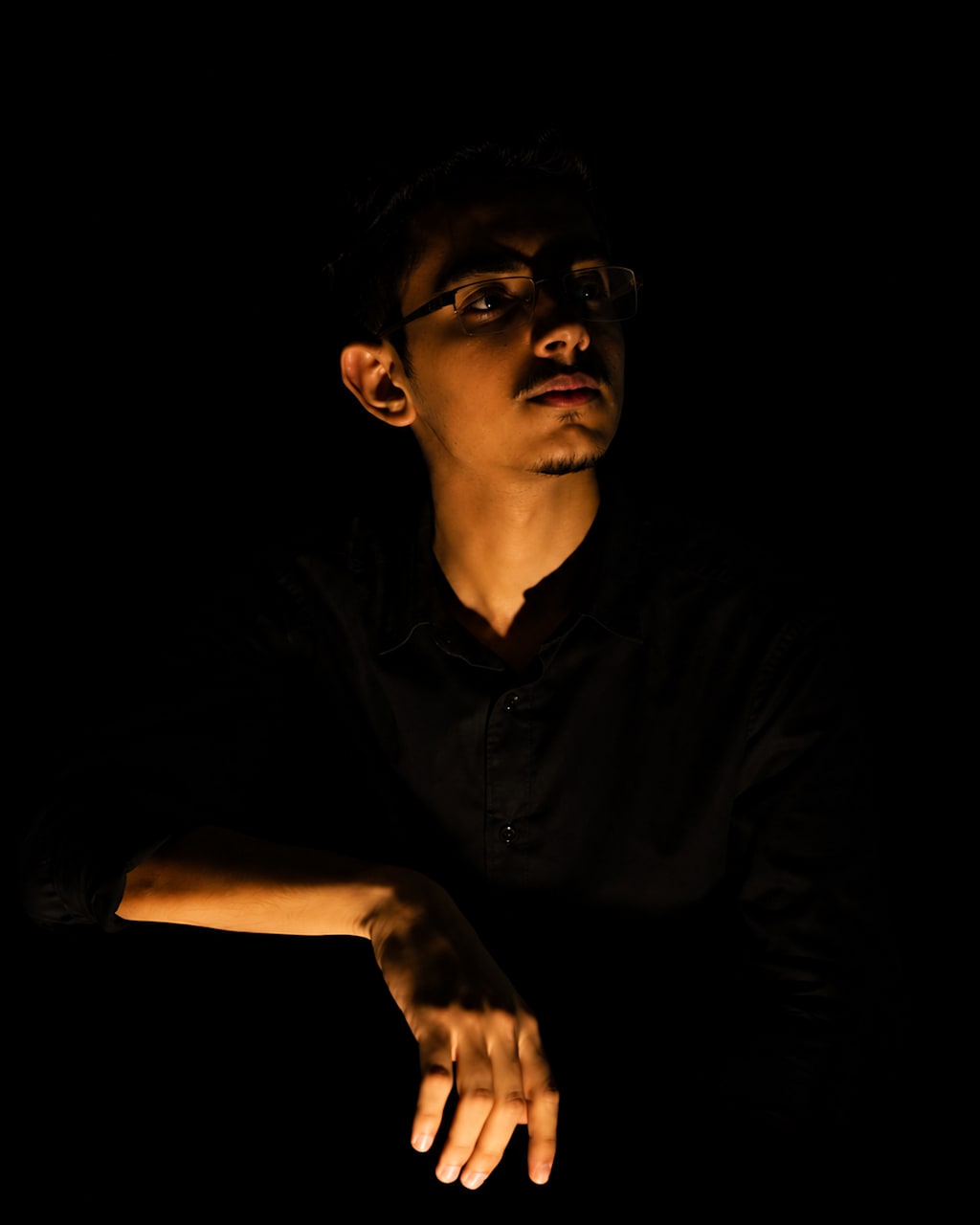
Aarsh Malik published one collection of poetry in his life. It is called Small Weather, it ran to sixty-one pages, and it sold, by his publisher's own generous estimate, under three hundred copies. For thirty-four years afterward, he worked as an editor and translator, uncredited on most covers, thanked in a paragraph of acknowledgments if he was lucky, shaping other people's sentences for a living while, as far as anyone knew, quietly setting his own aside.
He died believing this. It was not true.
The Sentence That Didn't Belong
It started, as these things do, with someone noticing a small wrongness and refusing to let it go.
In 2039, a translator named Yusra Fenn was preparing a new edition of a Bengali novel Malik had translated into English decades earlier, and she found, in his margin notes on the working manuscript, a line that had nothing to do with the book. It was tucked beside a paragraph about a wedding, unrelated to the scene, unattributed, written in Malik's small slanted hand: the door I painted over still remembers being a door.
Fenn assumed it was a stray thought, the kind any translator leaves in the margins at 2 a.m. and forgets to erase. She would have left it at that, except that six months later, cataloguing a different manuscript (a poetry collection by a different author entirely, one Malik had line-edited in 1998), she found another line. Different ink. Same hand. Same strange, unmoored quality, as if it had wandered in from somewhere else.
The door remembers. I am the one who forgets it on purpose.
It was, unmistakably, a continuation.
What Thirty Years of Margins Add Up To
What followed was not a discovery so much as an excavation, and it did not happen quickly. Fenn spent four years going back through every manuscript Malik was known to have touched: translations, edits, blurbs, the handwritten notes he left for authors who rarely thanked him by name. In nearly a third of them, she found a line that didn't belong to the book it was written in.
Alone, none of them were much. A fragment here. A half-sentence there, wedged into a margin beside someone else's paragraph about weather, or grief, or a wedding that had nothing to do with him. But laid end to end, in the order the manuscripts were dated, they didn't read like debris. They read like a poem, one poem, unbroken across three decades and forty-one different books, that no editor had ever assembled because no one had ever been asked to.
It is now called, for lack of anything Malik left behind to call it, The Door Sequence. It runs, by Fenn's count, to roughly nine hundred lines, though she'll admit the count depends on how you decide where one fragment ends and the next begins, a question nobody has ever managed to settle to everyone's satisfaction. It is, depending on which critic you ask, either the great hidden masterpiece of a generation, or the single most elaborate case of critical wishful thinking in recent literary history.
The Argument That Followed
The scholar Idris Okafor has called The Door Sequence "the only honest thing Malik ever wrote, because it was the only thing he never had to finish." His case rests on the fact that the fragments, read in order, trace an unmistakable arc: a door, painted over; a house someone leaves; a series of unnamed people who appear once and are never mentioned again; and, near what would be the end, a line that reads, simply, I kept the good sentences for other people's books. I don't know why I thought that was generous.
Okafor reads this as confession. Malik, in his account, spent his life servicing other writers' work not out of humility but out of something closer to self-erasure, giving his best lines away in fragments too small for anyone to notice, so that he could go on believing he hadn't really written them at all.
Not everyone agrees this is a poem at all. The critic Wren Adeyemi, whose skepticism has made her something of a professional irritant to Malik's growing cult following, has argued that Fenn and Okafor have done exactly what readers always do with a dead man's scraps: imposed a shape on noise because a shape is more bearable than the alternative, which is that a person's margin notes are just margin notes, and some of them happen, by the ordinary math of coincidence, to almost rhyme.
Her strongest piece of evidence is uncomfortable for the believers: at least six of the "Door Sequence" fragments Fenn catalogued were later shown, through dated correspondence, to have been written in different years than the manuscripts they were found in. That means some lines were copied forward, by Malik himself, from an earlier book into a later one, deliberately, sometimes decades apart. Which means one of two things. Either he was managing the sequence with more intention than anyone gave him credit for. Or he simply liked a line enough to reuse it, the way any writer might, and the "sequence" is an accident of a man recycling his own good sentences without ever meaning to build anything from them.
Fenn's answer to this, when asked, was short. A man doesn't carry the same sentence across twenty years and four decades of other people's books by accident, she said. He carries it because he's still writing the same poem. He just never let himself call it that.
For what it's worth, Fenn and Okafor don't fully agree with each other either. Okafor calls it confession; Fenn calls it something closer to compulsion. Neither has been able to say why the difference matters, only that it does.
What Small Weather Missed
It is worth returning, here, to the one book Malik did publish under his own name, because it has been almost entirely eclipsed by what came after. Small Weather is a slim, formally careful collection, mostly about his father's death and the particular silence of a house after someone leaves it. It received two reviews when it came out. One called it promising. The other didn't run long enough to call it anything.
Read now, after The Door Sequence, certain lines in Small Weather look different. Not because they changed, but because readers can't help mapping the door image backward onto the book that came before the sequence, hunting for the moment the obsession started. There is a poem in Small Weather called "Threshold" that ends: I painted the door before I left, so the next family wouldn't have to think of us. It is, on its own, a quiet, competent line about grief. Set beside the margin notes found thirty years later, it reads like the opening measure of something Malik would spend the rest of his life unable to stop returning to, in rooms where no one was looking.
Whether he intended that echo is, like almost everything else in this profile, unknowable. He never said. He was, by every account from people who worked with him, a private and somewhat evasive man who deflected questions about his own writing with the same practiced ease he brought to fixing other people's.
The Line That Isn't There Yet
The Door Sequence, as currently assembled, does not have an ending. The last dated fragment Fenn has found comes from a manuscript Malik edited eight months before he died, a translation project he never finished, for a novelist who has since declined to discuss the working papers publicly. The final line, sitting alone in the margin beside an unrelated paragraph about a train station, reads:
I think I left the door open this time. I can't remember if that was on purpose.
After that, nothing. Whatever came next, if anything did, went where Malik's private papers went, which is to say into a storage unit his family has not yet fully catalogued, and may not, according to one relative who asked not to be named, ever choose to.
This has not stopped people from looking. Fenn is reportedly still working through uncatalogued boxes. Okafor has proposed, only half-jokingly, that the sequence might still be findable: that somewhere in the fifty-odd manuscripts Malik touched but no one has yet reexamined, there might be six more lines, or sixty, or an ending no one has read yet because no one has thought to look in the right margin.
Adeyemi's response to this, delivered at the one conference where all three critics have shared a stage, was the closest thing the field has to a settled final word, though it settles nothing: Maybe that's the most honest thing about him. He spent his whole life making sure nobody could ever say for certain where his sentence ended. I don't think we should be in a hurry to finish it for him.
Whether The Door Sequence is a hidden masterpiece, an accident mistaken for one, or something in between (a private habit that slowly, without his ever choosing it, became the only large thing he ever wrote) is a question this profile cannot resolve, because Aarsh Malik never once, in any margin anyone has found, wrote a line that answered it.
He only ever wrote the door. Never what was on the other side of it.
About the Creator
Aarsh Malik
Poet and storyteller who believes in the quiet power of words.
My first book, QUIET FLAME
Buy Coffee
⏳ 90 days. $2,000
If my words stay with you, a little tip can help me get there.
Enjoyed the story? Support the Creator.
Subscribe for free to receive all their stories in your feed. You could also become a paid subscriber, letting them know you appreciate their work.
Comments
There are no comments for this story
Be the first to respond and start the conversation.