
The Frugal Love of China's 60s Generation
High-income retirees living like paupers: The hidden sacrifice behind a generation's obsession with saving.
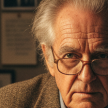

Those "Stingy" Parents of the 1960s Are Actually Saving a Future for Us
I’ve lived in this neighborhood for three years, and right across the hall lives a couple born in the 1960s—Uncle Wang and Auntie Zhang.
Before retiring, Uncle Wang was a middle manager at a state-owned enterprise (SOE), and Auntie Zhang was an elementary school teacher. Between the two of them, their monthly pension sits comfortably at over 15,000 yuan. In a third-tier city like this, that’s an income most young people would envy.
Yet, every time I see Uncle Wang, he’s wearing that same faded blue jacket. You know the style—the "old cadre" look. The collar is frayed and pilling, but he refuses to throw it away. Auntie Zhang isn't much different; she always heads out for groceries carrying a discolored canvas bag, refusing to spend even 0.2 yuan on a plastic bag at the supermarket.
At first, I thought they were just "stingy."
On summer evenings, while other elderly residents flock to the malls to "rub" the free air conditioning, Uncle Wang and Auntie Zhang sit in the shade of a tree by the building entrance, slowly waving traditional cattail fans. I once asked, "Uncle, Auntie, it’s not like you don't have AC at home. How much electricity can it really use?"
Auntie Zhang smiled and said, "It’s not at its hottest yet. The fan is enough."
Uncle Wang chimed in, "Electricity is billed on a tiered pricing system now. Running the AC all day costs dozens of yuan."
Dozens of yuan. Their daily pension is nearly 500 yuan, yet they wrestle with themselves over a few bucks of electricity.
It’s not that I don’t understand frugality—after all, my generation is also being crushed by the weight of living. But honestly, watching them sometimes stirs up a complicated emotion I can't quite name. My parents are also products of the '60s, and they share this exact "virtue."
Last year, when I went back to my hometown, I discovered my mother was still using my discarded smartphone from five years ago. There was a crack in the bottom right corner of the screen, which she had covered with clear Scotch tape so she could keep scrolling through short videos. My father was even more extreme. He’d worn the same pair of traditional Beijing cloth shoes for four years until the soles were almost worn through. I secretly threw them away, only for him to fish them out of the trash, saying, "They aren't even broken; it’s a sin to waste them."
Exasperated, I said, "Dad, your pension is over 6,000 a month. I’m not asking you for money. Can't you just be a little better to yourself?"
My father looked at me and said nothing.
I still remember that look. It wasn't anger or hurt; it was that silent "you just don't understand" expression.
Later, a conversation with Auntie Zhang helped me realize what I was missing.
It was during a heavy downpour. I ran into her downstairs as she was returning from the bank. She was clutching a brown paper envelope tightly to her chest. Her shoulders were soaked, but she kept that envelope perfectly dry.
I hurried her into my car to take shelter and asked, "Auntie, what are you doing at the bank in this weather?"
She wiped the rain from her face and said, "This month's pension hit the account. I went to move it into a fixed-term deposit."
"Interest rates are so low now. It's not even worth it to save like that," I remarked.
Auntie Zhang smiled and suddenly asked, "Do you know why Uncle Wang is still so frugal even after retiring?"
I shook my head.
"When he retired the year before last, a colleague of his retired at the same time. Their pensions were about the same. That colleague felt he’d worked hard his whole life and it was time to enjoy it. In his first year of retirement, he booked three group tours and bought a car for over 100,000 yuan to travel with his wife."
She paused. "Then, last year, he was diagnosed with late-stage lung cancer. From diagnosis to his passing, it was less than four months. His wife's health isn't great either, and their two sons work far away as migrant laborers. In those final days, they couldn't even afford proper professional nursing. They had to rely on relatives taking turns to look after him."
The car went quiet for a few seconds, save for the sound of rain drumming on the windshield.
Auntie Zhang looked down at the envelope in her arms and said softly, "Your Uncle Wang told me that we save now not because we don't want a good life, but because we’re afraid that if something goes wrong, we’ll become a burden to our child. People of our generation don't have much—all we have left is this pension. Every cent we save now is one less bit of hardship for our child later."
She said this with such calm, as if she were stating the most natural fact in the world.
But hearing it, I felt a sudden lump in my throat.
I thought of my father’s discarded cloth shoes and my mother’s taped-up phone screen. It wasn't that they didn't know how to spend money; they didn't dare to.
The '60s generation caught the wave of state-owned enterprise layoffs in their youth and the skyrocketing housing prices in their middle age. Finally reaching retirement, they watch their own children being suffocated by mortgages and car loans. That internal string of anxiety has never been loosened.
Where does their money go?
I began to notice.
Uncle Wang and Auntie Zhang live on crumbs, but once I overheard her on the phone in the hallway, talking to her daughter who works in another city: "Nannan, Mom transferred 50,000 yuan to you. Didn't you say you wanted to switch jobs? Don't be too hard on yourself. Spend what you need to spend; Mom has money here."
The daughter must have protested, because Auntie Zhang’s tone turned sharp: "Just take it! If we don't spend our money on you, who are we going to spend it on? We're old; we don't need much. Don't worry about us."
After hanging up, I heard her whisper to Uncle Wang, "She wouldn't take it."
Uncle Wang replied, "If she won't take it, just save it for her. Give it to her all at once when she gets married. That girl has been stubborn since she was a kid."
Another time, I saw Auntie Zhang carrying a heavy bag of groceries: pork ribs, fish, shrimp—luxuries she usually bypassed. I joked, "Auntie, having a feast today?"
Her eyes crinkled into slits as she laughed. "My son is bringing my grandson over tomorrow. The little one said he wants his Grandpa’s braised pork ribs."
That smile was entirely different from her usual frugal expression. In that moment, she radiated a kind of "grandeur," as if spending a few hundred yuan on ribs was her greatest point of pride.
Suddenly, I understood.
The happiness of these parents doesn't come from what they eat or wear, but from the feeling: "When my child needs me, I can provide."
Their sense of security doesn't come from the digits in a bank account, but from: "I’ve saved enough so I won't drag my child down."
Their "face" doesn't come from designer brands or luxury cars, but from: "My child is doing okay."
I finally understood why my father refused to replace his shoes.
Last year, when I was scraping together a down payment for a house, my father transferred 400,000 yuan to me without a second thought. It was nearly his and my mother’s entire life savings. I refused adamantly, but he shouted into the phone, "Why are you being polite with me? I’m your father! If I don't give my money to you, who do I give it to?"
Later, my mother told me privately that when he withdrew the fixed-term deposit, he sat in the bank for a long time. It wasn't that he was reluctant to give the money; it was the realization that he’d spent his whole life building this one thing, and now that it was gone, he felt a bit "empty"—yet profoundly at peace.
"Your father came home and told me, 'Well, that's that. Our son has a house now. We can finally stop worrying.'"
Hearing that, I teared up on my end of the line.
These parents of the '60s live within an obsession with "saving." This obsession isn't greed; it is love.
Every cent of their pension has a destination. Five thousand saved this month is for the grandson’s education fund. Three thousand next month is for the daughter’s dowry. Two thousand the month after is for their own medical "rainy day" fund, so the children won't have to pay.
It’s not that they don't want to enjoy life; it’s that they feel their own enjoyment simply isn't that important.
Uncle Wang told me something once that has stuck with me.
He said, "Our generation grew up with empty stomachs. we were poor when we were young, so we know the taste of having nothing. Now that we're old and the state gives us a pension, we are grateful. But if you ask us to spend lavishly, we just can't. It’s not that we don't know how; we’re just afraid. We feel that without savings, we have no solid ground. What if an emergency happens? Ask the kids for money? No, life is hard enough for them as it is."
When he said "Life is hard enough for them," his voice was light, but the weight of those words was massive.
I think of every time I go home. My parents cook a massive spread, acting as if they want to empty the entire fridge for me. But as soon as I leave, they go back to simple noodles and pickled vegetables.
I think of how my mother, hearing I was working late and exhausted, sent me two boxes of American ginseng. I later found out she stood in line at the pharmacy for two hours to get them. Yet, for her own blood pressure medication, she always picks the cheapest generic brand.
I think of my father’s bad back. I bought him a massage chair, and he scolded me for wasting money and told me to return it. Yet he tells everyone he meets, "My son bought me this massage chair. It works wonders."
To an outsider, the consumption habits of these parents look like "stinginess" or an "inability to enjoy life." But to me, this is their love language.
They shrink themselves to the smallest possible size, leaving all the light and heat for their children.
They aren't reluctant to spend money; they are reluctant to spend it on themselves.
They don't love saving money; they love the security that comes with it, and the person that security ultimately protects.
A few days ago, I saw Uncle Wang in the shade with his fan again. I walked over to chat.
I said, "Uncle, it’s so hot. Just turn on the AC. Don't get heatstroke—medical bills will cost way more than the electricity."
He paused, then laughed. "You’ve got a point, kid."
I thought he’d finally come around, until he added: "I’ll turn it on for two hours then, just to be safe. Got to use it sparingly."
I smiled helplessly, but I didn't push him this time.
Because I know you can never truly change a '60s parent’s habit of "using things sparingly." It’s etched into their bones—a mark of their era, and a trail left by their love.
What we can do is not to force them to change, but to visit more often and call more frequently. Let them know we are doing well, so that the money they’ve saved for an "emergency" never actually has to be used.
That, perhaps, is the greatest form of filial piety we can offer.
About the Creator
Water&Well&Page
I think to write, I write to think
Enjoyed the story? Support the Creator.
Subscribe for free to receive all their stories in your feed.
Comments
There are no comments for this story
Be the first to respond and start the conversation.