
The Five Rules of My Late-Life Partnership
A 63-Year-Old Man Proposed a Partnership; I Agreed on One Condition: Follow These 5 Rules

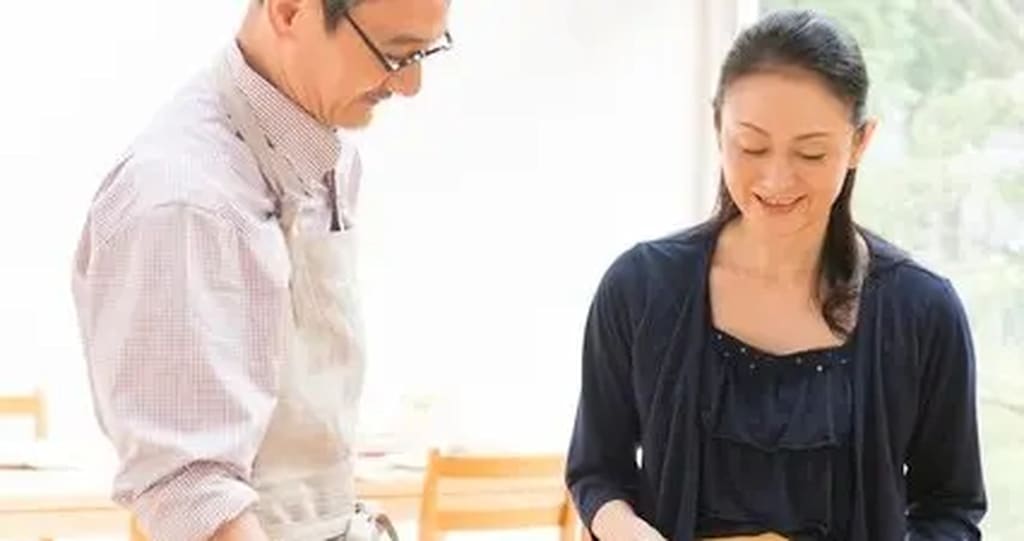
My name is Wang Xiuying. I’m 51 years old and went through menopause last year. To be honest, at this age, I’ve long since moved past the need for "romance" between men and women. All I want is to live out my later years in peace. But just last month, Old Zhang—a 63-year-old man from the neighboring unit in our building—suddenly approached me. He said he wanted us to "partner up" and live together.
I’ve known Old Zhang for a few years. His wife passed away over three years ago, and his only daughter married into a family in another province; she barely makes it back twice a year. He lives alone in a large three-bedroom apartment. He usually looks quite pulled-together, but whenever I ran into him downstairs, I always noticed a lingering sense of loneliness in his eyes.
He brought it up that day in the community garden. I remember his exact words: "Sister Xiuying, look, we’re both single. Why don't we just huddle together and get through life as partners? We can look out for each other."
I froze for a few seconds, my mind racing. Honestly, I hadn’t not thought about it. Living alone is lonely, especially at night. Once the TV is off, the whole house is filled with nothing but the sound of your own breathing. Sometimes there’s no one to say a single word to. But then I thought: at this age, "partnering up" (dahuo) isn't like falling in love when you’re young. Poetry and moonlit walks have to take a back seat. What comes first is the reality of how daily life actually functions.
I’m a straight shooter; I don't hide what's on my mind. I told him, "Old Zhang, I’m not opposed to the idea of a partnership. But if you’re serious about living with me, we have to set the rules straight first. We can live together, but you must keep five rules firmly in mind."
Old Zhang rubbed his hands together, looking nervous, and asked what they were. I broke them down for him, one by one.
First: It must be "AA system" (split expenses) financially. Each manages their own money; no one takes advantage of the other.
I made it very clear: partnering at our age isn’t like a young couple getting married; we aren't doing the "what’s mine is yours" thing. My pension isn’t much—just over 3,000 yuan a month—but it’s enough for me. I’m not interested in how much yours is, either. We spend our own money. Public household expenses—water, electricity, property fees, groceries—will be split 50/50. The accounts must be transparent.
Old Zhang looked a bit uncomfortable. "That seems a bit distant, doesn't it? I’m a man; how could I let you pay your share?"
I laughed. "Old Zhang, don’t give me that. I’ve seen too much. So many elder partnerships fall apart because of money. One day you’ll feel slighted because you paid more, the next day I’ll feel out of balance because I contributed less. Over time, resentment builds. If we clarify the money from the start, no one owes anyone anything. That’s how you make it last."
Old Zhang mulled it over and nodded. I knew he might still feel a bit awkward, but I couldn't budge. I’ve been burned before. When I was young, my ex-husband and I fought for over a decade because of messy finances before we finally went our separate ways. I refuse to step into the same pit twice.
Second: Separate rooms. No shared bed. We each keep our own space.
When I said this, Old Zhang’s expression changed visibly. I get it—men at this age, even if they don't say it, usually have certain "expectations." But I laid it out: this is non-negotiable.
I told him, "Old Zhang, I’m 51 and post-menopausal. I have no interest in those things anymore, and I don't want the hassle. We are partnering for mutual care, nothing else. With separate rooms, we each have our space. Your snoring won't affect me; my TV won't affect you. If you wake up early to stay busy, you do your thing; if I want to sleep in, no one disturbs me. It’s better for both of us."
Old Zhang was silent for a long time. Finally, he sighed. "Alright, we’ll do it your way."
Seeing him like that made me feel a bit bad, but I had to stand firm. At this age, sleep is shallow. If someone next to you even turns over, you wake up. After a night of tossing and turning, you’re dizzy the next day—I can’t handle that. Besides, sleeping separately avoids a lot of unnecessary awkwardness and trouble. It keeps things clean and simple.
Third: A clear division of labor. No "one person serving the other."
I’m a blunt person. I told him: "I spent over twenty years serving a husband—washing, cooking, mopping, raising kids—until my back could barely straighten, only to be told I wasn't doing enough. I’m not doing that anymore. If we partner up, the chores must be shared. You sweep, I wipe the tables; you cook, I wash dishes. No one gets to be a 'hands-off boss' (shuai shou zhang gui)."
Old Zhang was quick to respond: "Of course! I’m a diligent guy, and I’m a decent cook, too."
I warned him: "Don't just say what I want to hear. It’s easy for a day or two, but people start playing dumb as time goes on. We either set a schedule or divide the 'territories' clearly to avoid petty arguments later."
He was decisive this time: "Fine. The cooking is on me. I’m idle anyway, and making a meal isn't much trouble. You handle the cleaning. Does that work?"
I thought about it and agreed. Old Zhang really does have some skills in the kitchen; I often see him coming home with groceries, and he looks like he knows what he's doing. I hate cooking, but tidying up is my forte. It seemed like a fair trade.
Fourth: Our children must not interfere in our lives. During holidays, we each go back to our own families.
I added this one specifically. I told him: "Your daughter is out of province and my son is local, but regardless of where they are, the children have their lives and we have ours. After we partner up, if your daughter visits, you host her as usual; if my son comes over, I’ll take care of it. But the kids cannot stick their hands into our business, and they certainly can’t criticize or nitpick. During festivals like Chinese New Year, you go to your daughter’s and I go to my son’s. We visit our own relatives. No one forces the other."
Old Zhang looked visibly relieved. "You’ve hit the nail on the head. My daughter has a stubborn streak. If she knew I was partnering with someone, she might not say it, but she’d be unhappy. Keeping things separate saves the kids the awkwardness."
I know that for people our age, the hardest part of "partnering" isn't the two people involved—it’s the families behind them. Children worry about their parents being cheated, they worry about their inheritance being eyed by an outsider—they worry about everything. Sometimes two people who are perfectly fine get torn apart by their children’s meddling. So I laid it out: this is between us. The kids can offer opinions, but they don't get a vote.
Fifth: If it doesn't work, we break up—amicably and without lingering drama.
This was the final and most crucial rule. I told him: "We’ve both lived more than half our lives; we’ve seen all kinds of storms. If we get along, we stay; if not, we part. No one should suffer. If one day you feel it’s not right, or I feel uncomfortable, we just say it plainly. We’ll divide the stuff, go back to our respective homes, no fighting, no shouting. A clean break."
Old Zhang went quiet for a while. Then he looked at me and said seriously, "Xiuying, you are a transparent person (tong tou). I’m 63, and this is the first time I’ve heard someone speak so clearly. Fine. I agree to all five rules."
Honestly, I was surprised. I expected him to haggle a bit, but he agreed so readily. Later I realized he was probably just terrified of being alone. For people like us, at this age, the greatest fear isn't lack of money or illness—it’s not having a single soul to talk to.
Last weekend, Old Zhang cleared out his master bedroom and moved into the guest room. I tidied up my place and brought over only my clothes and daily essentials. I didn't give up my apartment or rent it out; I left it empty. I told Old Zhang that it’s my "retreat"—if I ever want to go back and live there for a few days, I will.
The day I moved in, Old Zhang made a whole table of food: braised fish, rib soup, stir-fried greens—quite a feast. We sat at the table; he picked out a piece of tender fish belly for me, and I ladled a bowl of soup for him. We chatted about this and that, like two old neighbors who had known each other forever—polite but familiar, close but maintaining a respectful boundary.
It’s been exactly one month now, and things are going smoothly. Old Zhang wakes up early to make breakfast. After I tidy the kitchen, I go for a stroll in the park. When I get back, he watches TV and I’m on my phone—each doing our own thing without bothering the other. After dinner, we go downstairs for a walk together, chat about neighborhood gossip, and then go to our separate rooms to sleep.
To be honest, it’s much better than living alone. At least when you come home, there’s someone there. Even if we don't speak much, that "human presence" (ren qi) in the house makes a difference.
Sometimes I think about how interesting life is. When you’re young, you fight tooth and nail for "love," thinking a relationship has to be grand and passionate. At my age, I’ve realized that you live your life for yourself, not for show. "Love" or "not love"—in the end, nothing is more practical than the word "comfortable." If two people can be together without fighting, without getting angry, and without calculating against each other—if they can just eat a peaceful meal, take a walk, and share some small talk—that’s enough.
A few days ago, my daughter-in-law called, beating around the bush to ask about me and Old Zhang. She was clearly worried I was being "taken advantage of." I told her: "Your mother has lived 51 years. I’ve eaten more salt than you’ve eaten rice—I won't be cheated. Don’t worry. Old Zhang and I are just 'partnering up.' It’s all transparent and above board. The five rules are there; no one is taking advantage of anyone."
She didn't have much to say after that.
I know many people think "partnering up" at our age sounds too pragmatic, even cold. But what I want to say is: it’s precisely because we’ve reached this age that we know what to keep and what to let go. It’s not that we don't want affection; it’s that we know affection can’t put food on the table. If two people can respect and tolerate each other and keep daily life running smoothly, that is the best kind of affection.
As for what happens later, who knows? If Old Zhang finds this life boring one day, or if I want to go back to my own place for some peace and quiet, we’ll just break up cleanly. No one will waste the other’s time.
But for now, this is pretty good.
With those five rules in place, the days can actually last.
About the Creator
Water&Well&Page
I think to write, I write to think
Enjoyed the story? Support the Creator.
Subscribe for free to receive all their stories in your feed.
Comments
There are no comments for this story
Be the first to respond and start the conversation.