
The First Draft Is An Alibi
It starts out socially acceptable. Three drafts later, I write what I think.

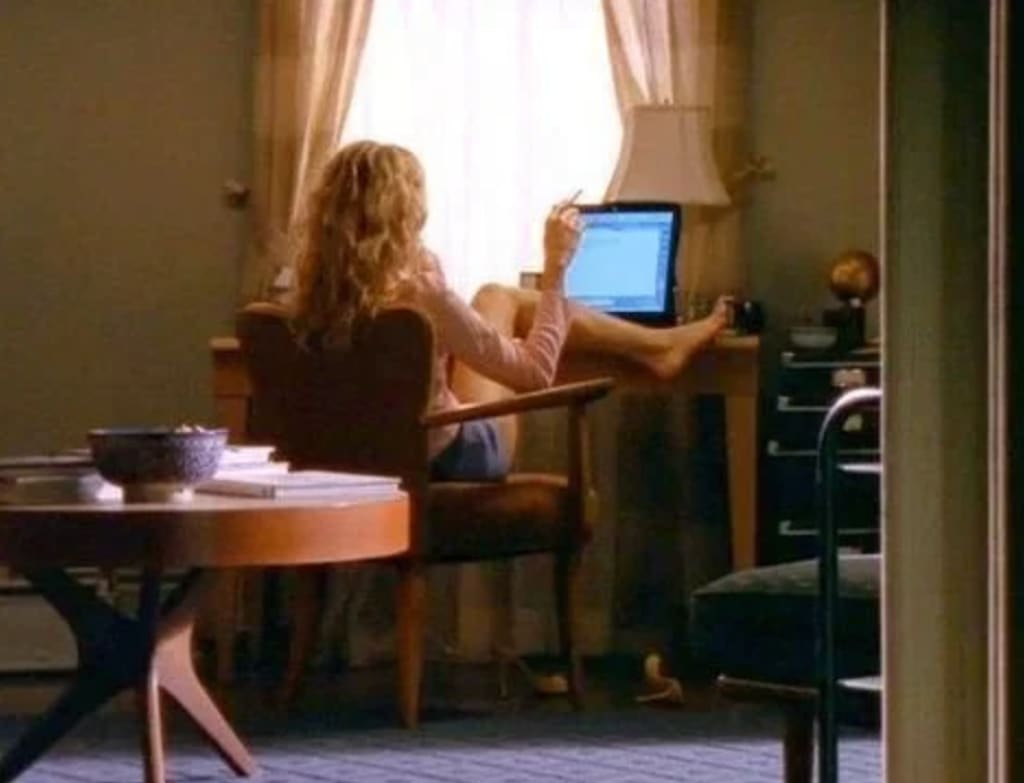
My first draft is the version that makes me—the writer—look good. Or it makes the subject look bad. It’s not until three drafts later where the uglier, more honest sentences creep in. It’s those words I was avoiding because it implicates me too.
I already know where draft one is headed before I write a single sentence of it. It’s the same process I go through every time. The draft is polite. Decent. It has a bad guy—and it won’t be me. My first draft makes an observation that feels like it cuts, but it doesn’t penetrate the skin. It’s a sentence you could read aloud at a lecture, and everyone would nod, because it doesn’t force anyone at the table to think about themselves holding the knife. Because there’s no blood in draft one, it’s the crime that’s always finished the fastest.
That right there should’ve told me everything about my writing years ago. Draft one is the socially acceptable version because it’s the one my ego doesn’t have to battle. I get to be clever without being exposed. I get to do what I always do—diagnose a pattern in people, women, or men, or whoever the safe, general noun is that week, and it never once turns my sentences around to point them at the person typing them. I’m not being dishonest—not exactly—it’s more like being vetted by the part of me that wants to be liked before it wants to be heard for what is true.
I used to think the editing process was strictly about grammar and clarity. Taking that knife and trimming the fat, right? But as you become a more seasoned writer, you realize there’s more to editing than your high-school English teacher explained.
Editing is the interrogation. Somewhere around the second pass, I ask myself a question I skipped the first time: okay, but where do you fit in all this? And that question is the whole damn reason the piece existed in the first place. We don’t sit down to write about a tidy little truth about people. At least I don’t. I sit down because something raw happened to me, and the little truth is the mask I put over it to make the real event bearable to look at.
Here’s what I change between my draft one and draft three, if I’m real about the mechanics behind it:
The bad guy gets a motive. In draft one he’s wrong, careless, reckless, just whatever withering adjective lets me stay the good guy. But by draft three, the reader sees my bad guy is operating on incomplete information. Some of which I didn’t fill you in on, some of which I never gave him the chance to have. He doesn’t stop being wrong, but he stops being the only one wrong. And once that happens I can’t stay only right either.
I chop off the clean ending. Draft one is always about a lesson learned. Fixing a broken boundary. Completing an unfinished goal. But an ending like that is a big fat lie. Because life is messier with no solid endings. Things just stop, unfinished. Sometimes there’s closure. Sometimes there’s not. When I bring myself to chop off the resolution, that’s the part that hurts about a ‘finished’ first draft — because it’s telling me I have more to say.
There’s always that inconspicuous sentence in my writing that shows up around the middle. It’s not anything elaborate or some intricate vocabulary. It’s usually short or unassuming. It’s probably the realest sentence in the piece. All those other dressed up sentences are doing too much. Yes, they’re needed to make a statement, but they’re also the ones doing the work to convince you of something. Those understated — more human — sentences don’t need to persuade anyone of anything. They sit there in plain sight, daring me to leave such simple words on the page.
All writers know the things they write leave a paper trail. But in a conversation, I’m able to edit my own story, in real time, and nobody catches it. On my laptop, draft one is open right next to draft three, and writers can’t pretend they don’t know the difference. We wrote both. I wrote both. And I sit there wondering what the second draft knows that the first didn’t.
This is why writing was created — to do it for a living or to do it half-ass on a random Thursday night — for no one. Writing the drafts isn’t meant to just produce a substantially good piece, but a version of events you can’t keep lying to yourself about once it’s typed out and sitting there in a Tahoma font looking back at you.
There will always be a first draft. I don’t think you can write something on a whim and claim that’s your most honest work. The first copy is the socially acceptable version, the necessary primer of a paint job. It’s the version that exists so there’s something on the page to argue with later. You can’t edit a blank document into something real, but you can edit a lie into something honest.
About the Creator
tatiana vitas
observational, a little sarcastic, mostly interested in why people lie to themselves.
tatianavitas.com
[email protected]
Enjoyed the story? Support the Creator.
Subscribe for free to receive all their stories in your feed. You could also become a paid subscriber, letting them know you appreciate their work.
Comments
There are no comments for this story
Be the first to respond and start the conversation.