
The Death of the Author
"The birth of the reader must be at the cost of the death of the author." - Roland Barthes
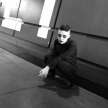

Raistlin Allen (February 9, 1989 - July ?, 2026) was an American author and poet who achieved modest success posthumously, due chiefly to their sudden and mysterious disappearance.
Born in 1989 in the mostly fictional land of Florida, Allen didn't so much die as walk into the woods never to be seen again. At the age of 8, they moved to Connecticut with their parents and three younger siblings, and they continued to live in the state for the rest of their known life before their disappearance at the age of 37.
Allen attended college in New Haven and graduated valedictorian, though they are cited as saying they didn't like academic life and had strongly considered dropping out due to discovering they did not want a traditional career. After their disappearance, various unpublished manuscripts and reams of creative content were found on their laptop by close friends, family, and investigators.
Allen's most well-known work today is the trilogy of novels known as the Ruined World series, which follows a vampire's bid to live freely in the modern world while satisfying her baser appetites. At once humorous and epic, it's very urban-fantasy coded and contains a unique mythology of a familiar monster (the vampires in this work gain human memories and the ability to shape-shift through the drinking of blood.) Allen's vampires are not pretty or romantic. Instead, they are simultaneously disturbing and vividly human. The main character in the series, known only as 'Ten', is a favorite among fans if not critics. She's something of a flailing, reluctant hero (or anti-hero, depending on who's asking), known for an awkward, tone-deaf sense of style and a habit of punching people in the face and asking questions later (to her detriment. Think less super-hero and more 'gangly androgynous klutz with the fist power of a wet noodle’).
In addition to the Ruined World trilogy, Allen is known for their short fictions, many of which fit the horror genre, and their arresting, evocative poetry, the bulk of which was never traditionally published in life.
EARLY YEARS & PERSONAL LIFE
To quote Neil Gaiman, as a young kid, Allen ‘lived in books more than anywhere else.' Their father commented on how Allen got into writing early, as a natural byproduct of their love of reading. Much of their first attempts at stories tended to be about animals, more specifically anthropomorphic rats and mice. Series like Redwall, Watership Down, and the Deptford Mice books had a big effect on them in their early days, before they shifted to writing about people. A friend recalled that they often jokingly talked about how they 'narrowly escaped becoming a god damn furry.’
As a child, Raistlin frequently cited being shy to the point of selective mutism in the company of peers. 'Like many strange, overly introverted children, I had the sense that there was something fundamentally different about me that separated me from my peers in a way that would become only too obvious if I opened my mouth. So I never did.' This wasn't completely without basis as they recount dealing with bullying through much of their younger childhood, though they say as they got older this abated as they 'mastered the art of invisibility'. Raistlin often cited high school as being the first time they really connected and made friends with others in a meaningful way, and indeed some of their best friends throughout their adult life were old friends from that time period. A lot of the characters in Allen's stories are outliers in some way, people -or creatures- who exist on the fringes of society or who feel as though they were other in some way, standing outside looking in. "Well, they do say write what you know," Allen would say glibly when this was brought up.
Raistlin credited their father in their writing for encouraging their love for the fantasy genre. ‘He handed me the Lord of the Rings trilogy in maybe fourth grade’ they remembered. It was something they bonded over. When Allen and their three younger siblings were growing up, their father used to play a 'kind of dumbed-down version of Dungeons and Dragons' for fun with them, for which they loved creating characters and landmarks for adventures.
Considering they were very private and didn't enjoy posting to social media, not much is known about Allen’s life as an adult. Their closest friends say they enjoyed collecting bones, smoking good cigars, eating at as many restaurants as was humanly possible on their restrictive budget, and making wood crafts (they operated a small online shop selling gothic home decor).
In terms of appearance, Allen was known for dressing like a modern-day casual vampire might. They sported all black, with heavy silver chains and jewelry, and what little of their body they showed was covered in greyscale tattoo artwork, often itself inspired by literature. They often wore their hair partially shaven and their beard cut in a way that closely resembled that of a cartoon Satan. Allen also had an inexplicable and slightly incongruent penchant for mirrored aviator shades, which they often wore in the sun, which it is often speculated they may actually have been allergic to, despite their claims that they were just Irish. As a bemused friend said, ‘they dressed a little like a fantasy villain but somehow made it work.’
Allen’s ultimate dream was to support themself on their creative work, though they never got to see this come to fruition. They worked several years as a barista (a traditional non-binary rite of passage, they joked) and then in a warehouse, allegedly choosing jobs that allowed them more freedom to pursue their own writing on the side over more financially stable options. They lived in a variety of rented spaces and struggled with finances all their life. They seemed largely indifferent to questions of status or ambition, confessing bluntly to be 'more or less pretty lazy beyond getting the words out’.
Allen was openly aromantic and asexual and never married or had children.
PRAISE & CRITICISMS
Allen was known in their short stories for writing a breed of horror that was less loud and gory, and more creeping and psychologically unnerving, like watching a sleepwalker move or waking up with a quiet panic attack at the same exact time every night. ‘It's less the fear you feel when you see the monster's face and more the fear you feel when you know it's there but don't know where or what it looks like. Less diarrhea and more persistent indigestion’, as one infamous review put it.
A lot of the nuance in Allen’s writing came from their penchant for creating complex characters. The main characters featured in their work were often morally gray, and they had a disturbing tendency to make the reader, in turns sympathetic to and repulsed by, some of their more extreme characters. They had the skill of making a character simultaneously compelling and disturbing. Allen tended to focus less on constructing unique monsters and abstract, mind-bending plots- the horror in their stories came more from the shadowy corners of the human mind. They frequently cited Stephen King as a source of inspiration.
One thing that really defined Allen as a writer was their sense of humor. In their fiction work, morbidity often mingles with the absurd and they seem unable to take themself completely seriously. In the Ruined World series, there's a scene where the vampire Ten attempts to do her laundry in her victim's house and clogs the washing machine with a bar of soap. A lot of critics thought this was just plain bizarre and didn't belong there, but Allen’s sister (and biggest fan in life) Emma campaigned to keep it in. “They always wrote whatever they wanted to write,” she said. "That's probably why it took them so long to get published."
Some critics maintain that their work wouldn't be talked about if it weren't for their disappearance, which may be true (Allen was virtually unknown at the time) but in my scholarly opinion, that doesn't mean said work wasn't worth talking about so much as it means it would have probably never gained the exposure it deserved.
Allen is known for having many pieces of fiction in which the ending (or even parts of the story itself) are ambiguous, and some criticisms remark that their writing sometimes relies too much on 'vibes' and compelling language, not liking how much it left up to interpretation. On the complete opposite side of the spectrum, there were those who thought it wasn't experimental or bold enough in style. When asked how Raistlin might respond to their critics today, Emma laughed and said, ‘oh my god, they wouldn’t care.’ Allen read broadly across genres, but liked writing genre work as opposed to literary, claiming that the desire to tell a story was more important to them than provoking thought on deeper themes or being 'smart'. Though a lot of their work arguably does this too, they considered it secondary.
When she was asked what Allen would be most happy about when it came to their fans, Emma said: "They always said it would be a big honor to have fanfic written or fanart drawn of their characters one day. I don’t think they’d care if it was weird or out of character- I think they'd be happy people were invested enough to do those things in the first place.”
POETRY & PHILOSOPHY
Allen’s poetry was a less-explored but highly praised area of their work, and probably exposes the most of who they were as a person as opposed to a storyteller. Through much of their teens and twenties, they struggled heavily with depression, anxiety, and gender dysphoria, themes that show up slant in their poetry. Their mother, who died when Allen was 23 from ovarian cancer and to whom they were very close, also shows up regularly.
Allen wasn't big on explaining their work, most especially where poetry was concerned. They believed that the reader owned the work as much as the author did, what is often called the ‘death of the author’ theory- that the author's intent should not be weighted too heavily in the interpretation of their work.
"Writing comes through me- who knows how- and sometimes I'm putting it on the page with very little idea of what it means myself. I feel like often when a writer gives their explanation of a story or poem, it starts to limit the reader, in that they believe this is the 'real' meaning and the ultimate 'answer' to the work. Really, I think readers have the bulk of the power- and that's how it should be. I don't want to keep the lenses my work is seen through from evolving after I'm gone, and the best way I've seen to do this is to leave much of it up to interpretation,’ Allen said in a rare interview where they mused about such things. “Especially with something like poetry- A lot of readers feel locked out of poetry because the language is not straightforward - it's not telling a linear, obvious story. And they worry- I certainly did as a high school student- that there's a right answer and poetry is this kind of intellectual pursuit they have to analyze like they're in school. This misconception is what got in my way when I was younger- before I realized all poetry was really asking me to do was feel. To me, poems are much like songs, in the way that two people might see the same words and interpret different meanings. But those self-interpretations become very important to us, very sacred almost- I remember being kind of disappointed to find out that the artist of one of my favorite songs would say 'no, that's not what it means' when it came to my feelings about it. Because that piece of music was absolutely pivotal to me and I felt like this was denying me that in some way. Now I find these stories to be merely fun trivia- an added layer, though certainly not the verdict in any sense. When I tell stories about how something was conceived or what a poem personally meant for me- I hope it is taken as just this and nothing more.”
DISAPPEARANCE
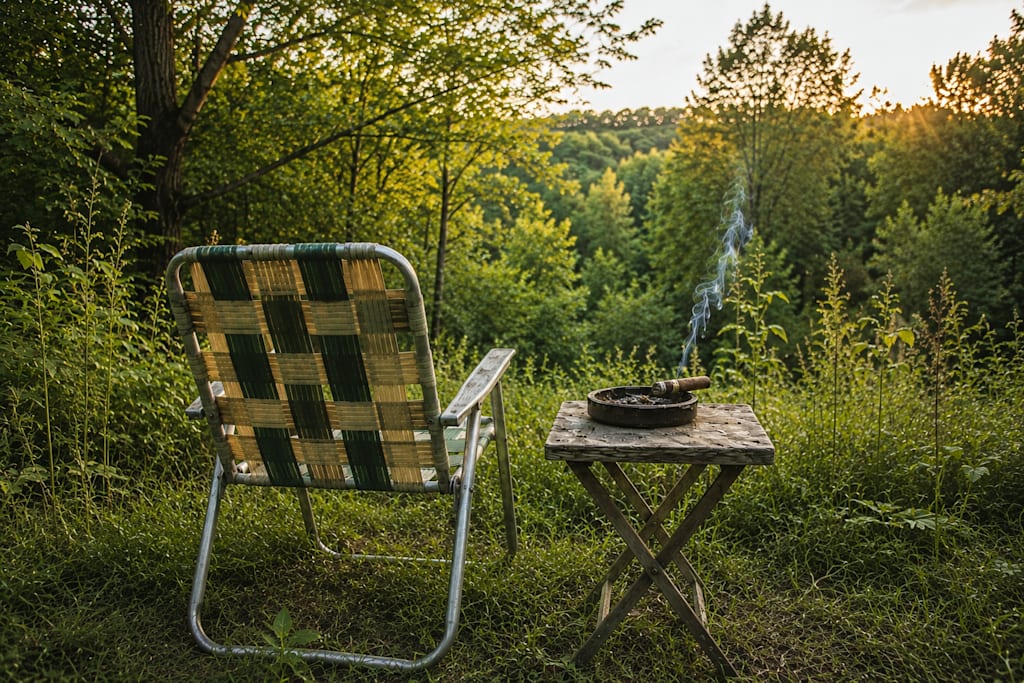
Allen disappeared from the back of their rented property in July 2026 (the exact day is unknown). They left behind a lawn chair and the butt of a cigar. Given that Allen had been talking about working on their first novel-length horror work around the time of their disappearance, a popular theory for a while was that the disappearance itself was a kind of eerie stunt done for publicity (it was, after all, the kind of ending they would have liked). However, when Allen didn't reappear over the next several years, this theory fizzled out of popularity.
Maybe Raistlin Allen is somewhere under a different identity, crafting some secret work. Maybe they have passed on and are simply at peace right now, floating in the void. Or maybe, as they described wanting to do in their writings, they rode into the bowels of hell on a creature that looked like the fellbeasts the Nazgul rode in the Lord of the Rings franchise, and upon dismounting, asked Satan for an endless supply of Nutella.
Their story belongs now to you, dear reader. It’s up to you to fill in the blanks.
(Profile by A.N. Lexor. All information sourced from interviews with family and friends, essays by various critics, and personal writings from Raistlin Allen’s estate.)
About the Creator
Enjoyed the story? Support the Creator.
Subscribe for free to receive all their stories in your feed. You could also become a paid subscriber, letting them know you appreciate their work.
Comments
There are no comments for this story
Be the first to respond and start the conversation.