
The Cult of Sam H Arnold
Why the critics still don’t get it

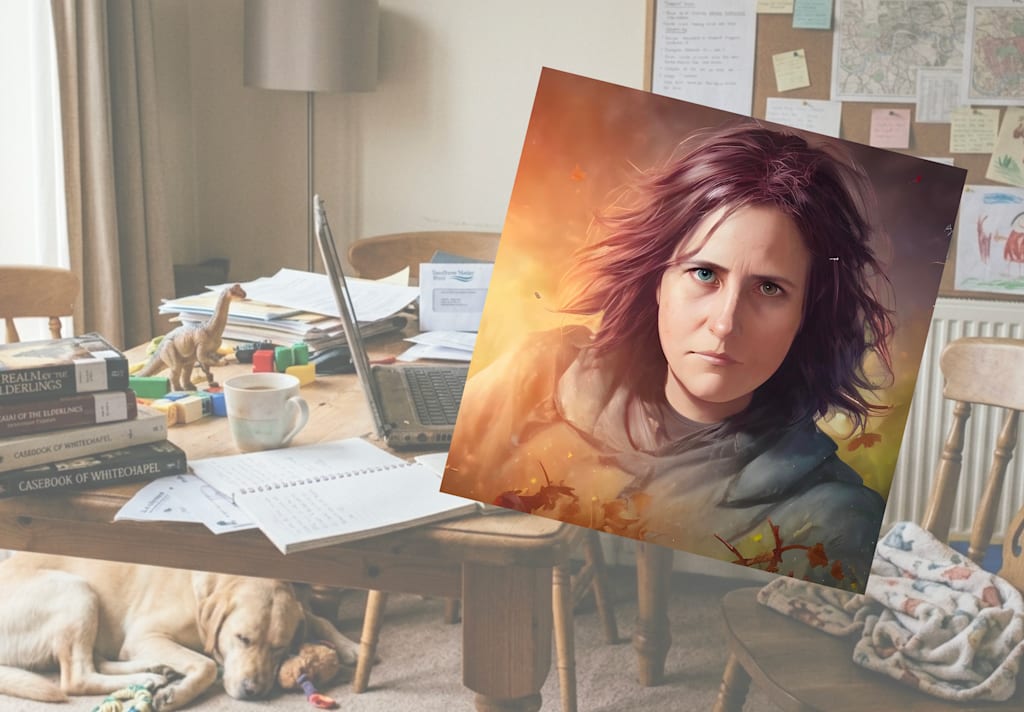
If Sam H. Arnold were around to see what the academics are writing about her these days, she might suggest they take a break and focus on something more productive.
If you step into any university literature department today, you’ll likely find a young PhD student trying to argue that Sam’s books were just a neatly packaged history lesson, completely overlooking that she was a brutally honest writer who wasn’t afraid to pursue a conspiracy theory or support an unpopular opinion if that’s where the facts led.
They seem to focus on how she approached historical true crime, stripping away the sensationalism and sticking to strict, unembellished timelines, they treat it like some high-concept literary experiment.
They write endless essays analysing her strict layout and structural prose as if she were trying to reinvent the historical wheel. It wasn’t an artistic statement. It was the work of a writer who valued grit, precision and digging through the dirt to find the truth without drowning it in academic fluff, even if it was on the edge of conspiracy theory.
But that’s what happens when the literary establishment gets hold of a crime and history writer who spent her life working entirely outside their ivory towers. They over-intellectualise the pragmatism and completely miss the real magic of how her mind actually worked.
The Clamour and the Desk
The standard biographical narrative paints Sam as this tragic, isolated figure, typing away in the Kentish suburbs while drowning in what they grandly call "the domestic mental load." It’s a nice, dramatic image for a Sunday supplement, but it’s mostly nonsense.
Yes, she was a self-employed sole trader managing a bustling household. Yes, she had a partner, three young kids running ragged through the house, a Labrador, and a small zoo of other family pets. And yes, she was simultaneously fighting a gruelling, month-long bureaucratic war with Southern Water over a blocked sewer.
But the critics treat her family life as if it were a hurdle she had to overcome to write. They don't see that the chaos was the anchor. You can’t understand Sam’s voice, that sharp, grounded, distinctively UK English syntax, without understanding that she was writing from the thick of real life.
She didn’t have the luxury of sitting around waiting for inspiration to strike like some tenured professor. She wrote with a kid on her hip and a dog barking at the postman, which is precisely why her prose never had room for fluff, padding, or academic pretension.
The Whitechapel Obsession
And then there’s the big one: her absolute obsession with the 1888 Whitechapel murders.
The true-crime shelf is full of rather ghoulish and sensationalised rubbish, written by men who are obsessed with the phantom of Jack the Ripper. Sam didn’t like that approach at all. Her fixation wasn’t with the killer; it was a deep, magnetic pull towards the people the world walked right past.
When she took on the story of Annie Chapman, she didn’t write it as a tragedy that was waiting to happen. Critics now rave about her ‘structural inversion of narrative history’, which is just a fancy way of saying she gave Annie her life back before it was taken away.
Sam built the narrative from the ground up, reconstructing the warmth of Chapman’s early family life, the stability she lost and the slow, isolated descent into vulnerability.
Modern critics argue until they’re blue in the face about whether this obsession was a ‘feminist reclamation’ or some dark psychological escape from her own domestic routine. They love to invent a hidden, lonely sadness in Sam to explain why she was drawn to isolated women.
It’s much simpler than that: Sam had a fierce, protective streak. Managing a large family gives you a very low tolerance for people being mistreated or forgotten. She didn’t look at the archives as a puzzle to solve; she looked at them with the eyes of a mother who saw a wrong that needed righting. She wasn’t escaping her life; she was bringing her entire human experience to the table to give those women their dignity back.
Dedicated Bookworm
If you want the real, unvarnished Sam H Arnold, you don’t look at the academic essays on Murder Mayhem UK. You look at her lifelong, borderline obsessive love affair with books and reading.
The critics love to pick apart her historical research, but they completely forget that she was, first and foremost, a massive reader who devoured everything she could get her hands on. Her archives show a mind that lived and breathed stories, deeply immersed in everything from classic literature and gritty true crime to sprawling, complex fantasy series like Robin Hobb’s Realm of the Elderlings. She wasn't reading to analyse text for a living; she read because she genuinely loved losing herself in a brilliant story.
That pure joy of reading is what fueled her own voice. You can hear it in every line she wrote: she understood how a great story worked because she had spent thousands of hours living inside them, and she brought that same passion to the pages of her own history and crime writing.
The Verdict
The literary world has built a very serious, very solemn monument to Sam H. Arnold. They’ve turned her into a prophet of historical empathy and a digital pioneer.
They’ve got the facts right, but they’ve missed the music. She wasn't trying to be a monument. She was a writer who loved fantasy books, cherished her family, despised bad formatting, and believed that if you're going to tell a story, you tell it clearly, honestly, and without the academic naval-gazing.
The critics will keep analysing her legacy, but the real Sam is still right there in the text—witty, pragmatic, and entirely her own boss.
About the Creator
Sam H Arnold
I write on a range of subjects, from the heart of family life and supporting children with additional needs to the intrigue of crime. I mainly concentrate on history, though, digging into the past to find the real stories that shaped us.
Enjoyed the story? Support the Creator.
Subscribe for free to receive all their stories in your feed.
Comments
There are no comments for this story
Be the first to respond and start the conversation.