Writing Exercise
The Silent Harmony
After centuries of war, climate collapse, and societal decay, humanity had finally embraced the Harmonic Accord — a universal agreement powered by the Mindlink, a neural network connecting every citizen to the Global Consciousness Core (GCC). Poverty, disease, crime, and loneliness were relics of a forgotten past. Every person’s emotions, needs, and ambitions were balanced by the Core, ensuring a seamless existence.
By Ashley Scottabout a year ago in Writers
Mayflowers, Trailing Arbutus, and the Clause That Connects Them: A Journey Through History and Horticulture
The Mayflower, scientifically known as Epigaea repens and commonly referred to as Trailing Arbutus, holds a special place in both history and horticulture. This delicate, fragrant flower is not only cherished for its beauty but also for its cultural and historical significance.
By Ashley Scottabout a year ago in Writers
Regal Geraniums (Martha Washington): A Guide to Growing These Royal Beauties
Regal Geraniums, commonly known as Martha Washington Geraniums, are renowned for their striking, pansy-like flowers and lush foliage. These plants, scientifically referred to as Pelargonium × domesticum, add a touch of elegance to any garden or indoor space.
By Ashley Scottabout a year ago in Writers
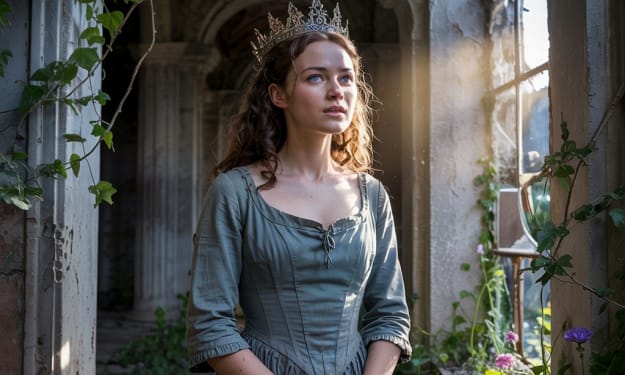
The Poor Queen and the Rich Prince"
The Poor Queen and the Rich Prince Subtitle: A Talest sonerited a crown that was more symbolic than powerful, a throne more ceremonial than respected. She lived not in luxury but among the cracked marble halls, tending to the overgrown gardens herself, wearing simple clothes and a crown that had lost most of its jewels. But Seraphina was not bitter. She believed deeply that a Queen's true worth was not in the gold she wore, but in the strength she carried, and the love she offered to her land, no matter how broken it was. Far across the mountains, in a kingdom bursting with riches, lived Prince Leontius. He was heir to a realm of glittering cities, endless feasts, and power that stretched across nations. His life was embroidered with gold and stitched with silk. Yet, despite all he had, Leontius felt hollow. Love, honesty, and humility were rarities in his palace, traded too easily for ambition and deceit. One day, during a grand hunt that crossed the kingdom's borders, Prince Leontius lost his way. Alone, tired, and battered by a storm, he stumbled into Elyndora. What he saw was not grandeur — but ruin. Yet through the ruins, there was an unmistakable spirit, something more beautiful than any gilded palace: a garden in bloom, a queen kneeling by a rosebush, hands dirty with soil, smiling at a single flower. Leontius, soaked and disheveled, introduced himself as nothing more than "Leo." He expected coldness or fear, but Queen Seraphina only offered him a warm place by the fire and a bowl of stew she had made herself. In the days that followed, Leontius stayed, saying little about his true identity. He worked alongside Seraphina, mending fences, patching roofs, planting seeds. He watched how she treated her lands like sacred ground and spoke to her few remaining subjects with kindness and dignity. To Seraphina, no task was too lowly, no person too small. He found himself falling — not for her crown, not for her beauty alone, but for her spirit. In her poverty, she had riches he had never known: honesty, compassion, courage. Seraphina, too, felt drawn to the mysterious, kind-hearted stranger who did not treat her with false grandeur or fear, but as an equal. She laughed with him, challenged him, and slowly, trusted him. One evening, under the tattered banners of her ancient hall, Leontius could hide no more. He knelt before her — not as a servant, but as himself. He told her his truth: the riches, the throne, the expectations waiting for him across the mountains. Queen Seraphina listened quietly, her heart torn. She was no fool; she knew the worlds they came from were not meant to cross easily. But she also knew love when it stood before her — rare, terrifying, and beautiful. "I have no riches to offer you," she whispered, voice steady, though her hands trembled slightly. "No army, no lands, no powerful allies." Leontius smiled. "And I have no soul to offer you unless I leave that life behind." The choice was heavy, but for Leontius, it had already been made in his heart. He renounced his claim to his father's throne, sending a message with a trusted friend to his kingdom. He chose instead to stay, to rebuild Elyndora not with gold, but with hands, heart, and hope. Years passed. Together, Queen Seraphina and Prince Leontius transformed the ruined kingdom. They rebuilt homes stone by stone, taught the land to breathe again, and welcomed anyone with willing hands and a true heart. Elyndora never became the richest kingdom, nor the most powerful. But it became something far rarer: a place where love ruled over gold, and where two hearts, once worlds apart, built a new world together. The Poor Queen and the Rich Prince lived not in splendid castles, but in a great house surrounded by wildflowers, laughter, and the loyal hearts of those they served. Their love story became legend — a whispered reminder across generations that the greatest treasure was not found in vaults, but in the unbreakable bond between two souls who chose each other against all odds. And thus, their kingdom thrived — not because of what they had, but because of what they believed. As Elyndora flourished under their rule, the people began to sing songs of the Queen who chose kindness over conquest and the Prince who chose love over luxury. Travelers from distant lands came not to plunder but to marvel at the spirit of the small kingdom. The gardens that Seraphina once tended alone now stretched for miles, filled with roses, sunflowers, and sweet-scented herbs. Children ran through the meadows laughing, and old stone towers, once broken and abandoned, rang again with music and joy. Seraphina and Leontius led by example. They walked among their people, worked in the fields during harvest, and listened to the concerns of the lowliest farmer
By MUHAMMAD Hukamran about a year ago in Writers
How to Get the Best Deals on Hotel Rooms
Traveling is one of life’s greatest joys, but let’s face it—finding the right hotel at the right price can be a challenge. Hotel rooms can vary greatly in price depending on the season, location, and even the time of day you book. Fortunately, there are plenty of strategies you can use to ensure you're getting the best deal on your stay. Whether you're planning a weekend getaway or an extended vacation, these tips will help you save money and book smarter.
By White Rose Resortsabout a year ago in Writers
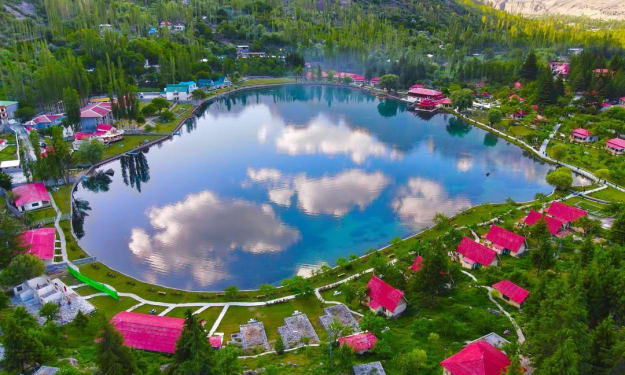
Best Time to Visit Pakistan | Travel Guide 2025 by Mavrick Tours
When planning an adventure to Pakistan, timing is everything. The best time to visit Pakistan depends on what you want to experience—lush green valleys, snow-capped peaks, colorful festivals, or peaceful lakes. From the breathtaking trails of Fairy Meadows Pakistan to the magical beauty of Skardu and Hunza, this guide by Mavrick Tours will help you choose the perfect season for your trip.
By Mavrick Tours Pvt Ltdabout a year ago in Writers
Imran Khan: A Journey of Struggle and Inspiration for the Youth"
Imran Khan: A Journey of Struggle and Inspiration for the Youth Imran Khan’s journey is not just one of personal triumph, but a reflection of the dreams and aspirations of an entire generation. His story is one of struggle, passion, and leadership, shaping the future of countless young people in Pakistan and beyond. From the cricket grounds to the political arenas, Imran Khan has constantly been a symbol of perseverance, and through his efforts, he has become a beacon of hope for the youth. Imran Khan was born on October 5, 1952, in Lahore, Pakistan, into a wealthy and influential family. However, it wasn’t the comfort of his upbringing that defined him, but his drive and determination to carve a path that would change the course of his nation’s history. From a young age, Khan exhibited an unyielding desire to prove himself, and it wasn’t long before he found his true calling in cricket. The game would not only be his passion but also the stage on which he would inspire millions. His cricketing career began in the early 1970s, but it was not an easy road to success. Imran faced numerous challenges in proving his worth on the cricket field. He encountered criticism, doubters, and obstacles at every stage of his career. Yet, his resilience pushed him forward. Imran’s leadership qualities became evident when he led Pakistan to victory in the 1992 Cricket World Cup. The triumph wasn’t just a victory for the team but a moment that unified an entire nation and left an indelible mark on the hearts of Pakistanis. For the youth of Pakistan, Imran Khan became a symbol of perseverance, a leader who had fought through adversity to reach the top. His victory in the World Cup showed them that no matter where they came from or what challenges they faced, anything was possible with hard work and determination. However, the victory was only the beginning of Khan’s journey. After retiring from cricket, Imran Khan could have chosen to live a comfortable life, enjoying the fruits of his success. But he was driven by a deeper purpose—a desire to serve the nation that had given him so much. Imran’s struggle transitioned from the cricket field to the realm of politics, where he sought to change the very fabric of the political system in Pakistan. He believed that the youth of the country had the power to bring about a transformation, but only if they had the right leadership and vision to guide them. In 1996, Imran Khan founded the Pakistan Tehreek-e-Insaf (PTI), a political party that aimed to bring justice, equality, and transparency to Pakistan. However, his political journey was fraught with challenges. The political landscape was dominated by traditional parties with established power structures, and Imran's message of change seemed almost impossible to deliver. For years, his party struggled to gain significant ground, with critics labeling him as an outsider who could never challenge the status quo. Despite the setbacks, Imran’s faith in the youth remained unwavering. He believed that the future of Pakistan lay in the hands of young people who had the potential to change the political system. He often spoke of the need for youth to become active participants in the democratic process, urging them to take ownership of their future. Imran’s words resonated with the youth, who were disillusioned with the corruption and inefficiency that plagued the country. The political parties that had ruled Pakistan for decades had failed to deliver on their promises, and young Pakistanis were looking for an alternative—a leader who understood their struggles and could offer a vision for a better future. Imran Khan’s message was simple yet powerful: "Change is possible, and it starts with you." He inspired countless young people to join his movement, making them believe that they were the key to transforming Pakistan into a prosperous, corruption-free nation. His message wasn’t just about politics; it was about empowerment. Imran taught the youth that they had the power to create change—not only in politics but in every aspect of society. He spoke about education, health, and social welfare—issues that directly affected young people and their families. Imran understood that to build a better Pakistan, the youth had to be equipped with the tools and opportunities they needed to succeed. His political struggle reached a turning point in the 2013 elections. While PTI did not win the majority of seats, Imran’s message was heard loud and clear. His party became the second-largest political force in Pakistan, and Imran emerged as the leader of the opposition. More importantly, he became the voice of the youth, who had turned out in large numbers to support his vision of a new Pakistan. The election results were a testament to the changing tides in Pakistani politics, with young people leading the charge for reform. Imran Khan’s impact on the youth didn’t stop at politics. His philanthropic efforts through the Shaukat Khanum Memorial Cancer Hospital and Research Centre (founded in 1994) have been a source of inspiration for countless young people who want to contribute to the betterment of society. The hospital, which offers cancer treatment to those who cannot afford it, stands as a testament to Imran’s commitment to serving the underprivileged and bringing positive change to the country. His ability to combine sports, politics, and charity into one narrative has made him a unique and influential figure in Pakistan. In 2018, Imran Khan’s long struggle finally paid off when PTI won the general elections, and he became the 22nd Prime Minister of Pakistan. His victory was not just a personal achievement but the triumph of a vision that had inspired millions of young people. His leadership was based on the principles of justice, accountability, and fairness, and he promised to build a Pakistan that would provide opportunities for the youth to thrive. Imran Khan’s journey is a powerful reminder that success doesn’t come overnight. It’s about facing setbacks, persevering through challenges, and believing in your ability to create change. His story continues to inspire young people in Pakistan and across the world, showing them that their dreams are within reach, and that their actions can shape the future. Today, Imran Khan is not only the Prime Minister of Pakistan but a symbol of the struggles and triumphs of a generation that refuses to give up on their dreams. He has proven that when the youth are empowered, they can change the world. --- This narrative captures Imran Khan's impact on youth and his journey of struggle, leadership, and eventual success. Would you like any changes or additional details in the story?
By MUHAMMAD Hukamran about a year ago in Writers