Vocal
Outsourcing vs. In-house Development: Why Hiring Dedicated Developers Works Best
When you're developing a software solution for your business, one of the first decisions you’ll have to make is whether to outsource development or hire an in-house development team. Both ways have good things about them, but lots of businesses are starting to get a dedicated software development team for their project because it's easier and they know what they're doing.
By Olivia Brown2 years ago in Writers
How Virtual Offices in Bournemouth Support Remote Teams and Businesses?
Remote work is transforming the way businesses operate, and having a Green Park virtual office in Bournemouth offers the flexibility and professionalism needed to thrive. Whether you are a freelancer, entrepreneur, or a growing company, a virtual office rental provides a business address, mail handling, and professional services without the high costs of a traditional workspace.
By Green Park2 years ago in Writers
Plus Size Outfits for the Mother of the Bride. AI-Generated.
The wedding day is a momentous occasion, not only for the bride but also for her mother. As the mother of the bride, your role is significant—you are a pillar of support, a guiding presence, and an honored guest. Naturally, you want to look and feel your best while complementing the overall aesthetic of the event. However, for many plus-size women, finding the perfect outfit can feel overwhelming. The good news is that the fashion industry has made great strides in embracing inclusivity, offering a wide range of sophisticated and stylish plus size outfits for the mother of the bride.
By FashionforAll2 years ago in Writers
The Ultimate Guide to Plus Size Outfits for Wedding Guests . AI-Generated.
Weddings are a time of joy, celebration, and love. Whether you’re attending as a close family member, a friend, or a colleague, choosing the perfect outfit is an essential part of the experience. However, for plus-size women, the search for plus size outfits for wedding guests can sometimes feel overwhelming due to limited options and inconsistent sizing.
By FashionforAll2 years ago in Writers
The Werewolf’s Sacrifice: A Love That Defied Fate
The Werewolf Who Fell in Love The moon hung low above the dense woods, its silver glow illuminating long shadows between the towering trees. A lone man moved silently in the darkness, his lungs filling and emptying in short, abrupt gasps. His lean, muscular body carried the weight of his secret—a secret he had sworn never to share.
By Taviii🇨🇦♐️2 years ago in Writers
Rising Together On Vocal.Media
Rising Together On Vocal.Media In the colorful world of Vocal Media, Ella often felt like a small star in a vast night sky, yearning to shine but often overshadowed. With dreams as bright as the morning sun, she poured her heart, soul, and countless hours into her poetry and stories. Yet, despite her passion, she found herself stuck in a silence that echoed against her creative spirit. With 171 followers, it felt like her voice was a whisper in a sea of louder calls. Only a handful of these others supported her. She was so greatful for the ones that did. The others took her likes and comments, they gave nothing in return back.
By ♿ V+ Marie381Uk 2 years ago in Writers
Differences in Interests and the Impossibility of a Unified Perspective
In social life, achieving an absolute unified perspective is nearly impossible. This is due to the diverse interests inherent in individuals and groups within society. Sociology, as a discipline that studies social structures and human interactions, has long highlighted how differences in interests shape social dynamics and prevent the formation of a homogeneous perspective.
By Haikal Akmal Ajikontea2 years ago in Writers
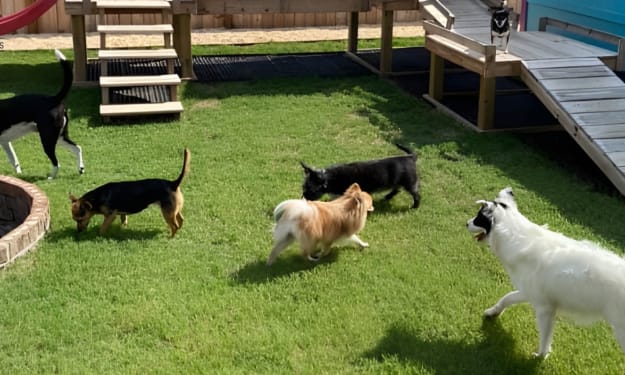
Short-Term Dog Boarding for Rescue Dogs: Helping Newly Adopted Pets Adjust
Adopting a rescue dog is an incredibly rewarding experience, but it also comes with challenges, particularly in the initial adjustment period. Many newly adopted dogs need time to adapt to their new environment, and sometimes, pet owners may require temporary boarding solutions. Short-term dog boarding can be an invaluable resource for rescue dogs, helping them transition smoothly into their forever homes while providing professional care and support.
By Dancing Creek Farm2 years ago in Writers
Challenges am facing as a writer. AI-Generated.
As a creative writer, I've always been drawn to the romanticized idea of sitting at a desk, pen in hand and pouring my heart and soul onto the page. But the reality of being a writer is far from romantic. It's a journey filled with self-doubt, rejection and uncertainty. I've been writing for years and yet, every time I sit down to start a new project, I'm met with a crippling sense of fear. What if I'm not good enough? What if my ideas are stupid? What if I fail? This fear is debilitating and it's a constant companion on my writing journey. It's the voice in my head that tells me I'm not worthy, that I'll never make it as a writer. It's the weight that presses down on me, making it hard to breathe, hard to think. But I'm not alone in this struggle. Every writer I know faces similar doubts and fears. We're all struggling to create something meaningful, something that will resonate with others. And we're all fighting against the voices in our heads that tell us we're not good enough. The Challenges of Being a Writer: 1. Self-doubt: The constant fear that you're not good enough, that your ideas are stupid and that you'll never make it as a writer. 2. Rejection: The inevitable rejection that comes with submitting your work to publishers, agents and editors. 3. Uncertainty: The uncertainty of whether your work will be well-received, whether you'll be able to make a living as a writer, and whether you'll ever achieve your writing goals. 4. Isolation: The isolation that comes with spending hours alone at your desk, struggling to create something meaningful. 5. Comparison: The constant comparison to other writers, the feeling that you're not measuring up and the fear that you'll never be as successful as they are. How I Overcome These Challenges: 1. I remind myself why I started writing: I reflect on why I became a writer in the first place and I let that passion and purpose drive me forward. 2. I seek out support: I surround myself with fellow writers, friends and family who encourage and support me on my writing journey. 3. I focus on the process, not the outcome: I try to focus on the process of writing, rather than the outcome. I remind myself that writing is a journey, not a destination. 4. I practice self-care: I make sure to take care of myself, both physically and mentally. I exercise, meditate and prioritize my well-being. 5. I celebrate my successes: I celebrate my successes, no matter how small they may seem. I remind myself that every accomplishment is a step forward on my writing journey. If you're a writer, I encourage you to keep writing, even when it's hard. Keep pushing forward, even when the doubts and fears creep in. Remember why you started writing in the first place and let that passion and purpose drive you forward. The Unseen Struggles of a Writer: My Journey As I continue on my writing journey, I'm reminded that the struggles I face are not unique to me. Every writer, regardless of their level of success or experience, faces similar challenges. I think about the writers who have come before me, the ones who have paved the way for me to pursue my dreams. I think about the struggles they faced, the rejections they received and the doubts they overcame. I think about the writers who are just starting out, the ones who are facing the same fears and doubts that I faced when I first began. I want to tell them that it's okay to struggle, that it's okay to doubt themselves. Because the truth is, writing is hard. It's a difficult, frustrating and often lonely process. But it's also a rewarding, fulfilling and exhilarating process. The Rewards of Writing: 1. Creative expression: Writing allows me to express myself creatively, to bring my ideas and imagination to life. 2. Personal growth: Writing helps me to grow and develop as a person, to learn new things and to challenge myself. 3. Connection with others: Writing allows me to connect with others, to share my thoughts and experiences with them. 4. Legacy: Writing gives me the opportunity to leave a lasting legacy, to create something that will outlive me. 5. Therapeutic benefits: Writing has therapeutic benefits, helping me to process my emotions and to cope with stress. How I Stay Motivated: 1. I set achievable goals: I set realistic goals for myself, both short-term and long-term. 2. I create a writing routine: I establish a regular writing routine, setting aside dedicated time to write. 3. I seek out accountability: I share my goals and progress with a friend or fellow writer, asking them to hold me accountable. 4. I reward myself: I reward myself for reaching milestones and achieving my goals. 5. I remind myself why I started: I reflect on why I became a writer in the first place, and I let that passion and purpose drive me forward. In conclusion, writing is a journey, not a destination. It's a journey filled with challenges, doubts and fears, but also with rewards, growth and fulfillment. By staying motivated, focused and committed to my craft, I'm able to overcome the struggles of being a writer and keep moving forward. being a writer is not easy. It's a journey filled with challenges, doubts and fears. But it's also a journey filled with passion, purpose and creativity. By reminding myself why I started writing, seeking out support, focusing on the process, practicing self-care and celebrating my successes, I'm able to overcome the challenges of being a writer and keep moving forward. If you're a writer, I encourage you to keep writing, even when it's hard. Keep pushing forward, even when the doubts and fears creep in. Remember why you started writing in the first place and let that passion and purpose drive you forward
By Henry Lucy2 years ago in Writers
The Power of Writing in Social. AI-Generated.
Through my writing’s , I've always been fascinated by the role of writing in social change. Can words really make a difference? Can they inspire, educate and mobilize people to take action? My journey into the world of social change writing began when I was a college student. I was part of a group of activists who were fighting for racial justice and equality on campus. We organized protests, rallies and awareness campaigns, but I soon realized that writing was a crucial part of our movement. I started writing op-eds, blog posts and social media updates that highlighted the issues we were facing and the changes we wanted to see. I wrote about the importance of diversity and inclusion, the need for systemic change and the power of collective action. As I wrote, I began to see the impact of my words. People were sharing my posts, commenting on my articles and reaching out to me to learn more about the issues. I was inspiring conversations, sparking debates and mobilizing people to take action. The Role of Writing in Social Change: 1. Raises awareness: Writing can raise awareness about social issues, educating people about the problems and the need for change. 2. Inspires action: Writing can inspire people to take action, mobilizing them to participate in movements, sign petitions, and contact their representatives. 3. Provides a platform for marginalized voices: Writing can provide a platform for marginalized voices, amplifying their stories, experiences and perspectives. 4. Challenges dominant narratives: Writing can challenge dominant narratives, offering alternative perspectives and counter-narratives that can help to shift public opinion. 5. Builds community: Writing can build community, creating a sense of solidarity and connection among people who are working towards a common goal. Tips for Writing for Social Change: 1. Know your audience: Understand who your audience is, what they care about, and what motivates them to take action. 2. Be clear and concise: Use clear and concise language to communicate your message, avoiding jargon and technical terms that may be unfamiliar to your audience. 3. Use storytelling techniques: Use storytelling techniques to make your message more relatable, memorable and impactful. 4. Be authentic and passionate: Write from the heart, sharing your personal experiences, perspectives and passions. 5. Use social media strategically: Use social media strategically to amplify your message, reach new audiences and build a community of supporters. In conclusion, writing has the power to inspire, educate and mobilize people to take action for social change. By raising awareness, inspiring action, providing a platform for marginalized voices, challenging dominant narratives, and building community, writers can play a crucial role in creating a more just and equitable world. Whether you're a seasoned writer or just starting out, I encourage you to use your words to make a difference. Write for social change and join a community of writers who are working together to create a better world. As I continued to write for social change, I began to realize the importance of intersectionality. I learned that social justice issues are often interconnected, and that writing about one issue can have implications for others. For example, writing about racial justice might also involve discussing issues of economic inequality, police brutality, and systemic racism. By acknowledging these intersections, writers can create a more nuanced and comprehensive understanding of social justice issues. I also learned the value of listening to and amplifying marginalized voices. As a writer, I have a platform and a responsibility to use it to elevate the stories and perspectives of those who are often silenced or erased. This meant being mindful of my own privilege and positionality and being willing to step aside and let others take the microphone. It also meant being committed to doing the hard work of learning, listening and growing, even when it was uncomfortable or challenging. The Importance of Intersectionality in Writing for Social Change: 1. Acknowledges interconnectedness: Intersectionality acknowledges that social justice issues are often interconnected and intertwined. 2. Creates a more nuanced understanding: By acknowledging intersections, writers can create a more nuanced and comprehensive understanding of social justice issues. 3. Highlights the experiences of marginalized communities: Intersectionality highlights the experiences of marginalized communities and the ways in which they are impacted by multiple forms of oppression. Tips for Amplifying Marginalized Voices: 1. Listen more than you speak: Listen to the stories, experiences and perspectives of marginalized communities and amplify their voices rather than speaking over them. 2. Be mindful of your privilege: Be aware of your own privilege and positionality and be willing to step aside and let others take the microphone. 3. Do the hard work of learning and growing: Be committed to doing the hard work of learning, listening and growing, even when it's uncomfortable or challenging. 4. Use your platform to elevate marginalized voices: Use your platform to elevate the stories, experiences and perspectives of marginalized communities. In conclusion, writing for social change requires a deep understanding of intersectionality and a commitment to amplifying marginalized voices. By acknowledging the interconnectedness of social justice issues and elevating the stories and perspectives of marginalized communities, writers can create a more nuanced and comprehensive understanding of social justice issues and inspire meaningful change. Whether you're a seasoned writer or just starting out, I encourage you to use your words to make a difference. Write for social change and join a community of writers who are working together to create a more just and equitable world
By Henry Lucy2 years ago in Writers
The Art of Writing Humor. AI-Generated.
As a writer, I've always been fascinated by the art of writing humor. What makes something funny? How can you craft a joke or a humorous scene that leaves readers laughing out loud? My journey into writing humor began when I was a teenager. I devoured books by comedic writers like Douglas Adams, Terry Pratchett and P.G. Wodehouse. I analyzed their writing styles, trying to understand what made their humor so effective. One of the key things I learned was the importance of timing. Humor is all about timing knowing when to deliver the punchline, when to pause for comedic effect and when to ramp up the absurdity. I also learned that humor is highly subjective. What one person finds hilarious, another might not find funny at all. This realization helped me to develop a sense of humor that was unique to my own voice and perspective. As I began to write my own humorous pieces, I discovered the power of observation. Humor often comes from observing the absurdities and contradictions of everyday life. By paying attention to the quirks and flaws of the people and world around me, I was able to craft humorous stories and characters that resonated with readers. Guidelines for Writing Humor: 1. Timing is everything: Humor is all about timing knowing when to deliver the punchline, when to pause for comedic effect and when to ramp up the absurdity. 2. Be observant: Humor often comes from observing the absurdities and contradictions of everyday life. 3. Develop your unique voice: Humor is highly subjective, so it's essential to develop a sense of humor that's unique to your own voice and perspective. 4. Use satire and irony: Satire and irony can be powerful tools for humor, allowing you to comment on serious issues in a way that's both funny and thought-provoking. 5. Don't be afraid to be silly: Humor often requires a willingness to be silly, absurd, or ridiculous. Logical guidelines for Writing Humor: 1. Read widely: Read humorous books, articles and comics to get a sense of what works and what doesn't. 2. Watch comedians: Watch stand-up comedians and study their timing, delivery, and material. 3. Practice your craft: Write humorous pieces regularly to develop your skills and find your unique voice. 4. Be willing to take risks: Humor often requires taking risks and trying new things don't be afraid to experiment and see what works. 5. Learn to laugh at yourself: Humor is often about laughing at ourselves and our own foibles – learn to laugh at yourself and you'll be well on your way to writing humor. In conclusion, writing humor is a delicate art that requires timing, observation and a willingness to be silly. By studying the masters, practicing your craft and taking risks, you can develop your own unique sense of humor and leave readers laughing out loud. Whether you're a seasoned writer or just starting out, I encourage you to give writing humor a try. You never know where it might take you and who knows, you might just make someone's day a little brighter. The Art of Writing Humor: A Writer's Journey As I continued to write humor, I began to realize the importance of authenticity. Humor that comes from a genuine place is often the most relatable and effective. I made a conscious effort to draw from my own experiences and observations, using humor to comment on the absurdities and contradictions of everyday life. I also learned the value of editing and revision. Humor is often about precision and timing, and a well-placed edit can make all the difference in the world. I developed a keen eye for detail, making sure that every joke, every quip and every humorous aside was carefully crafted and precisely placed. Another key aspect of writing humor is understanding your audience. What one group of people finds funny, another might not. I learned to consider my audience's perspectives, values and experiences, tailoring my humor to resonate with them. The Importance of Authenticity in Humor: 1. Draw from personal experiences: Humor that comes from a genuine place is often the most relatable and effective. 2. Be true to your voice: Authenticity is key to writing humor that resonates with readers. 3. Use humor to comment on everyday life: Humor is often about observing the absurdities and contradictions of everyday life. Tips for Editing and Revising Humor: 1. Read your work aloud: Reading your work aloud can help you identify areas where the humor falls flat. 2. Get feedback from others: Share your work with others and ask for feedback on the humor. 3. Be ruthless in your editing: Don't be afraid to cut jokes or humorous passages that aren't working. 4. Use precision and timing: Humor is often about precision and timing, so make sure every joke and quip is carefully crafted and precisely placed. In conclusion, writing humor is a delicate art that requires authenticity, precision, and a willingness to take risks. By drawing from personal experiences, understanding your audience, and editing and revising with care, you can craft humor that resonates with readers and leaves them laughing out loud. Whether you're a seasoned writer or just starting out, I encourage you to give writing humor a try. With practice, patience and a willingness to take risks, you can develop your own unique sense of humor and bring joy and laughter to your readers
By Henry Lucy2 years ago in Writers
THE BENEFITS OF SOCIAL COLLABORATIVE WRITING . AI-Generated.
I my writing site,I have always been drawn to the idea of social collaborative writing. The thought of working with other writers, sharing ideas and learning from each other's experiences was incredibly appealing to me. My journey into social collaborative writing began when I joined a writing group. We met once a week, sharing our work and providing feedback to each other. It was a safe and supportive environment, where we could experiment with new ideas and techniques without fear of judgment. As I worked with the group, I began to realize the numerous benefits of social collaborative writing. For one, it helped me to stay motivated and accountable. Knowing that I had to share my work with the group each week kept me on track, even when the writing got tough. Social collaborative writing also helped me to develop my critical thinking skills. By reading and providing feedback on other writers' work, I learned to analyze and evaluate writing from different perspectives. This, in turn, helped me to improve my own writing, as I was able to identify areas for improvement and develop strategies for addressing them. Another benefit of social collaborative writing was the opportunity to learn from others. Each member of the group brought their own unique experiences, skills, and perspectives to the table. By working together, we were able to share knowledge, expertise and resources, helping each other to grow and develop as writers. Benefited outlines of Social Collaborative Writing: 1. Improved motivation and accountability: Working with others helps to stay motivated and accountable. 2. Develops critical thinking skills: Providing feedback on others' work helps to develop critical thinking skills. 3. Opportunities for learning and growth: Collaborating with others provides opportunities to learn from their experiences, skills and perspectives. 4. Enhances creativity: Working with others can stimulate creativity and inspire new ideas. 5. Builds community and support: Social collaborative writing provides a sense of community and support, helping to alleviate the isolation and loneliness that can come with writing. Tips for Engaging in Social Collaborative Writing: 1. Join a writing group: Look for local writing groups or online communities that align with your interests and goals. 2. Be open and receptive: Be willing to share your work, receive feedback, and learn from others. 3. Establish clear goals and expectations: Define what you hope to achieve through social collaborative writing and establish clear expectations for the group. 4. Foster a supportive environment: Encourage constructive feedback, active listening and mutual respect within the group. 5. Celebrate successes and progress: Acknowledge and celebrate the successes and progress of group members. Social collaborative writing has been a transformative experience for me as a writer. It has helped me to stay motivated, develop my critical thinking skills and learn from others. By engaging in social collaborative writing, writers can build community, enhance their creativity and achieve their writing goals. Whether you're a seasoned writer or just starting out, I encourage you to explore the benefits of social collaborative writing for yourself. Join a writing group, attend writing workshops or participate in online writing communities. You never know where it might take you. As I continued to participate in social collaborative writing, I began to notice the impact it had on my writing style and voice. By working with others, I was exposed to different writing styles, genres and techniques. This helped me to experiment with new approaches and find my unique voice. I also found that social collaborative writing helped me to develop a thicker skin. As a writer, it's easy to get attached to your work and take criticism personally. But by sharing my work with others and receiving feedback, I learned to separate myself from my writing and view criticism as an opportunity for growth. Another benefit of social collaborative writing was the opportunity to learn from others' strengths and weaknesses. By reading and providing feedback on others' work, I gained insight into what worked well and what didn't. This helped me to identify areas for improvement in my own writing and develop strategies for addressing them. The Impact of Social Collaborative Writing on Writing Style and Voice: 1. Exposure to different writing styles: Working with others exposes you to different writing styles, genres and techniques. 2. Experimentation with new approaches: Social collaborative writing encourages experimentation with new approaches and techniques. 3. Development of a unique voice: By working with others, you can find your unique voice and writing style. 4. Thicker skin: Social collaborative writing helps you develop a thicker skin and view criticism as an opportunity for growth. Tips for Getting the Most Out of Social Collaborative Writing: 1. Be open to feedback: Be willing to receive feedback and use it to improve your writing. 2. Be respectful of others' work: Treat others' work with respect and kindness, even if you don't agree with their approach. 3. Be willing to take risks: Don't be afraid to try new approaches and take risks in your writing. 4. Celebrate others' successes: Acknowledge and celebrate the successes and progress of others in the group. In conclusion, social collaborative writing has been a game-changer for me as a writer. It's helped me to develop my writing style and voice, learn from others, and grow as a writer. By embracing social collaborative writing, writers can build community, enhance their creativity and achieve their writing goals. Whether you're a seasoned writer or just starting out, I encourage you to give social collaborative writing a try. You never know where it might take you.
By Henry Lucy2 years ago in Writers