Vocal
Why App Development Costs in India are Different From US and Australia?
When it comes to app development, there are a lot of factors to consider. One of the most important factors is cost. The cost can vary significantly depending on where your app is developed. Generally, app development costs in India are much lower than in the US or Australia.
By Helpful Insightabout a year ago in Writers
Are Smilers Clear Aligners Worth It ?
Smilers Clear Aligners offer a modern and discreet solution for straightening teeth, using a series of custom-made, transparent trays. Created with advanced 3D technology, these smiler clear aligners provide a precise and comfortable fit tailored to each individual's smile.This procedure is ideal if you're looking for a dentist who specializes in treating smiler clear aligners. Smiler's aligners are a cutting-edge, practically undetectable substitute for traditional braces, provided by the Van Orman Dental Group, a reputable dentist in Lake Oswego.
By Van Orman Dental Groupabout a year ago in Writers
The Ultimate Guide to Choosing the Perfect Wall Clock for Your Home
Wall clocks do more than just acquaint you with time—they add appearance and personality to your home. Whether you’re eyeing a living room wall clock to ballast your space, a bedroom wall clock for a blow of calm, or a table wall clock for home, the appropriate best can transform any room. With the affluence of affairs of wall clocks online, you have amaranthine options to suit your taste. This advisor shares applied tips to ace the absolute wall clock, aggregate action with ability, and afterward SEO best practices.
By Anurag Singhabout a year ago in Writers
Types of Mechanical Modelling in AEC Projects
In the constantly evolving world of AEC (Architecture Engineering, Construction and Construction), mechanical modelling plays an essential role in designing, planning and building efficient construction systems. Whether you're working on HVAC systems, plumbing CAD drawings, or duct construction layouts, understanding the different types of mechanical modelling is essential--especially for high-growth areas like Plano, Texas.
By Bim services llcabout a year ago in Writers
The Quran has so accurately revealed this original mystery of creation.
We will begin our discussion with an ancient and famous verse of the Quran, which sheds light on the subject of creation and the universe. This verse is in Surah Al-Anbiya (21:30): “Do not the disbelievers see that the heavens and the earth were joined together, then We separated them; and We created from water every living thing. Will they not then believe?”
By Abdul Barikabout a year ago in Writers
India and Pakistan: A Story of War and Rivalry. Content Warning. AI-Generated.
The story of India and Pakistan is one born not merely from political lines drawn on maps, but from a partition that carved deep scars into the subcontinent. It is a tale of shared heritage and painful separation, of wars fought on borders and in hearts, of rivalry, pride, and the ongoing struggle for peace. The Seeds of Division In 1947, British India gained independence—but the cost was immense. The subcontinent was divided into two sovereign nations: a secular India and a Muslim-majority Pakistan. What was meant to be a political compromise swiftly descended into chaos. The partition triggered one of the largest mass migrations in human history, with over 15 million people displaced. Hindus and Sikhs fled from what became Pakistan, while Muslims crossed into it from India. Amidst this mass upheaval, nearly a million people lost their lives. Trains full of corpses, villages set aflame, and bloodshed on both sides created an atmosphere of deep mistrust that would linger for decades. The First War: Kashmir Ignites the Flame Barely months after partition, India and Pakistan clashed over the princely state of Jammu and Kashmir. The Maharaja of Kashmir, a Hindu ruler in a Muslim-majority region, chose to accede to India under pressure. Pakistan responded by sending tribal militias into Kashmir. India retaliated with military force, and the first war between the two nations began in October 1947. By the time the United Nations brokered a ceasefire in 1949, the region was divided along the Line of Control (LoC), with Pakistan controlling one-third and India the rest. The Kashmir issue became the core of the India-Pakistan conflict, shaping decades of hostility. The 1965 War: A Second Confrontation Tensions over Kashmir flared again in 1965. Believing that Kashmiris would rise in rebellion, Pakistan launched “Operation Gibraltar” to infiltrate Indian territory. The operation failed, and full-scale war broke out. Major battles were fought in Kashmir, Punjab, and Rajasthan. Though both sides claimed victory, the war ended in a stalemate with the Tashkent Agreement, brokered by the Soviet Union. Over 3,000 soldiers died on each side, and the deep-rooted animosity only hardened. The 1971 War: Birth of a New Nation The third and most significant war occurred in 1971—not over Kashmir, but due to a civil conflict in East Pakistan (modern-day Bangladesh). West Pakistan’s military launched a brutal crackdown on Bengali nationalists demanding autonomy. India, facing an influx of 10 million refugees, intervened militarily in support of the Bengali cause. In a decisive two-week war, India’s military overwhelmed Pakistani forces. On December 16, 1971, over 90,000 Pakistani soldiers surrendered in Dhaka—the largest surrender since World War II. The war led to the creation of Bangladesh and permanently altered the geopolitical map. This defeat left a deep psychological wound in Pakistan’s military and political psyche and shifted the focus toward building nuclear deterrence. The Nuclear Shadow In 1974, India conducted its first nuclear test, calling it a “peaceful nuclear explosion.” Pakistan followed suit in 1998 with its own nuclear tests after India’s series of five underground detonations. With both nations now nuclear-armed, the stakes of any future conflict became infinitely higher. The world watched closely as the two adversaries edged closer to catastrophe—especially during the 1999 Kargil War. The Kargil War: A High-Altitude Conflict In the summer of 1999, just months after both nations signed the Lahore Declaration to reduce tensions, Pakistani soldiers and militants infiltrated Indian positions in the Kargil region of Kashmir. The high-altitude terrain and surprise tactics led to fierce battles. India eventually repelled the intruders, but over 500 Indian soldiers and hundreds of Pakistani troops were killed. The war once again highlighted the fragility of peace in the region, even under the nuclear umbrella. Terrorism and Proxy Wars Beyond open warfare, both nations have accused each other of supporting terrorism and insurgency. The 2001 Indian Parliament attack and the 2008 Mumbai attacks, carried out by Pakistan-based militant groups, brought the two countries to the brink of war. India has since adopted a more aggressive posture, including surgical strikes and air raids across the border in response to terrorist attacks. Pakistan, on its part, denies involvement and blames India for unrest in Balochistan and other regions. Peace Efforts and Missed Opportunities Over the decades, there have been attempts at peace. The Simla Agreement (1972), Agra Summit (2001), and bus diplomacy efforts created moments of hope. Cultural exchanges, trade dialogues, and cricket diplomacy occasionally brought warmth to the cold equation. However, each attempt at reconciliation has been undercut by political shifts, military tensions, or terrorist attacks. The cycle of hope and disappointment has repeated time and again. A Rivalry That Continues Today, India and Pakistan remain locked in a tense rivalry. While both nations have vibrant cultures, powerful militaries, and shared linguistic and historical roots, their relationship is dominated by suspicion and division. Kashmir remains unresolved. Borders remain heavily militarized. Dialogue, when it happens, is fragile and short-lived. Yet, the people on both sides continue to hope for a future where peace might prevail. --- Conclusion The India-Pakistan story is not just a tale of wars and political games. It is also a human story—of families divided by borders, of soldiers dying for flags, and of two nations forever shaped by a shared past and an uncertain future. True peace remains elusive, but history shows that no rivalry lasts forever. Perhaps one day, the story will end not with war, but with reconciliation.
By Muhammad ullah jan about a year ago in Writers
“Islam and Democracy: Conflict, Coexistence, or Alternative?”
“Islam and Democracy: Conflict, Coexistence or Alternative?” A profound question returns again and again in the court of history today—Can Islam coexist with democracy? Or is Islam itself a complete system of government that is an alternative to democracy? The Western world uses this question to establish a ‘political exception’ against Islam. But even in the Muslim world, many thinkers and intellectuals are divided on this question—for some, democracy and Islam are complementary, while for others, they are opposed to each other. In today’s discussion, we will go to the root of this debate—in the context of history, ideology, structure, and reality.
By Abdul Barikabout a year ago in Writers
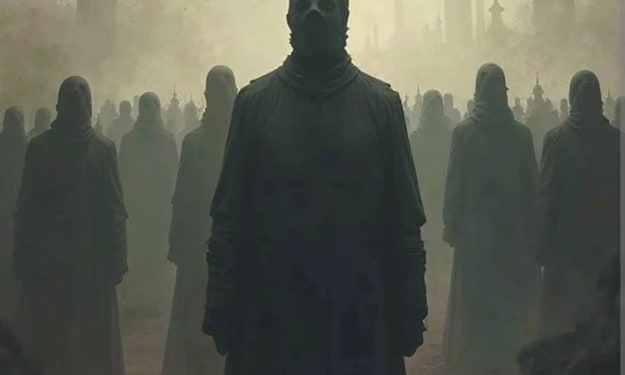
European colonialism and the beginning of Western domination in the Muslim world: a silent war of conquest
There is a chapter in history where, not with the blood of the sword, but under the guise of agreements, trade, education and culture, a terrible war of conquest is going on. The name of this war is colonialism. And the most silent victim of this war was the Muslim world. When Europe began to dominate the economy, technology and trade through the Industrial Revolution, the Muslim world gradually lost its political unity, weakened its military power, and most terribly, began to be defeated psychologically. This discussion is a picture of that long, suffocating history.
By Abdul Barikabout a year ago in Writers
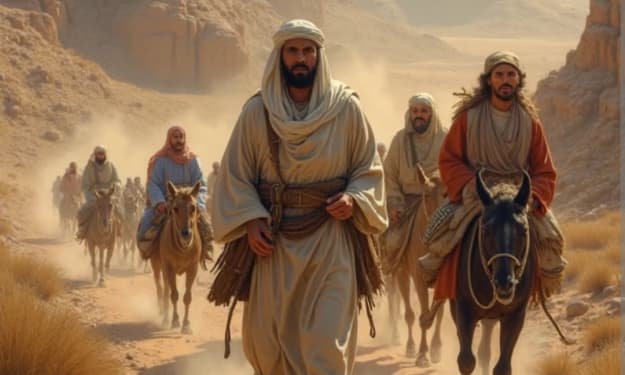
“Hijrah and Islamic Revolution: The Prophet’s Strategy for State Building in Medina”
There are moments in history that change not just the life of an individual, but the course of an entire civilization. The Hijrah—the migration of the Prophet Muhammad (peace and blessings of Allah be upon him) from Mecca to Medina—is a turning point. On the one hand, it was an attempt to protect himself, and on the other, it was the beginning of the building of a visionary state for the future. Today, when we talk about political, cultural, and social Islamic ideals, we think of the state of Medina, because the state established by the Prophet (peace and blessings of Allah be upon him) was the first practical example of a society based on faith and justice.
By Abdul Barikabout a year ago in Writers
A Story about Attackers Infiltrating Vocal
Hello, fellow Vocal Authors. I’m ___Lightning Bolt⚡, a.k.a. Bill O’Neal. Over the course of the next several days, I’m going to share a lot of information with you that I've uncovered about the spammers and thieves who have infiltrated this platform.
By Lightning Bolt ⚡about a year ago in Writers