Shoutout
The Art of Surrender- My Quest To Finally Let Go
People arrive and depart as they see fit. Learned this phrase when? I didn't completely understand at the time how someone could mean so much and then disappear the next second. When I went through it myself, it was a concept I found difficult to understand or accept because I had formed strong attachments to some people. I had the mental impression that I needed to take action to change the current situation. Anything that would allow them to stay, even if it meant causing me inconvenience. I was unaware that I had fallen into this trap. I put myself in a trap that made me vacillate back and forth.
By Hridya Sharma2 years ago in Writers
What Are The Five Basic Propensities That Can Improve Lives?
Five Basic Propensities That Improve Lives As I continued looking for self-improvement, I found that five straightforward propensities can enormously further improve life. These propensities shape our day-to-day schedules, influencing our wellbeing, attitude, and achievement. Propelled by Charles Duhigg's "The Impact of Trained Instinct," I discovered that making progress with our propensities is critical to development.
By Neverlosenasser2 years ago in Writers
Be Your Own Advocate Challenge Apology and Update
Hey, quick question for all reading this - who's the guy who good-heartedly said he'd read three pieces by everyone who provided links in the comments, pieces they wanted to advocate for themselves? This guy. That's right.
By Paul Stewart2 years ago in Writers
What did John Keats mean by "Beauty is Truth, Truth Beauty"?
'Magnificence is Truth, Truth Excellence': Revealing the Quintessence of Magnificence Craftsmanship and theory meet up in a profound jump into magnificence is truth. John Keats, a popular Heartfelt writer, showed us that excellence is something other than looks. He made us consider excellence to be a profound encounter.
By Neverlosenasser2 years ago in Writers
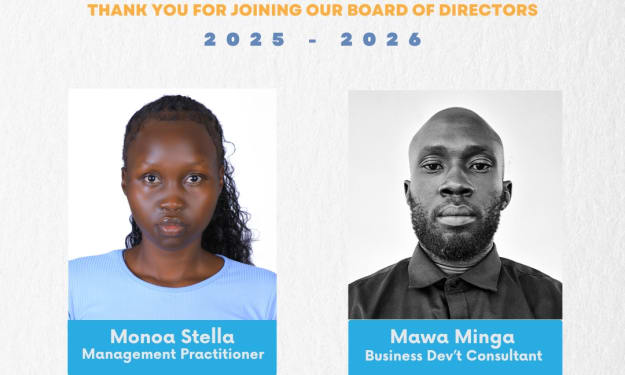
Welcoming new board members at the Excellence Foundation for South Sudan
Author: Emmanuel Bida We are happy to announce the appointment of two exceptional individuals to our board of directors at the Excellence Foundation for South Sudan. Monoa Stella, a seasoned management practitioner, and Mawa Minga, a dynamic business development consultant, will be joining us for a one-year term from January 2025 to January 2026.
By Excellence Foundation for South Sudan2 years ago in Writers
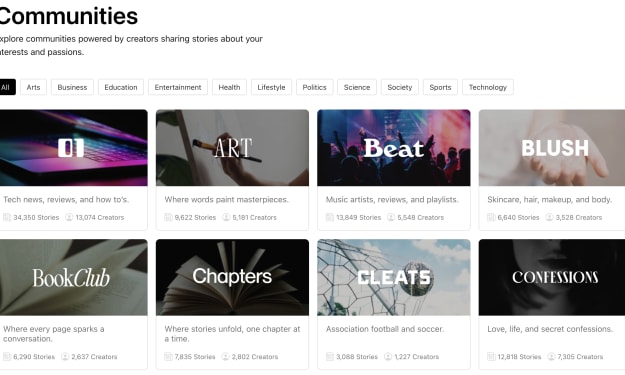
My Best Stories in Vocal Communities
I really liked Rachel Deeming's idea of writing stories for each Vocal Community in 2025. I've written for many of them, but it would be a great personal challenge to see if I can write a new story for each of the existing communities in 2025. This story will be an index for all my community stories.
By Lana V Lynx2 years ago in Writers
Why is saying "NO" so difficult for most people?. AI-Generated.
Understanding the Art of Saying No: A Practical Guide The key to avoiding confrontation is to learn the art of saying no. It's about establishing boundaries, without being impolite. This helps you maintain self-esteem, while also fostering relationships.
By Neverlosenasser2 years ago in Writers
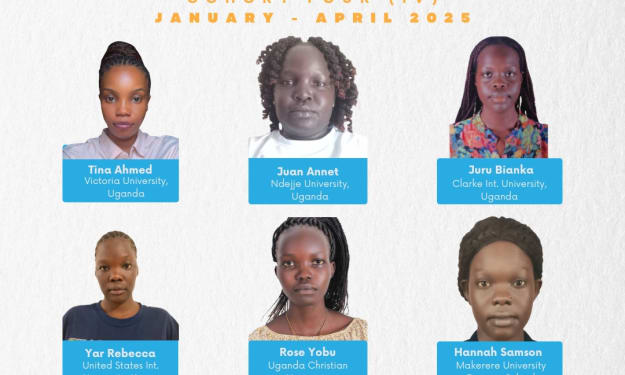
Excellence Foundation for South Sudan welcomes new interns
Author: Emmanuel Bida We are happy to announce the addition of six (06) new members to our team through the fourth (04th) cohort of the Female Student Internship Program (FSIP). The program targets female university students in their final year or those who have graduated without prior internship or work experience, and are passionate and eager to gain hands-on experience while making a difference in the communities the organisation serves.
By Excellence Foundation for South Sudan2 years ago in Writers
2025 is Different from Other Years
As we step into 2025, the world is facing an exciting new chapter, full of both challenges and possibilities. While every year brings its own set of unique circumstances, 2025 stands out for its convergence of technological advancements, social change, environmental awareness, and geopolitical shifts. In this article, we will explore the various ways in which 2025 differs from the years that preceded it and examine how these differences will impact global society. Technological Advancements: The Rise of AI and Automation One of the most noticeable differences in 2025 is the widespread adoption of artificial intelligence (AI) and automation across industries. While AI has been a key subject of discussion over the past decade, its integration into daily life has reached new heights. In 2025, AI is no longer just a futuristic concept; it is fully embedded in industries such as healthcare, transportation, education, and even entertainment. In healthcare, AI has revolutionized diagnosis, treatment plans, and patient care. AI systems are capable of analyzing vast datasets to detect medical conditions with a level of accuracy that human doctors often cannot achieve. Personalized medicine is now a reality, and patients are seeing better outcomes thanks to tailored treatment strategies powered by AI. In the transportation sector, autonomous vehicles have become a norm, reducing the need for human drivers in both freight and passenger transport. This shift is not only improving efficiency but is also playing a role in reducing road accidents and carbon emissions. Cities are becoming more intelligent, with smart traffic systems that adapt to real-time conditions, optimizing the flow of vehicles and reducing congestion. Education, too, is seeing a significant transformation due to AI. Adaptive learning technologies are personalizing education for each student, ensuring that learning speeds and styles are accommodated. AI tutors are assisting both students and teachers, making education more accessible and effective worldwide. However, these technological shifts are not without their challenges. The widespread automation of jobs has led to concerns about job displacement and inequality. As more industries become automated, society must confront the task of retraining workers and creating new roles in an increasingly digital world. The Climate Crisis and Sustainability Another defining characteristic of 2025 is the growing urgency surrounding the climate crisis. While climate change has been a significant issue for decades, the year 2025 is different because we are at a critical tipping point. In previous years, there were plenty of discussions and promises made at international climate summits, but concrete actions were often slow to materialize. However, in 2025, governments, corporations, and individuals are more committed to taking meaningful steps toward sustainability. The shift toward renewable energy sources is more pronounced than ever before. Solar, wind, and geothermal energy have become the dominant players in the energy landscape, pushing fossil fuels into decline. In many countries, green energy has surpassed traditional energy sources, and innovations in battery storage are making renewable energy even more reliable. Electric vehicles (EVs) are now the mainstream choice for consumers, as advancements in battery technology have made them more affordable and practical. Charging infrastructure is widespread, and governments are offering incentives to encourage the transition from gas-powered cars to EVs. Public transportation networks are also undergoing significant changes, with electric buses and trains replacing their diesel counterparts. In addition to energy, the world is seeing a shift in how we think about food production. Vertical farming, plant-based diets, and lab-grown meat are no longer niche industries but are now integral parts of the global food system. These innovations not only help to reduce environmental impact but also address food security concerns in densely populated urban areas. Despite these advancements, the effects of climate change are becoming increasingly evident. Severe weather events, rising sea levels, and droughts are becoming more frequent and intense, leading to mass migrations and increasing political instability in certain regions. Governments around the world are being forced to respond to these crises, and new policies focused on adaptation and mitigation are being implemented to protect vulnerable populations. Geopolitical Shifts: The New World Order The geopolitical landscape of 2025 is marked by significant shifts in power dynamics. While the United States and China have long been the dominant global superpowers, emerging nations are now playing a more prominent role in shaping global affairs. The rise of India, Brazil, and African nations has led to a more multipolar world, where decision-making is no longer exclusively in the hands of a few. One of the key differences in 2025 is the increased cooperation among countries to address global challenges. For example, the COVID-19 pandemic served as a wake-up call for many governments about the need for global collaboration in tackling health crises. In 2025, the world is more interconnected and cooperative, as nations recognize that many issues, such as climate change and global health, require collective action. However, geopolitical tensions are still present, particularly in areas such as the South China Sea, Eastern Europe, and the Middle East. Regional conflicts continue to be a challenge, but the global community is more inclined to use diplomacy and multilateral organizations to resolve disputes rather than resorting to military interventions. One area where the geopolitical shift is most visible is in the digital space. Cybersecurity is now a top priority for nations, with governments investing heavily in securing their digital infrastructure. Cyberattacks have become a key tool in international relations, and the race for dominance in emerging technologies, such as 5G, quantum computing, and AI, is fueling competition between nations. Social Change: A More Connected and Diverse World Socially, 2025 is different because of the increasing focus on inclusivity, diversity, and digital connectivity. The rise of social media platforms and the global reach of the internet have transformed the way people interact, organize, and advocate for change. In 2025, the world is more interconnected than ever before, and this has led to a greater exchange of ideas, cultures, and values. However, digital connectivity also comes with its own set of challenges. The spread of misinformation, online harassment, and the digital divide are issues that societies are grappling with. In response, governments and tech companies are putting more emphasis on digital literacy, regulation, and the responsible use of technology. One of the most profound social changes in 2025 is the growing focus on equity and social justice. Movements advocating for racial, gender, and economic equality have gained significant momentum in recent years, and in 2025, these issues are more prominent in global discourse. People are demanding better representation in politics, business, and media, and are pushing for systemic changes that reflect the diversity of the population. Workplace culture has also evolved, with remote work becoming the norm for many industries. This shift has had a profound impact on work-life balance, with people enjoying greater flexibility in how and where they work. The gig economy has continued to grow, with people increasingly pursuing freelance careers and independent entrepreneurship. The Future of Space Exploration Another distinguishing factor of 2025 is the growing focus on space exploration. While space exploration has been a fascination for many decades, in 2025, it is becoming an increasingly tangible reality. Space tourism is no longer a pipe dream; private companies like SpaceX, Blue Origin, and Virgin Galactic are offering commercial flights for those who can afford them. Space stations and lunar bases are in the planning stages, and the first human missions to Mars are expected within the next decade. The increasing interest in space exploration is not only about discovery but also about potential resources. Asteroid mining is being seriously explored as a way to access valuable materials, and the idea of establishing permanent colonies on the Moon and Mars is becoming more feasible. As technology advances, the prospect of human settlement on other planets may no longer be a matter of "if" but "when." Conclusion: A Year of Transformation In conclusion, 2025 is different from previous years due to its convergence of technological breakthroughs, environmental urgency, geopolitical shifts, and social transformations. The world is witnessing profound changes that will shape the future in ways we are just beginning to understand. While challenges such as climate change, inequality, and geopolitical instability remain, there is also a sense of optimism fueled by innovation, collaboration, and the pursuit of a more sustainable and inclusive future. As we navigate this new era, the actions we take today will determine how different the years that follow will be from 2025.
By Samrah Sayyed2 years ago in Writers