Publishing
When Should You Take Your Child to a Paediatrician?
As a parent, ensuring your child’s health and well-being is your top priority. But when should you take your child to a paediatrician? Should you wait until they’re sick, or are regular check-ups necessary? Many parents feel uncertain about whether a doctor’s visit is needed, especially when symptoms seem mild or temporary. Paediatric care is crucial for monitoring growth, development, and overall health not just for treating illnesses.
By Ashraya Hospital2 years ago in Writers
Best Foods for Weight Loss: What to Eat to Shed Pounds Naturally
Losing weight doesn’t have to mean starving yourself or following extreme diets. Instead, making smart food choices can help you shed pounds naturally while keeping your body nourished and healthy. Some foods boost metabolism, control hunger, and reduce fat storage, making weight loss easier. This article explores the best foods to include in your diet if you want to lose weight effectively and sustainably.
By Taviii🇨🇦♐️2 years ago in Writers
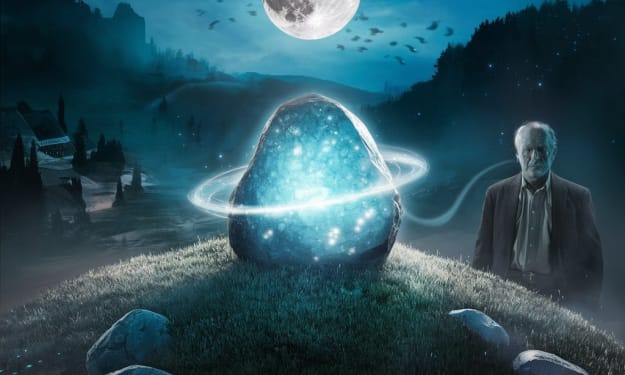
The Moonstone: A Cosmic Enigma Beyond Time
The night was calm, the sky painted in deep shades of blue, illuminated by the full moon’s silver glow. At the highest peak of the village, far away from modern civilization, lay an ancient stone—one that had baffled people for centuries. The villagers called it "The Moonstone," for on every full moon night, it radiated a strange, ethereal glow. Some believed it was a fragment of the moon itself, while others whispered tales of divine power hidden within. I am Nadim, a young scientist fascinated by the unknown. My life revolved around facts, logic, and scientific explanations. But when I first heard of the Moonstone from my grandfather, I was intrigued. He used to say, "This is no ordinary rock, my son. It holds secrets older than time itself." As a man of science, I dismissed these as myths, yet something about his words lingered in my mind. Determined to uncover the truth, I left the city and traveled to the secluded village. The villagers, though welcoming, were wary of my intentions. "The Moonstone is not for human understanding," one elder warned. "Many who tried to unravel its mystery never returned." Their fear only fueled my curiosity. On the night of the full moon, I climbed the lonely hill where the stone rested. As I reached the peak, a breathtaking sight awaited me—the stone, bathed in moonlight, pulsated with a soft, bluish-white glow. It was as if it were alive, breathing in harmony with the universe. Carefully, I reached out to touch it. The moment my fingers brushed against its smooth, cold surface, I felt a strange sensation. The air around me thickened, time seemed to slow, and for a fleeting moment, I felt weightless—detached from reality itself. My spectrometer, which I had brought to analyze the stone, failed to capture any readings. The stone defied all known scientific principles. Suddenly, a deep voice called out from the shadows. I turned to see an old man, his piercing eyes filled with wisdom. "You seek answers," he said. "But not all truths are meant to be known." I hesitated before asking, "Is this stone from the moon?" The old man chuckled. "It is older than the moon itself. Those who understand its secret are no longer bound by time." His words sent a shiver down my spine. What did he mean? Was this just an ancient legend, or was I standing before something beyond human comprehension? I decided to take a fragment of the stone for testing. However, when I struck a small piece, something unbelievable happened—the entire hill trembled, and a sudden gust of wind howled through the night. The villagers, sensing the disturbance, rushed to the hilltop. "You must leave it be!" they cried. "It does not belong to this world." Frightened yet curious, I returned to the city to analyze my findings. To my shock, the stone’s composition did not match any known earthly or extraterrestrial material. Science told me it was an unidentifiable cosmic mineral, but deep within, I knew this was something far greater. Back in the village, the stone remained undisturbed, continuing its silent glow under the full moon. Some called it a fallen star, others believed it was a gateway to another dimension. But one truth remained—some mysteries are not meant to be solved, only felt. Even now, when I look up at the full moon, I wonder—was the Moonstone just an extraordinary rock, or was it something far beyond human understanding?
By Md. Iqbal Hasan2 years ago in Writers
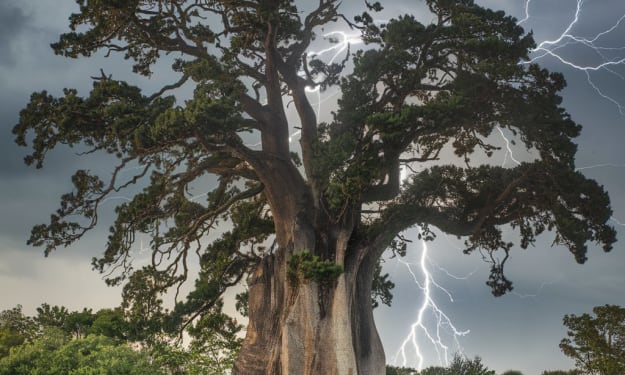
A Mystery of Nature and Belief
It was a bright blue morning, but the sky held a strange mystery deep within. At the edge of the village stood an ancient, massive tree from the Moraceae family. Its branches, leaves, and roots seemed to whisper a tale different from any other tree. The tree had no known name, for around it swirled countless stories of curiosity and fear, passed from one villager to another. An astonishing phenomenon surrounded this tree: on a specific day during each monsoon season, lightning would strike it—but, strangely enough, the lightning never harmed the tree or anything nearby. Instead, the tree seemed to glow with an unfulfilled energy, as if it absorbed the power of the strike. I am Rahim, a young scientist driven by curiosity. For a long time, I was eager to uncover the truth behind this mystery. My days in the city, lost in the silence of science and technology, often left me with lingering questions—why was this particular tree always the target of lightning? What secret lay hidden in its unmatched resilience? The village was small, but its people held beliefs older than modern science. The village elders would say, "This tree was born by the grace of the Creator. The lightning comes to it as a divine command—an unresolved mystery, a reflection of the Creator’s will." Others believed, "Natural phenomena like lightning force us to think about the depths of our existence and confidence in life." One day, I decided to see this mystery with my own eyes—both from a scientific and an unexplained perspective. After attending a recent scientific conference in the city, I was convinced that there was a link between the tree’s characteristics and the natural causes of lightning. As the monsoon season approached, I set out for the village. Walking through the village, I was greeted by the scent of damp earth, the laughter and tears of its people, and the sight of farmers preparing their fields for the jolly Aman rice crops. It was as if reality and imagination were connected by an invisible bridge. Finally, I reached the tree. This unknown tree carried a thousand years of history, its sturdy roots and sprawling branches appearing to tremble with time. Surrounding it were smaller plants and cultivated land, yet this one tree seemed to hold nature’s special attention. Observing the tree closely, I noticed a shimmering airflow around its bark, and tiny crystalline droplets falling from its leaves—an unusual trait. I opened my laptop and searched for scientific data. According to my research, lightning occurs due to electrical discharge between clouds and the ground. But why did this tree become the target every time, and why was it never harmed? Nearby, an old village teacher, Master Babu, sat down beside me. His face held a touch of mystery, his eyes filled with deep, silent memories. He said, "Son, this tree won’t match any formula in your science books. Every branch, every leaf carries an old story—a divine sign. Nature’s rules are strict, but here, it seems as if nature itself has taken a pause." His words surprised me, but deep within, I had a question—could science truly answer all mysteries? I knew modern scientific explanations might link this to the tree’s chemical composition, its biological properties, or the arrangement of its deep-rooted structure. Some researchers suggest, "The tree’s sap increases its electrical conductivity, allowing the lightning’s energy to dissipate quickly." But can such explanations capture the essence of faith, fear, and wonder that surrounded this phenomenon? As days passed, the sky began to darken one evening. The air grew dense, as if nature was making a solemn decision. I set up my scientific instruments near the tree, balancing between data on my laptop and the village’s folklore. My mind was torn—one side drawn to the sharp light of logic, the other to the deep shadows of belief. As night fell, a sudden flash of lightning tore across the sky. The atmosphere froze in awe and fear. Right before my eyes, a blazing light struck the unknown tree—yet, astonishingly, the tree bore no signs of damage. Instead, it shone brighter, its roots seemingly embedding deeper into the earth, tracing patterns of mystery. I quickly examined my instruments to analyze the effects of the strike. Scientifically, the tree’s structure possessed properties that dispersed electrical flow evenly. Its wide-reaching root system, high water-retention capacity in its leaves, and unique chemical composition all worked together to neutralize the intense power of the lightning. Scientific principles stated, "The tree acts like a natural electrical conductor, dissipating the energy harmlessly." Yet, my research also raised unresolved questions. Even if science could explain the mechanics, why did nature choose this specific day? Why only this tree, while everything else around it remained untouched? Was it merely a coincidence, or was there something more—something beyond equations and theories? The next day, I sat at the village tea stall, discussing with both young and elderly villagers. Their words carried a mix of belief and ancient memories. One said, "This tree is a divine blessing to our ancestors. When lightning touches it, it shields us from harm and brings new hope." Another added, "Perhaps nature itself sends us warnings from time to time. Maybe this tree is a messenger of such signals." For some, this was not just a natural event—it was a manifestation of a higher power, reminding us of the wonders of nature and the insignificance of human life in its vastness. Science would say, "Ionized particles in the ionosphere reduce electrical intensity." The villagers believed, "This is a blessing from the Creator, protecting us." That day remained etched in my memory, an unsolved chapter of life. A question lingered—"What if science cannot explain everything?" When I looked deeper, I realized that many of life’s questions remain unanswered—nature, human existence, faith, and doubt all blending into an infinite mystery. That night, sitting on the rooftop, I gazed at the sky and wondered, "Is lightning merely a scientific occurrence, or does it carry a spiritual message that stirs the human soul?" Science could describe how a tree withstands lightning, how its roots absorb the charge—but could it capture the silent awe, the deep faith, the unspoken wonder? Some mysteries lie beyond human intellect. When I stood beneath that tree, I felt as if my own unanswered questions merged into its shadow. Perhaps, behind nature’s transformations and the recurring lightning strikes, there was more than just scientific principles. Maybe, woven into these events were human hope, fear, belief, and wonder. The next morning, I returned to the tree with my scientific notes and the villagers' words echoing in my mind. I saw delicate water droplets forming patterns on its leaves, like soft traces of electricity. Science told me, "This beauty is an expression of natural conductivity." The villagers would say, "It is the Creator’s mercy, protecting us." One day, Jashim, a young scientist from the village, joined me in my research. Together, we conducted experiments—testing electrical conductivity, analyzing the tree’s chemical makeup, and studying its root structure. The results confirmed that the tree’s sap and wood formed a natural conductive system that absorbed and dispersed lightning energy. Science concluded, "This tree naturally resists lightning damage by distributing the charge." But deep down, I felt an uncertainty. I asked Jashim, "Do you think this explanation can truly answer the deeper questions of belief and wonder?" He smiled and replied, "Science explains causes and processes, but it may never fully grasp the mysteries of the human heart." His words stirred a gentle conflict within me—on one side was science, which sought to define every phenomenon; on the other was human belief, which led us to explore life’s deeper meanings, beyond formulas and facts. For centuries, the tension between science and spirituality has persisted. Perhaps one day we will uncover the full truth of nature’s mysteries—or perhaps, some secrets are meant to remain, bound by time and faith. Even today, when dark clouds gather, lightning flashes over that unknown tree, sending shivers through the villagers. Some see it as divine mercy, others as a natural rule. But deep inside, I hold a strange conflict—can science truly answer everything, or will some mysteries forever remain part of nature’s untamed power? As I pass by that tree, I feel that every event—scientific or spiritual—is part of a vast, endless poem. Our task is to read its verses, seek its meaning, and pursue the unanswered questions that may never fully reveal themselves. Thus, the Thunder Tree was not just a scientific anomaly, but a symbol of human belief, fear, curiosity, and life’s profound contradictions—a bridge between science and faith, shaping our understanding of the world and our place within it.
By Md. Iqbal Hasan2 years ago in Writers
How to Protect Hair from Holi Colours
How to Protect Hair from Holi Colours Holi, the festival of colors, is a joyful celebration filled with fun, laughter, and vibrant hues. However, the synthetic chemicals in Holi colors can cause dryness, frizz, and damage to your hair. Protecting your hair from harmful colors is essential to maintain its health and shine.
By Sujit Kumar2 years ago in Writers
What Should You Do If Your Boiler Stops Working?
A boiler breakdown can be stressful, especially during cold months when you rely on it for heating and hot water. If your boiler stops working, don't panic—there are a few troubleshooting steps you can take before calling a professional. Here’s what you should do:
By Hp Heating2 years ago in Writers
Top Gastroenterology Clinics in Delhi: What Sets Gut Clinic Apart
Gastroenterology is at the heart of good health, helping us manage the digestive issues that can often sneak into our busy lives. In Delhi, a city known for its world-class healthcare, there’s no shortage of options for specialised care. But one name truly stands out—Gut Clinic, a trusted centre led by Dr Ajay Kumar, who has been caring for patients at 124 Shreshtha Vihar for over 40 years. Known for blending modern medical advancements with genuine compassion, Gut Clinic has become a go-to destination for those seeking expert care for their digestive health.
By Gut Clinic2 years ago in Writers
How to Prepare for Your First Visit to a Gynaecologist
Did you know that 1 in 3 women in India experience gynaecological health problems at some point in their lives? Early intervention helps prevent these issues from developing into severe conditions. Regular check-ups not only help detect and prevent potential health issues but also establish a health baseline for ongoing care. Yet, many women delay their first visit due to anxiety or a lack of knowledge about what to expect. Visiting a gynaecologist is an essential step in ensuring overall women’s health.
By Prerana Hospital2 years ago in Writers
10 Surprising Fertility Tips to Boost Your Fertility Naturally
Fertility is influenced by many factors, and understanding these elements is crucial for anyone trying to conceive. According to a WHO report, nearly 1 in 6 couples face challenges with infertility worldwide. While some factors are beyond our control, many aspects, particularly lifestyle, can significantly impact fertility.
By Parency IVF2 years ago in Writers
What Are the Advantages of Using Donor Eggs in IVF?
IVF (In Vitro Fertilisation) has revolutionised fertility treatments, offering hope to couples struggling to conceive. A significant advancement in this field is the use of donor eggs, particularly for women who cannot use their own eggs due to medical or age-related factors. This blog explains the key advantages of using donor eggs in IVF and how they pave the way to parenthood for many couples.
By Parency IVF2 years ago in Writers
What Are the Risks of Leaving Deep Vein Thrombosis (DVT) Untreated?
Deep Vein Thrombosis (DVT) is a silent threat that can lead to severe complications if ignored. A report revealed that venous thromboembolism (VTE), which includes DVT and pulmonary embolism (PE), occurs in 1 out of every 1,000 people globally, causing between 60,000 and 100,000 deaths annually. Despite it being so common, many people remain unaware of the dangers of leaving DVT untreated. This blog is here to highlight why early diagnosis and timely treatment are fundamental in managing DVT and preventing potentially life-threatening outcomes.
By Akhil Monga2 years ago in Writers
The Importance of Regular Skin Check-Ups: Early Detection and Prevention
Our skin is the body’s largest organ, acting as a protective barrier against environmental elements. Yet, many people overlook the importance of regular skin check-ups until a problem arises. Early detection of skin conditions, especially skin cancer, can significantly improve treatment outcomes. In fact, studies indicate that when detected early, the 5-year survival rate for melanoma is around 98.5%. Regular visits to a skin specialist doctor can help in the timely identification and prevention of serious dermatological concerns, ensuring optimal skin health for years to come.
By Diva Clinic2 years ago in Writers