Life
How Logical
This is definitely a cheat. I am talking about my choice of song for Annie Kapur’s private Challenge, “Sing us the Song of the Century”. I could have chosen so many famous numbers from the twentieth century (assuming that this is the century that she is referring to; I am not too attracted to the noises of our new age). But I have to go back to a song that I have already written about on this page. As I said, this is definitely a cheat.
By Kendall Defoe about a year ago in Writers
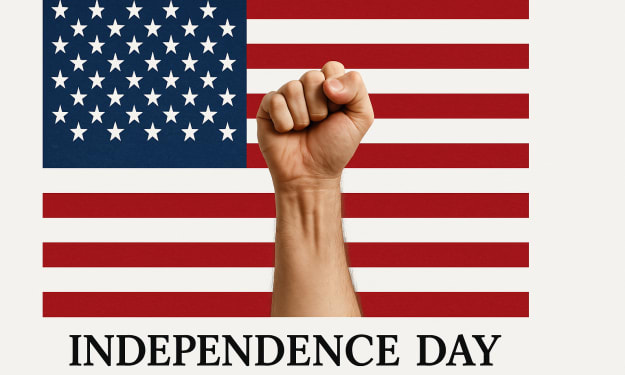
Our Independence Day
Our Independence Day, at its core concept, is the independent gasp of a nation—an intangible instant condensed into history, memory, and legend. It is not so much a date enumerated by flags and parades; it is a throb of liberty, a transcendent liberation from the silences of servitude. By definition, Independence Day is the yearly celebration of a nation's freedom from foreign rule, colonial occupation, or tyrannical authority. But under this technicality is a maze of feelings, philosophies, and obligations beyond the ink of historical proclamations.
By Muhammad Abdullahabout a year ago in Writers
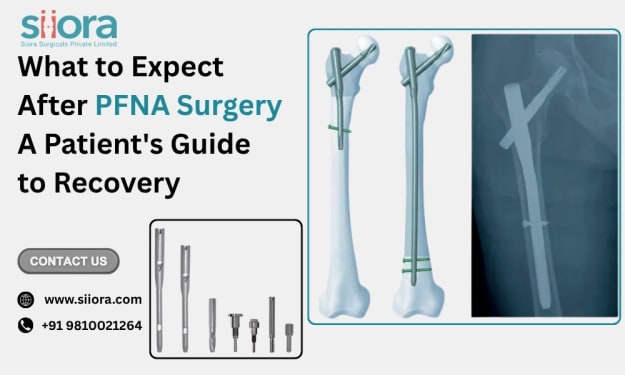
What to Expect After PFNA Surgery: A Patient's Guide to Recovery.
Going through PFNA (Proximal Femoral Nail Antirotation) surgery can feel overwhelming, especially if you’re unfamiliar with the recovery journey ahead. Whether you're a patient or caring for a loved one, understanding what comes after surgery is just as important as the procedure itself. This guide offers a human-centered look into the recovery process, what you might feel, what challenges may arise, and how to regain strength gradually and confidently.
By Siora Surgicals about a year ago in Writers
7 Ayurvedic Herbs for Weight Control That Actually Work
One such issue is obesity or excess weight, for which Ayurveda has offered a natural and time-tested solution long before weight loss pills and trendy supplements. Ayurvedic herbs not just burn fat, they aid digestion, balance hormones, and support overall well-being.
By Slim Tonicabout a year ago in Writers
Me Ves Y Sufres by Hope Of The States
There are plenty of songs I could’ve written about for Annie Kapur’s challenge — songs that touched me, got me through dark days, reminded me to keep going. But when I sat down to write, I knew I’d be lying if I didn't pick this one.
By Paul Stewartabout a year ago in Writers
Ed Strachar and Healing Genius®: Awakening the Body’s Natural Healing Power
In today’s fast-paced world, many people are searching for effective, natural methods to enhance their health and well-being beyond traditional medicine. Ed Strachar’s Healing Genius® offers an innovative approach to self-healing by combining scientific principles with spiritual wisdom. His work empowers individuals worldwide to tap into their inner healing genius and live healthier, more vibrant lives.
By Ed Stracharabout a year ago in Writers
How to Maintain Good Health
Good health is one of the greatest blessings in life. Islam teaches that the body is a trust from Allah, and we are responsible for taking care of it. Maintaining health isn’t just about avoiding sickness—it's about living a balanced, energetic, and fulfilling life. 1. Eat Balanced and Pure (Halal) Foods The Qur’an says: > “Eat of what is lawful and good that Allah has provided you.” — (Qur’an 2:172) Focus on whole foods: fruits, vegetables, grains, and lean meats. Avoid processed and harmful foods. Eat in moderation—the Prophet (ﷺ) said: > “The son of Adam does not fill any vessel worse than his stomach.” — (Tirmidhi) 2. Stay Physically Active The Prophet Muhammad (peace be upon him) encouraged physical activity. He walked daily, raced with his companions, and even advised swimming, archery, and horseback riding. Try to move daily—walk, stretch, or do light exercises. Activity keeps the heart strong and mind fresh. 3. Sleep and Rest Properly Rest is essential. The Prophet (ﷺ) maintained a balanced sleep schedule, often sleeping after Isha and waking early for Fajr. Quality sleep: Strengthens immunity Supports brain function Improves mood 4. Keep a Clean Body and Soul Islam links physical cleanliness with spiritual purity. Wudu (ablution), ghusl (full washing), trimming nails, and brushing teeth (with siwak or modern tools) are part of Sunnah and promote hygiene. 5. Manage Stress with Faith Spiritual health is part of overall well-being. When overwhelmed, turn to Allah: > “Verily, in the remembrance of Allah do hearts find rest.” — (Qur’an 13:28) Make du’a, pray regularly, and avoid negative thoughts. Trust in Allah brings calmness. --- Conclusion Maintaining health is an act of gratitude and worship. A healthy body helps you worship better, serve others, and enjoy the blessings of life. Take care of yourself—for the sake of both dunya (this life) and Akhirah (the Hereafter).
By Numan Afridiabout a year ago in Writers
She Texted Me by Mistake — And Changed My Life Forever
It was a Tuesday — the kind of dull, gray day that made the hours feel heavier than they should. I was sipping on cheap black coffee at my desk, pretending to care about spreadsheets, when my phone buzzed.
By Awais Khaliqabout a year ago in Writers
My Therapist Quit Because I Wrote Her Into a Novel
When I started therapy, I wasn’t looking for healing. I was looking for material. This confession might make me sound like a sociopath, but writers—especially the chronically blocked kind—often do strange things in the name of inspiration. Therapy seemed like fertile ground. Emotions, revelations, and someone who legally had to listen? Perfect. Dr. Jane Kellerman had a soft voice, steel-rimmed glasses, and a gaze that made me feel like a poorly constructed sentence. She rarely smiled, often paused too long before responding, and had an irritating habit of saying, “What do you think that means?” like I had a clue. But she was compelling. A walking contradiction—controlled, but full of the kind of quiet intensity that hinted at a world of inner chaos. She intrigued me. Which, as any writer knows, is the first dangerous step toward character creation. Three sessions in, she appeared in my manuscript. A therapist named Dr. Jenna Kelmar. Glasses, check. Tight bun, check. Unnerving insight and a backstory involving a childhood spent in a lighthouse? Creative liberty. Jenna Kelmar wasn’t exactly Dr. Kellerman, but the resemblance was more than passing. And, as the novel took shape, I gave Jenna a secret: she was slowly unraveling, struggling with her own mental health while treating others. The plot thickened—clients disappeared, therapy sessions turned sinister, and Jenna began to question if her patients were real or constructs of her deteriorating mind. It was good. Dark, but good. For the first time in months, I wrote like a faucet turned on full blast. The words poured. Therapy, oddly enough, helped—both literally and fictionally. Then I made the mistake. I printed out Chapter 12 and left it in my bag—my therapy bag, the one I took to Dr. Kellerman’s office. I was running late, flustered, didn’t realize I’d grabbed the wrong notebook until it was too late. She glanced at it when I stepped out for water. When I returned, her expression had changed. "Interesting reading material," she said slowly, tapping the corner of the page. I froze. “Oh. That’s—uh—fiction.” “I gathered.” A pause. “But it seems quite familiar.” My stomach turned. “It’s a composite character. You know…creative blending.” She nodded once, the way you do when someone tells you their dog understands English. We finished the session in strained silence. The air between us had shifted—no longer patient and therapist, but subject and observer. Or maybe, adversaries. The next week, she canceled. The week after that, she emailed: “I believe it is no longer therapeutically appropriate for us to continue. I wish you well in your writing and personal journey.” It felt like being broken up with in a very professional, cold way. My immediate reaction wasn’t sadness—it was, embarrassingly, the instinct to write about it. The meta-potential was delicious: a therapist quitting therapy because of a fictional doppelgänger? That’s practically literary gold. But something tugged at me deeper than my writer’s glee. Guilt. Because the truth is, Dr. Kellerman had started to help. Not in big ways, not with thunderclaps of epiphany, but in quiet nudges. I’d begun unpacking things I hadn’t touched in years. Old griefs, identity cracks, inherited guilt. And now she was gone. Because I’d blurred the line between truth and invention. For weeks, I debated reaching out. I drafted emails I never sent. Apologies. Explanations. Questions. Then, in a fit of strange bravery—or perhaps masochism—I mailed her the finished manuscript. I included a note that read: “You were never Jenna. But you did help write her. Thank you.” I never heard back. The book went on to be published through a small press. It didn’t hit bestseller lists or get optioned for Netflix, but it found readers. A few even emailed me saying the story changed how they viewed their own therapy journeys. One message stuck out. It came from a woman in Vermont: “I used to be a therapist. Reading your book reminded me why I quit—and why I sometimes miss it. Thank you for giving her a voice, even if it wasn’t your intention.” I still think about Dr. Kellerman. Sometimes I wonder if she ever read the book cover to cover, or if she tossed it aside after the first few chapters. Maybe she hated it. Maybe she saw it as betrayal. Or maybe—just maybe—she saw it as what it was: a writer trying to stitch fiction from the raw fabric of truth. Therapy taught me boundaries. Writing taught me how easily they blur. And somewhere in that murky space between real and imagined, I think I finally found something close to healing. ---
By Jane Smith about a year ago in Writers