Inspiration
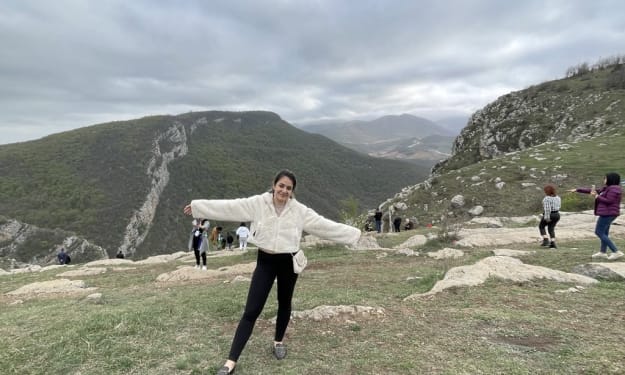
Championing Human Rights: The Advocacy of Yasmin Bashirova
In a world increasingly challenged by inequality, conflict, and social injustice, the work of human rights advocates has never been more vital. Among the new generation of leaders driving positive change is Yasmin Bashirova, an entrepreneur and activist whose efforts bridge innovation, education, and social responsibility. Through her multifaceted career, Yasmin Bashirova has demonstrated that technological advancement and human rights advocacy are not mutually exclusive, but can in fact be powerful allies in shaping a better world.
By Yasmin Bashirovaabout a year ago in Writers
Restoring the Spirit of the Islands: Sustainable Real Estate Development in Hawaii
Hawaii is not just a destination — it is a living ecosystem, a cultural homeland, and a spiritual refuge. Yet, as its population grows and its economy continues to attract investment, the archipelago faces a profound question: Can development happen without destruction? The rise of sustainable real estate practices offers hope that the answer is yes — but only with intention, respect, and visionary leadership.
By Stephane Marchandabout a year ago in Writers
How an Overwhelmed Burger Owner Found Financial Freedom
Chapter 1: The ‘I Got This’ Phase Jack was a man of simple pleasures. He loved burgers, he loved cooking, and most importantly, he loved seeing the satisfied faces of his customers at Jack’s Juicy Burgers. He was the kind of guy who believed he could do anything—especially run a business.
By Morgan Blake, CPAabout a year ago in Writers
When Local Events Turn Kids Into Readers
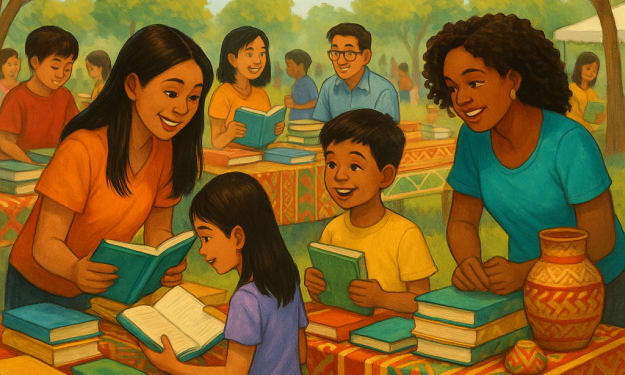
Community Events as Literacy Triggers In neighborhoods where the public library is the heart of a town square and summer reading challenges double as rites of passage, community events often do more than fill up a calendar. They spark imagination. They create rituals around reading. And in many cases, they plant the earliest seeds of a reader’s identity.
By Maxine Dela Cruzabout a year ago in Writers
The Unexpected Power of Pop Culture to Promote Books
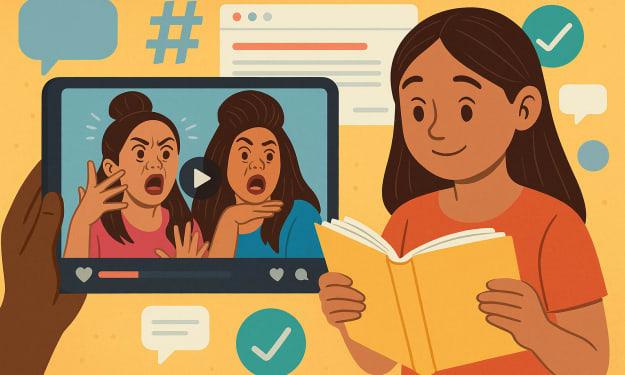
Not All Readers Start with Books Not every young reader begins their journey with a bookshelf. Some start with a TikTok scroll. Others with a meme. In today’s content-saturated world, stories often reach audiences long before they ever open a book. This shift isn’t a crisis—it’s an opportunity. Especially for authors trying to connect with kids who’ve grown up more on screens than in libraries.
By Maxine Dela Cruzabout a year ago in Writers
Books, Belonging, and the Neighborhood Fair
Community Events as Literacy Triggers In neighborhoods where sidewalks double as playgrounds and basketball courts host weekend barbecues, something quieter but equally powerful often unfolds—a child meets a book for the first time. Local community events, especially those centered around storytelling and books, have an underestimated power: they create readers. These moments aren't just about literacy—they're about identity, belonging, and discovery.
By Maxine Dela Cruzabout a year ago in Writers
Project Hail Mary
When Ryland Grace wakes up, he doesn’t remember who he is, where he is, or what he’s doing. All he knows is that he’s strapped to a bed in a sterile room, attended by a robotic medical arm. Nearby are two corpses — crewmates who didn’t survive. Slowly, his memories trickle back like distant echoes. He learns that his name is Ryland Grace, and that he’s aboard a spaceship traveling through deep space. The ship is called the Hail Mary. And then he remembers the mission: he’s humanity’s last hope. Years earlier, scientists on Earth discovered a terrifying phenomenon. The sun’s energy output was decreasing at an alarming rate. After much research, the cause was identified: a mysterious, spacefaring microbe that feeds on stellar energy. It was dubbed astrophage. The implications were catastrophic — within decades, Earth would be too cold to support life. But a small ray of hope emerged. While most nearby stars were also dimming due to astrophage, one — Tau Ceti — was not. A multinational coalition formed to investigate. If Tau Ceti had astrophage but wasn’t dimming, something must be protecting it. Something humanity could use. Thus was born Project Hail Mary: a one-way mission to Tau Ceti to discover how that star is surviving, and to return the solution to Earth — if possible. Grace had never intended to be part of the crew. He had been a scientist — a molecular biologist turned middle-school teacher after a career-ending academic dispute. But when the original crew succumbed to coma-related complications, and with time running out, Grace was chosen as a reluctant last resort. He had the knowledge. He could fly solo. He just didn’t agree to it consciously — he was sedated and loaded into the ship against his will. Now, 12 light-years from Earth, Grace must piece together clues, alone, to save humanity. The Hail Mary is powered by astrophage itself, whose energy density is high enough to enable interstellar travel. As Grace explores the star system, he discovers something shocking: he’s not alone. Another ship is nearby — massive, alien in design. Soon, first contact is made. From the alien ship emerges a creature like nothing on Earth: spider-like, five-limbed, encased in rock-like armor, breathing ammonia and communicating through musical tones. Grace names him Rocky. Despite their biological differences, Rocky and Grace find common ground: both their worlds are dying because of astrophage. Rocky’s species, the Eridians, live in the 40 Eridani system and have advanced technology but are as desperate as Earth. The two form a working partnership — and a deep friendship. Together, they investigate Tau Ceti and discover the key to its resistance: a natural predator of astrophage, a microbe they name Taumoeba. It exists only in this system, but it eats astrophage, keeping the star clear. The problem? Taumoeba is fragile — it dies quickly under any conditions outside of Tau Ceti. It has to be engineered to survive on both Earth and Erid. For weeks, Grace and Rocky work tirelessly. They share data, invent joint experiments, and modify Taumoeba to become more resilient. They face setback after setback, but their trust in each other grows. Grace begins to care more for Rocky than he ever expected — not just an alien colleague, but a friend. Eventually, success. A hardy strain of Taumoeba is developed, capable of withstanding the environments of both planets. Grace prepares to send samples back to Earth using a preprogrammed probe. Rocky, too, prepares to return home. Their mission is nearly complete. But tragedy strikes. A breach in Rocky’s ship threatens his life. The ammonia atmosphere he requires is leaking, and he’ll die without repairs. Grace faces an impossible choice: continue on the Hail Mary’s programmed course and return to Earth a hero — or turn back, save Rocky, and risk being stranded light-years from home. To Grace, the choice becomes clear. He turns the ship around. He rescues Rocky and helps rebuild the Eridian ship, but doing so uses up the return fuel. Grace knows he won’t see Earth again. He watches as Rocky flies home, taking the Taumoeba with him. Grace, alone once more, finds solace in knowing he did the right thing. Time passes. In a surprising turn, Rocky returns. With advanced Eridian tech and knowledge of human biology, he helps build a livable environment for Grace on Erid. There, Grace becomes something unexpected: a teacher again. This time, he teaches alien children — the next generation of Eridians — about Earth, humanity, and science. He’ll never go home. But he saved two worlds. And in that, he finds peace.
By SULAIMAN SHAHabout a year ago in Writers
Back in the Summer of 77. Top Story - June 2025.
In my youth in British Columbia, I loved to snorkel in the ocean waters. Much of my time was spent when I prepared to attend private school, snorkelling under the White Rock Pier in all sorts of weather. During my youth, crabs were still plentiful around the White Rock Pier and in the rugged breakwater that protected the pier.
By Bruce Curle `about a year ago in Writers
What a Viral Collab Taught About Reaching Non-Readers
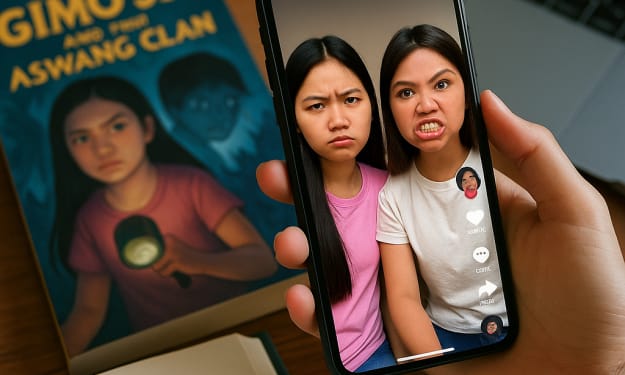
Not All Readers Start with Books Not everyone discovers reading in the aisles of a library or through a beloved bedtime story. For many, especially digital-native youth, the gateway to literature isn’t ink on paper — it’s the scroll of a screen, a short video clip, or a viral meme. And in the age of algorithm-driven attention, some of the most effective storytelling doesn’t begin with a book at all. Instead, it starts where readers are already looking: on their phones.
By Maxine Dela Cruzabout a year ago in Writers