Inspiration
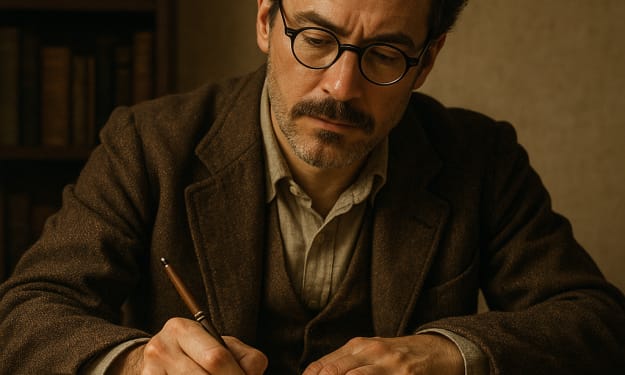
She Texted Me by Mistake — And Changed My Life Forever
It was a Tuesday — the kind of dull, gray day that made the hours feel heavier than they should. I was sipping on cheap black coffee at my desk, pretending to care about spreadsheets, when my phone buzzed.
By Awais Khaliqabout a year ago in Writers
Hamlet: The Tragedy of a Prince Torn Between Thought and Revenge
Hamlet: A Tale of Madness, Revenge, and Tragedy In the cold kingdom of Denmark, a storm brews not just in the skies but within the soul of a young prince. His name is Hamlet, and though born to rule, he finds himself drowning in sorrow. Just weeks ago, his beloved father—the king—died suddenly, and before his mourning clothes could gather dust, his mother Gertrude married his uncle Claudius, who now wears the crown. The halls of Elsinore Castle echo with whispers. Something doesn’t sit right with Hamlet. He’s haunted by a feeling, a gnawing instinct that his father’s death was not natural. Soon, that suspicion is confirmed in the most chilling way possible. One night, Hamlet’s loyal friend Horatio and the castle guards see a ghost wandering the battlements. It is the spirit of the late king, pale and armor-clad. They bring Hamlet to meet the ghost, and under the moonlight, his father’s spirit tells a dreadful tale: he was murdered by his own brother, Claudius, who poured poison into his ear as he slept. The ghost demands revenge. Hamlet is shattered. His world, already unsteady, collapses entirely. He swears to avenge his father but must be cunning—Claudius is now king, and no one would believe the word of a grieving prince against him. To mask his plan, Hamlet begins to feign madness, confusing the court and causing alarm. Not everyone is convinced he’s truly mad. Polonius, the king’s advisor, believes Hamlet’s madness is due to heartbreak over his daughter Ophelia, with whom Hamlet has had a complicated romance. Claudius and Gertrude send spies—Rosencrantz and Guildenstern, Hamlet’s old friends—to uncover the truth. But Hamlet is always one step ahead. He distrusts everyone, speaks in riddles, and questions the very meaning of life. His most famous soliloquy—“To be, or not to be”—is not just about death, but about the weight of existence itself. Why suffer life’s pain? Why not end it? But he fears the unknown, the dreams that may come in death. And so he hesitates. To confirm Claudius’s guilt, Hamlet stages a play called The Mousetrap, mirroring the murder of his father. He watches Claudius’s face closely during the performance. When the scene of the poisoning plays out, Claudius storms away—guilt written across his brow. Now, Hamlet is certain. Yet still, he hesitates. In a moment alone, he finds Claudius praying. It would be the perfect time to strike. But Hamlet reasons that killing a man at prayer might send his soul to heaven—a reward, not justice. So he waits again, and the bloodshed begins to spiral. Mistaking Polonius for Claudius hiding behind a curtain, Hamlet stabs him to death. This act unravels what little stability remains. Ophelia, devastated by her father’s death and Hamlet’s erratic behavior, descends into madness. Her grief leads her to a watery death—an apparent suicide. Meanwhile, Claudius, now afraid for his life, sends Hamlet to England with Rosencrantz and Guildenstern, carrying secret orders for Hamlet’s execution. But the prince outwits them, alters the letters, and returns to Denmark alone, his soul now hardened. Enter Laertes, Ophelia’s brother, who returns to avenge his family. Claudius manipulates Laertes into a deadly plot: challenge Hamlet to a duel, poison the tip of the sword, and keep a poisoned drink nearby, just in case. The duel begins before the court. The blades clash. Laertes wounds Hamlet but is cut himself in the chaos. Gertrude, unaware of the poison, drinks the fatal wine and dies. Laertes, dying, reveals the king’s treachery. Enraged and betrayed, Hamlet finally acts: he stabs Claudius and forces him to drink the poison. As the poison seeps through his own veins, Hamlet’s life slips away. But before dying, he names Horatio the bearer of truth—his voice to tell the tale. Fortinbras, a noble prince from Norway, arrives to find the royal family destroyed. He honors Hamlet as a fallen hero and takes control of Denmark. Thus ends the tragedy of Hamlet—a story of betrayal, madness, and revenge that spirals into death for nearly all involved. It is not just a tale of vengeance but a deep exploration of the human condition. Hamlet asks questions that still echo today: What is justice? What does it mean to live with purpose? And when is it right to act, or to wait? In the end, Hamlet is no simple hero. He is flawed, introspective, sometimes cruel, and always caught between thought and action. But perhaps that is what makes his story so enduring. We see ourselves in his doubt, in his pain, and in his search for meaning in a world that often seems senseless.
By Soul Draftsabout a year ago in Writers
Todd Kassal Leads Rubber Track’s Quantum Leap into the Future of Heavy Equipment
In the competitive world of heavy equipment manufacturing, innovation can be the difference between leading the market or falling behind. At Rubber Track, a renowned manufacturer of rubber track systems, Todd Kassal, Project Manager, is redefining the industry standard by bringing the cutting-edge power of quantum computing to bear on every aspect of the company’s operations.
By Todd J. Kassalabout a year ago in Writers
How to go viral on vocal media.
Introduction: Why "Viral" Matters Going viral on Vocal Media isn’t just about luck — it’s a blend of strategy, timing, and consistency. Many writers publish dozens of stories but see only a few readers. If you’re wondering how to turn your words into wide-reaching content that captures attention and brings in both views and earnings, this guide is for you.
By USA daily update about a year ago in Writers
On A July Morning - A Mikeydred July Dollar Prompt For All Vocal Creators
Introduction Every month, I set prompts in the Vocal Social Society and offer a dollar tip to five random creators who take part in it and ask them to share their stories in the comments and on the thread in the group.
By Mike Singleton 💜 Mikeydred about a year ago in Writers
Letters from the Future Husband — Before We Even Met
Dear You, I don’t know your name yet. I don’t know the shape of your laugh or how your eyes light up when you're excited. I don’t know if you drink your coffee black or with too much sugar, or if you even like coffee at all. But I do know this — I’m writing to you now because somewhere in this vast world, our paths are slowly winding toward each other. And even though we haven’t met, you’re already in my heart.
By Adrian-Razvan Ispasabout a year ago in Writers
What Makes a Certified Personal Trainer Truly Stand Out
Choosing a personal trainer is an important step for anyone serious about improving their fitness, health, and overall well-being. But not all trainers are the same. While many may call themselves fitness coaches or gym instructors, a certified personal trainer brings something more to the table, training, knowledge, and a commitment to professional standards. However, certification alone does not make a trainer stand out. So, what actually makes a certified trainer truly different and worth your time, money, and trust? Let’s break it down in this article.
By Abbasi Publisherabout a year ago in Writers
My Top 10 Writers of All Time
Books have always been portals to other worlds, windows into the human soul, and mirrors reflecting the complexities of life. Behind every great book is a writer whose imagination, intellect, and skill breathe life into stories that endure beyond time. Over the years, countless authors have influenced me, but there are ten whose work has left an indelible mark on my mind and spirit. These writers are my top 10 of all time — not just for their literary genius but for how they challenged me to think differently, feel deeply, and dream wildly.
By Anwar Jamilabout a year ago in Writers