Community
First Half of 2025 on Vocal: By The Numbers
Greetings, Vocal subscribers and readers! The first half of 2025 has come to a close and we're eager to see what the final half of this year has in store for us. In this story, I'll be sharing a few statistics related to my progress as a creator on Vocal. It was a productive first half for me and had so much to talk about. Now, let's this show on the road!
By Mark Wesley Pritchard about a year ago in Writers
My Grandmothers Said so
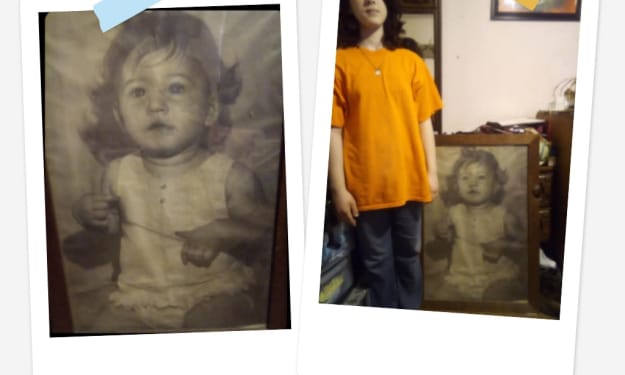
Once, there was a little girl, so stinking cute and well-loved, she knew the universe revolved around her. With dark curly hair and big blue eyes, she proudly sat amidst everyone's attention. Knowing that she could do nothing wrong, she basked in the glow of their pride, as they expounded upon this wee lass's perfections.
By Mother Combsabout a year ago in Writers
Not Sure Where to Turn? Addiction Counselling Could Be Your First Step
It’s easy to feel overwhelmed when you’re struggling with addiction. You might not know who to talk to or where to begin. Everything feels heavy, and even deciding to get help can be confusing. But here’s the truth—many others have felt exactly the same way. That lost feeling doesn’t mean you’re weak. It means you're human. Addiction counselling might just be the first step to finding your way back.
By Abbasi Publisherabout a year ago in Writers
What is Ammonia (NH3)? Properties, Uses, Production
Have you ever thought about the silent hero behind kitchen cleaning products, farm fertilizers, or even the cooling systems at the back of your refrigerator? Ammonia (NH3), which most of us recognize by its characteristic pungent odor, actually plays a critical role in a wide range of applications, from our daily lives to heavy industry. It's not just a chemical formula; it's a fundamental building block of modern agriculture, the cleaning sector, and countless chemical products. So, what exactly is this compound, an indispensable part of nature's nitrogen cycle, what does it do, and how has its place in our lives become so important? In this article, we'll embark on a journey into the mysterious world of ammonia, getting to know it up close.
By Nedir Lifeabout a year ago in Writers
All My Top Stories: 5 So Far!
Hi readers, Let me introduce myself. I am Seema Patel (PhD in biotechnology). I am a writer across many platforms, including Medium, where I have a large portfolio of work with close to 3,000 articles. I also have an Amazon KDP profile with 10 book titles so far. Many books have decent rankings. I also run a YouTube channel and have a growing Substack. I wrote for Blogger for 8 years. I will share links in another article.
By Seema Patelabout a year ago in Writers
Simplicity and Humility of Hazrat Muhammad (SAW):
----- Let's start Hazrat Muhammad (peace be upon him), the last Prophet of Islam, is a perfect model of human character. Among his many beautiful qualities, his simplicity and humility stand out as shining examples for all of humanity. Despite being the most beloved Prophet of Allah, the leader of the Muslim Ummah, and the head of a growing state, he chose a life of modesty and simplicity over luxury and pride. His behavior teaches us that true greatness lies not in material wealth or power, but in humility and service to others. From the very beginning of his life, Hazrat hammad (SAW) was known for his simple lifestyle. Born in the noble tribe of Quraish, he came from a respected family, but his early years were marked by modesty. He worked as a shepherd in his youth, and later as a merchant, earning an honest livelihood. Even after he was chosen as the final Prophet, and Islam began to spread rapidly, he never let pride enter his heart. One of the most remarkable aspects of his life was his home. The Prophet (SAW) did not live in a grand palace or a luxurious house. Instead, he resided in a small, simple home made of mud bricks. His room was so modest that when he lay down, there was little space left. His bed was a simple mat made of date palm leaves. When he slept on it, the rough texture would sometimes leave marks on his blessed body. Yet he never complained. When some of his companions suggested that he should have a more comfortable bed like the kings of other lands, he replied that this world was not his true home — he was only a traveler passing through. His food was also very simple. Many days would pass in the Prophet’s household without any cooked food. Often, he and his family would survive on dates and water. Sometimes, he would tie a stone to his stomach to reduce the pangs of hunger. Despite having access to wealth after the victories of Islam, he never stored food for the next day. When asked why, he explained that he wished to rely on Allah each day for his sustenance. Hazrat Muhammad (SAW) was also humble in his dealings with people. He treated everyone with kindness and respect, regardless of their status. Whether he met a king or a poor laborer, he would greet them warmly and listen to them patiently. He never looked down upon anyone. He would sit on the ground with his companions, eat with the poor, and visit the sick. He mended his own clothes, patched his shoes, and helped with household chores. Even when invited to a simple meal of barley bread and vinegar, he would happily accept. A beautiful example of his humility was during the conquest of Makkah. As he entered the city victorious, with thousands of companions around him, his head was bowed low in gratitude to Allah. There was no pride or arrogance in him. He forgave those who had harmed him, including the people who had plotted to kill him and forced him to leave Makkah years earlier. He declared, “Today, no blame shall be upon you. You are free.” The Prophet’s (SAW) humility was also evident in how he dealt with his companions. He never allowed them to stand up for him out of respect, and he forbade them from giving him titles that would elevate him above his human status. He would say, “I am only a servant of Allah and His messenger.” He reminded his followers that he was a human being like them and that they should worship Allah alone. Children loved the Prophet (SAW) because of his gentle and humble nature. He would greet them, carry them in his arms, and even play with them. He once shortened a prayer when he heard a child crying, out of concern for the mother. His mercy and compassion extended to animals as well — he would advise his companions to treat animals with kindness and not to overburden them. Perhaps one of the clearest signs of his humility was his response to criticism or insults. Even when people mocked him, threw stones at him, or treated him harshly, he responded with patience and forgiveness. He never sought revenge for personal reasons. Instead, he prayed for the guidance of those who opposed him. In all aspects of his life, Hazrat Muhammad (SAW) demonstrated that humility is a sign of true strength. His simplicity was not because of a lack of wealth — after the spread of Islam, much wealth flowed into Madinah — but because he chose to live simply, fearing that luxury might distract from the remembrance of Allah. The lessons from his life are deeply relevant today. In a world often filled with materialism, pride, and competition, the example of Hazrat Muhammad (SAW) teaches us the value of humility, gratitude, and simple living. True success does not lie in wealth or status, but in serving others with sincerity and in maintaining a heart free of arrogance. In conclusion, the simplicity and humility of Hazrat Muhammad (SAW) remain unmatched in history. His life continues to inspire millions around the world, teaching us that a humble heart is more valuable than any worldly treasure. May we all strive to follow his noble example in our own lives.He was the last prophet of Islam.
By Huzaifa Writerabout a year ago in Writers
How Safe Are Electric Gates In Kent For Families With Children?
Over the past decade, automated electric gates have become increasingly popular throughout Kent. This is not only for their stylish looks, but also for the convenience and security benefits they provide.
By Clare Girlingabout a year ago in Writers