Community
Mindfulness and the Muse. AI-Generated.
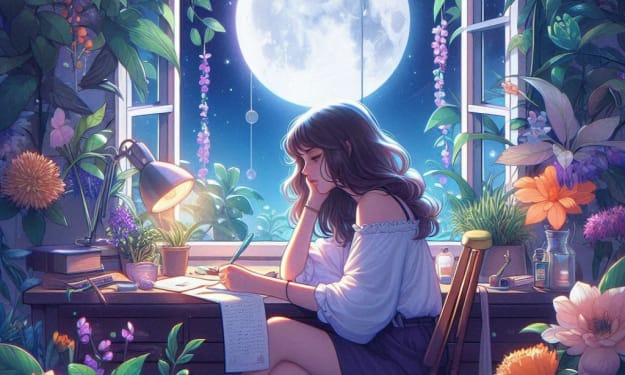
Amara settled into her favorite spot by the window, the morning sun casting a warm glow across her cluttered desk. Her notebook lay open, the blank pages a quiet invitation to create. The sweet scent of jasmine from the garden wafted in, mingling with the aroma of her half finished cup of coffee. Yet, the words she longed to write remained elusive, playing hide and seek with her consciousness. For weeks, she had chased her muse, hoping to catch inspiration like fireflies in the night. Some days, it visited in brief flashes quick, dazzling ideas that flickered out as fast as they came. On other days, it stayed away entirely, leaving her alone with the echo of her own frustration. "Maybe you're trying too hard," her friend Mariah had said over the phone the day before. "You need to be still, Amara. The muse comes when you're not running after it." Amara had laughed then, brushing off the advice. But now, sitting in the quiet hush of the morning, she began to wonder if Mariah was right. She leaned back in her chair, letting her eyes wander to the swaying branches outside. The rhythm of the leaves seemed to pulse with life, a gentle reminder of the present moment. Slowly, almost without thinking, Amara closed her eyes and took a deep breath filling her lungs, then releasing the tension knotted in her chest. The silence stretched out around her, not empty but full it was full of the distant chirp of birds, the ticking of the clock and the soft rustle of paper beneath her fingertips. For the first time in days, she simply sat without expectation, allowing the world to unfold without trying to capture it. Minutes passed. Or maybe hours. Time seemed to lose its edges. And then like the faintest whisper the muse stirred. It wasn't a loud arrival. No fanfare or sudden rush of ideas. Just a single image, clear and delicate, blooming in the stillness of her mind: a girl standing at the edge of the sea, the wind lifting her hair as she reached for something just beyond the horizon. Amara's eyes fluttered open. Her heart beat a little faster. Without hesitation, she picked up her pen and began to write. As the words flowed, she realized something she had always overlooked: the muse was not a creature to be hunted or forced. It was a companion that walked hand in hand with mindfulness a gentle presence that revealed itself only when she was truly present. She had spent so long chasing inspiration, never realizing that what she sought was already within her, waiting patiently beneath the noise of her restless mind. The more she surrendered to the moment, the easier the words came. Paragraphs unfolded effortlessly, like petals opening to the light. There was no urgency, no pressure only the steady rhythm of breath and ink, guiding her deeper into the story. By the time the sun had climbed to its peak, Amara's notebook was filled with pages of life characters whispering their secrets, landscapes painted in vivid strokes and emotions laid bare on paper. When she finally set down her pen, a quiet satisfaction settled in her chest. The muse had been there all along waiting in the silence, in the steady breath, in the act of simply paying attention. As Amara closed her notebook, she glanced back at the window where the branches still swayed against the blue sky. "Thank you," she whispered, not to anyone in particular but to the moment itself. From that day on, Amara made a promise not to chase inspiration but to invite it by showing up with presence. Mindfulness and the muse were not separate forces, she realized. They were partners in creation, moving together in a delicate dance. All she had to do was be still and let the story find her. In the end, creativity is not born from pressure or pursuit. It blossoms in the quiet spaces we create when we slow down, breathe and trust the flow of the present moment. Whether you're a writer, artist or dreamer, the muse will always find you if only you are willing to listen. As Amara sat there, basking in the warmth of the sun, she knew that she had discovered a secret. A secret that would stay with her for the rest of her creative journey. The secret of mindfulness and the muse. A secret that would guide her through the ups and downs of the creative process and remind her that inspiration is always just a breath away. With a newfound sense of clarity and purpose, Amara opened her notebook once again. The blank pages stared back at her but this time, she wasn't intimidated. She knew that the muse was waiting for her, patiently, in the silence. And with a gentle smile, she began to write. As she wrote, the words flowed effortlessly, like a river meandering through the landscape of her mind. The characters came alive, their stories unfolding like a tapestry of intricate threads. The world she created was vibrant, full of color and texture and Amara felt herself becoming a part of it, as if she were stepping into the pages of her own book. The hours passed and the sun began to set, casting a warm orange glow over the room. Amara didn't notice, lost as she was in the world of her story. She wrote until the stars came out, until the moon rose high in the sky and until the words finally began to slow. As she set down her pen, Amara felt a sense of satisfaction, of completion. She had tapped into something deep within herself, something that had been waiting to be set free. The muse had been with her, guiding her, inspiring her and Amara knew that she would never forget this feeling. She closed her notebook, her eyes tired but happy and leaned back in her chair. The room was quiet, the only sound the distant hum of crickets outside. Amara smiled, feeling the peace and tranquility of the moment wash over her. And then, as she sat there, she felt it again the gentle nudge of the muse. It was a soft whisper, a quiet urging and Amara knew that it was time to start again. She opened her notebook and began to write, the words flowing out of her like a river. The muse was still with her, guiding her, inspiring her and Amara knew that she would never be alone again. She had found her creative partner, her guide and her friend. And together, they would create worlds, characters and stories that would touch the hearts of all who read them. As the night wore on, Amara wrote, the words pouring out of her like a fountain. She wrote of love, loss and redemption. She wrote of hope, despair and the human condition. And she wrote of the muse, that elusive, ethereal creature that had captured her heart. The stars shone bright outside, the moon casting a silver glow over the room. Amara wrote, lost in the world of her story, with the muse by her side. And as the night wore on, she knew that she would never forget this feeling, this sense of creative joy and this partnership with the muse that had changed her life forever.
By Henry Lucy2 years ago in Writers
Top 5 Best Salesforce Experience Cloud Site Examples
For a business, the Salesforce Experience Cloud Site should be structured and well-designed. Only then can it make the work flow smoothly and error-free. It helps in customer satisfaction, streamlining partner collaboration, and other key areas. Thus, organizations can experience increased sales and more reliable relationships. It even improves employee engagement, as I’ve observed.
By Anurag Sharma2 years ago in Writers
What is Hard Landscaping?
Creating the perfect outdoor space requires more than just a lush lawn or vibrant flowerbeds. For any professional or homeowner looking to balance beauty with function, hard landscaping plays a crucial role. But what exactly is hard landscaping? Simply put, it refers to the use of hard materials like stone, brick, concrete, or wood in garden and outdoor space design. It forms the backbone of any landscape, providing structure, accessibility, and style.
By Landscaper Huddersfield2 years ago in Writers
From Anxiety to Inner Peace. AI-Generated.
As I sat at my desk, staring blankly at the page in front of me, I couldn't control the feeling of dread that had been creeping over me for weeks. My mind was a jumble of worries, fears and doubts, each one vying for attention like a cacophony of clashing cymbals. I had always been a writer, or at least, I had always wanted to be. But as the days turned into weeks, and the weeks turned into months, I began to wonder if I was cut out for this writing thing. The words that once flowed so easily now seemed stuck, like a rusty gate that refused to budge. I tried everything to get my creative juices flowing again. I changed my environment, switching from my cozy home office to a bustling coffee shop. I tried different writing tools, swapping my trusty pen and paper for a shiny new laptop. I even attempted to bribe my muse, promising her all sorts of treats and rewards if she would just, please, come back to me. But no matter what I did, the anxiety persisted. It was like a constant companion, always lurking just beneath the surface, waiting to pounce and steal my peace. It wasn't until I stumbled upon a mindfulness app on my phone that things began to shift. At first, I was skeptical I had tried meditation before but it never seemed to stick. But something about this particular app resonated with me. Maybe it was the gentle voice of the guide or the soothing music that accompanied each session. Whatever it was, I found myself looking forward to those daily meditation sessions and slowly but surely, I began to notice a shift within myself. The anxiety that had once felt like a constant companion began to lift, replaced by a sense of calm and clarity that I had never experienced before. I felt more grounded, more centered, and more at peace with myself and the world around me. As I continued to practice mindfulness and meditation, I began to notice the impact it was having on my writing. The words that had once seemed stuck now flowed easily, like a babbling brook that had been unclogged. My ideas felt more cohesive, my characters more fully realized and my stories more engaging. But the benefits of mindfulness and meditation didn't stop there. As I continued to practice, I began to notice a profound shift in my relationships with others. I felt more patient, more compassionate and more understanding. I was able to listen more deeply, to respond more thoughtfully, and to connect with others on a more meaningful level. It was as if the mindfulness and meditation had somehow awakened a deeper sense of empathy and connection within me, allowing me to see the world and its inhabitants in a new and more loving light. As I reflect on my journey from anxiety to inner peace, I am reminded of the power of mindfulness and meditation to transform our lives. It is a power that is available to each and every one of us, regardless of our background or circumstances. So if you are struggling with anxiety, or feeling stuck in your creative pursuits, I urge you to give mindfulness and meditation a try. It may just change your life in ways that you never thought possible. In the words of the great Buddhist teacher, Thich Nhat Hanh, "The present moment is the only moment available to us, and it is the door to all moments." May we all learn to walk through that door, and discover the peace and clarity that awaits us on the other side. As I took this pathway , I began to notice the subtle yet profound ways it was impacting my daily life. I felt more present in my relationships, more focused in my work and more at peace with myself. But perhaps the most surprising benefit of mindfulness was its impact on my creativity. As I cultivated a greater sense of awareness and clarity, I found that my writing became more fluid, more expressive and more authentic. I no longer struggled to find the right words or to silence my inner critic. Instead, I felt a sense of freedom and flow, as if the words were pouring out of me like water from a fountain. It was as if mindfulness had unlocked a deeper part of myself, a part that was connected to my creative source. And as I tapped into that source, I found that my writing became more meaningful, more impactful and more alive. Of course, there were still days when the anxiety and self-doubt crept in. But I had learned to approach those feelings with kindness and compassion, rather than resistance and fear. I had learned to recognize that those feelings were simply a part of my journey, and that they did not define me. And I had learned to trust in my ability to navigate them, using the tools and techniques I had developed through my mindfulness practice. As I look back on my journey, I am reminded of the power of mindfulness to transform our lives. It is a power that is available to each and every one of us, regardless of our background or circumstances. And it is a power that can be cultivated through simple yet profound practices, such as meditation, deep breathing, and mindful movement. So if you are struggling with anxiety, or feeling stuck in your creative pursuits, I urge you to give mindfulness a try. It may just change your life in ways that you never thought possible. In the words of the great poet, Rumi, "The wound is the place where the light enters you." May we all learn to approach our wounds with kindness and compassion, and may we all discover the light that awaits us on the other sides.
By Henry Lucy2 years ago in Writers
International Gita Mahotsav. AI-Generated.
The International Gita Mahotsav is one of the most revered spiritual festivals in India, attracting devotees, scholars, and tourists from all over the world. Celebrated in Kurukshetra, Haryana—the land where Lord Krishna imparted the divine teachings of the Bhagavad Gita—this grand event pays tribute to the timeless wisdom that continues to guide humanity.
By White Rose Resorts2 years ago in Writers
Effective 3D Clash Detection and Coordination Services in Washington
In the ever-changing construction industry, precise planning coordination, execution, and coordination are essential to the success of a project. A single of the most critical elements of contemporary construction involves 3D clash detection and coordination in Washington. This assures that every system within the building's design, such as plumbing, electrical, HVAC, and structural elements--fit together perfectly without conflict. In Washington the process is becoming essential to avoid expensive delays, mistakes and rework that occurs during construction.
By Bim services llc2 years ago in Writers
Rising Together On Vocal.Media
Rising Together On Vocal.Media In the colorful world of Vocal Media, Ella often felt like a small star in a vast night sky, yearning to shine but often overshadowed. With dreams as bright as the morning sun, she poured her heart, soul, and countless hours into her poetry and stories. Yet, despite her passion, she found herself stuck in a silence that echoed against her creative spirit. With 171 followers, it felt like her voice was a whisper in a sea of louder calls. Only a handful of these others supported her. She was so greatful for the ones that did. The others took her likes and comments, they gave nothing in return back.
By ♿ V+ Marie381Uk 2 years ago in Writers
The Art of Writing Humor. AI-Generated.
As a writer, I've always been fascinated by the art of writing humor. What makes something funny? How can you craft a joke or a humorous scene that leaves readers laughing out loud? My journey into writing humor began when I was a teenager. I devoured books by comedic writers like Douglas Adams, Terry Pratchett and P.G. Wodehouse. I analyzed their writing styles, trying to understand what made their humor so effective. One of the key things I learned was the importance of timing. Humor is all about timing knowing when to deliver the punchline, when to pause for comedic effect and when to ramp up the absurdity. I also learned that humor is highly subjective. What one person finds hilarious, another might not find funny at all. This realization helped me to develop a sense of humor that was unique to my own voice and perspective. As I began to write my own humorous pieces, I discovered the power of observation. Humor often comes from observing the absurdities and contradictions of everyday life. By paying attention to the quirks and flaws of the people and world around me, I was able to craft humorous stories and characters that resonated with readers. Guidelines for Writing Humor: 1. Timing is everything: Humor is all about timing knowing when to deliver the punchline, when to pause for comedic effect and when to ramp up the absurdity. 2. Be observant: Humor often comes from observing the absurdities and contradictions of everyday life. 3. Develop your unique voice: Humor is highly subjective, so it's essential to develop a sense of humor that's unique to your own voice and perspective. 4. Use satire and irony: Satire and irony can be powerful tools for humor, allowing you to comment on serious issues in a way that's both funny and thought-provoking. 5. Don't be afraid to be silly: Humor often requires a willingness to be silly, absurd, or ridiculous. Logical guidelines for Writing Humor: 1. Read widely: Read humorous books, articles and comics to get a sense of what works and what doesn't. 2. Watch comedians: Watch stand-up comedians and study their timing, delivery, and material. 3. Practice your craft: Write humorous pieces regularly to develop your skills and find your unique voice. 4. Be willing to take risks: Humor often requires taking risks and trying new things don't be afraid to experiment and see what works. 5. Learn to laugh at yourself: Humor is often about laughing at ourselves and our own foibles – learn to laugh at yourself and you'll be well on your way to writing humor. In conclusion, writing humor is a delicate art that requires timing, observation and a willingness to be silly. By studying the masters, practicing your craft and taking risks, you can develop your own unique sense of humor and leave readers laughing out loud. Whether you're a seasoned writer or just starting out, I encourage you to give writing humor a try. You never know where it might take you and who knows, you might just make someone's day a little brighter. The Art of Writing Humor: A Writer's Journey As I continued to write humor, I began to realize the importance of authenticity. Humor that comes from a genuine place is often the most relatable and effective. I made a conscious effort to draw from my own experiences and observations, using humor to comment on the absurdities and contradictions of everyday life. I also learned the value of editing and revision. Humor is often about precision and timing, and a well-placed edit can make all the difference in the world. I developed a keen eye for detail, making sure that every joke, every quip and every humorous aside was carefully crafted and precisely placed. Another key aspect of writing humor is understanding your audience. What one group of people finds funny, another might not. I learned to consider my audience's perspectives, values and experiences, tailoring my humor to resonate with them. The Importance of Authenticity in Humor: 1. Draw from personal experiences: Humor that comes from a genuine place is often the most relatable and effective. 2. Be true to your voice: Authenticity is key to writing humor that resonates with readers. 3. Use humor to comment on everyday life: Humor is often about observing the absurdities and contradictions of everyday life. Tips for Editing and Revising Humor: 1. Read your work aloud: Reading your work aloud can help you identify areas where the humor falls flat. 2. Get feedback from others: Share your work with others and ask for feedback on the humor. 3. Be ruthless in your editing: Don't be afraid to cut jokes or humorous passages that aren't working. 4. Use precision and timing: Humor is often about precision and timing, so make sure every joke and quip is carefully crafted and precisely placed. In conclusion, writing humor is a delicate art that requires authenticity, precision, and a willingness to take risks. By drawing from personal experiences, understanding your audience, and editing and revising with care, you can craft humor that resonates with readers and leaves them laughing out loud. Whether you're a seasoned writer or just starting out, I encourage you to give writing humor a try. With practice, patience and a willingness to take risks, you can develop your own unique sense of humor and bring joy and laughter to your readers
By Henry Lucy2 years ago in Writers
THE BENEFITS OF SOCIAL COLLABORATIVE WRITING . AI-Generated.
I my writing site,I have always been drawn to the idea of social collaborative writing. The thought of working with other writers, sharing ideas and learning from each other's experiences was incredibly appealing to me. My journey into social collaborative writing began when I joined a writing group. We met once a week, sharing our work and providing feedback to each other. It was a safe and supportive environment, where we could experiment with new ideas and techniques without fear of judgment. As I worked with the group, I began to realize the numerous benefits of social collaborative writing. For one, it helped me to stay motivated and accountable. Knowing that I had to share my work with the group each week kept me on track, even when the writing got tough. Social collaborative writing also helped me to develop my critical thinking skills. By reading and providing feedback on other writers' work, I learned to analyze and evaluate writing from different perspectives. This, in turn, helped me to improve my own writing, as I was able to identify areas for improvement and develop strategies for addressing them. Another benefit of social collaborative writing was the opportunity to learn from others. Each member of the group brought their own unique experiences, skills, and perspectives to the table. By working together, we were able to share knowledge, expertise and resources, helping each other to grow and develop as writers. Benefited outlines of Social Collaborative Writing: 1. Improved motivation and accountability: Working with others helps to stay motivated and accountable. 2. Develops critical thinking skills: Providing feedback on others' work helps to develop critical thinking skills. 3. Opportunities for learning and growth: Collaborating with others provides opportunities to learn from their experiences, skills and perspectives. 4. Enhances creativity: Working with others can stimulate creativity and inspire new ideas. 5. Builds community and support: Social collaborative writing provides a sense of community and support, helping to alleviate the isolation and loneliness that can come with writing. Tips for Engaging in Social Collaborative Writing: 1. Join a writing group: Look for local writing groups or online communities that align with your interests and goals. 2. Be open and receptive: Be willing to share your work, receive feedback, and learn from others. 3. Establish clear goals and expectations: Define what you hope to achieve through social collaborative writing and establish clear expectations for the group. 4. Foster a supportive environment: Encourage constructive feedback, active listening and mutual respect within the group. 5. Celebrate successes and progress: Acknowledge and celebrate the successes and progress of group members. Social collaborative writing has been a transformative experience for me as a writer. It has helped me to stay motivated, develop my critical thinking skills and learn from others. By engaging in social collaborative writing, writers can build community, enhance their creativity and achieve their writing goals. Whether you're a seasoned writer or just starting out, I encourage you to explore the benefits of social collaborative writing for yourself. Join a writing group, attend writing workshops or participate in online writing communities. You never know where it might take you. As I continued to participate in social collaborative writing, I began to notice the impact it had on my writing style and voice. By working with others, I was exposed to different writing styles, genres and techniques. This helped me to experiment with new approaches and find my unique voice. I also found that social collaborative writing helped me to develop a thicker skin. As a writer, it's easy to get attached to your work and take criticism personally. But by sharing my work with others and receiving feedback, I learned to separate myself from my writing and view criticism as an opportunity for growth. Another benefit of social collaborative writing was the opportunity to learn from others' strengths and weaknesses. By reading and providing feedback on others' work, I gained insight into what worked well and what didn't. This helped me to identify areas for improvement in my own writing and develop strategies for addressing them. The Impact of Social Collaborative Writing on Writing Style and Voice: 1. Exposure to different writing styles: Working with others exposes you to different writing styles, genres and techniques. 2. Experimentation with new approaches: Social collaborative writing encourages experimentation with new approaches and techniques. 3. Development of a unique voice: By working with others, you can find your unique voice and writing style. 4. Thicker skin: Social collaborative writing helps you develop a thicker skin and view criticism as an opportunity for growth. Tips for Getting the Most Out of Social Collaborative Writing: 1. Be open to feedback: Be willing to receive feedback and use it to improve your writing. 2. Be respectful of others' work: Treat others' work with respect and kindness, even if you don't agree with their approach. 3. Be willing to take risks: Don't be afraid to try new approaches and take risks in your writing. 4. Celebrate others' successes: Acknowledge and celebrate the successes and progress of others in the group. In conclusion, social collaborative writing has been a game-changer for me as a writer. It's helped me to develop my writing style and voice, learn from others, and grow as a writer. By embracing social collaborative writing, writers can build community, enhance their creativity and achieve their writing goals. Whether you're a seasoned writer or just starting out, I encourage you to give social collaborative writing a try. You never know where it might take you.
By Henry Lucy2 years ago in Writers
THE BENEFITS OF WRITING IN DIFFERENT GENRES . AI-Generated.
As a writer, I've always been drawn to the idea of writing in different genres. At first, it was a daunting prospect how could I possibly master multiple styles and voices? But as I began to experiment with different genres, I discovered the numerous benefits that came with it. My journey began with fantasy, a genre I'd always been passionate about. I spent years honing my craft, writing epic novels and short stories that transported readers to magical worlds. But as time went on, I began to feel a little stifled. I wanted to challenge myself, to push beyond the boundaries of fantasy and explore new styles and voices. That's when I turned to science fiction. I'd always been fascinated by the genre, with its emphasis on technology, space exploration and social commentary. I threw myself into the world of science, reading everything I could get my hands on and writing stories that explored the possibilities of the future. The experience was exhilarating. I found that writing in a new genre forced me to think differently, to approach storytelling from a fresh perspective. I had to consider new themes, new characters and new worlds, which in turn helped me to grow as a writer. But the benefits didn't stop there. As I continued to write in different genres, I discovered that each one informed and influenced the others. My fantasy writing became more nuanced and complex, thanks to the scientific and technological concepts I'd explored in sci-fi. And my sci-fi writing became more character-driven and emotionally resonant, thanks to the emphasis on character development in fantasy. I also found that writing in different genres helped me to develop a unique voice and style. By experimenting with different narrative techniques, tone and language, I was able to craft a distinctive voice that set me apart from other writers. Of course, there were also challenges. Writing in different genres required a significant amount of research and world-building. I had to immerse myself in new subjects, from science and technology to history and culture. And I had to be careful not to confuse my readers, ensuring that each story was consistent within its own genre. Despite these challenges, the benefits of writing in different genres far outweighed the costs. I found that it helped me to stay fresh and excited about my writing, to continually challenge myself and push beyond my comfort zone. And it's not just me. Many writers have found success by writing in multiple genres. Authors like Neil Gaiman, who has written everything from fantasy to horror to children's literature, are a testament to the power of genre-hopping. The Benefits of Writing in Different Genres: 1. Improved creativity: Writing in different genres forces you to think outside the box and explore new ideas. 2. Increased versatility: By writing in multiple genres, you can develop a unique voice and style that sets you apart from other writers. 3. Enhanced research skills: Writing in different genres requires research and world-building, which can help you develop your critical thinking and analytical skills. 4. Broader audience appeal: By writing in multiple genres, you can appeal to a wider range of readers and increase your chances of success. 5. Personal growth: Writing in different genres can help you develop as a writer and a person, forcing you to confront new challenges and push beyond your comfort zone. Tips for Writing in Different Genres: 1. Start with what you know: Begin by writing in a genre that you're familiar with, and then gradually experiment with new genres. 2. Read widely: Read books and stories in different genres to get a feel for the tone, style and conventions of each genre. 3. Do your research: Research the genre, its conventions, and its audience to ensure that your writing is authentic and engaging. 4. Be open to feedback: Be willing to receive feedback from readers and other writers, and use it to improve your writing. 5. Have fun: Most importantly, have fun! Writing in different genres is a great way to challenge yourself and explore new ideas. By embracing the power of genre-hopping, writers can unlock new creative possibilities, develop their skills and appeal to a wider range of readers. So why not give it a try? You never know where it might take you. All this improved my writing skills but also helped me to develop a unique voice and style. I was no longer confined to a single genre and I could experiment with different narrative techniques, tone and language. One of the most significant benefits of writing in different genres was the ability to tap into different emotions and experiences. When I wrote in the fantasy genre, I could explore themes of magic, wonder and adventure. When I wrote in the science fiction genre, I could explore themes of technology, space exploration, and social commentary. By writing in different genres, I could access different parts of myself and tap into different emotions and experiences. It was like having multiple personalities, each with its own unique voice and perspective. The Challenges of Genre-Hopping: 1. Confusing readers: One of the biggest challenges of writing in different genres is confusing readers. Readers may expect a certain type of story or tone from a particular genre and if you don't deliver, they may be disappointed. 2. Establishing credibility: When you write in multiple genres, it can be challenging to establish credibility with readers. Readers may question your expertise or authority in a particular genre. 3. Managing multiple projects: Writing in different genres can be challenging because you have to manage multiple projects simultaneously. You have to keep track of different characters, plotlines, and world-building elements. Despite these challenges, I found that the benefits of writing in different genres far outweighed the costs. By writing in multiple genres, I could challenge myself, develop my skills and appeal to a wider range of readers. Tips for Overcoming the Challenges of Genre-Hopping: 1. Be clear about your genre: Make it clear to readers what genre they can expect from your writing. 2. Establish your credibility: Establish your credibility as a writer by showcasing your expertise and authority in a particular genre. 3. Use a pseudonym: Consider using a pseudonym when writing in different genres to avoid confusing readers. 4. Keep track of your projects: Use tools like spreadsheets or writing software to keep track of your multiple projects. By following these tips and being open to the challenges and opportunities of genre-hopping, writers can unlock new creative possibilities, develop their skills, and appeal to a wider range of readers. Conclusion: Writing in different genres has been a liberating experience for me as a writer. It has allowed me to challenge myself, develop my skills and appeal to a wider range of readers. While there are challenges to genre-hopping, the benefits far outweigh the costs. If you're a writer looking to challenge yourself and develop your skills, I encourage you to try writing in different genres. You never know where it might take you.
By Henry Lucy2 years ago in Writers