Achievements
Tonmoy Islam Shakil: A Literary Voice from Bangladesh Echoing Across Borders. AI-Generated.
Dhaka, July 15, 2025 — In an era where literature constantly evolves to accommodate the voices of diverse cultures, one young Bangladeshi writer is quietly but confidently carving a place for himself in the international literary scene. Tonmoy Islam Shakil, born in 2000 in the southern district of Pirojpur, is gaining attention for his profound, emotionally nuanced, and philosophically rich writing in both Bengali and English. At just 24, he has already published several books, essays, and poems that resonate with global readers—especially among youth seeking identity, introspection, and meaning in a complex world.
By Dhaka Newsabout a year ago in Writers
Mid July: Nine Goals Accomplished
Earlier this year I finished my 1st draft of a script, “The Mermaid Outside the Window.” I knew I needed to come back to it to make some edits, but that I had to take time off from it to gain perspective. How better to do that then go work on the 1st draft of some other script idea? I came back to this, reread, took notes, made edits, and completed the next draft! Nine goals down!
By Stephen Kramer Avitabileabout a year ago in Writers
Goulhearth’s Marvelous Institute of Wizardry and Other Magical Creations Opens Its Doors to the Public
A Hidden Realm of Magical Education Emerges Goulhearth’s Marvelous Institute of Wizardry and Other Magical Creations, long considered a myth by even the most devout magical scholars, has officially revealed itself to the modern world. Tucked within the Enchanted Thistlewood Forest, the prestigious school announced a historic public opening for select non-magical visitors and aspiring magic-wielders alike.
By CyberFlex-TVabout a year ago in Writers
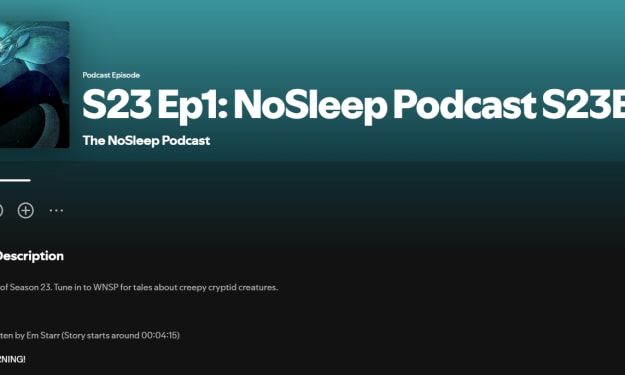
A Quick Victory Lap: “SEALAB IV” on The NoSleep Podcast
TLDR: I wrote an entry for a Vocal challenge that flopped. But I knew it was good, so rather than let that initial failure condemn the story to eternity, I said “fuck that” and start publishing it as a reprint. Then one of the largest horror podcasts in the world said, “We’ll take it.”
By Stephen A. Roddewigabout a year ago in Writers
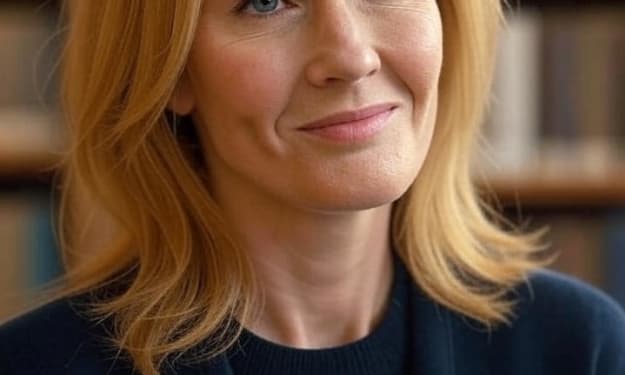
J.K. Rowling’s Untold Story: The Hidden Struggles Behind Harry Potter’s Magic
Picture this: a single mom in a cold Edinburgh café, her baby asleep in a stroller, with just a few coins and a dream. The world feels heavy, ready to crush her. But inside, a story burns—a tale of wizards and courage. This was J.K. Rowling before she became the Harry Potter author. Most know her as a billionaire writer, but few know the untold story of J.K. Rowling—a journey of heartbreak, secrets, and a twist that changed everything. Join us for a thrilling ride through her struggles, triumphs, and the magic nobody saw coming.
By Frank Massey about a year ago in Writers
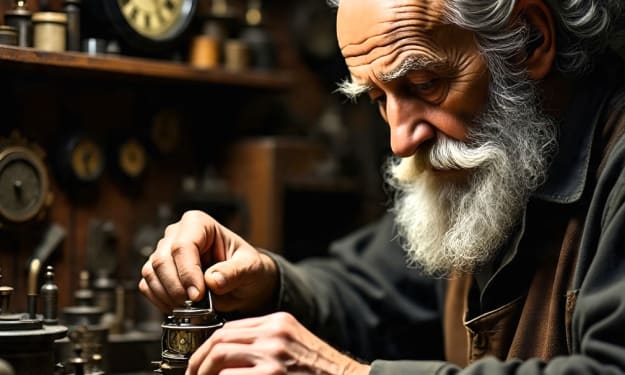
The Clockmaker's Secret
In the quiet village of Windmere, nestled between green hills and silver lakes, there lived an old clockmaker named Elias Greaves. His shop sat at the corner of the cobbled main street, filled with the soft ticking of countless timepieces, from tiny pocket watches to grand floor clocks that boomed on the hour.
By Hamdan Khanabout a year ago in Writers
The woman who wrote through silence . AI-Generated.
Do you see this woman? She was mocked, dismissed, humiliated, and cast aside… simply because she was born a woman. Her name was Grazia Deledda. Born in the rugged hills of Nuoro, Sardinia — a land where girls were taught to sew, not to dream. At just nine years old, she was pulled out of school. Education, they said, was unnecessary for a girl. But Grazia didn’t agree. She studied in secret — feeding her mind with borrowed books and filling her soul with unwritten stories. In the dusty hills of Nuoro, a small Sardinian village surrounded by stone paths and ancient traditions, a girl named Grazia was born — quiet, curious, and already too different for comfort From the moment she could hold a pencil, Grazia began scribbling onscraps of paper. Her world wasn’t made for dreamers, especially not female ones. Here, girls were taught to cook, clean, and marry — never to think too deeply or speak too loudly. Writing was for men. Dreams were for boys By age nine, Grazia’s formal education ended. Her parents pulled her from school, like most girls, believing that reading and writing were a waste of time for someone destined to be a wife. But Grazia disagreed — quietly. When her family thought she was sewing, she was reading. When they thought she was asleep, she was writing by candlelight. She borrowed books from anyone who’d lend them — dusty novels, forgotten poems, even newspapers — anything with words. Her first story was published in a magazine while she was still a teenager. She should’ve been proud. But in Nuoro, it was a scandal. “A girl? Writing in public?” the neighbors hissed. “She’ll bring shame,” the priest warned. Her family, once proud, grew distant Grazia walked through her village with whispers behind her and disapproval in front. Yet every evening, she returned home, picked up her pen, and kept writing. Because writing wasn’t a choice for Grazia — it was breath. Years passed. The rejections came fast, followed by letters from editors who told her to “write about more feminine things,” or worse, “stop altogether.” Still, she wrote. Her stories were not soft. They were rugged like the Sardinian mountains — full of strong women, flawed men, wild weather, and emotions too deep to name. Her writing was different because *she* was different. And that difference, at first mocked, became her power. In her late twenties, she married a man named Palmiro Madesani — a customs officer from the mainland. He was unlike the men of Nuoro. Where others dismissed her, he admired her. Where others tried to silence her, he urged her on. Together, they moved to Rome — a world away from her childhood home. There, Grazia finally had the space, support, and freedom to become who she truly was. She wrote tirelessly. Novels, short stories, essays. In every word, she poured her defiance, her dreams, her memories of a land that tried to cage her — and the fire inside that refused to be extinguished. Then, in 1926, the impossible happened. The Nobel Committee in Stockholm announced its newest laureate in literature *Grazia Deledda. The girl who was told she didn’t need an education. The woman who was mocked for picking up a pen. The soul who wrote through silence, shame, and solitude. Now, the world applauded. She stood on the Nobel stage in a modest dress, tears held back, pride not for herself — but for every girl who had been told “no.” At her side stood Palmiro, silent and proud. A man secure enough to let his wife shine. A partner who never feared her strength, but fueled it. The world had tried to write her story for her. She took the pen back. And rewrote everything. Even today, Grazia Deledda’s name doesn’t echo as loudly as others — not because her words were weaker, but because she was a woman in a world that wasn’t ready. But those who know her story — remember. They remember a girl who read in secret. A woman who wrote through rejection. A soul who turned silence into sentences that would live forever. And now, her story belongs not just to Sardinia, not just to Italy, but to every girl who’s ever been told she couldn’t. Because Grazia proved something powerful: *Being born a woman is not a weakness.* *It’s a different kind of strength. One that whispers first… then changes the world.*
By Muhammad sufyanabout a year ago in Writers
Stop Starving, Start Writing: 8 Real Ways to Actually Earn from Your Words
Let’s be brutally honest for a second. It guts me. Absolutely guts me. Seeing someone pour their soul onto the page, craft sentences that shimmer, tell stories that resonate, only to watch them wrestle with bills, stress over rent, or worse – give up altogether because "writing doesn’t pay." That phrase shouldn’t exist. It shouldn’t be a badge of honour or a resigned sigh. It should be a relic. I hate seeing writers not making money. It feels like watching a master painter use their finest brush to scrub floors for pennies. Your words have value. Serious value. And it’s high time that value translated into actual dollars in your bank account.
By John Arthorabout a year ago in Writers
A New Chapter in Surgery and Sisterhood: My Residency Journey at Duke Begins
Stepping into this new chapter of my life as an Otolaryngology – Head and Neck Surgery resident at Duke University feels like both the culmination of years of hard work and the thrilling beginning of something even greater. It’s a transition filled with purpose, reflection, and deep gratitude.
By Audrey Abendabout a year ago in Writers