
Six Years Ago I said the UK owe Meghan Sussex an Apology
Today the Case Is Even Stronger

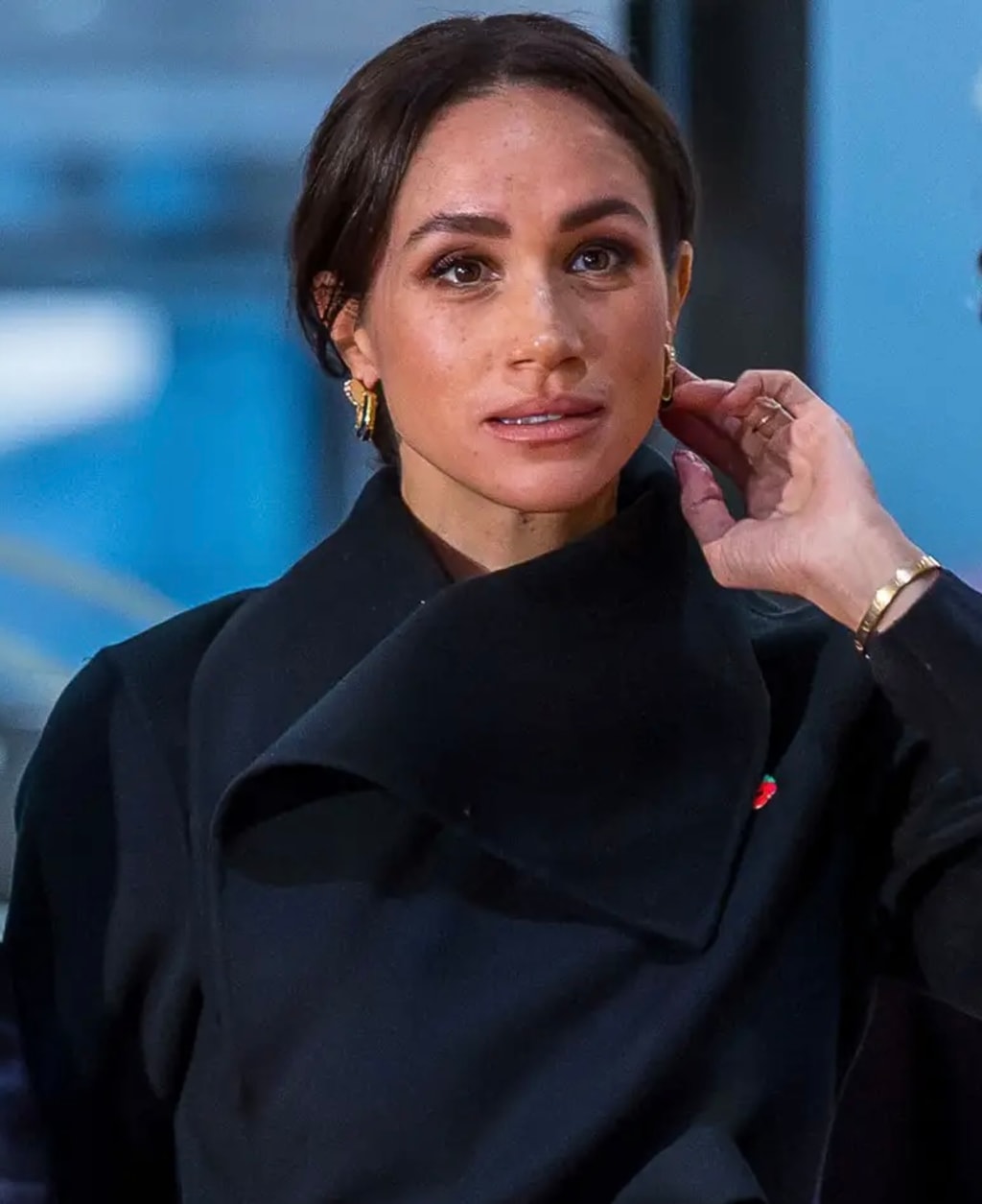
Six years ago, I wrote an article entitled “Why the UK Owes Meghan Markle an Apology.” It was the first story I published right here on Vocal Media.
At the time, I felt strongly that the way Meghan had been treated by sections of the British media and public was deeply unfair.
Now in light of what has emerged in October, I believe the UK owes her an even greater apology.
Let’s have an honest conversation about Meghan, Duchess of Sussex.
And let’s have one without the usual royal commentators, the tabloid headlines, the endless speculation about her motives or the familiar chorus of people explaining what she should have done differently.
Because something has happened that should make Britain stop and think.
For years, Meghan was criticised for distancing herself from her father. She was portrayed as disloyal, ungrateful, cold and unwilling to put family first. People questioned how a daughter could possibly turn her back on her own father, particularly when he was publicly expressing his desire for reconciliation.
The message was relentless. She should forgive him. She should visit him. She should make peace. She should put family before everything else.
And yet, here we are in October 2026, with revelations that cast an entirely different light on the circumstances surrounding that estrangement.
The question now is not simply why Meghan refused to reconcile with her father.
The question is: Why were so many people so determined that she should?
In 2019, the Metropolitan Police received a letter containing allegations of serious offending outside the UK involving Thomas Markle. The letter was passed to Harry and Meghan’s office for their awareness, but the allegations were not shared with relevant overseas law-enforcement agencies at the time.
The Metropolitan Police has now referred its handling of the matter to the Independent Office for Police Conduct, which has launched an investigation. The precise allegations in the original letter have not been fully disclosed publicly. Thomas Markle denies the more recent allegations concerning child sexual abuse material, which are being investigated in the Philippines.
Let that sink in.
The police had received information. Meghan was made aware of the letter. The allegations were not passed to the relevant overseas authorities at the time. Seven years later, the handling of that information is the subject of an independent investigation.
And all those years, Meghan was expected to defend her decision to remain estranged from her father.Think about the emotional burden of that.
Imagine being a daughter who has received information that makes her question whether a family relationship is safe. Imagine making the decision to protect your children, only to have strangers repeatedly tell you that you are a terrible daughter for doing so.
Imagine having to watch television discussions about your private family circumstances, knowing that there are things you cannot explain publicly.
And imagine the extraordinary hypocrisy of being told to reconcile by people who have never had to live with the consequences of that decision.
There is another question here that deserves much more attention.
What might have happened if Meghan had listened?
What if she had followed the public pressure, travelled to see her father, re-established the relationship and allowed him into the lives of Archie and Lilibet? the Grandchildren of the King.
Imagine the outrage if Meghan had let him in.
And this is the part of the story that I think Britain really needs to sit with. Imagine, for a moment, that Meghan had done exactly what so many people demanded of her.
Imagine that she had put aside her reservations, ignored whatever concerns she had, travelled to see her father, rebuilt the relationship and allowed him into the lives of Archie and Lilibet.
Imagine that he had subsequently been welcomed into the wider family circle, perhaps even having access to the King’s other grandchildren including the young future king Prince George.
Do you honestly believe the British tabloids would have responded with sympathy? Would the commentators who spent years criticising Meghan for being estranged from her father would suddenly have acknowledged that perhaps she had been under enormous pressure to make an impossible decision?
I doubt it.
I suspect the outrage would have been extraordinary.
The headlines practically write themselves.
Why did Meghan allow him access to her children? What did she know? Why didn’t she protect Archie and Lilibet? How could a mother have ignored the warning signs? She put her own family ahead of her children’s safety? And perhaps the most devastating question of all: why had she allowed him anywhere near the King’s grandchildren?
She would have been hounded.
Her judgement would have been questioned. Her motherhood would have been scrutinised. Her character would have been dismantled all over again.
The very people who had spent years telling her to reconcile might have been the first to demand an explanation for why she had done so.
Let that contradiction sink in.
When she kept her distance, she was a terrible daughter. Had she reconciled and subsequently faced questions about allowing access to her children, she could have been portrayed as a terrible mother and terrible human being.
She can never win when the rules keep changing but I suppose thats the point.
And I find that possibility particularly disturbing because the children at the centre of this are not abstract figures in a royal soap opera. They are two little people whose safety and wellbeing should always come before the public’s appetite for a family reconciliation story.Their mother does not owe the public an explanation for every boundary she establishes. Nor should she have to wait until something goes wrong to be vindicated for having established it in the first place.
And that is precisely why the public’s attitude deserves such serious reflection.
Because if the allegations had emerged after a reconciliation,
I have very little doubt that the same media environment that condemned her for keeping her father at a distance would have found an entirely different reason to condemn her for letting him close.
And this time, the criticism would not simply have been about whether she was a good daughter. It would have been about whether she was a good mother.
And that brings me to something else that I believe Britain needs to confront.
Race.
Because we cannot have an honest conversation about Meghan Markle without acknowledging that she is a mixed-race woman raised largely by her Black mother who married into an institution with centuries of predominantly white tradition.
Her racial identity was not incidental to her experience. It was there from the beginning, whether people wanted to acknowledge it or not.
The language used about her, the scrutiny she received and the way her behaviour was interpreted deserve to be examined in that context.
Academic research into the media’s portrayal of Meghan has explored how her mixed-race identity challenged established ideas about race, class, nationality and what a royal woman was expected to look like and represent.
We should ask ourselves why a woman who was presented as independent and accomplished before her marriage became, in the eyes of so many commentators, difficult and problematic afterwards.
Why was confidence interpreted as arrogance?
Why was speaking about her experiences interpreted as complaining?
Why did her boundaries become evidence of bad character?
And why did so many people seem so uncomfortable with the idea of a half Black woman entering the Royal Family and refusing to disappear into the role expected of her?
There is a particular burden placed on women of colour when they enter spaces where they are expected to be grateful simply for having been admitted.
They are expected to be twice as accommodating, twice as gracious and twice as careful not to offend.
They must be confident, but not too confident. Independent, but not difficult. Opinionated, but never confrontational.
Meghan was not simply expected to become a member of the Royal Family. She was expected to become a particular kind of royal woman, one who understood that the institution came first and that her own identity, experiences and opinions should take second place.
Let’s also look at the role of the British media.
For years, newspapers made an industry out of Meghan’s family relationships. Her father became a recurring character in a public drama. Her half-sister was given a platform. Every development became another opportunity to revisit the question of whether Meghan was a good person.
There was an appetite for reconciliation, but was there ever an equal appetite for understanding why reconciliation might not be appropriate?
The distinction matters.
The Metropolitan Police’s handling of the 2019 letter raises questions about institutional responsibility. The press coverage raises separate questions about the way Meghan was judged.
We should not assume that journalists knew the contents of the letter, or that there was some coordinated effort to bring about a reconciliation.
But I think we should be brave enough to ask: is it possible that the British press knew about the 2019 letter, or at least had knowledge of the allegations it contained, while simultaneously fuelling the public pressure on Meghan to reconcile with her father? We do not know who outside the authorities and Meghan's representatives had access to that information, or what journalists knew or whether any connection existed between that knowledge and the coverage of Meghan's estrangement, just consider the implications for a moment.
For years, Meghan was expected to ‘explain’ herself. Perhaps it is time the British public did some explaining.
Ask yourself why you were so quick to judge?
Why were you so ready and willing to vilify a woman who literally did nothing but Marry a man she loved?
Why did you find it easier to believe that she was a bad daughter than to consider that she might have had legitimate reasons for protecting herself and her children?
Why did we treat reconciliation as a moral obligation rather than a personal decision?
There is a lesson here for everyone.
The next time you read a headline designed to make you dislike a woman, particularly a woman who doesn’t look like you, your sister or your mother, pause and ask yourself: are you being given the whole picture, or are you being presented with a narrative shaped, at least in part, by that woman’s ethnicity? Ask yourself whether the same headlines, the same language and the same level of hostility would have been directed at a white woman in identical circumstances.
It is difficult to ignore the possibility that race and identity influence how someone is treated by the press and British public but it has been demonstrated time and time again. That contrast is worth examining. It raises an uncomfortable question: whose humanity does the press choose to recognise, and whose does it ask the public to disregard?
Britain, it is time to look in the mirror
About the Creator
Tabby
Hello,
I am a singer-songwriter/creative from London. I am currently saving money to record my debut EP. I love telling stories through writing, acting, or song.
Enjoyed the story? Support the Creator.
Subscribe for free to receive all their stories in your feed. You could also become a paid subscriber, letting them know you appreciate their work.
Comments
There are no comments for this story
Be the first to respond and start the conversation.