
Simple Joy in Simple Living
Choosing Peace Over the Paycheck

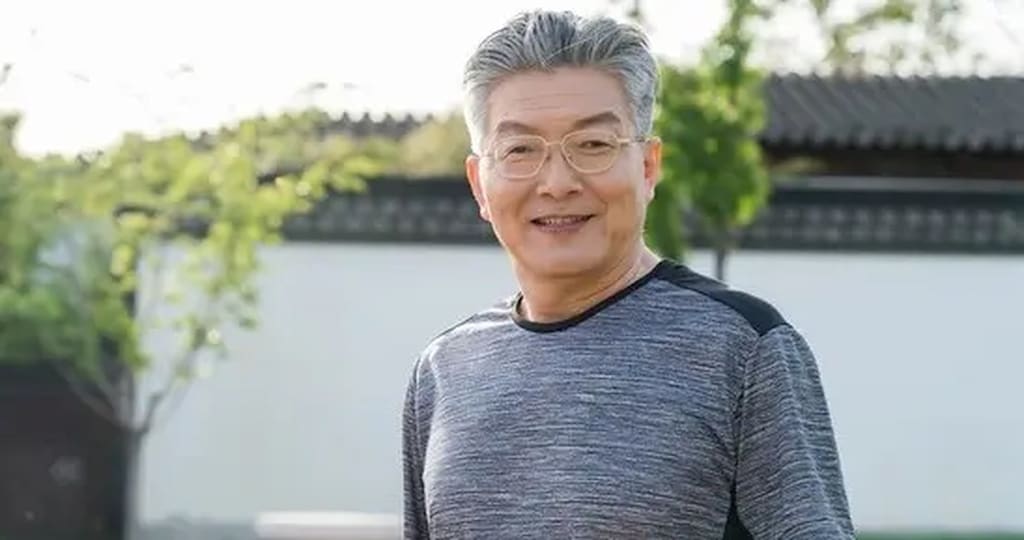
I would rather live on my 2,800-yuan pension, crunching on radishes and eating plain noodles at home, than go back to work.
The other morning, Old Zhang called me. He said his unit was looking for a warehouse manager—light work, just keeping books and checking inventory. It paid 4,500 a month. He asked if I was interested.
I was squatting in my yard pulling radishes at the time, left hand gripping the leafy greens and right hand loosening the soil with a trowel, phone wedged between my ear and shoulder. I laughed when I heard him. "Old Zhang," I said, "thanks for keeping me in mind, but I’m not going."
Old Zhang paused on the other end. "Is the pay too low? Let me tell you, this is an easy gig. Plenty of people have their eyes on it."
"It’s not about the money," I replied. "I just don't have the heart for it anymore."
After hanging up, I hoisted a radish from the earth—plump, white, and trailing mud from its tail. I rinsed it under the tap and took a big bite. It was crisp, spicy with a hint of sweetness. The sun beat down on my back, warm and mellow. The osmanthus tree in the yard is growing exceptionally well this year; in two months, the fragrance will be everywhere. I just stood there in my yard, munching on that radish, feeling a profound sense of peace.
To be honest, I’ve never been a man of great talent. When I was young, I was a worker in a textile mill—rotating shifts and noise so loud you had to shout at the top of your lungs just to talk to someone face-to-face. Later, the mill went under, and I moved to a private factory operating a punch press. I did that for over a decade. I don’t even know how I survived those years—hands covered in cracks in the winter, and summer heat so intense the workshop hit 40°C. You could practically hear the sizzle when a bead of sweat hit the sheet metal.
When I turned fifty-two, my back gave out. The X-ray showed a severe herniated disc. The doctor told me no more heavy lifting. I was worried sick back then—if I didn't work, where would the money come from? Eventually, I took a disability retirement, leaving me with a monthly pension of about 2,800 yuan.
Truthfully, I wasn’t used to it at first. It wasn't about the money; it was the sudden stillness. It made my heart feel frantic. I’d wake up every morning at five, tossing and turning, feeling like I should be getting up for my shift. Sometimes I’d walk out onto the balcony and watch the commuters below—rushing on their e-bikes, squeezing onto buses, always in a hurry. Watching them, I’d have a feeling in my chest I couldn't quite name.
During that time, I kept brooding over finding another job. Cleaning, security, a doorman—anything, as long as I wasn't idle. My wife used to say, "You were born to toil; you can't sit still for two days without feeling restless." I’d agree. What does 2,800 get you anyway? After utilities, rice, flour, and oil, you have to count every cent. A side job would at least give us some breathing room.
So, I actually went looking. A supermarket nearby was hiring stockers. I went for the interview, but they took one look at me and asked, "Can your back handle it? You’ll be moving crates." I told them it was no problem. I lasted a week. By the end, the pain was so bad I couldn't even turn over in bed at night. Stocking looks easy, but moving crates of soda and heavy bags of rice up and down... my old back just couldn't take the hit.
Then I found a job as a security guard, sitting in a booth, raising the gate for cars and logging plates. Easy, right? It was. But it was twelve hours a day—7 AM to 7 PM—just sitting there. The first two days were fine. By the third day, sitting in that chair, watching the sun crawl from east to west, watching the cars go by and the kids running home from school, I suddenly felt it was all so meaningless.
It wasn't exhaustion; it was a hollow feeling in my chest. You just sit there, second by second, feeling like a piece of furniture—a machine that happens to breathe. For two thousand-some yuan a month, you surrender your entire daylight.
I quit after half a month. I told the captain it wasn't a good fit. He was a nice guy; he told me to give it time to adjust. I told him it wasn't about adjusting—I’m just not the type who can sit still for nothing.
After that, I stopped thinking about work. I started thinking about how to actually live.
I live on the first floor with a small yard that used to be derelict and full of junk. I spent a few days clearing it out, tilled two patches of soil, and planted radishes, greens, and spring onions. I put up a trellis in the corner for some luffa vines. You sow in the spring, water and weed in the summer, and harvest in the autumn. My radishes grow all crooked and wouldn't win any beauty pageants, but they are truly sweet. The greens are organic—plenty of wormholes in the leaves—but you just wash them a couple extra times.
My daily meals are very simple now. In the morning, I boil a bowl of noodles, slice some of my own radishes, toss in some spring onions and a dash of soy sauce. Eating that hot bowl of noodles makes my whole body feel right. For lunch, maybe a steamed bun and some vegetable soup. Dinner is even simpler: a bowl of congee with some pickled vegetables. My monthly grocery bill is tiny. I buy rice, flour, and oil at the wholesale market once a month—it's much cheaper than the supermarket.
I’ve done the math. With a 2,800-yuan pension, property fees and utilities are about 400, food is 500, phone bill is 50. The rest is enough. My wife passed away a few years ago, and my son has his own family in another city; he doesn't need my support. Aside from buying a couple of shirts when the seasons change, I have no big expenses.
Some people say this is too "bitter"—just radishes and noodles. They ask what the point of such a life is. I tell them they’re wrong. Whether a life is "bitter" or not doesn't depend on what you eat, but whether you're happy while eating it. Now, I eat the radishes I grew and the congee I simmered, and every bite feels "steady." Back at the factory, I’d crouch by the workshop door with a tin lunchbox, shoving food down in three gulps just to get it over with. That was a meaningless life.
I have an old colleague, Old Liu. He couldn't stand being idle after retirement and went to work as a gatekeeper for a private firm. I visited him last month. He’d lost a lot of weight and looked haggard. He said the factory was busy, he had to work overtime, and sometimes he had to get up in the middle of the night to open the gates for trucks. I asked him, "What are you doing it for?" He said he wanted that extra 2,000 yuan. I asked, "Is it worth ruining your health for 2,000 yuan?" He just sighed and said nothing.
I’m not saying work is bad. Young people should work—how else can they provide for a family? But I’m fifty-six. My back is bad, my legs are bad. Why should I go out and compete with the youth for a meager paycheck? People say, "You're only in your fifties, you're still young! It's a waste to retire so early." I just want to laugh. What do you mean "a waste"? I entered the factory at eighteen and retired in my fifties. I worked for over thirty years. I’ve sweated enough. Now I just want a few days of peace—how is that a waste?
My life moves slowly now, but every minute belongs to me. I don’t need an alarm; I wake up naturally. When I wake, I’m in no rush to get up. I lie there and listen to the birds. There are many trees in our compound—sparrows, magpies, doves—all chirping away. It sounds much better than an alarm clock. Then I go to the yard to check the vegetables, pull a weed here, or water a dry patch there. I might wander to the wet market—not to buy much, just to walk around, see people, and soak in the "hustle and bustle" (renao). I come back, make breakfast, and then check the news or flip through a book I bought from a secondhand stall.
In the afternoon, I sometimes play chess with the other old-timers under the trees, or I just grab a small stool and sit in my yard to bask in the sun. When the sun hits you, it’s so warm. If you close your eyes, you can hear the wind rustling the leaves—hua-la, hua-la—like flowing water. In those moments, I feel that this life has been worth it.
My son calls once a month from out of town. Every time, he says, "Dad, if you’re short on cash, just tell me." I tell him I’m fine, not to worry. He asks, "Is that small pension enough?" I tell him it is. "Your dad is living on radishes and noodles now; I don't spend much." He laughs on the phone and says, "Dad, you’ve become an immortal (xian)." I tell him it's not about being an immortal; I’ve just "thought it through."
In this life, when you're young, you fight for money because you think money is security. Only when you're older do you realize that security isn't given by money—it's the absence of panic in your heart. I’m not panicking now. I know what I’m doing every day, and I know I’m happy. I don’t have to watch a boss’s face, I don’t have to play office politics, I don’t have to squeeze onto a bus, and I don't have to crawl out of a warm bed on a freezing winter morning. When my radishes sprout, I’m happy. When my noodles are cooked just right, I’m happy. When the sun comes out, I’m happy.
It’s that simple.
A few days ago, a neighbor asked me, "Big brother, aren't you bored at home alone?" I said no, I’m very busy. He asked, "Busy with what?" I said, "Busy soaking up the sun, busy growing radishes, busy boiling noodles, and busy watching ants move their house." He shook his head and said my logic was all twisted. I didn't argue; I just smiled and let it go.
I know that in many people's eyes, I’m "worthless." Not working in my fifties, living on a 2,000-plus pension, eating radishes and noodles—what is that if not laziness? But I don't see it that way. I think the ultimate goal of living is to live according to your own "willingness." I am willing to live this way, and my heart is at ease. That is enough.
Who hasn't had their glory days? I’ve made 5,000 or 6,000 a month, I’ve worn new clothes, and I’ve dined out. But those things are in the past. Now, I just want something simple. After a lifetime of eating all sorts of things, you realize the best tasting thing is that bowl of noodles at home. After wearing all sorts of things, the most comfortable is that old shirt.
I would rather live on my 2,800-yuan pension, crunching on radishes and eating noodles at home, than go back to work. It’s not that I don’t love money anymore; it’s that I feel my time is worth more than those few thousand yuan. My back, my legs, my sleep, and my mood—they are all worth more than that money.
The sun is out again. I’d better go to the yard and check on my radishes.
About the Creator
Water&Well&Page
I think to write, I write to think
Enjoyed the story? Support the Creator.
Subscribe for free to receive all their stories in your feed.
Comments
There are no comments for this story
Be the first to respond and start the conversation.