
Seven Rules, One Heartbeat
At 71, he asked to move in; she agreed on one condition: "Follow my seven rules."

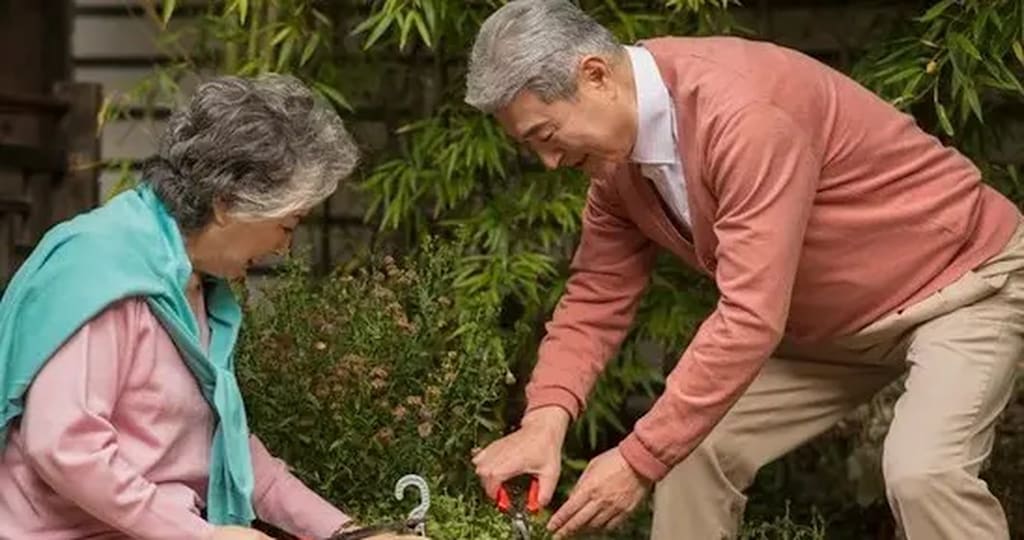
When Old Chen asked me to move in together, I was on the balcony watering a few pots of wilting devil’s ivy. He stood in the middle of the living room, rubbing his hands together and stammering for a long while before finally blurting out, "Old Li, why don't we move in together? That way, we can look out for one another."
The watering can in my hand nearly slipped.
To be honest, this wasn't the first time he’d brought it up. We’d known each other for over three years through square dancing. His wife had been gone for five years; my husband, seven. We usually went grocery shopping, took walks, and danced together. The neighbors saw it all, and the neighborhood gossips had long been wagging their tongues, saying we were "dating." I didn't care. At my age, why worry about what people say?
But moving in together—that was different.
I put down the watering can and turned to look at him. He was 71, his hair mostly white, though his back was still straight. His eyes, however, were darting around like a child who’d done something wrong. I felt a sudden pang of sympathy, but then I thought better of it. No, this couldn't be handled haphazardly.
"Fine," I said.
His eyes lit up instantly.
"But you have to follow my seven rules."
I’ve never had any great talents in my life, but I’ve always lived with a clear head. Back in the day, I was a workshop director at a textile factory, managing over a hundred women. What kind of petty drama haven't I seen? Later, when I retired and my husband was sick for those few years, I held everything together—inside and outside the house—on my own. I know all too well that when two people live together, having a good heart isn't enough; you need rules.
A life without rules is like a dish without salt: it looks the part, but the taste just isn't right.
Old Chen sat on the sofa like an elementary school student. He put on his reading glasses, pulled a small notebook from his pocket, and said earnestly, "Go ahead, I'm listening."
Looking at him, I felt a mix of amusement and heartache. He was honest, but he was far too careless. The last time he came over for dinner, he tracked mud directly onto my freshly mopped floor and draped his dirty socks right over the arm of the sofa. I endured it then and kept my mouth shut. But if we were going to live together, I couldn't tolerate that.
"Rule number one," I said, holding up a finger. "Personal hygiene must be maintained. Shower every day. Change your socks and underwear daily—no piling them up. The living room is your space, and the bedroom is your space, but you cannot turn this home into a pigsty."
He nodded and scribbled a "1" in his notebook.
"Rule number two: we go Dutch. Our pensions remain separate, and daily expenses are split fifty-fifty. Utilities, groceries—we settle the bill at the end of the month. I won't take advantage of you, and don't expect me to foot the whole bill."
I had thought long and hard about this one. Over the years, I’ve seen too many "old sisters" whose "companionate marriages" ended in bitter breakups over money. Some old men think an old woman’s job is to cook, clean, and serve them; some old women think it's only natural for the man to pay for everything. In the end, they’d have massive rows over a few dozen yuan.
I told Old Chen, "We both have pensions. Neither of us is hurting for a few cents, but the accounts must be clear. Even biological brothers settle their debts clearly, let alone a pair like us joining up halfway through life."
He thought for a moment and said, "Fine. But when I treat you to a meal out, I’m still paying."
"That’s your business, but daily expenses must be split."
He put his head down and wrote the second rule.
"Rule number three: division of labor. I won't be the only one doing housework. If I cook, you wash the dishes. If I mop, you wipe the tables. Don't give me that 'men rule the outside, women rule the inside' talk. We’re both retired; nobody gets to use those old-fashioned ideas to fool anyone."
Old Chen looked up, looking a bit troubled. "You know how I am with dishes. Last time I chipped that floral plate of yours..."
"Then wash them carefully! Nobody is born knowing how. If you don't know, I can teach you, but you can't use 'I don't know how' as an excuse to do nothing."
I sounded a bit sharp. Actually, I wasn't snapping at him; I was thinking of my late husband. That man never stepped foot in a kitchen his whole life; he couldn't even crack an egg. I served him for decades—from our youth until he got sick. At the end, I was the one wiping him down and turning him over in bed, and I never breathed a word of complaint. But thinking back now... why? Why did it have to be that way?
It’s not that I don't want to give anymore; it’s that I’m afraid of that feeling of carrying everything alone.
Old Chen probably sensed my mood. He didn't say anything more and obediently wrote down the third rule.
"Rule number four," I cleared my throat. "We each manage our own children. If your son is short on money for a house, whether you help him is your business; I won't interfere. If my daughter has something going on, keep your opinions to yourself. We are living our lives; don't drag the children into it."
This rule also came from experience. I had a friend who lived with an old man for two years. Things were going well until the man’s son wanted to buy a car. The man took 50,000 yuan from their joint savings. My friend wasn't happy, they had a huge fight, and eventually split up.
When elderly people live together, the biggest fear is the children getting involved. The kids might feel awkward about you finding a "step-parent," and you might feel like you shouldn't be spending all your money on someone else’s child. It’s better to be clear from the start.
"Rule number five," I saw he was almost caught up. "You entertain your friends, and I’ll entertain mine. If you want to invite your old army buddies over for drinks, tell me in advance. I’ll make a couple of dishes for you, but I won't stay up with you until midnight. Likewise, if I invite my sisters over for cards, you can be home, but you can't give us a sour face."
Old Chen was much more agreeable this time. "That’s for sure. Those old buddies of mine can drink forever. If you don't want to hear them bragging, you could even go stay at your daughter’s for a couple of days."
I glared at him. "Why should I leave? That’s my home."
He quickly corrected himself. "Right, right. Don't leave. I’ll tell them to keep it down."
I suppressed a smile and didn't respond.
"Rule number six—and this is the most important one," I looked him in the eye, emphasizing every word. "We sleep separately."
Old Chen froze, his pen stopping mid-air.
"You take the guest room, I take the master bedroom. At night, we each sleep our own sleep and don't disturb each other. If you cough or have to get up in the night, that’s your business—don't ruin my sleep. I’m a light sleeper; the slightest noise wakes me up, and once I’m up, I can't get back to sleep. If you don't agree to this one, we can forget the first six."
I was blunt. At our age, there’s no room for embarrassment.
To be honest, I’ve seen many seniors move in together just to find someone to warm the bed. But Old Chen and I are both 71. What are we looking for? What we want is someone nearby to talk to, someone who can pour a cup of water when we have a headache or a fever. As for sleeping, keeping things clean and separate is better than anything else.
Old Chen was silent for a long while. Finally, he wrote down rule six. After he finished, he looked up at me and muttered, "Then aren't you afraid that if something happens to me in the middle of the night, no one will know?"
I said, "If something really happens, I’ll hear you if you shout. Besides, if you're really worried, we can buy one of those call buttons—you press it and a buzzer goes off in my room. There are plenty of ways; we don't have to share a bed."
He didn't say anything more.
"Rule number seven," I took a deep breath. "We can break up at any time. If either of us feels it’s not working out, just say the word. A clean break. No clinging, no fighting, and no bad-mouthing each other to outsiders."
Saying this out loud made me feel a bit uneasy, too. But I knew it had to be said.
Dating as an older person is different from being young. Young people have all the time in the world to adjust, test the waters, and change their minds. We don't have that kind of time. But because we don't have time, we have to cherish every day we have together even more. If the day comes when we truly can't get along, forcing it would be bad for everyone.
Better to have it all out in the open first.
Old Chen put down his pen, took off his reading glasses, and looked at me earnestly.
"Old Li, I’ve written down all seven of your rules. I have an eighth one; see if it works for you."
I was a bit surprised. "Go on."
"Rule number eight: Every morning when we get up, regardless of rain or shine, we have to say 'Good morning' to each other. Every night before bed, regardless of whether we're angry, we have to say 'Goodnight'."
I was stunned.
"I’m not a man of many words, and I don't know how to say sweet things," Old Chen said, looking down and flipping through his little notebook. "But I figure, when two people live together, the scariest thing is gradually becoming strangers. Saying 'Good morning' is my way of telling you that I'm here today. Saying 'Goodnight' is my way of telling you that I’ll still be here tomorrow."
My eyes suddenly grew hot.
At this age, I’ve seen it all and experienced it all. I thought I was clear-headed enough, rational enough, to make my life airtight. I thought the rules I’d set had plugged every possible leak.
But Old Chen’s one rule had pierced right through my defenses.
I turned my head away, pretending to look at the devil’s ivy on the balcony. It took a good while to push down that surge of emotion. When I turned back, I acted as if nothing had happened and said, "Fine. Rule number eight. I agree."
Old Chen smiled—a smile like a child's.
Last week, Old Chen moved in. He didn't have much; everything fit into two woven sacks. His most prized possession was a Yixing clay teapot he’d used for twenty years, its lid held on with a rubber band for fear it might fall off.
He cleaned the guest room until it was spotless. He put on the sheets himself, though they were a bit rumpled. I offered to help, but he said no need. He spent ages fussing over them until they were finally smooth.
On the first night, I made braised fish in brown sauce, sautéed some greens, and made an egg drop soup. He ate heartily and took the initiative to wash the dishes afterward. Although I secretly rinsed them again once he was done, I didn't let him see.
The next morning, before I was even out of bed, I heard him clattering around in the kitchen. I walked out and saw that he’d burned the congee; the bottom of the pot was a layer of black, and he was standing there looking helpless.
I sighed, scrubbed the pot, and started a new batch.
He stood to the side like a child who’d made a mistake and whispered, "I wanted to make you breakfast. I didn't expect..."
"It’s fine. I’ll do it tomorrow."
"No, we agreed on a division of labor. How about you teach me how to cook congee?"
I looked at him and taught him how to judge the water levels, how to adjust the heat, and when to give it a stir. He listened intently and even took out his little notebook to write it down.
On the third morning, he made a pot of plain white congee. It wasn't burned, just a little thin. I drank two bowls and didn't say a word.
That night, lying in bed, I heard him tossing and turning in the next room. After a while, he tapped lightly on my door. "Old Li, you asleep?"
"Not yet. What’s up?"
"Nothing. Just wanted to say goodnight."
I smiled in the darkness.
"Goodnight."
This is the life I wanted. It has rules, but it also has warmth. It has boundaries, but it also has something to lean on.
At 71, I don't want to change myself for anyone anymore, nor do I want to wrong myself just to accommodate someone else. But I am willing, once the rules are set, to try and live a good life with someone.
It’s not about "romance"—that stuff is too airy. It’s simply about having someone say "Good morning" to you in the morning and "Goodnight" at night. Having someone sit across from you at dinner, and having someone beside you when you’re sick.
It’s that simple.
Old Chen said his eighth rule came from an article he read. It said that a person’s life is about thirty thousand days long. But the days you truly remember aren't the calm, uneventful ones; they’re the days when someone says "Good morning" and "Goodnight" to you.
I thought about it, and I think he’s right.
I’m 71 this year. I don't have many days left. I don't want to waste time on hollow things anymore. I don't want to keep my heart locked so tight that no one can get in.
The seven rules are the dignity I give to myself.
That eighth rule is the sincerity I give to him.
The days are still long; we’ll take them slow.
After all, we agreed we could part ways at any time. But in my heart, I know that as long as he still says "Good morning" and "Goodnight" every day, this partnership isn't going anywhere.
In the end, isn't that all a person looks for in this life?
About the Creator
Water&Well&Page
I think to write, I write to think
Enjoyed the story? Support the Creator.
Subscribe for free to receive all their stories in your feed.
Comments
There are no comments for this story
Be the first to respond and start the conversation.