
Returnable Packaging Solutions
A Sustainable Approach to Modern Logistics

Introduction
In today’s fast-paced supply chain, businesses are increasingly looking for ways to reduce waste, improve efficiency, and enhance cost savings. One of the most effective strategies gaining traction is returnable packaging solutions. Unlike single-use packaging that contributes to environmental pollution, returnable packaging is designed for multiple uses, making it a sustainable and cost-effective choice for industries ranging from automotive and electronics to food and pharmaceuticals.
As companies strive to minimize their environmental footprint and improve operational efficiency, returnable packaging solutions offer a reliable way to achieve these goals while maintaining product safety and reducing logistics costs.
What Are Returnable Packaging Solutions?
Returnable packaging refers to durable containers, pallets, crates, and other materials designed for repeated use within supply chains. These solutions are typically made from strong materials like high-density polyethylene (HDPE), polypropylene (PP), metal, or composite materials, allowing them to withstand multiple transit cycles without significant wear and tear.
Unlike disposable packaging, which is used once and discarded, returnable packaging is designed for a closed-loop system where packaging materials are collected, cleaned, and reused multiple times before being recycled at the end of their life cycle.
Types of Returnable Packaging Solutions
Returnable packaging comes in various forms, depending on the specific requirements of industries. Some of the most common types include:
1. Returnable Plastic Crates (RPCs)
Widely used in food, beverage, and retail industries
Provide excellent durability, stackability, and ventilation
Ideal for transporting perishable goods
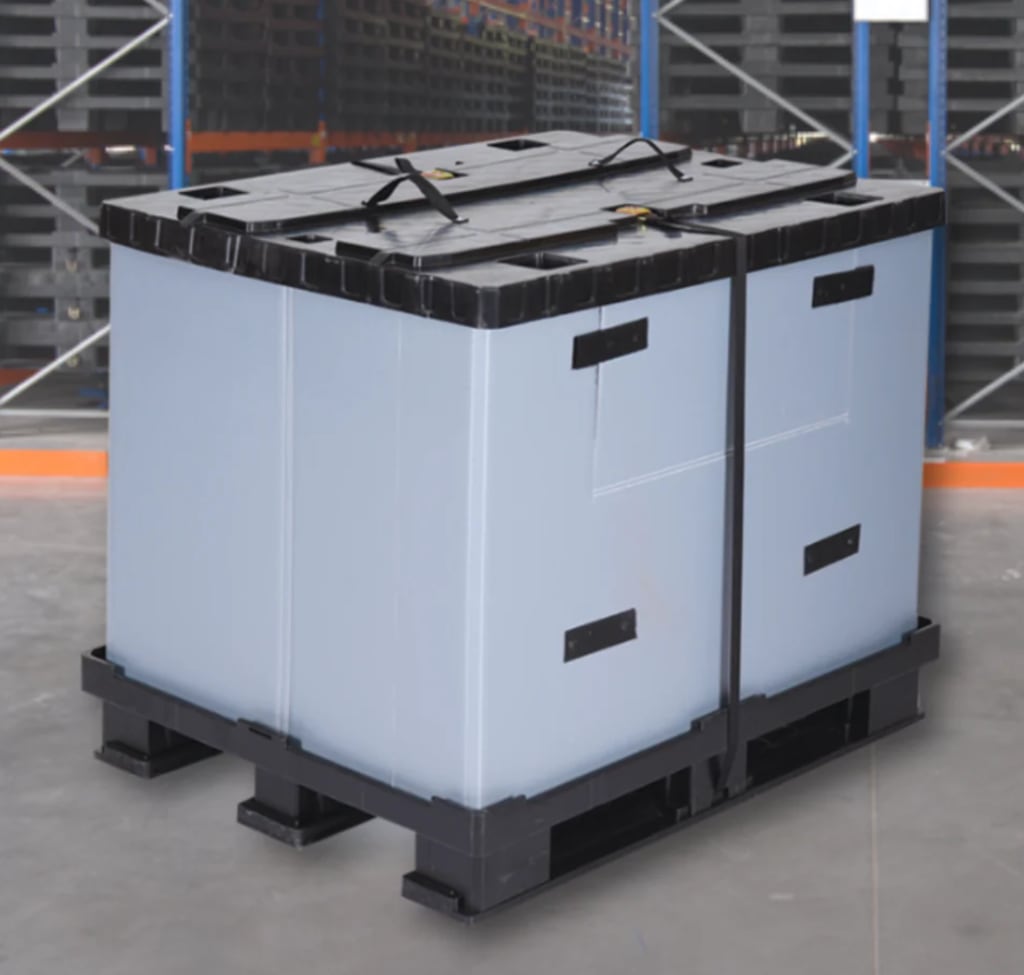
2. Collapsible Bulk Containers
Space-saving design that reduces storage and return transport costs
Used in industries like automotive, manufacturing, and agriculture
Lightweight yet strong enough to protect heavy or delicate goods
3. Reusable Pallets
Available in plastic, wood, or metal variations
Reduce the need for disposable wooden pallets, cutting down waste
Improve handling efficiency in warehouses and logistics operations
4. Stackable and Nestable Totes
Ideal for inventory management in warehouses
Used extensively in retail distribution and electronics industries
Designed for easy stacking to maximize storage space
5. Metal Racks and Containers
Used in heavy industries such as automotive and machinery
Provide robust protection for large, heavy, or sensitive components
Can be customized with dividers and padding for added protection
Key Benefits of Returnable Packaging Solutions
1. Cost Savings
While the initial investment may be higher than single-use packaging, returnable packaging reduces long-term costs by eliminating the need for constant repurchasing.
Reduces material handling costs, damages, and losses during transit.
2. Environmental Sustainability
Significantly reduces waste generation by replacing single-use materials with reusable alternatives.
Contributes to circular economy initiatives by promoting recycling and resource optimization.
3. Improved Product Protection
Durable materials provide better protection against impacts, moisture, and contamination.
Reduces the risk of damage during transit, leading to lower replacement costs.
4. Operational Efficiency
Standardized packaging dimensions allow for better warehouse organization and transportation efficiency.
Reduces reliance on disposable packaging, minimizing packaging waste management efforts.
5. Enhanced Supply Chain Control
Many returnable packaging systems integrate tracking technology like RFID (Radio Frequency Identification) to monitor inventory movement.
Helps prevent losses, theft, and inefficiencies in the logistics network.
Industries Benefiting from Returnable Packaging Solutions
Various industries are leveraging returnable packaging solutions to optimize their supply chains. Some of the key sectors include:
1. Automotive Industry
Uses returnable plastic totes and metal racks to transport components between suppliers and assembly lines.
Reduces packaging waste in manufacturing plants.
2. Food and Beverage Industry
Implements reusable crates and bins for fresh produce, dairy, and beverage distribution.
Ensures compliance with hygiene and safety regulations.
3. Retail and E-commerce
Employs reusable totes for warehouse storage and order fulfillment.
Helps streamline returns and reverse logistics operations.
4. Pharmaceutical and Healthcare
Utilizes returnable insulated containers for temperature-sensitive products.
Enhances the safety and efficiency of medical supply distribution.
5. Electronics and Manufacturing
Uses protective, anti-static reusable packaging for delicate electronic components.
Minimizes damage and contamination risks.
Challenges and Considerations in Implementing Returnable Packaging
Despite its numerous advantages, businesses must address certain challenges when adopting returnable packaging solutions:
1. Initial Investment Costs
Requires a higher upfront investment compared to traditional disposable packaging.
Businesses must evaluate long-term savings to justify costs.
2. Reverse Logistics Management
Efficient return systems must be in place to collect, clean, and redistribute packaging.
Requires tracking solutions to prevent losses and mismanagement.
3. Storage Space Requirements
Reusable packaging solutions require dedicated storage areas when not in use.
Businesses need proper warehouse planning to optimize space.
4. Standardization Issues
Compatibility with existing supply chain processes must be ensured.
Custom packaging designs may be required for specific industries.
The Future of Returnable Packaging Solutions
With growing global emphasis on sustainability, returnable packaging solutions are set to become a dominant trend in the packaging industry. Businesses are increasingly adopting eco-friendly alternatives to comply with environmental regulations and corporate social responsibility (CSR) goals.
Advancements in materials, design, and tracking technologies will continue to enhance the efficiency and functionality of reusable packaging. From biodegradable coatings to IoT-enabled smart tracking, the future of returnable packaging will focus on further improving durability, convenience, and cost-effectiveness.
As organizations recognize the long-term benefits of returnable packaging, investments in closed-loop supply chains and reusable packaging innovations will only increase, making this approach a standard practice across industries.
Conclusion
returnable packaging solutions offer a smart, sustainable alternative to single-use packaging by providing durability, efficiency, and long-term cost savings. By adopting reusable packaging, businesses can reduce waste, enhance product protection, and optimize logistics operations.
As industries across the globe shift toward greener solutions, returnable packaging is set to play a crucial role in shaping the future of supply chain management. Whether in the automotive, food, pharmaceutical, or retail sector, companies that embrace returnable packaging will benefit from improved sustainability, lower costs, and enhanced efficiency.
Would you consider implementing returnable packaging in your supply chain? Share your thoughts on how reusable packaging could transform your industry!
About the Creator
Enjoyed the story? Support the Creator.
Subscribe for free to receive all their stories in your feed.
Comments
There are no comments for this story
Be the first to respond and start the conversation.