

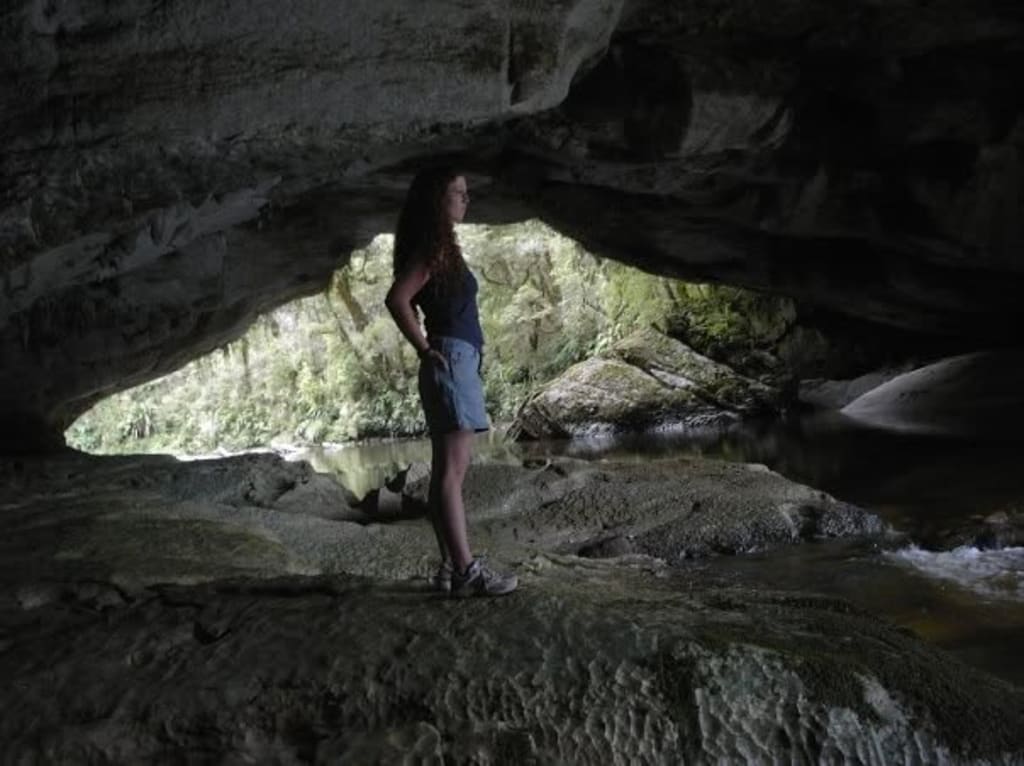
Not all those who wander are lost
It is ironic perhaps, given the circumstances of her death, that this is the line now most closely associated with Hannah Moore. Ironic too, of course, that this quote, popularised following her now infamous 2027 eulogy for her dear friend Paul Stewart, should be one that Moore herself would never have laid claim to, for, as any literature student would attest, she remained stalwart in her opposition to plagiarism until the time of her death in 2031. Indeed, in her 2026 poem “Pilgrims in an Unholy Land”, Moore suggested that the use of Artificial Intelligence in art of any sort might be seen as an act of mass plagiarism leading to a cultural circularity akin to the desertification of fertile land, and it has perhaps been this “Human Intelligence” approach which has allowed so many readers to connect with her work since the posthumous publication of “Rising to the Challenge” by JCox Publishing House in 2033. In his personal forward, Cox himself called Moore’s work “deeply and beautifully human.”
It has not been lost to critics, however, that Moore wandered profusely, and while this seeming inability to settle into a genre, style or discipline in her writing has left us with a body of work in which any reader might find something to kindle an appetite, it is hard to dispute that it has also been instrumental in limiting her commercial viability during her lifetime. As the Guardian wrote in their April 2034 review of “The Dribbling Witches”, Moore might be seen as “a jack of all trades, master of none.”
And yet, she persisted, for better or worse, rendering herself a side note in the work of most genre essayists, despite her increasing appearance across English Literature curriculums in both the UK and the US. Where the literary press has given her short shrift, the assembled student essays on her poems, short stories and long form fiction might fill the shelves of a moderate school library.
So what makes Hannah Moore such a perennial favourite of the teacher of literature, when her critical reception has been fleeting and lukewarm? Like so many oft-studied writers before her, Moore was a writer of her time, emerging in the midst of the great democratisation of voice. However, unlike so many of the writers of that period, Moore’s writing seems not to have fallen into the trap of publication for self-promotion. Her enjoyment of the work of writing shines through, her openness to experiencing fully the gamut of human (and sometimes non-human) emotion, whether pleasure or pain, continues not only to connect with readers, but to provide rich fodder for discussion and even debate. Of course, accusations of experiential appropriation have been levied on more than one occasion, and while this is unsurprising given the socio-political climate of her era, it is hard to make the argument that Moore, when venturing into such territory, does so without pathos and respect, and it is a rare writer who can write ONLY what they know first-hand and remain readable for long.
Yet we know that Moore was not without experience, and it was perhaps the itinerant nature of her formative years which informed her approach to writing, setting up camp anywhere and yet never finding a home. As she once wrote in “Playing the Writer”, “I have a hunger to taste it all, but to what end?” In this epistolary essay, Moore goes on to discuss her sense that “whatever breadth offered me in life, I fear it was nothing to the joys born of depth which I witnessed played out in the lives of my peers.” Indeed, while her short stories have generally been lauded for their emotional punch, her longer works have consistently attracted criticism for a laziness of construction, frequently leaving the reader somewhat unsatisfied. A rarity amongst the slew of books made into screenplays, the 2034 BBC televisation of Moore’s previously unpublished 2028 novel “To the Ground” was widely considered to offer a marked improvement on the original text. In contrast, the 2035 feature film based on her 2022 short story “Freezing” proved a cinematic flop, whilst catapulting “Rising to the Challenge” into the bestseller lists.
If short stories leant themselves to Moore’s temperament, it was poetry where she showed her truest colours. The Times described her body of work as “inconsistent” and it is easy to see why. When she was good, as the saying goes, she was very very good. But when she was bad, she was horrid. Here, again, she appears to have been undeterred. As she said in a 2025 interview with WATG, “I really don’t mind failing, if there is value in the trying. When you don’t fear failure, there is not a lot to fear from writing any way you please!”
Perhaps this is why Hannah Moore’s name continues to appear in the school books of so many young people. Though the successful novel eluded her in her lifetime, her fearlessness in writing, her pleasure in it, the foundations of respect and compassion that permeated her work, have inspired students to connect with culture, to recognise their own validity within the ongoing story of it, and join in.
In life, Moore spread herself thin. The now viral video of what remains a moving eulogy despite the ghoulish blundering is a rare piece of footage of the writer, and it shows Moore at once at her best and her worst. The few who knew her well tell of a woman who, despite her well documented personal troubles, tried to do too much, was always hungry, never satisfied, and yet also permanently plagued by having overestimated her own capacities. Ultimately, this fear that some snippet of life might escape her may have cost her the whole of hers. But we can be sure of one thing. Hannah Moore was never lost, however far she wandered.
About the Creator
Enjoyed the story? Support the Creator.
Subscribe for free to receive all their stories in your feed. You could also become a paid subscriber, letting them know you appreciate their work.
Comments
There are no comments for this story
Be the first to respond and start the conversation.