
One Work: The Magician
On René Magritte, Edvard Munch and the magic of making art — for Raymond's "One Work" challenge.
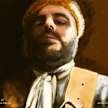
I have long believed that artists, musicians, and writers are all magicians of a kind. We use different tools—paint, sound, or words—to perform the same impossible trick: to conjure something from nothing.
Sometimes it's to reveal truths, whether universal or deeply personal. Other times it's to elicit emotions—surprise, fear, anger, confusion, or disarray. More often than not, though, it's simply to help someone look at the world a little differently.
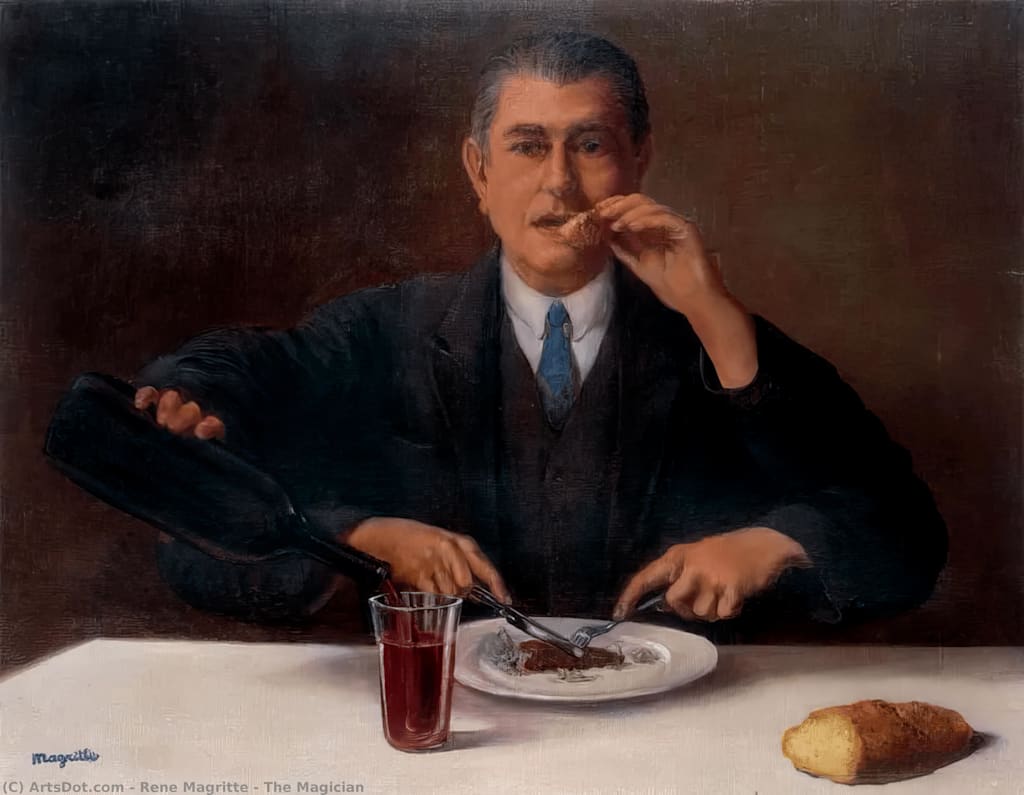
Although art is always subjective—which is what makes it so tantalising to get lost in—The Magician by René Magritte perfectly illustrates my point. At first glance, there doesn't appear to be anything especially remarkable about it. Linger a little longer, however, and you'll notice that the calm, collected Magritte has four arms.
Each arm is occupied with a different task. A surface-level reading might simply be, "Wouldn't four arms make eating a meal much easier when you're in a hurry?" But is that really the point?
Like Edvard Munch, Magritte occasionally turned himself into a subject. Munch explored the darkest and deepest parts of being human, while Magritte approached identity from a more playful and philosophical angle. He frequently used his own image to comment on the nature of the artist, perception, and the strange relationship between reality and illusion. That's my reading, anyway.
Perhaps that's why I relate so strongly to artists like Magritte and Munch. Much of my own writing is about me—or at least parts of me. My poetry is almost entirely autobiographical. Well... perhaps eighty percent.
Even when I'm not writing about something overtly personal, what appears on the page is still a reflection of my feelings, opinions, or thoughts.
I also connect with Magritte's idea of the artist as a magician.
One of the greatest joys of writing is the strange exchange it creates.
I write something.
Someone comes along and reads it. Let's call him Matthew Fromm.
The moment Matthew begins reading, he gives me permission to enter his mind. That's a remarkably powerful thing when you stop and think about it.
Then I'll inevitably get into trouble for unlocking a brand-new fear in poor Matthew, and I'll make a thoroughly unenthusiastic attempt to deny all responsibility.
Secretly, though, that's exactly the response I'm hoping for.
For example, my story Make It That Far tapped into Matthew's greatest fear—proof that words can linger long after the page has been turned.

If my words are allowed to enter another person's mind but leave nothing behind, then I haven't really performed any magic at all.
Maybe Magritte had already figured out the secret. The greatest magic trick isn't creating something from nothing. It's placing something in another person's mind that refuses to leave.
*
Thanks for reading!
This piece is connected to Raymond G. Taylor's "One Work" challenge through Edvard Munch's Self-Portrait and the shared idea of the artist examining themselves and their craft.
Check out the challenge here:
About the Creator
Paul Stewart
Award-Winning Writer, Poet, Scottish-Italian, Subversive.
The Accidental Poet - Poetry Collection out now!
Streams and Scratches in My Mind coming soon!
Enjoyed the story? Support the Creator.
Subscribe for free to receive all their stories in your feed. You could also become a paid subscriber, letting them know you appreciate their work.
Comments
There are no comments for this story
Be the first to respond and start the conversation.